
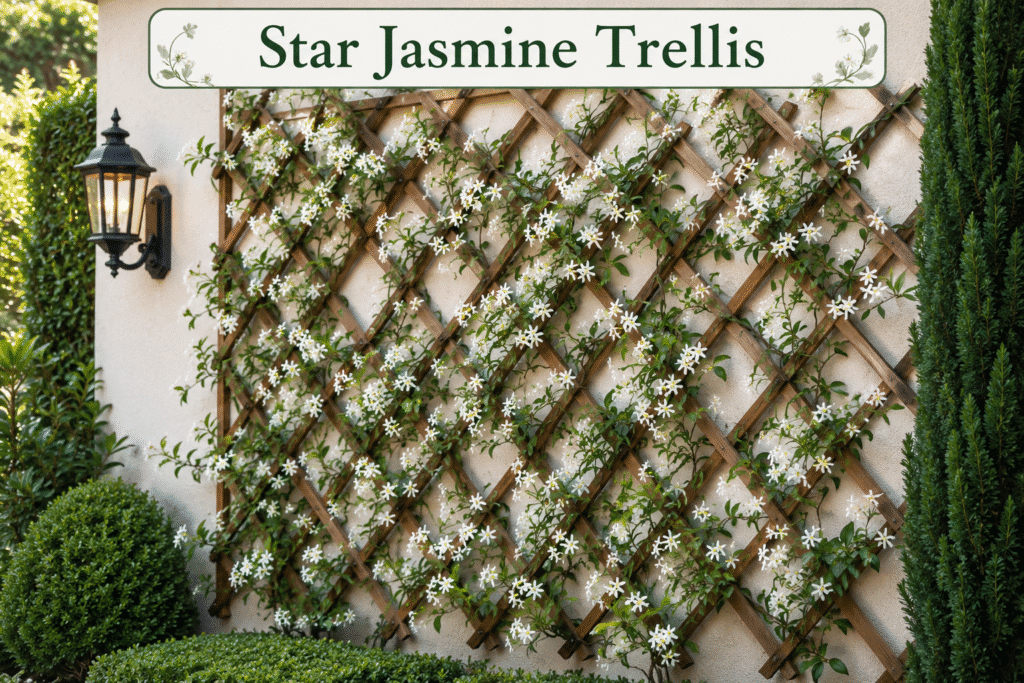
Everything the purely aesthetic guides leave out plant behaviour, DIY builds, structure selection, training methods, and 14 real trellis ideas for every garden situation.
Star jasmine (Trachelospermum jasminoides) is one of the most reliably beautiful climbing plants you can grow. Evergreen, fragrant, vigorous, and surprisingly adaptable, it has the rare quality of making almost any trellis look extraordinary – glossy dark foliage year-round, an explosion of small white pinwheel flowers in late spring and early summer, and a growth habit that responds beautifully to training and shaping.
But here’s what most star jasmine trellis guides won’t tell you: the trellis you choose fundamentally determines how the plant grows, how easy it is to maintain, and how long it takes to look the way you want it to look. Choose the wrong structure and you’ll spend years coaxing an unhappy plant; choose the right one and star jasmine will reward you with a display that looks effortlessly designed.
This guide takes a different approach from the usual inspiration gallery. It starts with the plant itself, how it climbs, what it needs, what it does in different conditions, and then works through 14 of the best trellis ideas for star jasmine, organised by garden situation, style, and skill level. Whether you are planning a store-bought structure, designing your own DIY trellis ideas for star jasmine, or looking for the best star jasmine trellis garden ideas for a specific space, this is the guide that will get you there.
First: Understanding How Star Jasmine Actually Climbs
Contents
- 1 First: Understanding How Star Jasmine Actually Climbs
- 2 Choosing the Right Trellis: A Decision Framework
- 3 Part One: DIY Trellis Ideas for Star Jasmine
- 4 Part Two: Trellis Ideas for Star Jasmine by Garden Situation
- 5 Part Three: Star Jasmine Trellis Ideas by Garden Style
- 6 How to Train Star Jasmine on Any Trellis: A Step-by-Step Guide
- 7 Frequently Asked Questions
- 8 Final Thoughts
Most people treat star jasmine like a self-clinging climber, and then wonder why it keeps falling off the trellis. Understanding how this plant grows is the single most important piece of knowledge for choosing and using any trellis effectively.
Star jasmine is a twining climber, not a self-clinger. Unlike ivy or Virginia creeper (which attach directly to surfaces using adhesive pads or aerial roots), star jasmine climbs by winding its stems around supports. This means it needs something to wrap around, ideally supports no thicker than about 2–3cm in diameter, which the stems can grip and encircle as they grow.
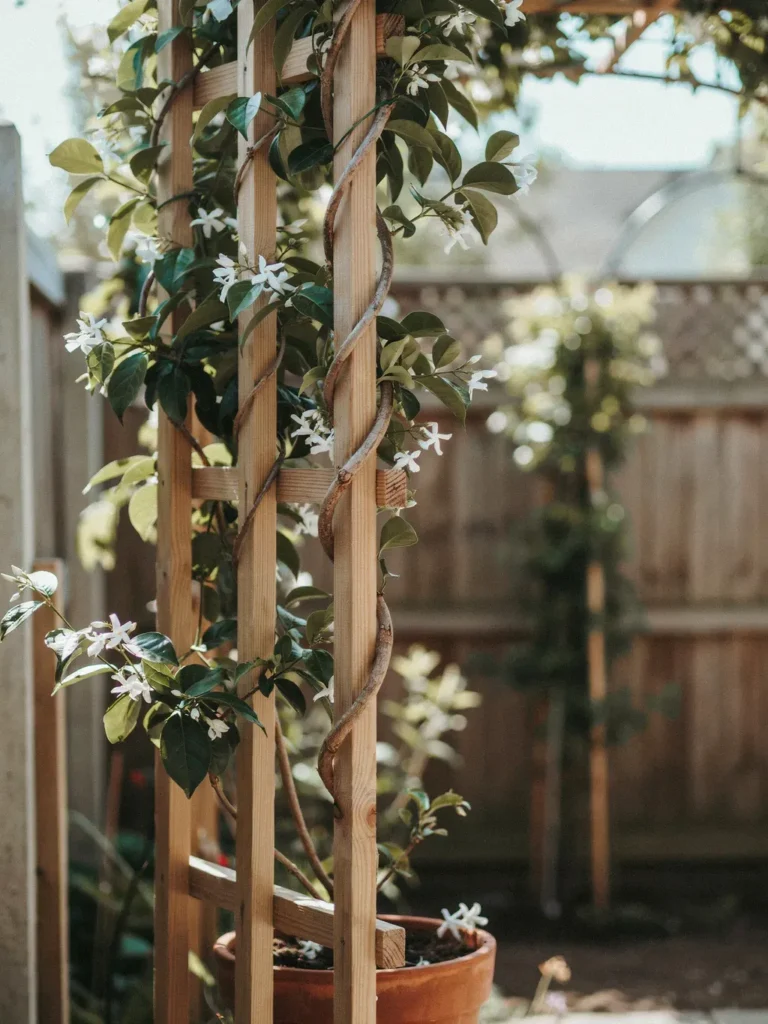
What this means for trellis selection:
- Wide, flat lattice panels work, but stems need to be tied in regularly because the gaps are too large for natural twining
- Wire or rope systems are ideal, stems naturally wrap around individual strands
- Thick timber posts need to have wire or string run along them for stems to grip
- Bamboo, thin steel rod, and tensioned wire are all excellent support materials
Growth rate: In a good position (full sun to partial shade, well-drained soil, sheltered from hard frost), star jasmine can put on 60–90cm of growth per year. This means most trellises will reach their designed coverage within 3–5 years.
Size at maturity: Star jasmine typically reaches 4–8 metres in length if left unrestricted. For most trellis applications, you will train and prune it to the dimensions of the structure — which it accepts willingly.
Fragrance note: The scent of star jasmine is strongest in the evening and in warm, still conditions. Position fragrance-maximising trellis ideas near seating areas, doorways, and windows that are open in summer for the best effect.
Choosing the Right Trellis: A Decision Framework
Before selecting a specific structure, answer these four questions they will narrow down the right type of trellis for star jasmine in your specific situation.
1. What are you covering? A blank wall, a fence panel, a garden boundary, an entrance, or open space? Wall-mounted options differ fundamentally from freestanding structures.
2. How fast do you need coverage? Star jasmine is not the fastest climber. If you need coverage in year one, a wider trellis with more stems trained across it will work harder than a single narrow panel.
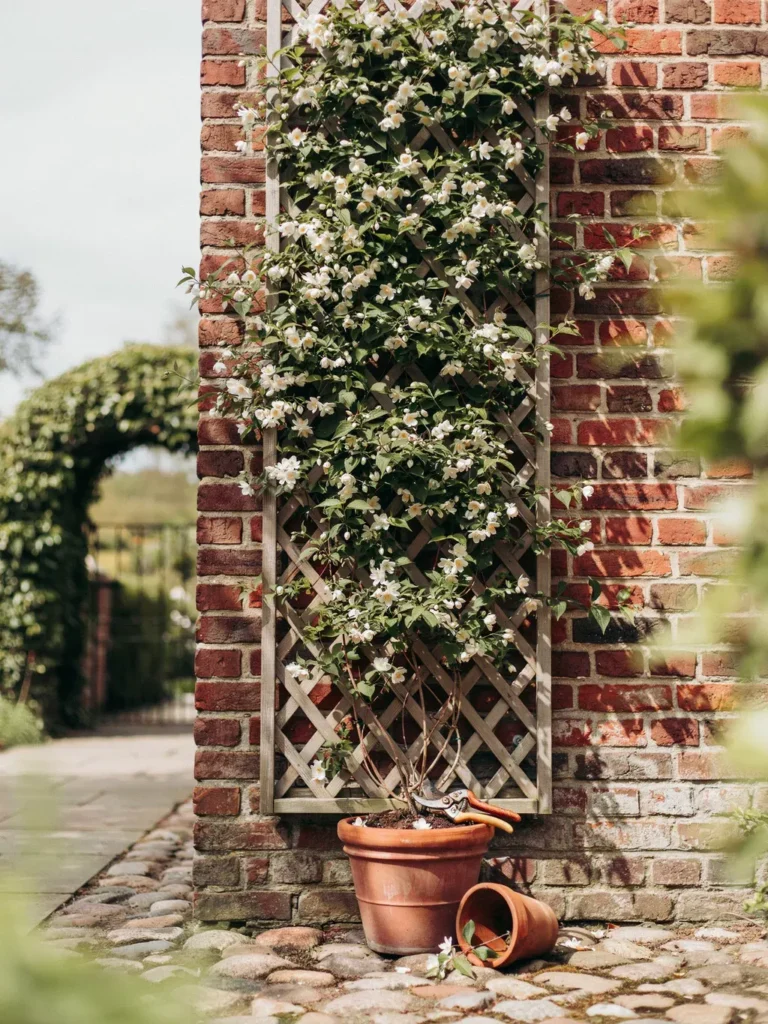
3. What is your garden’s aesthetic? Contemporary, rustic, cottage, Mediterranean, or minimal? The structure must speak the same visual language as the rest of the space or the result will look like an afterthought.
4. Are you buying or building? Some of the most effective trellis ideas for star jasmine are also the simplest to make yourself — tensioned wire systems in particular cost very little to install and produce exceptional results.
Part One: DIY Trellis Ideas for Star Jasmine
DIY trellis options are consistently the most popular search category for star jasmine growers and rightly so. The best structures for this plant are often the simplest to build, and a DIY approach lets you scale and proportion the trellis perfectly to your space.
1. The Tensioned Wire DIY Trellis, The Best Overall System
Difficulty: Easy | Cost: Low | Best for: Walls, fences, any aesthetic
If you build just one trellis for star jasmine in your lifetime, make it a tensioned wire system. It is simultaneously the most versatile, the most effective, and the easiest to maintain of all DIY trellis ideas for star jasmine — and it produces results that look genuinely high-end regardless of budget.
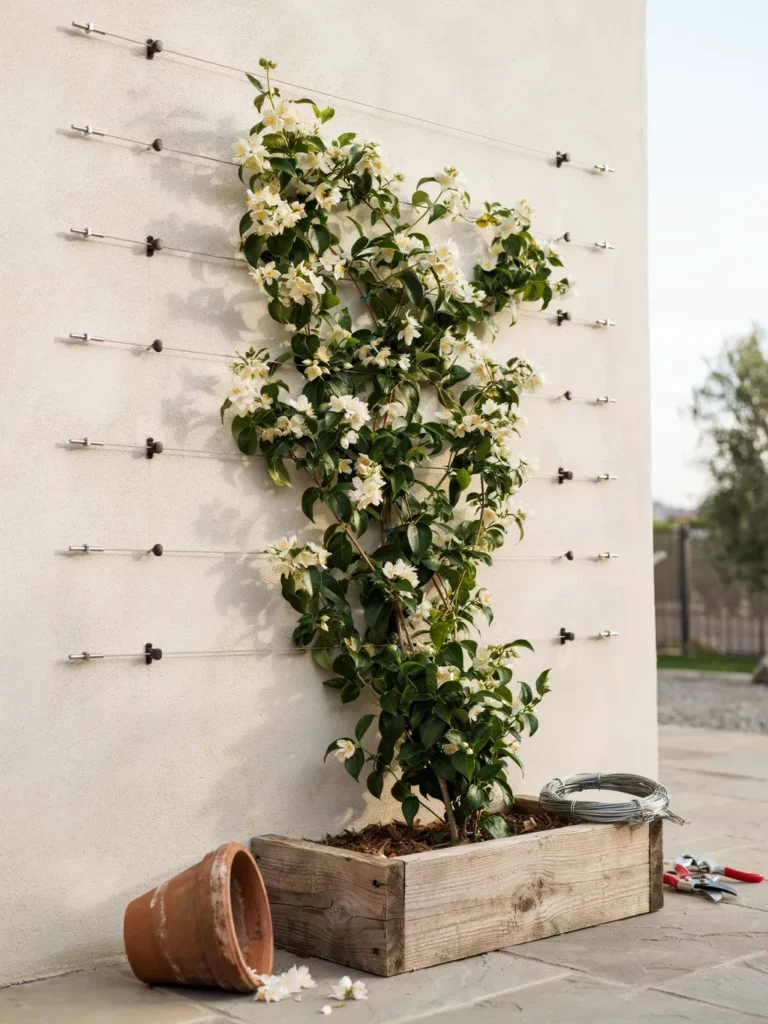
How to build it:
You need: stainless steel wire (1.5–2mm gauge), vine eye screws (the right length for your wall material), tensioning buckles or barrel strainers, and a drill.
- Mark horizontal lines at 30cm intervals up your wall or fence — from about 40cm above the ground to your desired maximum height
- Drill and fix vine eye screws at each end of every horizontal line, maintaining consistent spacing (60–90cm apart)
- Thread stainless steel wire through each eye, pull taut using barrel strainers, and secure
- Plant star jasmine at the base and begin training stems along the wires as they grow, tying in loosely with soft garden twine
The result is an almost invisible support system that becomes completely hidden once star jasmine reaches full coverage, leaving only a seamless living wall of glossy foliage and white blooms that looks like it grew there naturally.
Pro tip for DIY wire trellises: Use stainless steel wire rather than galvanised wire. It is slightly more expensive but will not rust or stain rendered walls, and it maintains its tension over many years without deterioration.
2. Bamboo Grid DIY Trellis
Difficulty: Easy | Cost: Very low | Best for: Informal, rustic, cottage garden aesthetics
One of the most accessible of all DIY trellis ideas for star jasmine, a hand-built bamboo grid requires nothing more than bamboo poles of two different sizes, natural jute twine, and about an afternoon of your time.
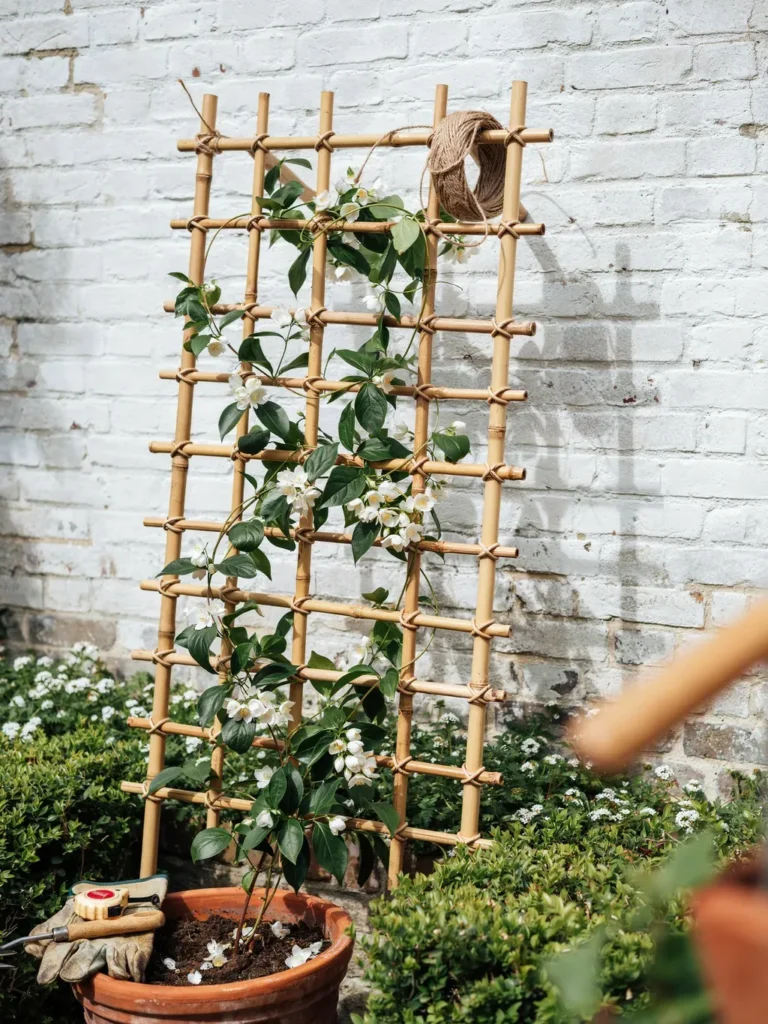
Use thicker bamboo poles (2–3cm diameter) for the vertical uprights and thinner poles (1–1.5cm) for the horizontal cross-pieces. Lash them together at each intersection using a double-wrap and square knot in jute twine, the knots become part of the aesthetic, giving the panel a handcrafted quality that painted lattice cannot replicate.
Construction tips:
- Build the frame slightly larger than you think you need, star jasmine will fill it more quickly than expected and a generous panel always looks more intentional than a timid one
- Seal bamboo poles with outdoor varnish or linseed oil before building to significantly extend their lifespan
- Lean the finished panel against a fence or wall and secure at the top with wire hooks rather than fixing permanently, this makes it easy to remove for fence maintenance without disturbing the plant
Planting arrangement for bamboo grids: Plant three young star jasmine plants spaced 40–50cm apart at the base of the panel rather than a single plant at the centre. Three plants fill the structure far more quickly and create a denser, more even coverage across the whole panel.
3. Reclaimed Timber Frame DIY Trellis
Difficulty: Medium | Cost: Low–medium | Best for: Cottage, rustic, vintage garden aesthetics
Old wooden door frames, window frames, or lengths of reclaimed timber are the raw materials for some of the most beautiful DIY trellis ideas for star jasmine you can make. The patina, character, and imperfection of reclaimed wood gives the finished trellis an authenticity that new materials cannot replicate. It looks like it belongs in the garden rather than like it arrived last Tuesday.
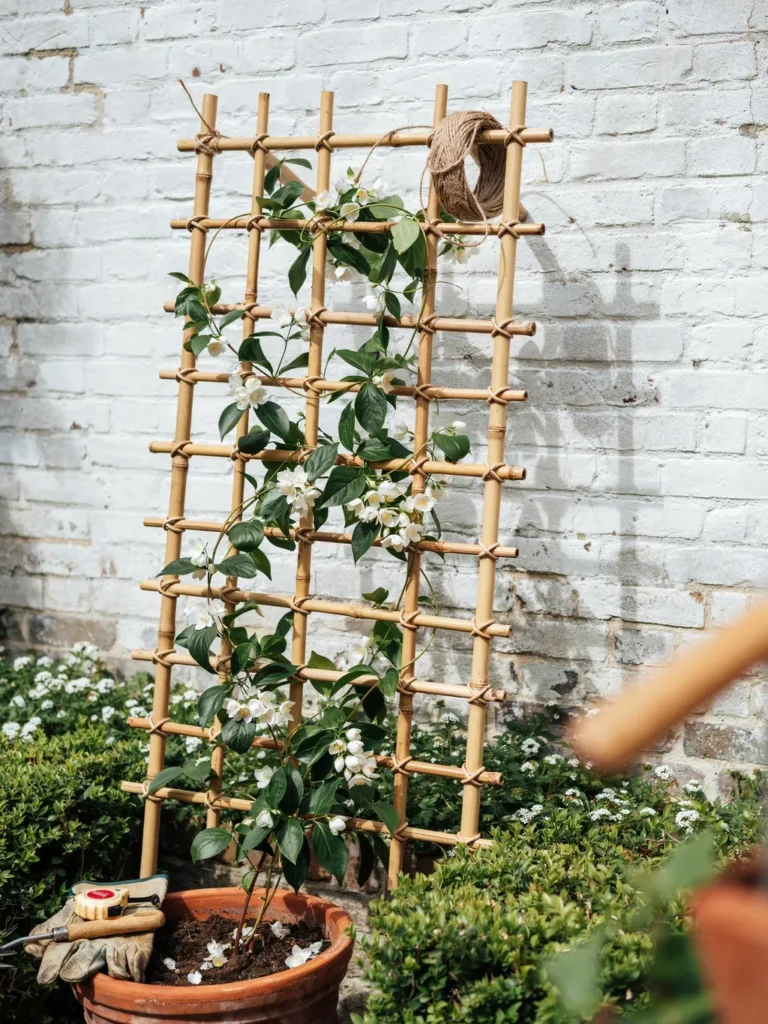
Simple reclaimed frame build:
- Source a pair of matching timber lengths for uprights (fence posts, old scaffold boards, or gate posts all work well)
- Fix horizontal cross-rails at 30–40cm intervals using galvanised screws or coach bolts
- Stretch wire or string along each horizontal rail to give star jasmine something to twine around
- Set uprights into the ground using metal post spikes or concrete, or mount to an existing wall or fence
Finish options: Leave untreated for a bleached, weathered look that develops character over time; treat with outdoor linseed oil to deepen the natural grain; or paint in a heritage colour. Faded sage green, chalky off-white, and washed terracotta all work beautifully against star jasmine’s dark foliage.
4. Copper Pipe DIY Feature Trellis
Difficulty: Medium | Cost: Medium | Best for: Contemporary, artisan, statement garden aesthetics
Copper pipe is one of the most beautiful materials you can use for a handmade garden trellis. It is lightweight, easy to work with, and develops a rich living patina as it weathers, shifting from warm gold through amber and eventually to verdigris, which contrasts magnificently with star jasmine’s glossy dark leaves.
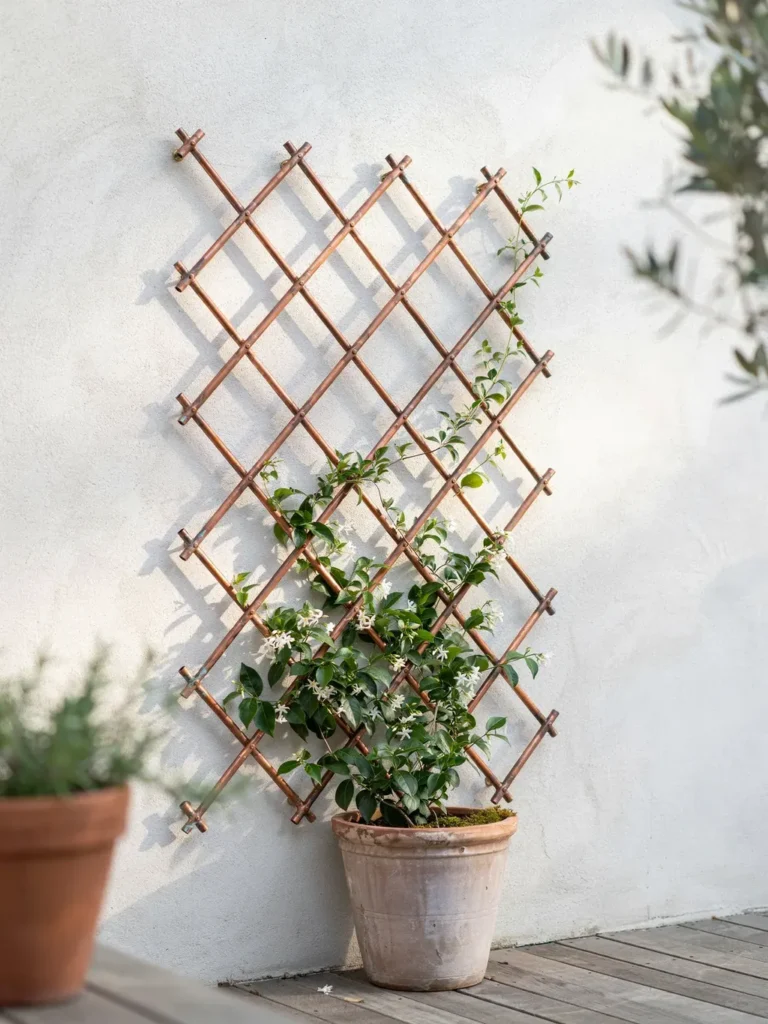
Simple copper grid trellis:
- Use 15mm or 22mm copper pipe from a plumbing supplier
- Cut sections to length using a pipe cutter (no specialist tools required)
- Join sections using push-fit copper fittings (elbows, T-junctions, and straight couplers) to create a grid or geometric pattern
- Mount to a wall using copper pipe brackets at regular intervals
A 1.2m × 1.8m copper grid trellis makes an extraordinary garden feature even before star jasmine has grown a single centimetre up it — the structure itself is worth looking at. Add the plant and the result is a genuinely gallery-worthy garden detail.
Part Two: Trellis Ideas for Star Jasmine by Garden Situation
5. The Boundary Wall Trellis, Covering a Long Fence or Wall
Modular timber lattice panels or a horizontal wire system. Covering a long boundary wall or fence with star jasmine requires a different approach than covering a smaller feature wall. The priority here is even coverage across the full length, no sparse gaps, no concentrated heavy growth in one area.
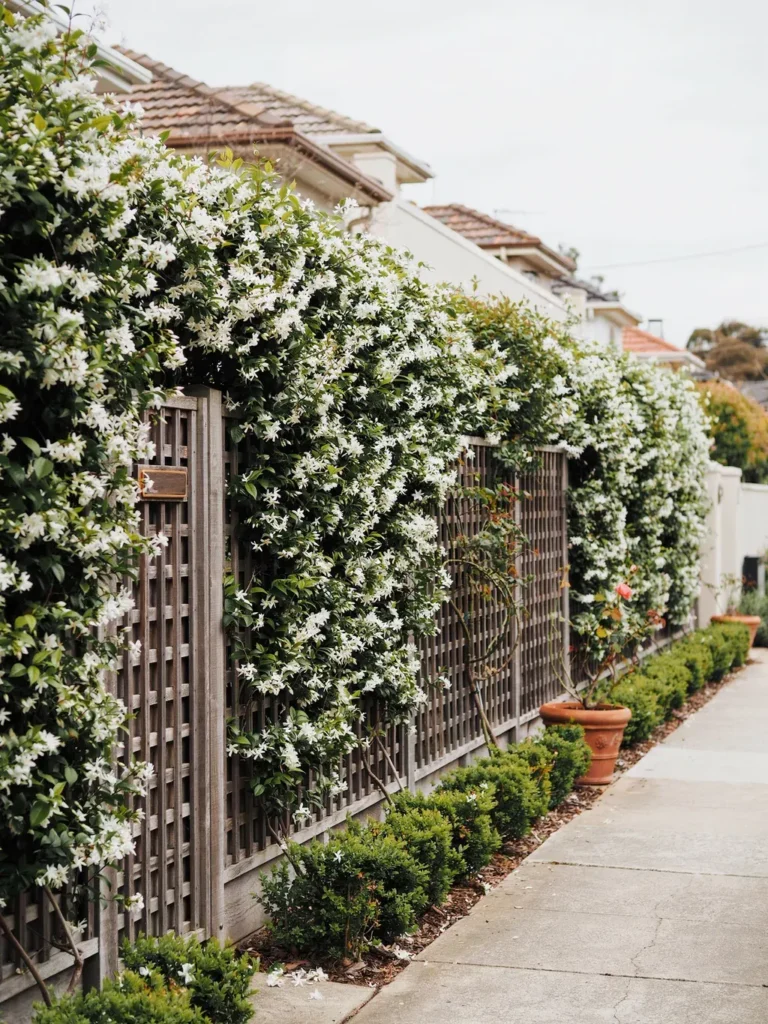
For long boundaries, the horizontal wire system wins every time. Run multiple horizontal wires at 30cm intervals along the entire length of the fence, and plant star jasmine at regular intervals (one plant every 1.5–2m) along the base. Train each plant to spread laterally along the wires rather than growing vertically, which distributes coverage evenly and fills the fence significantly faster than single central planting.
For star jasmine trellis garden ideas on boundary walls, consider painting the fence a deep colour before installing the wire system, charcoal, forest green, or deep navy, and then allowing the jasmine to grow against it. The dark background makes the white flowers and glossy foliage sing.
6. The Entrance Arch Trellis
Best structure: Steel or timber arch, 2.4m minimum height
A star jasmine-draped arch at a garden entrance is one of the most atmospherically beautiful star jasmine trellis garden ideas available. The combination of structure, scent, and flowering creates an arrival experience that is genuinely sensory. Guests walk under a canopy of white blooms and fragrance before they even reach the door.
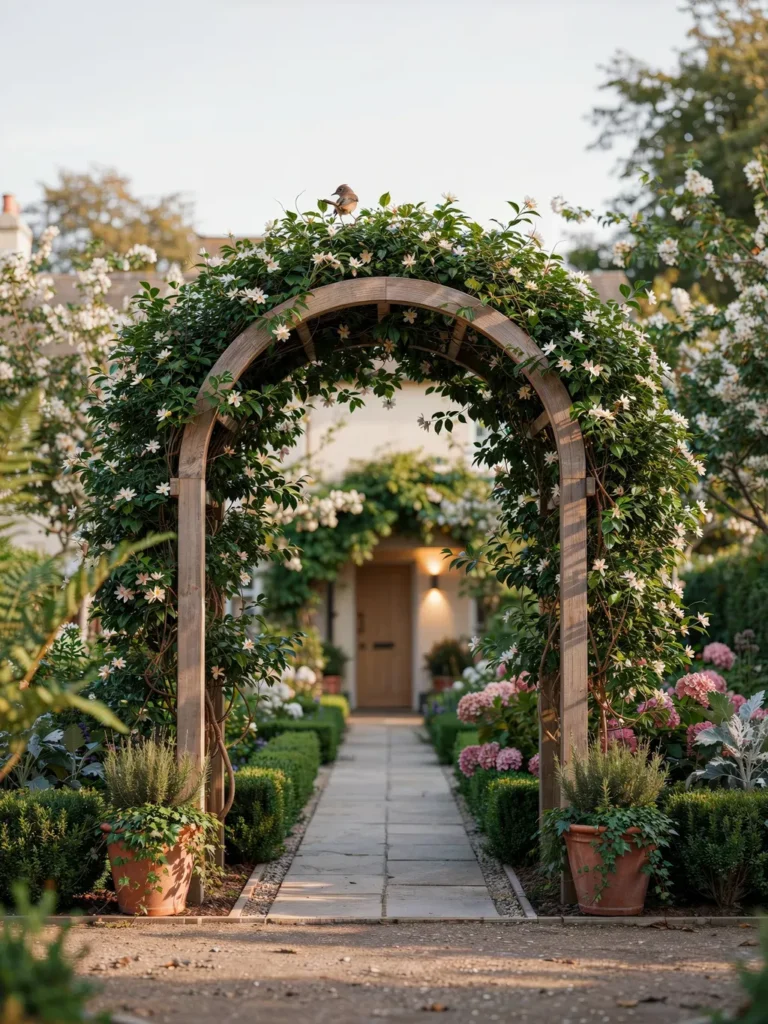
Getting an arch right:
- Height matters enormously — an arch must be tall enough to feel generous (minimum 2.2m clearance) or it reads as cramped and token
- Width should match the path — an arch narrower than the path it spans looks awkward; match the internal width to the path width with 20–30cm clearance on each side
- Material choice — powder-coated steel in matte black is the most durable and contemporary option; timber arches in hardwood or pressure-treated softwood suit cottage and rustic gardens
Train one star jasmine plant up each upright of the arch, tying stems to the structure every 20–30cm as they grow. Allow stems to meet and cross over the crown — the interwoven growth at the apex creates the densest, most romantic canopy effect.
Scent tip: Star jasmine flowers most prolifically in full sun. A south or west-facing arch will produce significantly more blooms — and therefore more fragrance — than a north-facing one.
7. The Courtyard Wall Feature Trellis
Best structure: Oversized powder-coated steel grid panel, mounted proud of the wall
Courtyards reward boldness — a small, timid trellis in a courtyard space looks like a forgotten detail. For star jasmine trellis garden ideas in enclosed courtyard spaces, scale up significantly and use a single oversized trellis panel as the architectural centrepiece of the space.
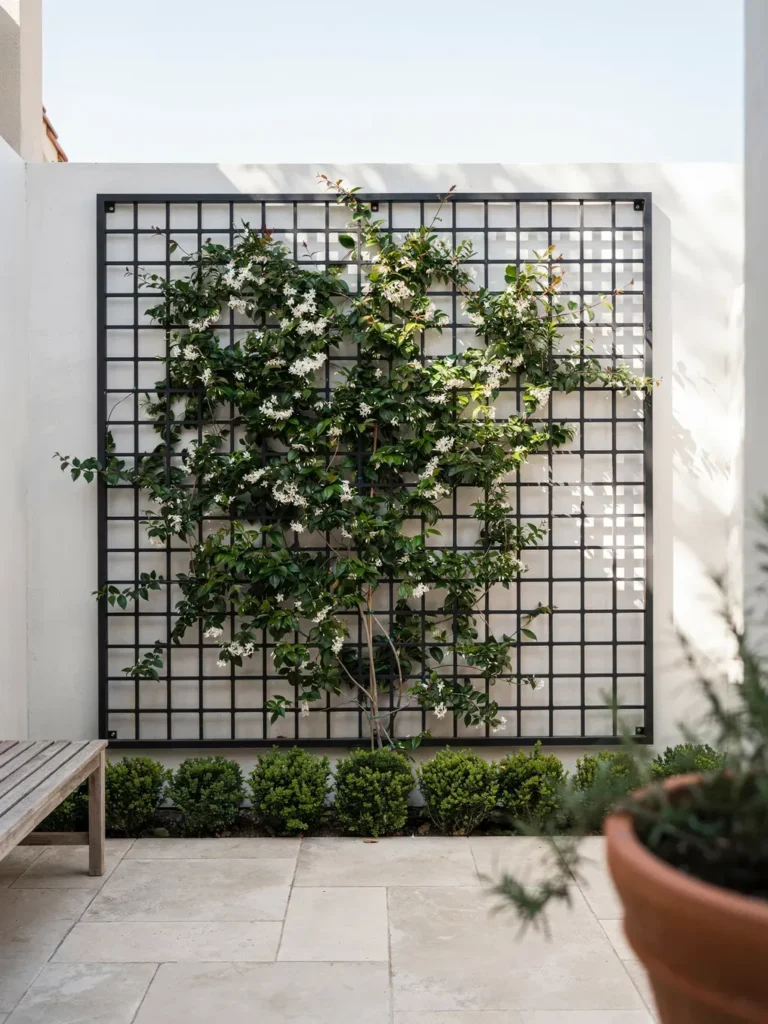
A 2m × 2.5m steel grid panel, mounted 5–8cm proud of the wall on standoff fixings, creates a three-dimensional quality — star jasmine grows both flat against the grid and through the gaps, creating a layered, sculptural effect with genuine depth. At night, with a wall-mounted light source positioned below or to the side, the shadows cast through the trellis onto the wall behind create a visual effect of extraordinary beauty.
Wall colour for maximum impact: Deep charcoal (#2b2b2b), moody terracotta, or soft sage behind a dark steel trellis creates a tonal depth that makes the white flowers and green foliage pop with vivid contrast. Avoid pale or white walls if you want drama — they reduce rather than enhance the visual impact.
8. The Privacy Screen Freestanding Trellis
Best structure: Freestanding timber or steel trellis panel on post footings
When a garden boundary is not where you need privacy — perhaps you need a screen between a seating area and a neighbouring line of sight — a freestanding trellis panel planted with star jasmine is the most elegant solution available.
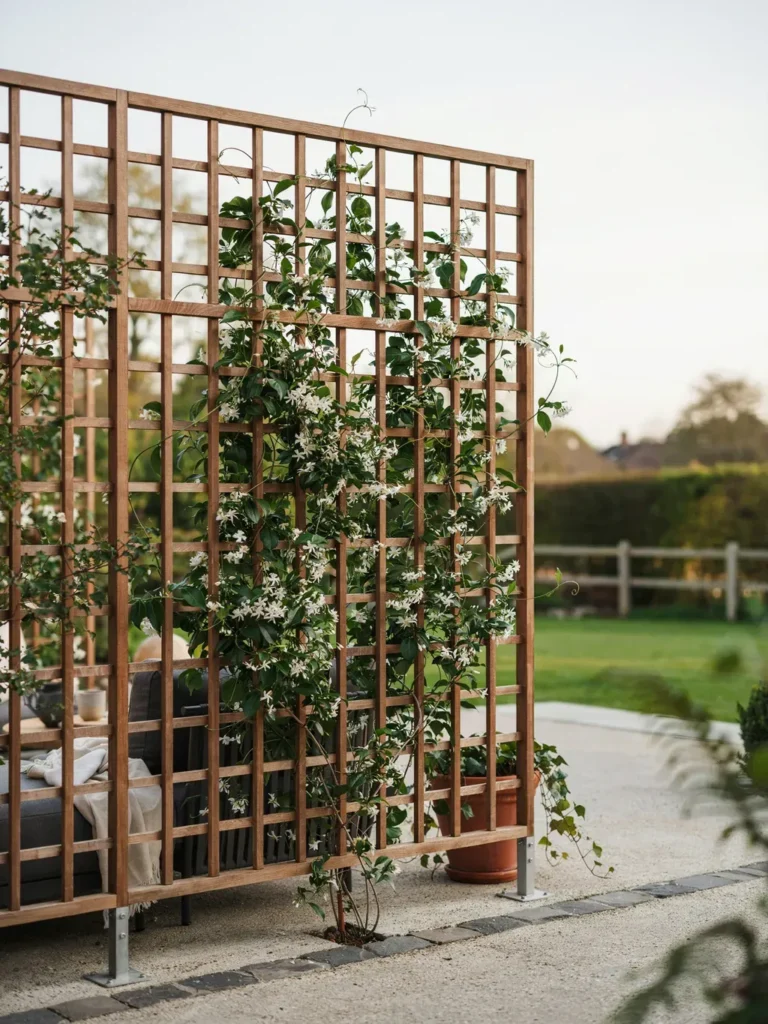
Building a freestanding trellis for star jasmine:
- Use 75mm × 75mm timber or 40mm × 40mm box steel for uprights, set into the ground at least 60cm using post spikes or poured concrete
- Attach trellis panels, wire grids, or custom welded screens to the uprights
- Plant star jasmine at the base of each post and train outward across the panel surface
A pair of freestanding trellis panels arranged at a 120-degree angle creates a semi-enclosed garden room that feels deliberately designed — a destination rather than just a dividing screen. Star jasmine on both panels creates a wall of living fragrance that makes the space feel complete.
9. The Pergola Overhead Trellis
Best structure: Timber or steel pergola with latticed or wire roof panels
Training star jasmine over a pergola roof is the most immersive trellis experience you can create — one that envelops you in fragrance and dappled green light rather than simply framing a wall. The combination of overhead canopy, trailing stems, and evening scent creates a garden space that feels genuinely transformative.
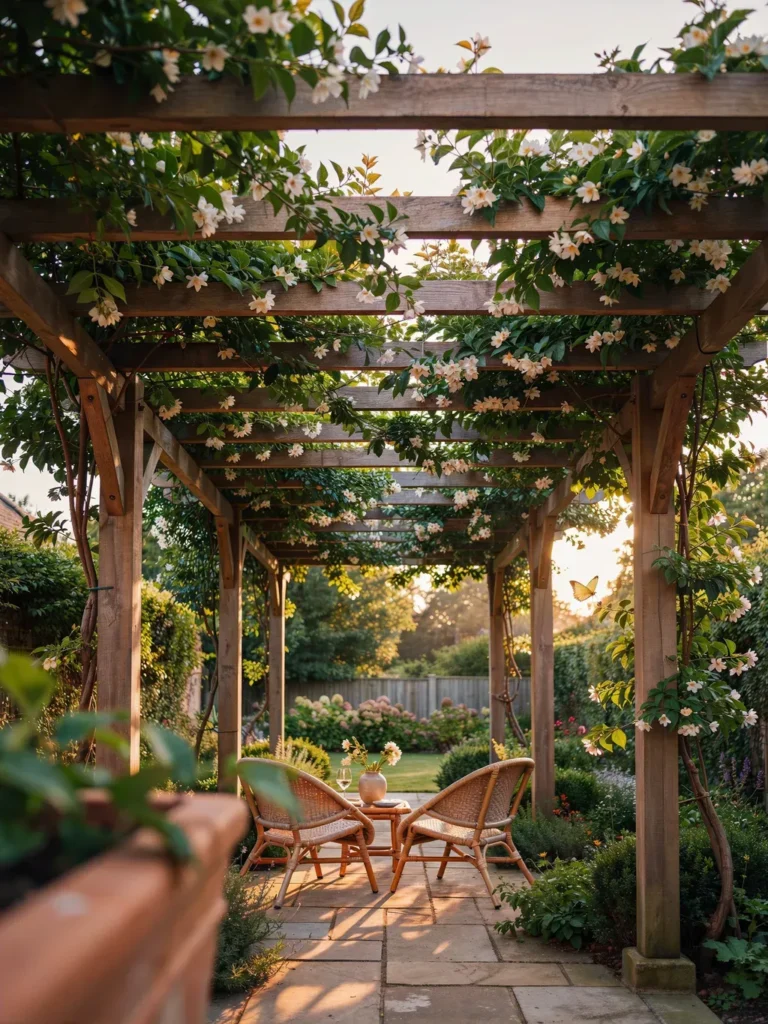
Practical notes for pergola star jasmine:
- Allow 3–5 years for star jasmine to fully cover a pergola roof — it is vigorous but not the fastest overhead climber
- Add wire or mesh across the pergola roof beams to give stems something to grip as they grow horizontally overhead (without supports, stems will drape loosely rather than covering evenly)
- Prune after flowering (late summer) to keep growth manageable and prevent the overhead canopy from becoming too heavy
- In colder climates, check that star jasmine is hardy enough for your zone — it is reliably frost-tolerant to around -10°C but may suffer in harsher conditions
10. The Narrow Side Passage Trellis
Best structure: Horizontal wire system or slim modular panels
Side passages are one of the most underused spaces in any garden, and star jasmine is one of the best plants for transforming them. A wire trellis along both side walls of a narrow passage, planted with star jasmine, creates a scented tunnel effect that turns a utilitarian corridor into a memorable sensory journey.
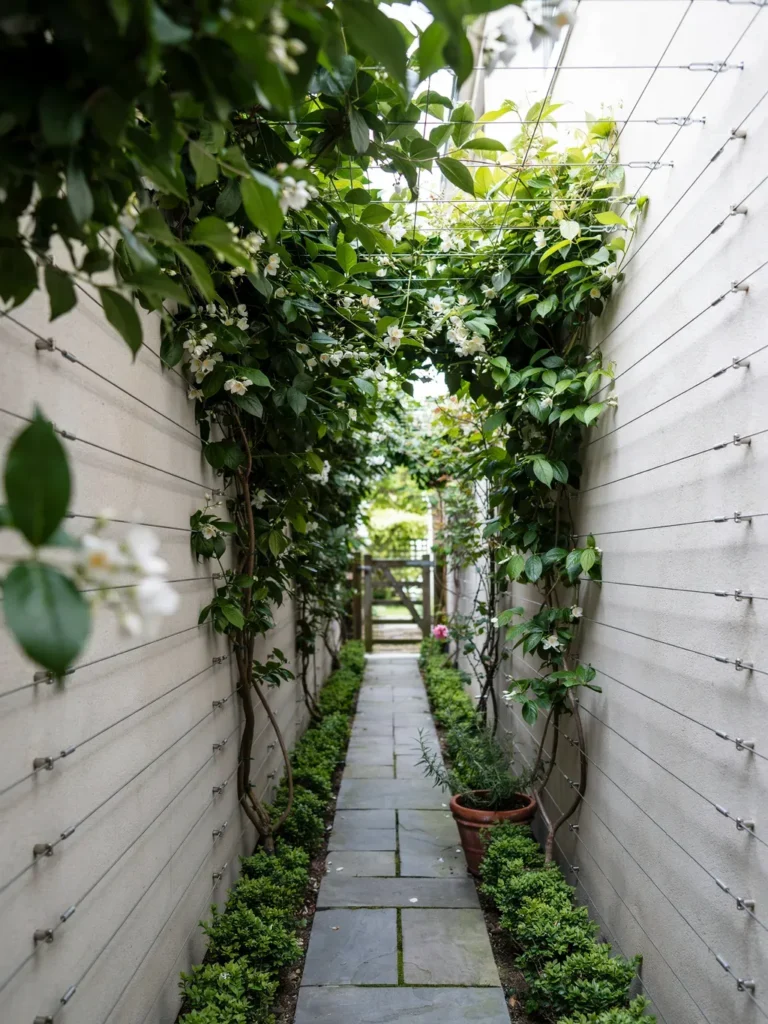
Key considerations for passage trellises:
- Keep the trellis flush to the wall to maintain maximum passageway width
- Use a horizontal wire system rather than projecting panels for slim passages
- Plant one star jasmine every 1.5m along each wall for rapid, even coverage
- Ensure the plant receives enough light — very dark passages will produce foliage-only growth with little flowering
Part Three: Star Jasmine Trellis Ideas by Garden Style
11. Modern Minimalist Trellis for Star Jasmine
Structure: Laser-cut corten steel panel, tensioned wire grid, or large-format powder-coated aluminium mesh
The modern minimalist approach to trellis ideas for star jasmine uses the plant itself as the star — which means the structure should be as refined and unobtrusive as possible.
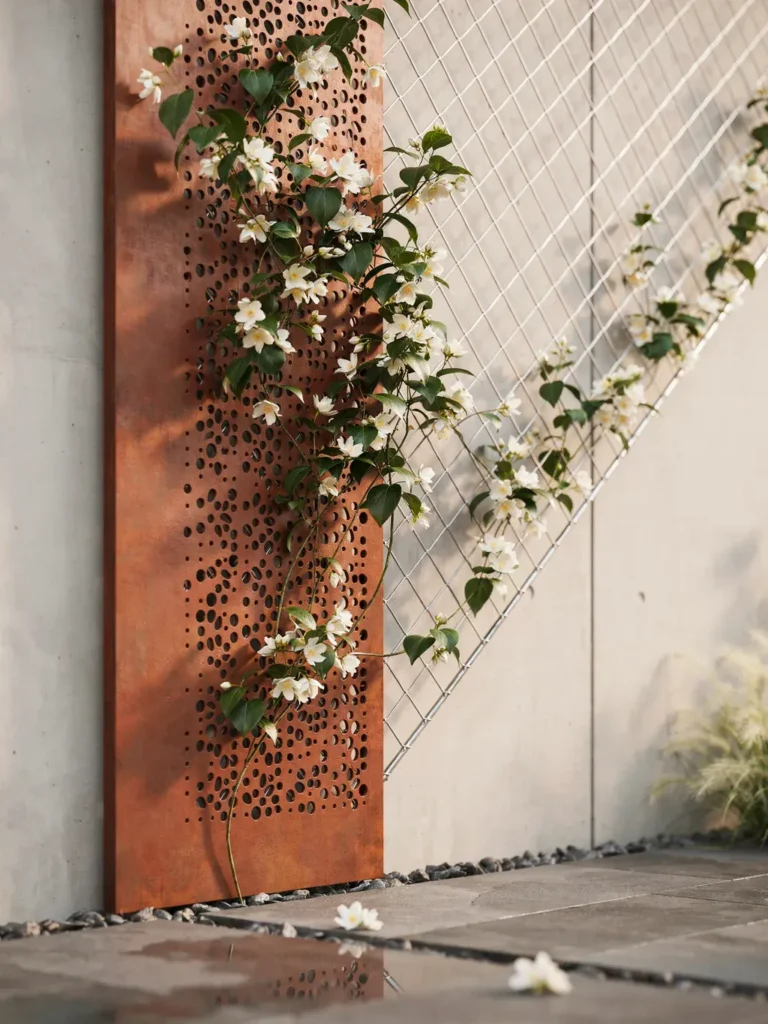
Tensioned stainless wire grids on minimal wall fixings almost disappear once star jasmine reaches full coverage, leaving only the living green surface with its white flower punctuation in season. For a slightly more visible structure, a single large corten steel panel with a geometric cut-out pattern brings warm, rusted tones that age beautifully against the evergreen foliage.
Design principles for minimalist star jasmine trellises:
- Single material, consistently finished — no mixing of timber, metal, and rope
- Clean horizontal or grid geometry — no fans, diamonds, or decorative shapes
- Dark backgrounds (painted wall or dark fence) to maximise visual contrast
- One plant variety only — no mixing star jasmine with other climbers
12. Cottage Garden Trellis for Star Jasmine
The cottage approach to star jasmine trellis garden ideas celebrates abundance, informality, and the beauty of imperfection. Star jasmine pairs beautifully with the cottage aesthetic because its refined white blooms and glossy foliage never look overgrown or weedy — even when sprawling generously across an old painted lattice.
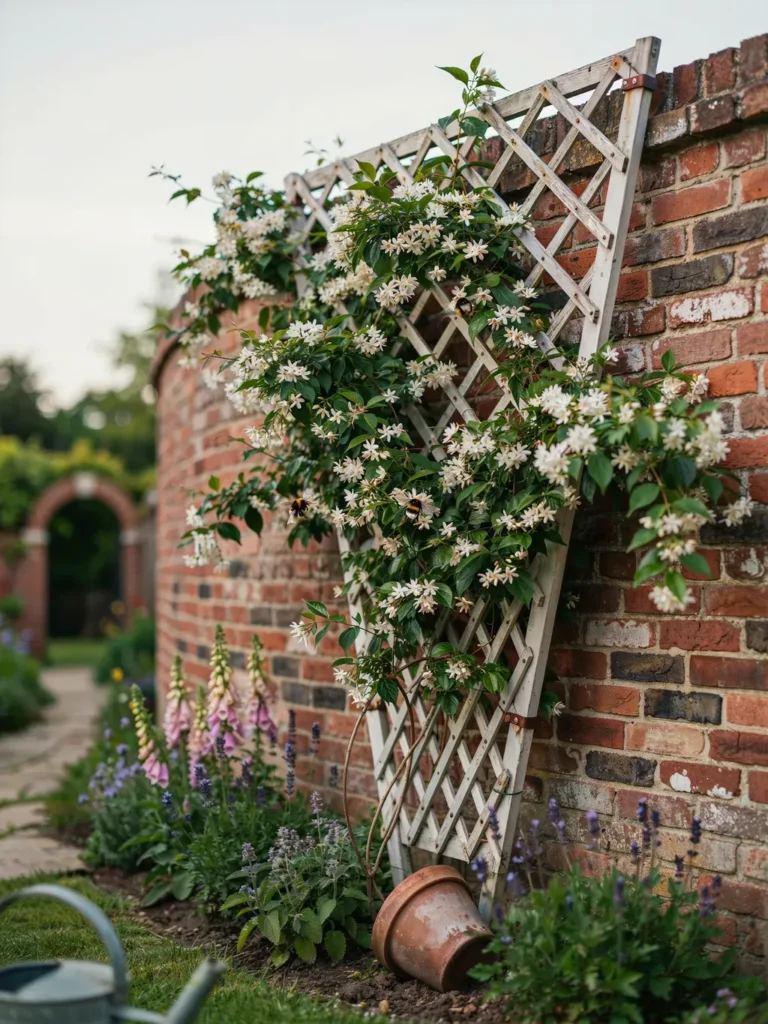
For the fullest cottage effect, mix star jasmine with one or two companion climbers on the same trellis structure — a soft pink or blush climbing rose, or a blue clematis — for a layered, abundant look that appears to have taken decades to accumulate.
Colour palette for cottage trellis structures: Faded white, chalky sage green, duck egg blue, or washed apricot all suit the cottage aesthetic and complement star jasmine’s colour scheme perfectly.
13. Mediterranean Courtyard Trellis
Structure: Terracotta-toned rendered wall with wire system, stone or concrete columns wrapped with wire
Mediterranean star jasmine trellis garden ideas lean into the plant’s natural habitat, warm, sunlit walls, terracotta and stone surfaces, and the scent of jasmine hanging in warm evening air. This is an aesthetic where the wall is as important as the structure: a honey-toned rendered wall or warm stone surface provides everything the trellis needs as a backdrop.
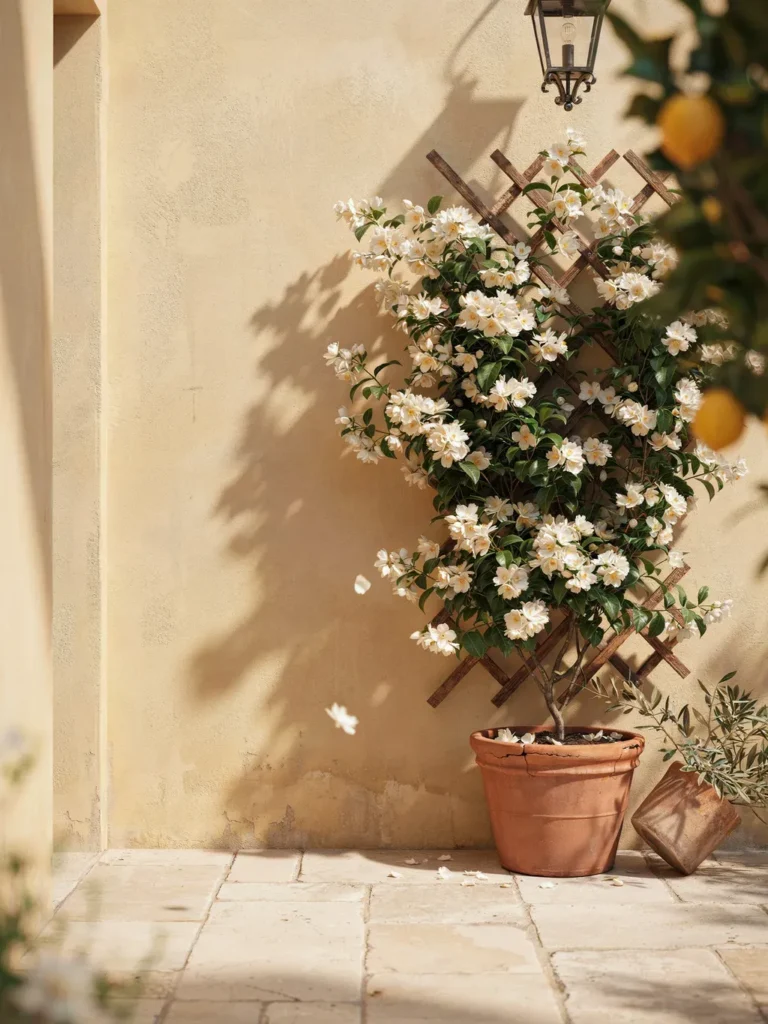
Train star jasmine along horizontal wires fixed to a warm-coloured rendered wall, and allow a few stems to cascade freely without training for a naturalistic, unhurried feel. Combine with terracotta pots, olive trees, and gravel surfaces for a complete Mediterranean entrance or seating area scheme.
14. Vertical Garden Feature Trellis
For anyone working with limited horizontal space, a narrow city garden, a rooftop terrace, a balcony, or a courtyard where every square metre counts, a vertical living wall system is the most space-efficient and visually powerful of all trellis ideas for star jasmine.
A floor-to-ceiling grid panel fixed to a single wall, planted with three to five star jasmine plants at the base and trained vertically, can cover a 3m × 3m surface within four to five growing seasons. At full coverage, it reads as a seamless vertical garden, uniform, dense, richly green with seasonal white flowers appearing across the entire surface simultaneously.
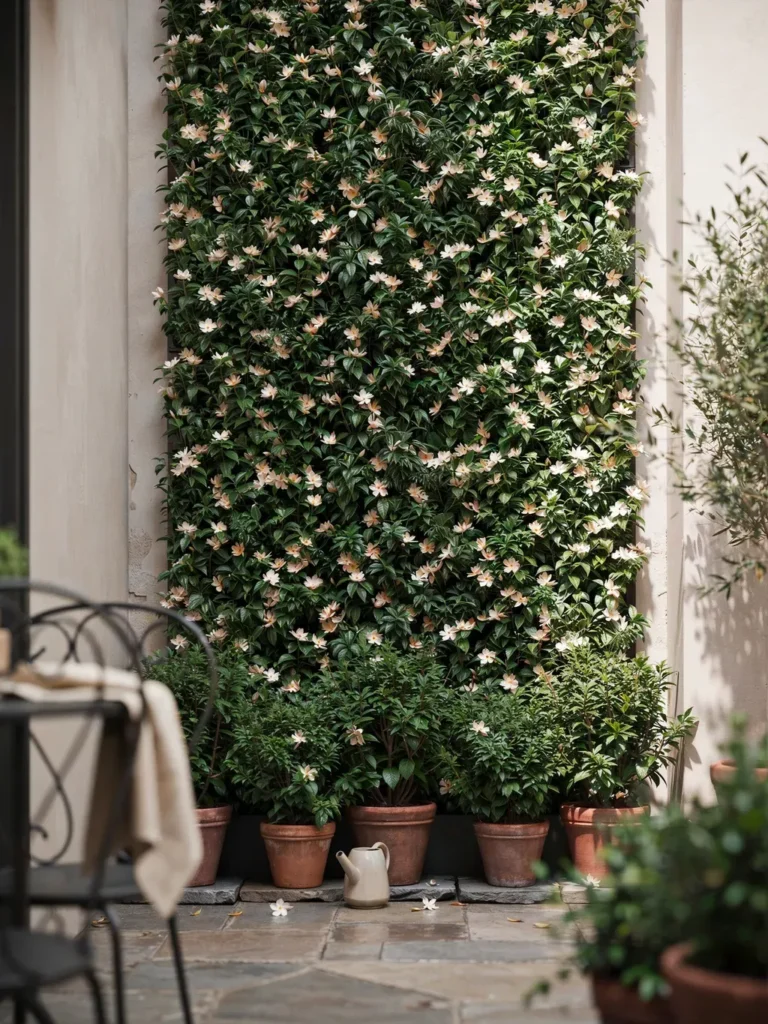
Irrigation tip: Tall vertical trellis plantings can be difficult to water adequately at ground level once the plant reaches full height. Installing a simple drip irrigation system at planting stage, run along the base of the trellis, ensures consistent moisture distribution without any maintenance burden once the plant is established.
How to Train Star Jasmine on Any Trellis: A Step-by-Step Guide
Whichever structure you choose, the training approach in the first two or three years determines how the plant looks for the next decade. These steps apply to any trellis system:
Year 1 — Establishing the framework: Plant in spring or early summer. Immediately attach all existing stems loosely to the trellis with soft garden twine or silicone plant ties. Spread stems outward and across the structure from the beginning — resist the urge to let them grow straight up, as lateral spread in year one creates a much fuller plant in subsequent years.
Year 2 — Filling the structure: As new growth emerges, continue training outward and upward, tying in every 20–30cm. Remove any crossing or congested stems at the base. Feed with a general-purpose slow-release fertiliser in early spring to fuel vigorous new growth.
Year 3 onward — Maintenance pruning: Prune after the main flowering period (late summer). Remove approximately one-third of the oldest, woodiest stems by cutting to a healthy lateral shoot near the base. This stimulates new growth from the base and prevents the plant from becoming a dense mass of woody stems with foliage and flowers only at the outer edges.
The golden rule of star jasmine training: Always train horizontal before vertical. A plant trained to spread across the full width of the trellis in year one will produce a far more even, beautiful coverage than a plant allowed to race straight up and then fill outward — which can take years longer to look complete.
Frequently Asked Questions
How long does it take for star jasmine to cover a trellis?
In a warm, sunny position with good soil, star jasmine will typically cover a 2m × 2m trellis within 3–4 growing seasons. In cooler or shadier conditions, allow 4–6 years. Three plants spaced evenly across the base of a trellis will achieve coverage significantly faster than a single central plant.
What is the best DIY trellis for star jasmine?
A tensioned stainless steel wire system is consistently the most effective DIY trellis for star jasmine — it is inexpensive to install, perfectly matched to the plant’s twining growth habit, and produces a result that looks refined and intentional regardless of budget.
Can star jasmine grow on a trellis in a pot or container?
Yes, star jasmine grows well in large containers and can be trained on a trellis or obelisk within the pot. Use a container at least 45cm wide and deep, plant in loam-based compost, and water consistently (containers dry out faster than in-ground planting). A container-grown star jasmine on a freestanding trellis obelisk makes an exceptional portable fragrance feature for a terrace or balcony.
Does star jasmine damage walls or fences?
When trained on a wire or trellis system attached to the surface, star jasmine does not cause structural damage. Unlike self-clinging climbers (ivy, Virginia creeper), it does not send adhesive roots into mortar or brickwork. The main consideration is that a dense coverage of foliage traps moisture behind it — ensure any wall surface behind the trellis is well-maintained before planting.
What wall colour looks best behind a star jasmine trellis?
Deep charcoal, forest green, warm terracotta, and moody navy all create dramatic backdrops that make the white flowers and glossy foliage pop. For a softer effect, warm white or stone grey works beautifully. Avoid cold, stark white if you want the entrance to feel atmospheric rather than clinical.
Final Thoughts
Star jasmine is one of those rare plants that makes every structure look better than it would without it — more alive, more layered, and more beautiful. But the structure you choose still matters enormously: it determines how the plant grows, how quickly it covers, how easy it is to maintain, and how the finished combination reads aesthetically.
Whether you are building your own DIY trellis ideas for star jasmine, sourcing a statement steel panel for a courtyard wall, or planning the most ambitious of star jasmine trellis garden ideas, a scented pergola canopy, or a floor-to-ceiling living wall — the right combination of structure, training, and patience will reward you with something genuinely extraordinary.
Save this guide and return to it as your star jasmine grows; the training notes in particular are worth revisiting each spring. And share it with any gardener you know who has a blank wall and a love of fragrance, because this is the plant-and-trellis pairing that makes gardens unforgettable.