
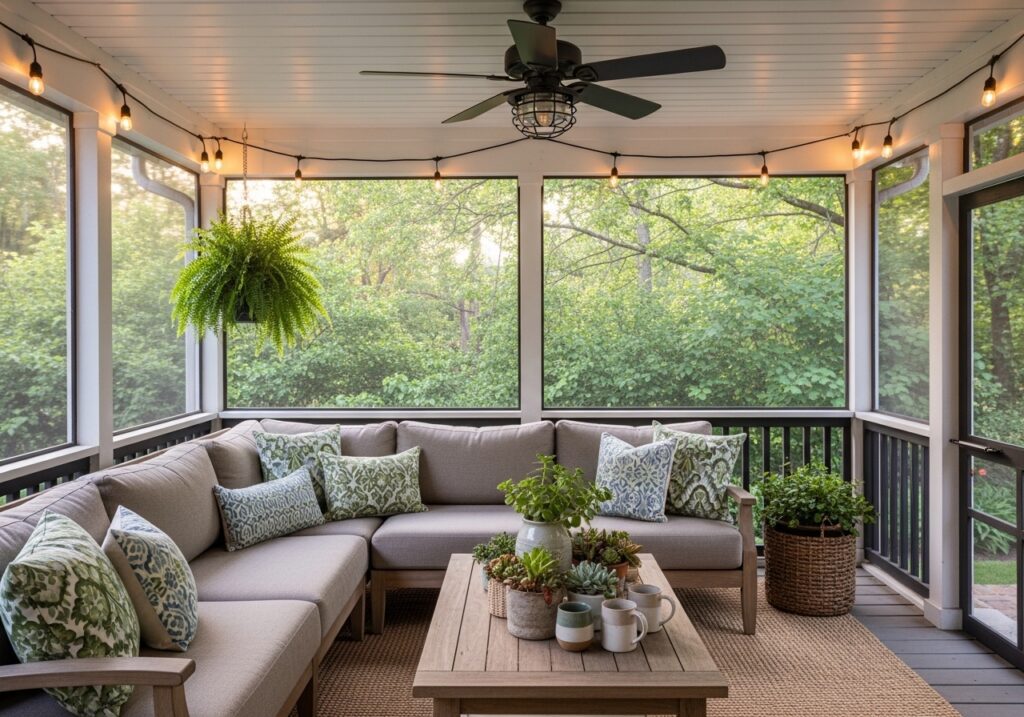
A screened porch is the perfect space to enjoy fresh spring air without worrying about bugs, pollen, or harsh sunlight. With just one weekend and a few thoughtful design upgrades, you can transform your porch into a cozy retreat that feels both stylish and relaxing. Whether your style is modern, farmhouse, or boho, these ideas will help you create a Pinterest-worthy outdoor space quickly. Best of all, most of these updates involve zero tools and zero permanent changes — just smart styling choices you can return or swap out as your taste evolves.
1. Cozy Neutral Seating Area for a Relaxing Spring Vibe
Contents
- 1 1. Cozy Neutral Seating Area for a Relaxing Spring Vibe
- 2 2. Add Greenery for a Fresh Spring Feel
- 3 3. Refresh with a Light and Airy Color Palette
- 4 4. Style a Small Coffee Table for a Finished Look
- 5 Your Weekend Porch Makeover Timeline
- 6 5. Add an Indoor-Outdoor Rug for Comfort
- 7 6. Warm Lighting for Evenings on the Porch
- 8 7. Add Soft Textures for a Cozy Feel
- 9 Budget Breakdown: What This Makeover Actually Costs
- 10 Adapting This Look Beyond Spring
- 11 Frequently Asked Questions
- 12 Final Thoughts
Seating is the anchor of any porch makeover, so it’s worth starting here before touching anything else. A neutral palette — think beige, cream, oatmeal, and light gray — works because it doesn’t compete with the greenery and natural light you’ll be adding later, and it also won’t clash with whatever exterior siding or brick color your home already has. Look for cushions labeled fade-resistant or solution-dyed, since porch furniture gets far more UV exposure than indoor pieces even when screened. If you’re working with existing furniture rather than buying new, a simple set of new cushion covers is often enough to shift the whole look from dated to current without replacing the frames underneath.
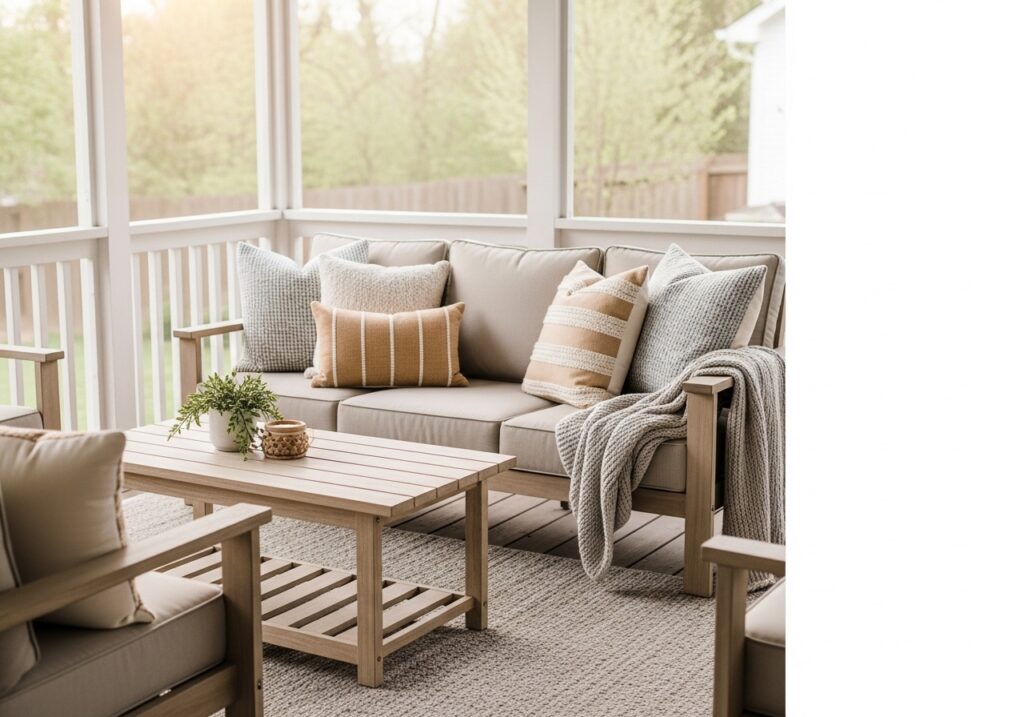
Layer throw pillows with subtle patterns and add a textured blanket for warmth during cool evenings. This setup creates a timeless look that works beautifully in both modern and farmhouse-style homes. For a quick refresh, mix two solid cushion colors with one patterned accent pillow per seat — enough variation to feel styled without looking cluttered.
2. Add Greenery for a Fresh Spring Feel
Plants do more work per dollar than almost any other porch update, instantly making a space feel intentional rather than half-finished. The key on a screened porch is choosing plants that tolerate filtered, indirect light, since the screen itself blocks a meaningful amount of direct sun compared to a fully open patio. Ferns, pothos, and snake plants are reliable choices because they’re forgiving of inconsistent watering and adapt well to the lower-light conditions common on covered porches. For instant impact without a big investment, mix plant heights and containers: a tall floor planter in one corner, a few mid-height potted plants along the railing or window ledge, and a hanging planter overhead to use vertical space that would otherwise sit empty.
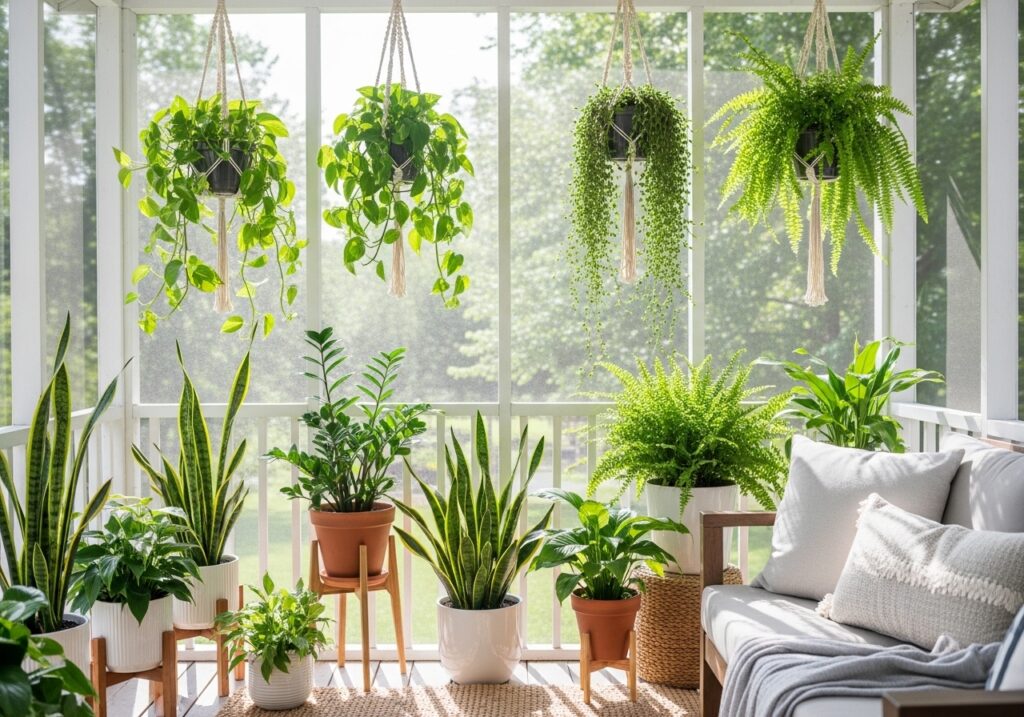
Choose easy-care plants like ferns, snake plants, or pothos that thrive in filtered light. Natural greenery pairs perfectly with neutral decor and adds a calming outdoor-inspired aesthetic. If you tend to forget watering schedules, look for self-watering planters — they’re a small upgrade that prevents the most common reason porch plants don’t survive their first season.
3. Refresh with a Light and Airy Color Palette
A color refresh is one of the fastest ways to shift a porch’s entire mood without buying new furniture. Spring palettes tend to lean into soft, desaturated tones — sage green, soft blue, blush, and warm beige — because they read as fresh and light-filled rather than heavy or dark. The easiest way to introduce these colors is through swappable textiles: pillow covers, a table runner, and a lightweight throw blanket, all of which can be changed again for the next season without any real cost. If your porch gets strong afternoon light, test fabric swatches in that actual light before buying, since colors can shift noticeably compared to how they look under indoor store lighting.
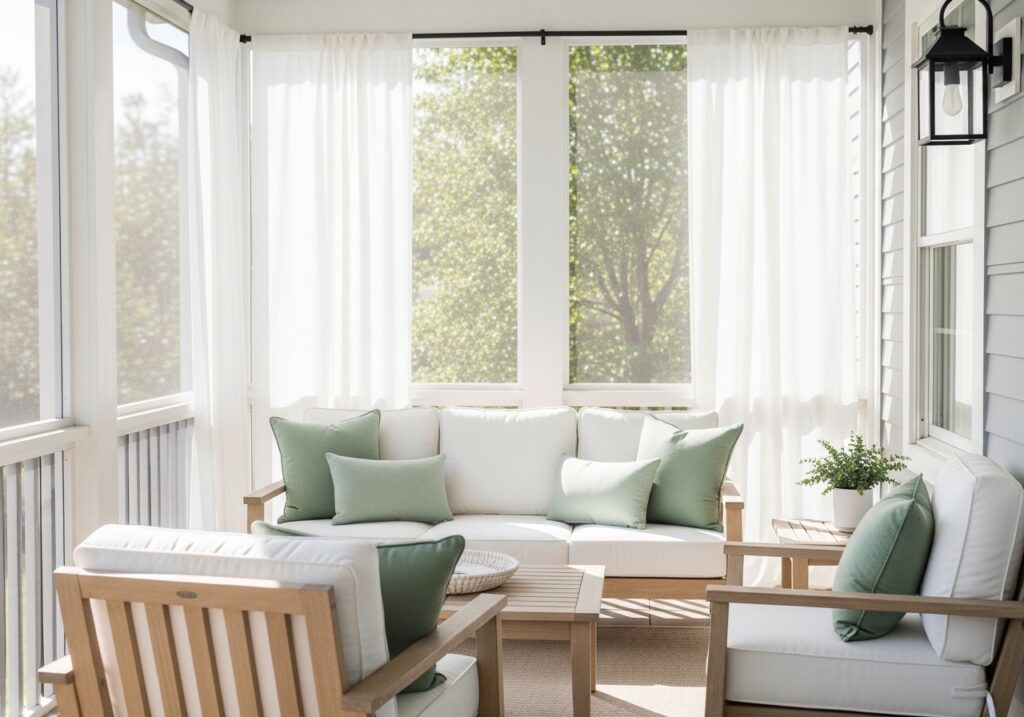
Swap out dark accessories for lighter decor pieces that reflect natural light beautifully. A bright color palette makes the porch feel larger, more inviting, and perfect for relaxing weekends. Keep hard surfaces — like side tables or plant stands — in a neutral wood or white tone so the color story lives mainly in the soft textiles, which are the easiest and cheapest pieces to update again later.
4. Style a Small Coffee Table for a Finished Look
A well-styled coffee table is often what separates a porch that feels “decorated” from one that just has furniture sitting in it. The trick is restraint: a tray to corral small items, one taller object (a vase or candle), one shorter object (a small stack of books or a dish), and a bit of negative space so the table doesn’t feel cluttered. Fresh flowers are the single highest-impact addition here, since they bring color and a sense of “just tended to” that dried or artificial arrangements can’t quite replicate, though a quality faux stem is a fine low-maintenance substitute if fresh flowers aren’t practical for your schedule.
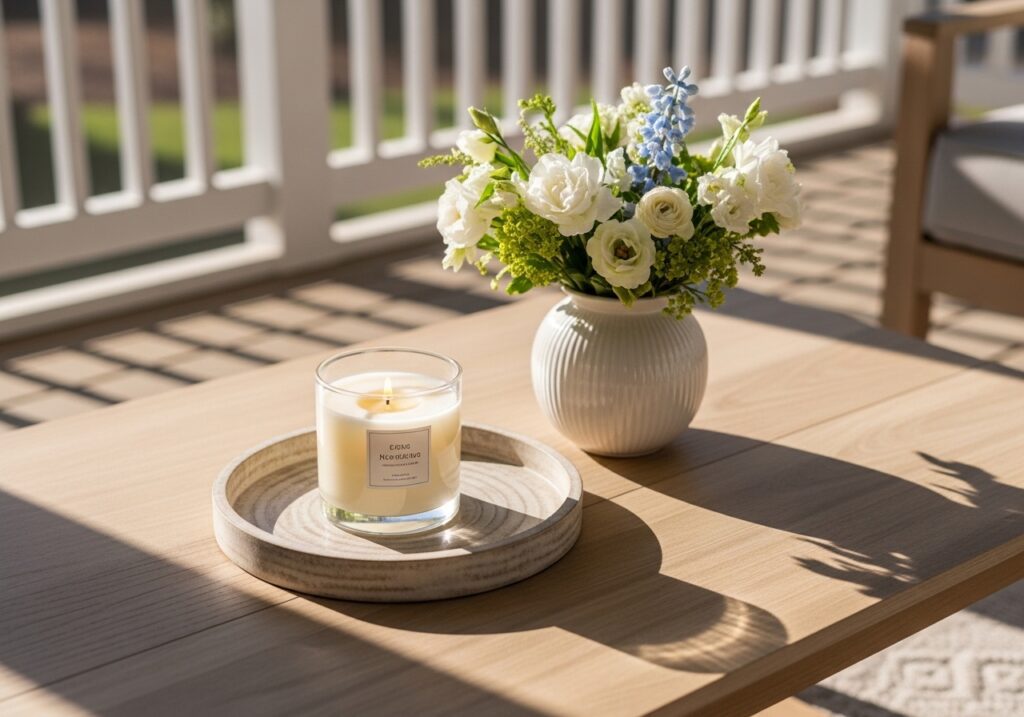
Keep the styling minimal to maintain a clean and modern aesthetic. Small details create a polished look that makes your porch feel thoughtfully designed. As a general styling rule, odd numbers of objects (three, not four) tend to look more natural and less arranged than even groupings.
Your Weekend Porch Makeover Timeline
Since the whole point of this project is finishing it in one weekend, here’s a realistic breakdown of how to pace it so you’re not still styling cushions at 9pm Sunday:
Saturday morning — Clear and clean. Remove everything from the porch, sweep and wipe down surfaces, and give furniture frames a quick wash if they’ve been sitting through winter. This step gets skipped most often, but a clean base makes every later step look better.
Saturday afternoon — Big pieces first. Bring in or rearrange seating, add the rug, and position larger furniture like a coffee table or plant stand. Get the “bones” of the layout right before adding any decor — it’s much easier to style around a layout than to keep re-styling a layout you’re still not sure about.
Saturday evening — Lighting and greenery. Hang string lights or set out lanterns, and place your larger plants. Both benefit from being done in daylight so you can judge spacing and shadow placement accurately.
Sunday morning — Textiles and color. Add cushions, throw pillows, blankets, and any color-refresh textiles. This is the most flexible step, so it’s fine to experiment and swap things around.
Sunday afternoon — Final styling and small details. Style the coffee table, tuck in smaller plants and textures, and do a final walk-through from the doorway to check the overall balance. Take a few photos — it’s often easier to spot what’s missing in a photo than standing in the space itself.
5. Add an Indoor-Outdoor Rug for Comfort
A rug does more to visually “finish” a porch than almost any other single item, because it defines the seating area as its own distinct zone rather than furniture scattered across an open floor. Indoor-outdoor rugs, typically made from polypropylene or similar synthetic fibers, are the right choice here even on a screened (and therefore somewhat protected) porch, since they still handle humidity, occasional splashes, and UV exposure far better than a rug made for strictly indoor use. As a sizing guideline, aim for a rug large enough that at least the front legs of your seating sit on it — a too-small rug is one of the most common styling mistakes and makes a space feel disjointed rather than pulled together.
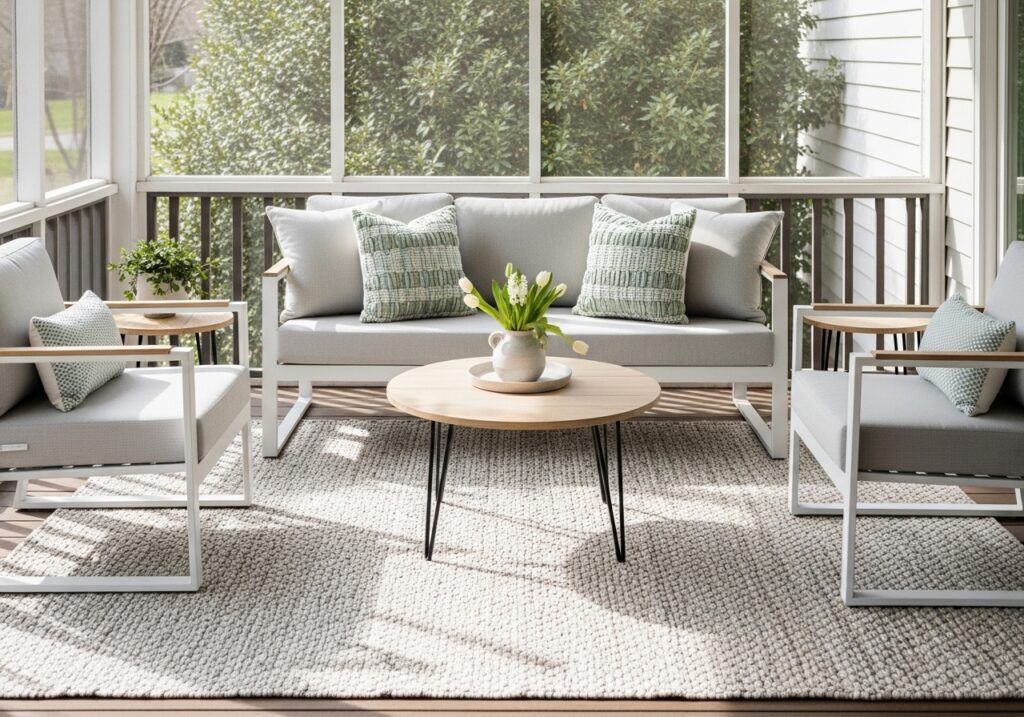
Rugs also help make the porch feel like an extension of your home’s interior. This simple addition instantly makes the space feel cozy and intentional. Choose subtle patterns or textured neutral rugs that complement your furniture without overwhelming the space.
6. Warm Lighting for Evenings on the Porch
Good lighting is what extends a porch’s usable hours from just daytime to evening as well, which matters most if you’re hoping to actually use the space for dinners or unwinding after work. String lights remain the most popular option because they’re inexpensive, easy to hang without tools using included clips or hooks, and create a soft, even glow rather than harsh spot lighting. For a more grounded look, pair string lights overhead with a few lanterns or flameless LED candles at seating height — the mix of light sources at different heights is what makes a space feel professionally lit rather than like a single bulb was switched on.
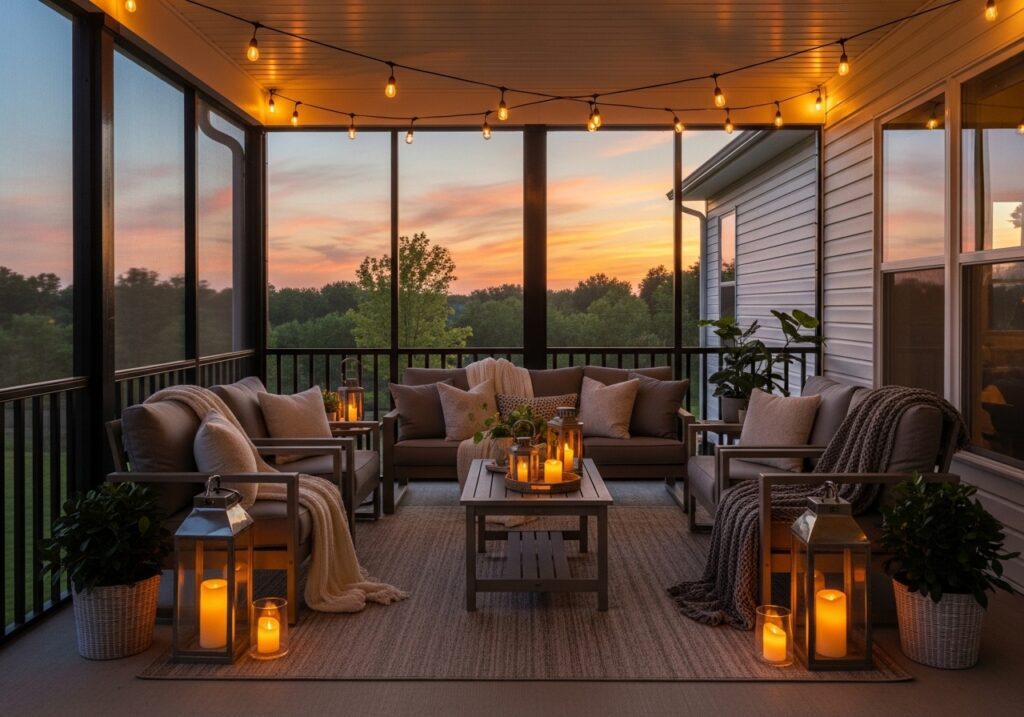
Lighting adds ambiance and highlights the design details of your porch. Warm light tones create an inviting atmosphere that feels comfortable and peaceful. Stick to warm white (around 2700K) rather than cool white bulbs — cool white tends to read as clinical rather than cozy in an outdoor living space.
7. Add Soft Textures for a Cozy Feel
Texture is what keeps a neutral color palette from feeling flat or sterile, since it adds visual interest without relying on bold color or pattern. The goal is to mix at least three different textures within the seating area — for example, a woven rattan basket, a chunky knit throw, and smooth linen pillow covers — so the eye has variety to move across even though the color palette stays fairly consistent. Natural materials tend to work best here because they photograph well and age gracefully outdoors, whereas overly synthetic textures can start to look worn or plasticky after a season of sun exposure.
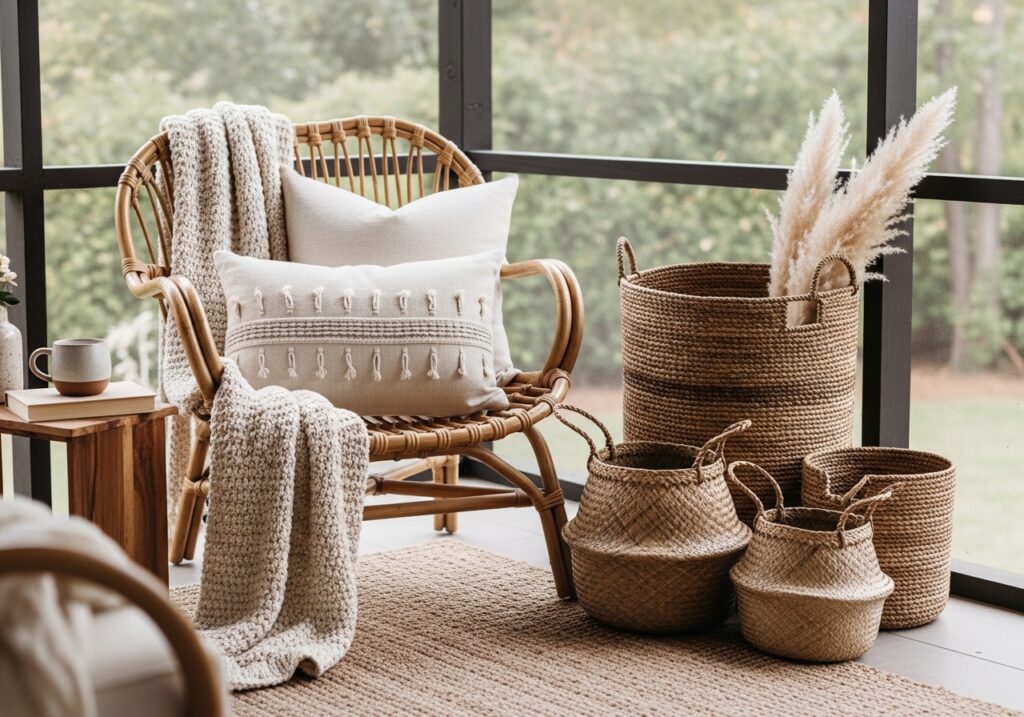
Mix natural materials like rattan, cotton, and wood for a balanced organic look. Textured decor enhances comfort and creates a welcoming space perfect for spring relaxation. If you’re short on time, a woven basket doubles as both a texture element and functional storage for blankets or magazines, solving two problems with one purchase.
Budget Breakdown: What This Makeover Actually Costs
Costs vary widely depending on whether you’re starting from scratch or refreshing what you already have. Here’s a realistic range for a full weekend makeover:
| Item | Budget Option | Mid-Range Option |
|---|---|---|
| Seating cushions (per set) | $40–$80 | $100–$250 |
| Throw pillows (each) | $10–$20 | $25–$50 |
| Indoor-outdoor rug (5×7) | $50–$100 | $150–$350 |
| Potted plants (per plant) | $8–$20 | $25–$60 |
| String lights (per 20ft strand) | $12–$25 | $30–$50 |
| Coffee table styling accessories | $20–$40 | $50–$100 |
| Throw blanket | $15–$30 | $40–$80 |
| Total estimated range | $155–$315 | $420–$940 |
A full refresh using mostly existing furniture and just updating textiles, plants, and lighting typically lands at the lower end of this range. Starting from empty or replacing furniture entirely will push costs higher.
Adapting This Look Beyond Spring
Everything above works as a seasonal refresh, which means the same porch can get a similar one-weekend treatment throughout the year with a few swaps:
Summer: Lean into lighter, breezier textiles — swap the knit throw for a lightweight cotton one, and add a small fan or misting system if your porch runs hot in direct afternoon sun. Brighter, more saturated colors (coral, turquoise, citrus tones) tend to suit summer better than the softer spring palette.
Fall: Swap sage and blush tones for warm terracotta, mustard, and deep green. Add a chunkier knit throw and consider layering in a few dried or preserved botanical stems, which hold up better than fresh flowers as temperatures drop.
Winter: If your climate allows year-round porch use, add heavier textiles, a space heater rated for outdoor/covered use, and swap string lights for warmer, denser lighting to counter shorter daylight hours. In colder climates, this is also a good time to store cushions and rotate in weather-appropriate covers.
Because the underlying furniture and layout stay the same, only the textiles, plants, and color accents need to change — meaning the bulk of the investment from your spring makeover carries forward all year.
Frequently Asked Questions
Will an indoor-outdoor rug hold up on a screened porch?
Yes — since a screened porch already blocks direct rain and reduces sun exposure compared to a fully open patio, an indoor-outdoor rug will typically last even longer here than in a completely exposed outdoor space. Just make sure it’s rated for outdoor or covered-outdoor use, not strictly indoor.
How do I keep bugs out if my screens have small gaps?
Check screens for tears or gaps at the frame edges first, since that’s the most common entry point. A citronella candle or two, combined with sealing any visible gaps with weatherstripping, handles most of what a screen alone doesn’t catch.
What if my porch is very small?
Scale down rather than skip steps — a small bistro-style seating area, one or two plants, and a compact rug can follow the same styling principles as a larger porch. Avoid oversized furniture, which will make a small porch feel more cramped rather than cozier.
Do I need special paint or finishes for porch furniture?
If you’re refreshing existing wood furniture, an exterior-rated paint or sealant matters more than the shade of color, since interior products won’t hold up to humidity and temperature swings even under a screen.
How long will this makeover actually last before needing another refresh?
With fade-resistant textiles and durable plants, expect the core look to hold up for 2–3 seasons before textiles need replacing, though many people refresh just the color accents (pillows, small decor) each season for a low-cost seasonal update.
Final Thoughts
A screened porch makeover doesn’t have to take weeks or require a big budget. With simple decor updates, soft colors, and cozy textures, you can transform your porch into a beautiful spring retreat in just one weekend — and with a few swaps, the same core setup carries you through summer, fall, and winter too.
Start with the big pieces (seating, rug, layout), then layer in plants, lighting, and textiles using the weekend timeline above. Small, intentional details go further than an expensive overhaul, so don’t feel pressure to buy everything new before you begin.
Looking for more outdoor inspiration? Check out our Patio Ideas and Porch Ideas categories, or browse our Outdoor Design section for more ways to make your exterior spaces feel just as considered as the inside of your home.