
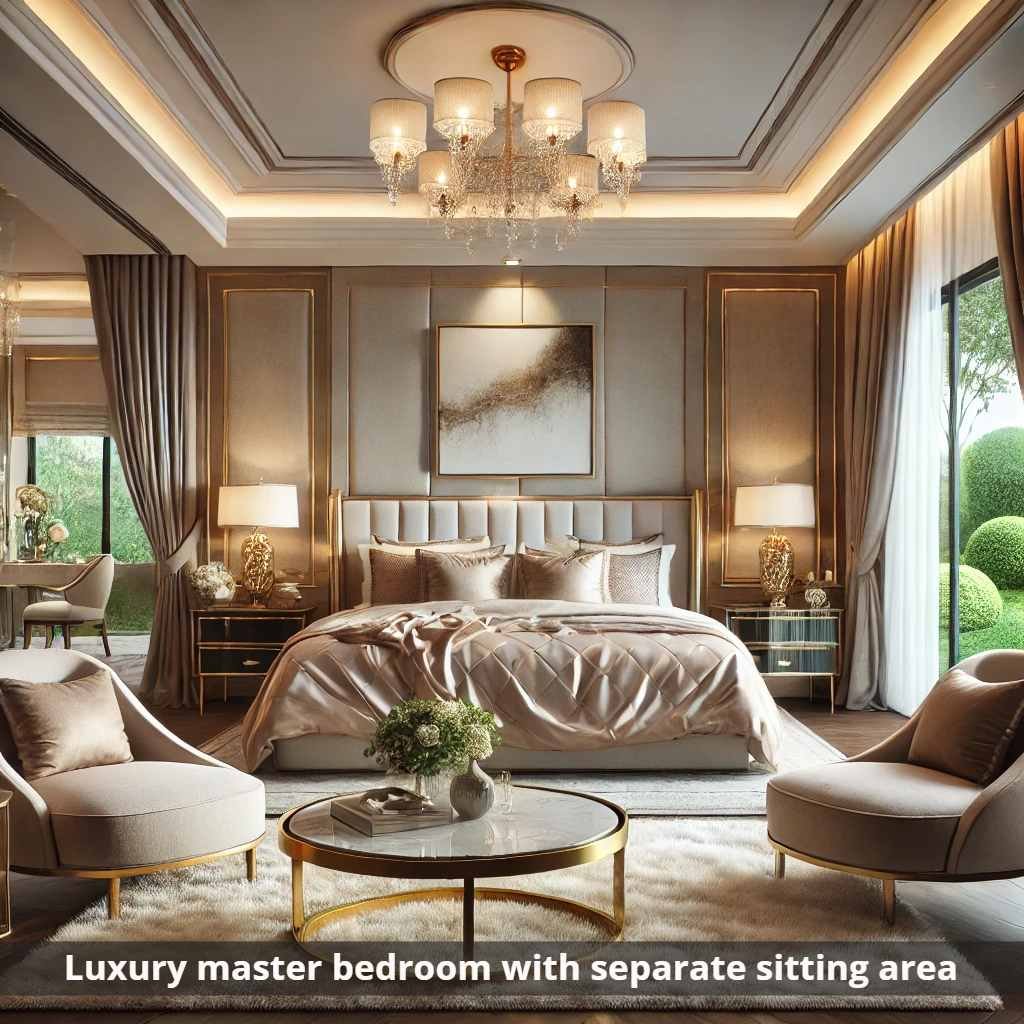
A luxury master bedroom with a separate sitting area is the epitome of comfort, elegance, and relaxation. If you’re planning a redesign, this feature not only enhances the aesthetic of your bedroom but also adds a functional space where you can unwind after a long day. Whether you’re sipping your morning coffee or curling up with a good book by the fireplace, a master bedroom with cozy seating elevates your entire living experience.
Position Your Sitting Area Near a Window
Contents
- 1 Position Your Sitting Area Near a Window
- 2 Add a Fireplace for a Cozy Focal Point
- 3 Choose a Sofa-and-Armchair Combination for Maximum Comfort
- 4 Go Minimalist with a Chaise Lounge
- 5 Build a Reading Nook or Quiet Corner
- 6 Add a TV and Media Setup for a Lounge Feel
- 7 Design a Window-Seat or Bay Window Nook
- 8 Create a Spa-Inspired Retreat
- 9 Bring in Vintage or Rustic Character
- 10 Showcase Art or Personal Collections
- 11 Planning the Layout: How Much Space Do You Need?
- 12 Budget Guide: What a Sitting Area Addition Costs
- 13 Frequently Asked Questions
- 13.1 How much space do I actually need for a sitting area in a master bedroom?
- 13.2 Can I add a sitting area to a smaller master bedroom?
- 13.3 Do I need a permit or contractor to add an electric fireplace?
- 13.4 What’s the best flooring for a bedroom sitting area?
- 13.5 Should the sitting area match the bedroom’s color scheme exactly?
- 14 Conclusion:
Natural light does more for a sitting area than almost any other design choice, which is why placing it near a window is one of the simplest ways to make the space feel like a genuine retreat rather than an afterthought corner. If your room has an open floor plan, letting the sitting area flow visually into the sleeping area — rather than walling it off — keeps the whole room feeling larger and more connected. A window-adjacent nook also gives you flexibility throughout the day: bright and energizing for morning coffee, softer and more relaxed by evening once you add a floor lamp or table lamp nearby.
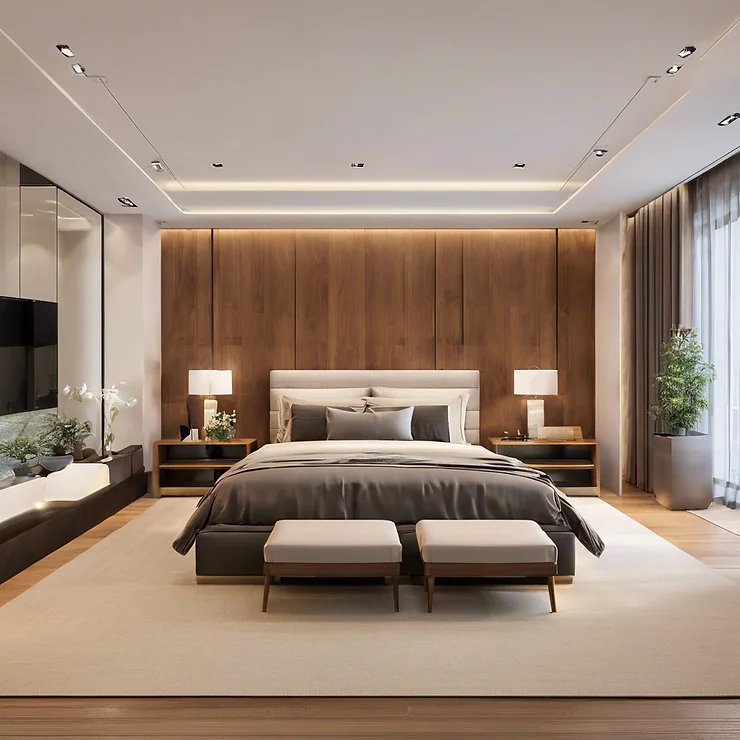
When laying out the room, aim to keep at least 3 feet of clearance around the sitting area so it doesn’t feel like it’s competing with the bed for space. If your window is large enough, a bench seat or window seat built into the sill can be a space-efficient alternative to freestanding furniture.
You may need to know about: 13 Remodeling ideas for split-level houses
Add a Fireplace for a Cozy Focal Point
A fireplace transforms a sitting area from “a couple of chairs in the corner” into a genuine architectural feature worth designing the whole room around. Electric and gas inserts have made this far more achievable than a full wood-burning fireplace retrofit, since many can be installed without major structural work or a chimney. Position seating to face the fireplace directly rather than off to the side, and keep the area rug large enough that both chairs (or a small sofa) sit fully on it – this is what visually “anchors” the space as its own zone within the larger room.
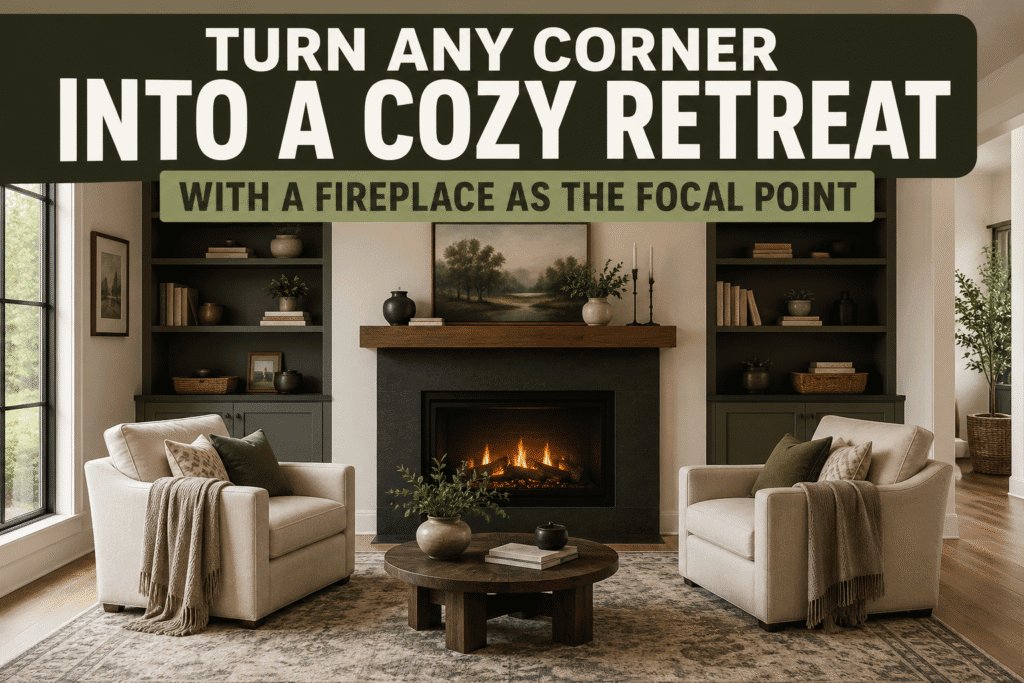
For smaller sitting areas, a slim wall-mounted electric fireplace uses far less floor space than a traditional mantel-style unit while still providing the same cozy focal point.
Choose a Sofa-and-Armchair Combination for Maximum Comfort
A small sofa paired with one or two armchairs remains the most popular seating combination for a master bedroom sitting area, and for good reason — it comfortably seats two to four people, which matters if you ever use the space for more than solo relaxation. Look for a loveseat or small two-seat sofa (typically 60–72 inches wide) rather than a full-size living room sofa, which can easily overwhelm the proportions of a bedroom. Pair it with one or two accent armchairs in a complementary but not identical fabric or color – this creates visual interest without looking like a mismatched furniture showroom.
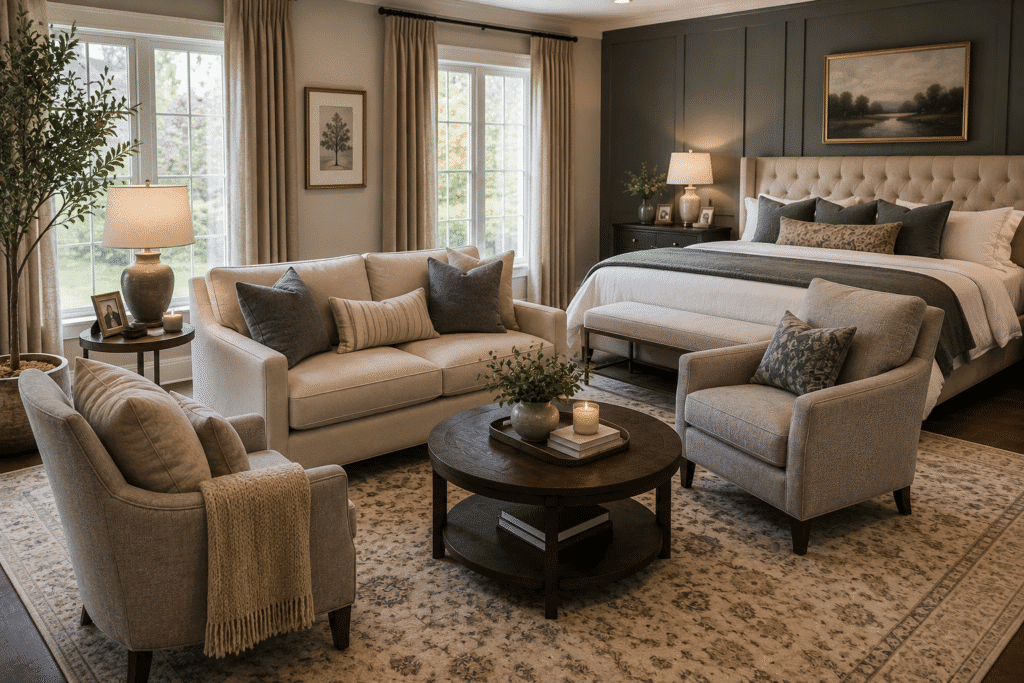
If your space is tight, prioritize depth over width: a loveseat with soft, deep cushions will feel more luxurious in a small footprint than a wider but shallower sofa.
Go Minimalist with a Chaise Lounge
For a sleeker, more contemporary look, a single chaise lounge often works better than a full seating group — it takes up less floor space, requires no coordinating side chairs, and creates an uncluttered, almost spa-like feel. This works especially well in modern or minimalist bedrooms where clean lines and negative space matter more than maximizing seating capacity. A chaise positioned perpendicular to a window, with a small side table for a lamp and a book, is one of the most efficient ways to create a genuine reading nook without dedicating much square footage to it.
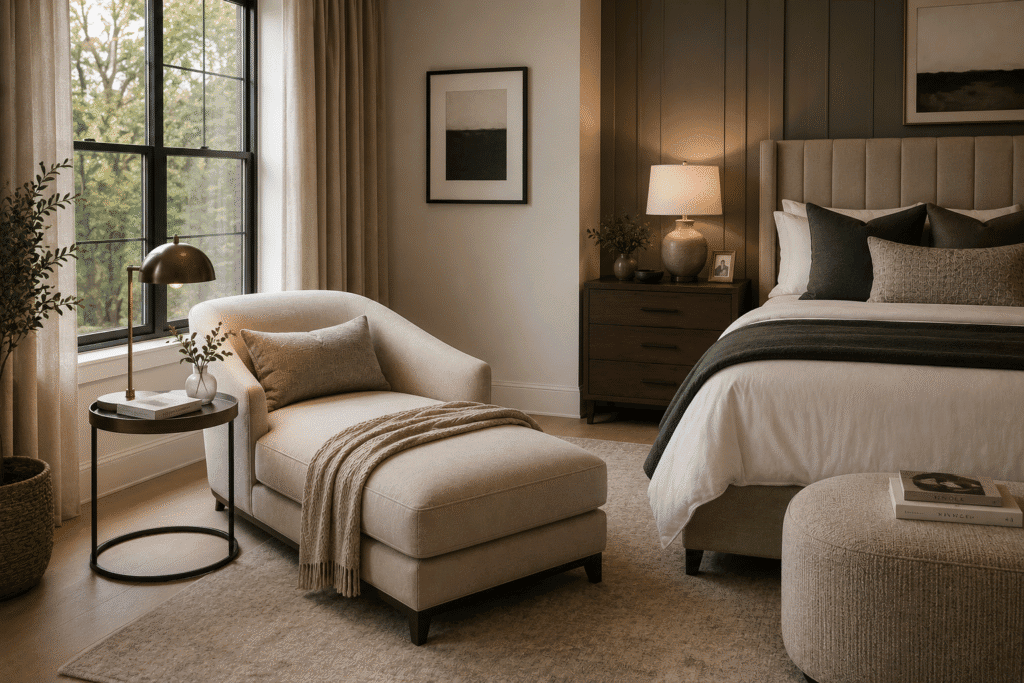
Look for a chaise with a low profile and simple upholstery – busy patterns tend to work against the minimalist effect this style is going for.
Build a Reading Nook or Quiet Corner
A reading nook doesn’t need much: one comfortable chair, good task lighting, and a small side table or shelf within arm’s reach for books and a drink. What makes a reading nook feel intentional rather than incidental is usually the lighting — a dedicated reading lamp with adjustable brightness makes a bigger difference than the chair itself. If you have a corner with awkward proportions that doesn’t fit larger furniture, this is often the best use for it, since a single chair and small table can fit into spaces a sofa or chaise simply can’t.
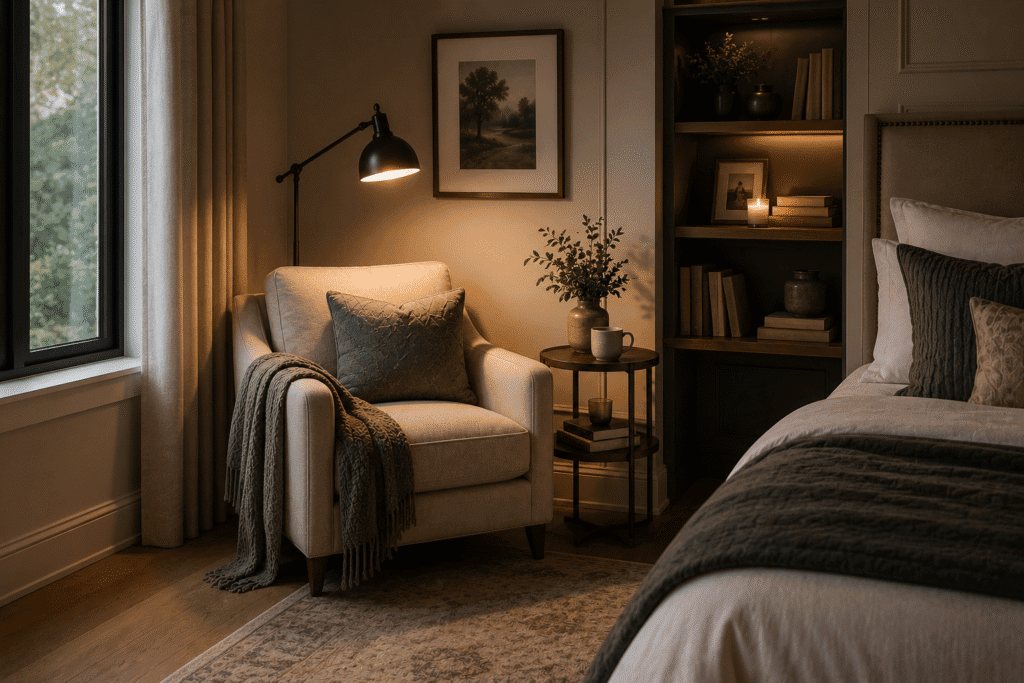
Adding a small bookshelf or a few floating shelves nearby completes the look and keeps your current reads within reach without cluttering the nightstand.
Add a TV and Media Setup for a Lounge Feel
If unwinding with a show is part of your evening routine, positioning a TV within view of the sitting area (rather than only the bed) makes the space genuinely functional rather than just decorative. A swivel TV mount lets you angle the screen toward either the bed or the sitting area depending on how you’re using the room at a given moment, which is a practical upgrade if you want the flexibility without installing two separate screens. Keep cord management in mind here — an in-wall cord kit keeps the setup looking clean rather than showing a trail of cables down the wall.
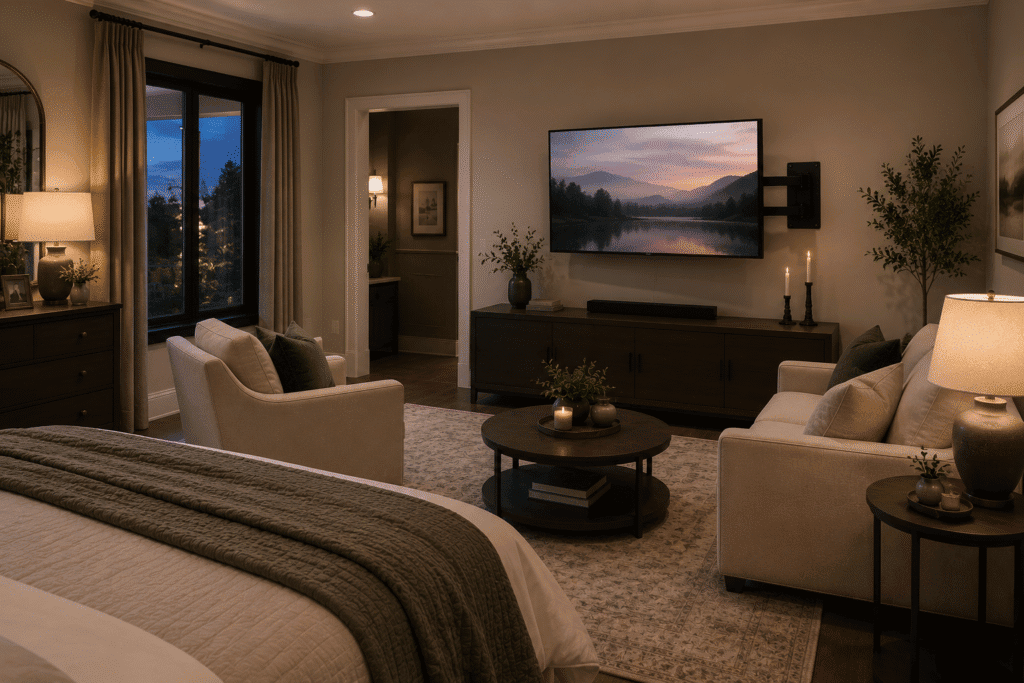
Pair this setup with a comfortable sofa or chaise rather than rigid accent chairs, since media-watching sessions tend to be longer than a quick morning coffee.
Design a Window-Seat or Bay Window Nook
A bay window is one of the best built-in opportunities for a sitting area, since the architecture is already doing half the design work for you. A cushioned bench seat along the window, paired with a few throw pillows, turns unused floor space into one of the most-used corners in the room. If your bay window has enough depth, consider built-in storage beneath the seat — a practical bonus that adds function without taking up additional floor space elsewhere in the room.
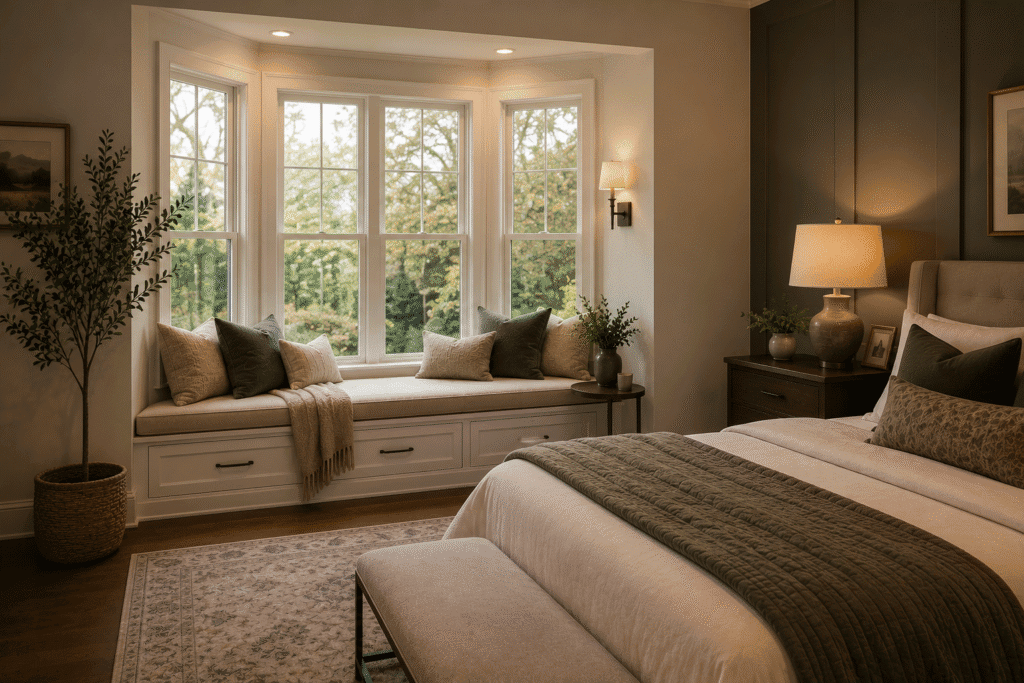
If you don’t have a bay window but want the same effect, a simple bench or daybed positioned along any window wall can achieve a similar look with a smaller renovation footprint.
Create a Spa-Inspired Retreat
For bedrooms with an adjoining en suite, extending a spa-like feel into the sitting area creates a seamless transition between bathing and relaxing. This usually comes down to a restrained color palette (soft whites, warm grays, muted sage or blue tones), natural materials like linen and light wood, and minimal visual clutter. Adding a small area rug in a plush, soft texture underfoot reinforces the spa feeling more than almost any single furniture piece, since it’s the first thing you notice barefoot.
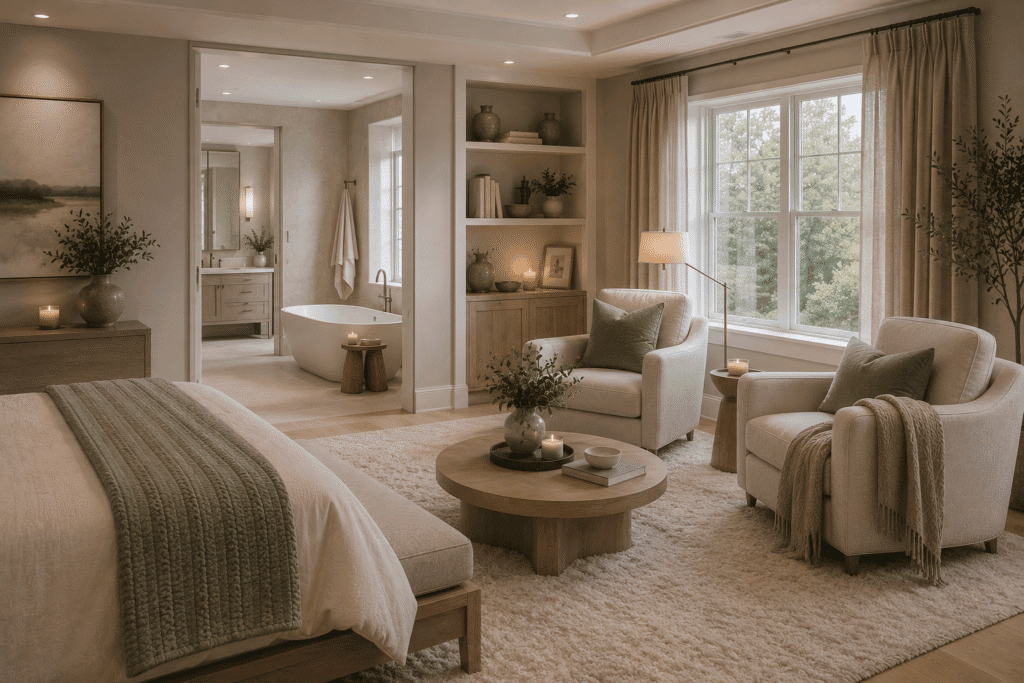
Keep decor sparse here — a single plant, a stack of neutral-toned towels or throws, and simple lighting go further toward a genuine spa feel than a heavily decorated corner.
Bring in Vintage or Rustic Character
If your taste leans more traditional than modern minimalist, a sitting area is a great place to bring in vintage or rustic character without overwhelming the rest of the bedroom. A vintage-inspired approach might include a tufted velvet chair, an antique side table, and warm brass lighting fixtures for a nostalgic, old-world feel. A rustic take instead leans on natural wood furniture, woven textures, and warmer, earthier tones — think a leather accent chair paired with a reclaimed-wood side table.
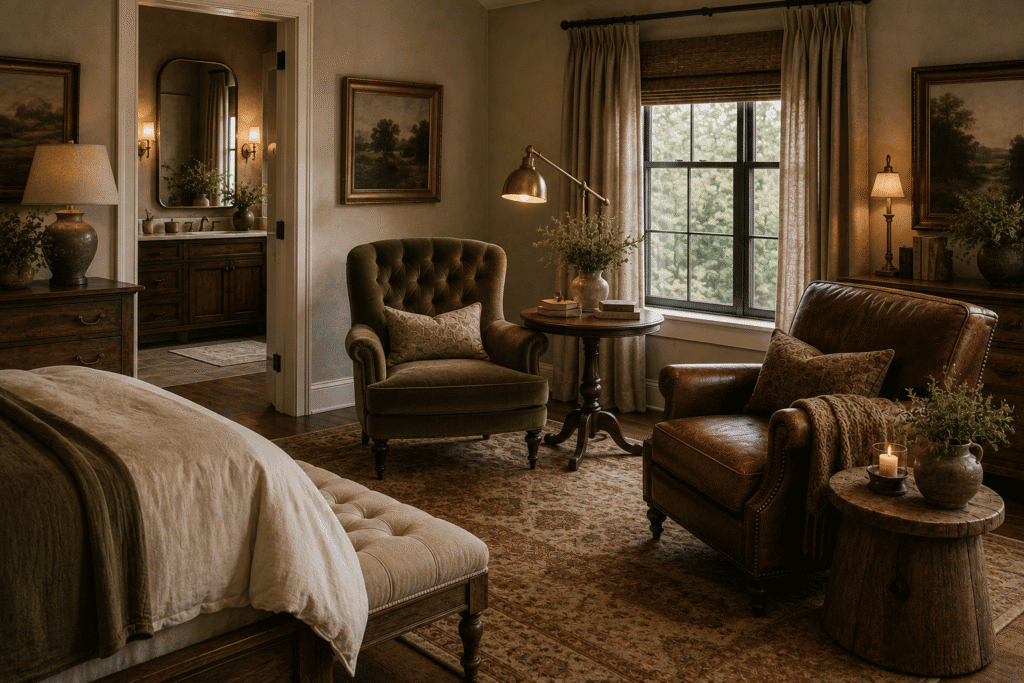
Both styles work well as a contained “moment” within an otherwise more neutral or contemporary bedroom, so you don’t have to commit the entire room to one aesthetic to enjoy either look in the sitting area specifically.
Showcase Art or Personal Collections
A sitting area is also a natural spot to display art, books, or personal collections in a way that feels more like a curated gallery corner than clutter. A small gallery wall behind the seating, a display shelf for travel mementos, or a stack of favorite books doubling as a side table all add personality that generic bedroom decor often lacks. If you’re drawn to a hotel-inspired look instead, keep the display more restrained — one or two statement art pieces and quality lighting tend to read as “boutique hotel” more convincingly than a busier, more personal collection.
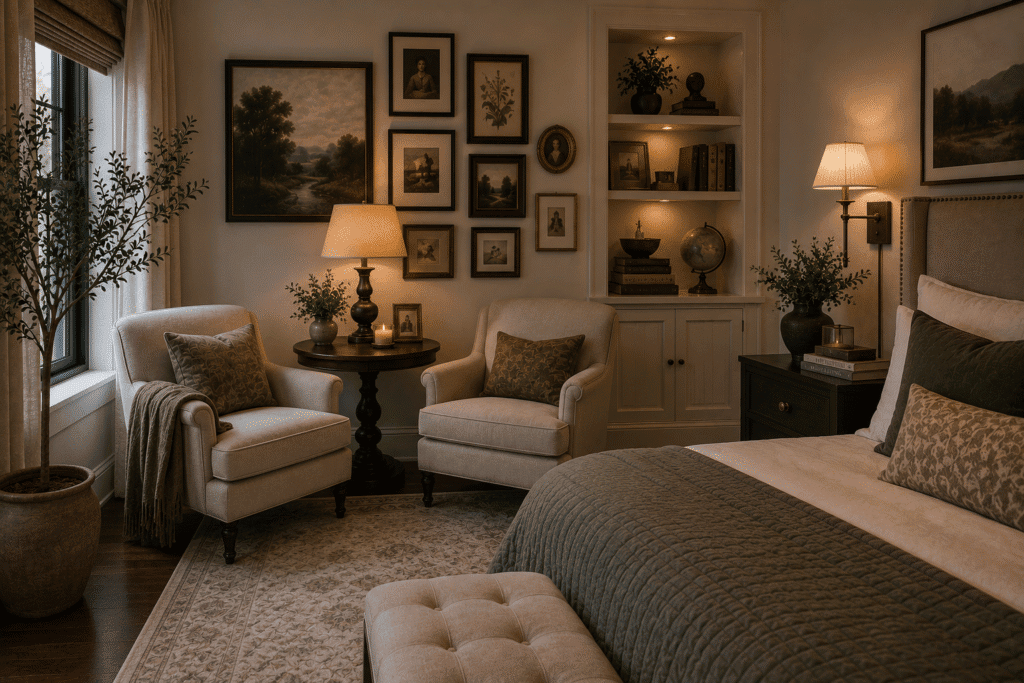
Either direction works well paired with any of the seating styles above — this idea is really about what you put around the seating rather than the furniture itself.
Planning the Layout: How Much Space Do You Need?
Before choosing furniture, it helps to know roughly how much square footage a sitting area realistically needs:
- Reading nook (single chair + side table): 25–40 sq ft
- Chaise lounge setup: 35–55 sq ft
- Loveseat + one armchair: 60–90 sq ft
- Full sofa + two armchairs: 90–130 sq ft
- Fireplace-anchored seating group: 100–150 sq ft (plus mantel/fireplace footprint)
As a general rule, a master bedroom needs to be at least 200–250 square feet before a dedicated sitting area starts to feel comfortable rather than cramped alongside a bed, dresser, and walking space. If your room falls below that, a single chaise or reading nook (rather than a full seating group) is usually the better fit.
Budget Guide: What a Sitting Area Addition Costs
Costs vary widely depending on whether you’re furnishing from scratch or repurposing existing pieces, and whether structural additions like a fireplace are involved.
| Item | Budget Option | Mid-Range Option | High-End Option |
|---|---|---|---|
| Accent chair (each) | $150–$350 | $400–$900 | $1,200+ |
| Loveseat/small sofa | $500–$900 | $1,000–$2,500 | $3,000+ |
| Chaise lounge | $400–$800 | $900–$1,800 | $2,500+ |
| Area rug (5×8) | $80–$200 | $250–$600 | $800+ |
| Side/accent table | $60–$150 | $200–$450 | $600+ |
| Floor or table lamp | $40–$100 | $120–$300 | $400+ |
| Electric fireplace insert | $300–$700 | $800–$1,800 | $2,500+ |
| Custom window-seat build | $800–$1,500 | $1,800–$3,500 | $4,500+ |
A modest reading nook refresh using existing furniture can often be done for under $500 in new textiles and lighting. A full furnished sitting area with a fireplace addition can run well into the thousands — get a local contractor quote if structural work like a fireplace or built-in bench is involved.
Frequently Asked Questions
How much space do I actually need for a sitting area in a master bedroom?
At minimum, aim for 25–40 square feet for a simple reading nook with one chair. A full seating group with a sofa and armchairs typically needs closer to 90–130 square feet in addition to your existing bed and dresser footprint.
Can I add a sitting area to a smaller master bedroom?
Yes — scale the idea down rather than skipping it. A single accent chair with a small side table and a good reading lamp can create a genuine sitting area in as little as 25 square feet, without needing a full furniture grouping.
Do I need a permit or contractor to add an electric fireplace?
Most plug-in electric fireplace inserts require no permit or structural work since they don’t need venting like a gas or wood-burning fireplace. Built-in or wall-recessed units may require an electrician for proper wiring, so check the specific unit’s installation requirements before buying.
What’s the best flooring for a bedroom sitting area?
This usually matches whatever flooring is already in the bedroom — hardwood or LVP paired with a soft area rug under the seating is the most common approach, since it lets you change the rug (and therefore the look) more easily than replacing flooring.
Should the sitting area match the bedroom’s color scheme exactly?
Not necessarily — many designers treat the sitting area as a complementary “moment” rather than an exact match, using a coordinating but distinct color or texture to give the corner its own identity while still feeling connected to the rest of the room.
Conclusion:
A luxury master bedroom with a separate sitting area is more than just a trend — it’s a way to transform your bedroom into a true sanctuary with a dedicated space to unwind, read, or simply enjoy your morning coffee. Whether you’re drawn to a fireplace-anchored lounge, a minimalist chaise, or a cozy window-seat nook, the right choice comes down to your available space, budget, and how you actually plan to use the area day to day.
Start by measuring your room against the space guide above, then use the budget breakdown to figure out what’s realistic for your renovation — a simple reading nook refresh can transform the feel of a room for a few hundred dollars, while a full fireplace-anchored seating group is a bigger investment worth planning carefully.
If you’re planning a broader bedroom refresh, check out our guides on Minimalist Bedroom Ideas and our full Master Bedroom category for more inspiration, or explore 13 Remodeling Ideas for Split-Level Houses if you’re tackling a larger renovation.