

Creating a comfortable and motivating college living space starts with choosing the right colors. Thoughtful Dorm Room Color Designs can completely change how a college dorm room feels, even when you are dealing with limited space, shared layouts, and strict housing rules. Color impacts mood, focus, sleep quality, and even productivity, making it one of the most powerful tools in student housing interiors.
This in-depth guide explores 17 expertly curated Dorm Room Color Designs that work beautifully in both shared dorm rooms and single dorm rooms. Each design is easy to apply, budget-friendly, and ideal for temporary dorm decor and rental-safe dorm design, ensuring you stay within dorm policies while still expressing your personal style.
Why Dorm Room Color Designs Matter in College Living
Contents
- 1 Why Dorm Room Color Designs Matter in College Living
- 2 1. Soft Neutral Tones with Warm Wood Accents
- 3 2. White-Based Dorm Room Color Design with Black Accents
- 4 3. Sage Green and Cream for a Calming Dorm Room
- 5 4. Navy Blue with Soft Gray Balance
- 6 5. Pastel Pink with Neutral Beige
- 7 6. Terracotta Accents with Soft White
- 8 7. Light Blue and White for Study-Focused Spaces
- 9 8. Monochrome Gray Dorm Room Aesthetic
- 10 9. Lavender and Soft Gray for Relaxation
- 11 10. Neutral Base with Flexible Accent Colors
- 12 11. Black, White, and One Bold Accent Color
- 13 12. Taupe and Cream for Cozy Comfort
- 14 13. Forest Green with Natural Beige
- 15 14. All-White Dorm Room with Textural Layers
- 16 15. Dusty Blue and Warm Wood Combination
- 17 16. Beige, Black, and Linen Neutrals
- 18 17. Soft Yellow with White and Gray
- 19 Final Thoughts on Dorm Room Color Designs
The colors in your dorm room do far more than decorate the space. They shape your daily experience, influence your emotions, and affect how comfortable you feel during long study sessions or stressful exam weeks.
Color psychology for students shows that softer tones help reduce anxiety, cooler shades improve focus, and warm accents bring comfort and energy. Since most dorms are compact, selecting the right dorm room color palette also helps visually expand a small dorm room space, making it feel brighter and more breathable.
Because dorm rooms are temporary, students must rely on dorm-friendly color schemes that don’t involve painting walls or making permanent changes. That’s where smart use of neutral base colors, layered textures, and carefully chosen accent colors becomes essential.
1. Soft Neutral Tones with Warm Wood Accents
This design is one of the most reliable Dorm Room Color Designs for college students. Soft neutrals like beige, cream, and light gray create a calming foundation that works in any dorm setting. When paired with warm wood accents, the room feels welcoming and grounded rather than bland.
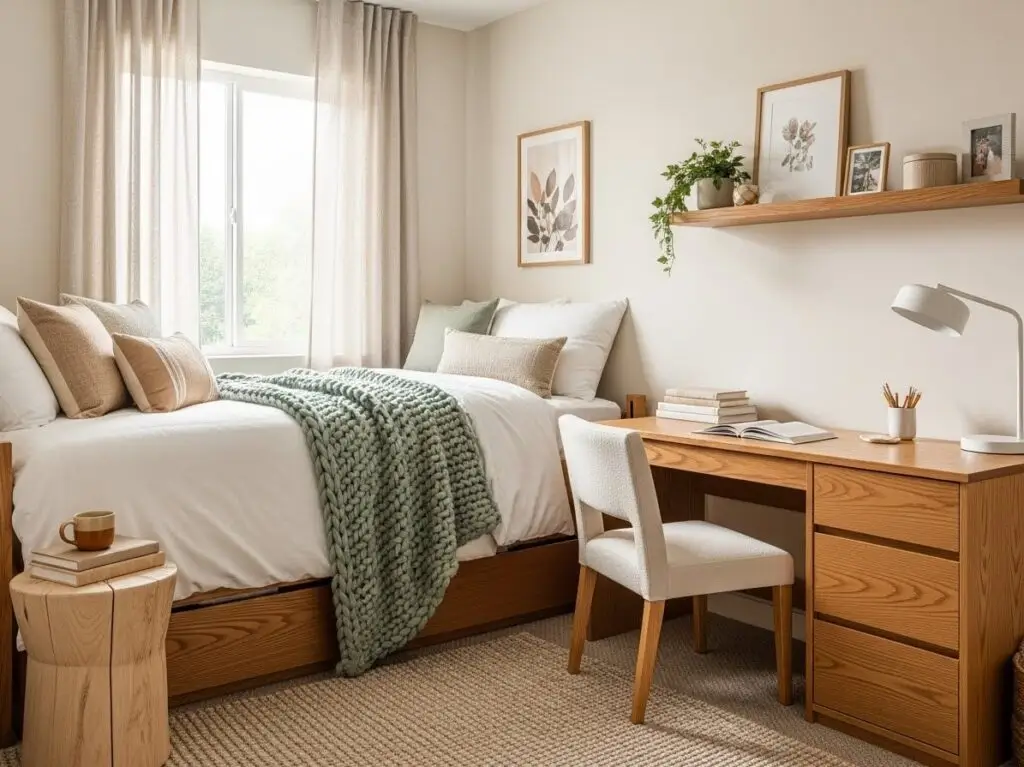
In a college dorm room, this color design helps balance artificial lighting and makes the space feel more natural. It works especially well in shared dorm rooms where neutral tones keep the space harmonious for multiple personalities.
2. White-Based Dorm Room Color Design with Black Accents
A white base paired with black accents offers a clean, structured look that suits modern student housing interiors. White keeps the room bright and visually open, which is ideal for small dorm room spaces, while black adds definition and contrast.

This dorm room color design works best when black is used sparingly in accessories such as desk lamps, frames, or storage containers. The balance between light and dark keeps the room polished without feeling heavy.
3. Sage Green and Cream for a Calming Dorm Room
Sage green has become a favorite in Dorm Room Color Designs due to its calming properties. Paired with cream or off-white, this palette creates a relaxed environment that supports focus and rest.

For students who experience academic stress, this color combination helps reduce mental fatigue. It’s also perfect for rental-safe dorm design because it can be introduced through bedding, curtains, and removable decor.
Navy blue adds depth and maturity to a college dorm room when balanced correctly with soft gray. This design is an excellent example of proper light and dark color balance, preventing the space from feeling too enclosed.
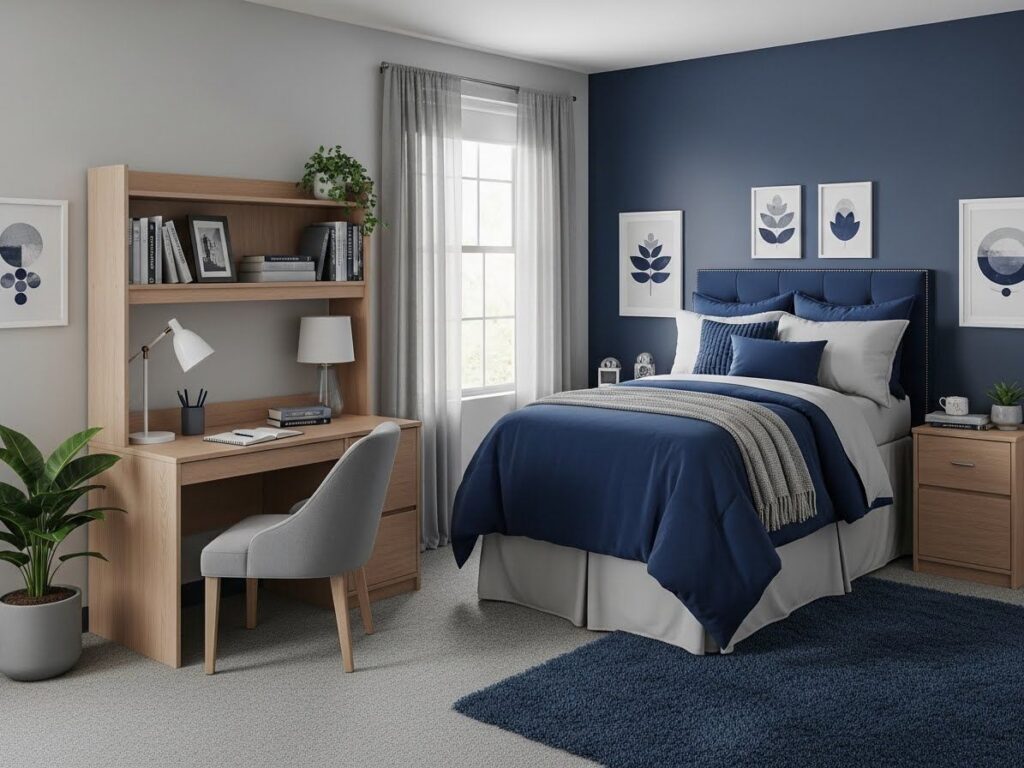
In a small dorm room space, navy should be limited to textiles or accent pieces rather than dominating the room. Gray softens the look and keeps the space feeling modern and comfortable.
5. Pastel Pink with Neutral Beige
Pastel pink paired with beige creates a warm and approachable dorm room aesthetic. This combination feels personal without being overpowering, making it ideal for both shared and single dorm rooms.

Beige acts as a grounding neutral base color, while pastel pink introduces softness and personality. This design is especially popular among students looking for budget dorm decor options that still feel stylish.
6. Terracotta Accents with Soft White
Terracotta tones bring warmth and character to student housing interiors, especially in dorms that feel cold or impersonal. When combined with soft white, the result is cozy without being overwhelming.

This dorm room color design works best when terracotta is used as an accent rather than a dominant color. It’s a smart choice for temporary dorm decor because it relies on textiles and accessories instead of permanent changes.
7. Light Blue and White for Study-Focused Spaces
Light blue is known for its ability to enhance concentration, making it a strong choice for students. When paired with crisp white, this dorm room color palette feels fresh and mentally refreshing.
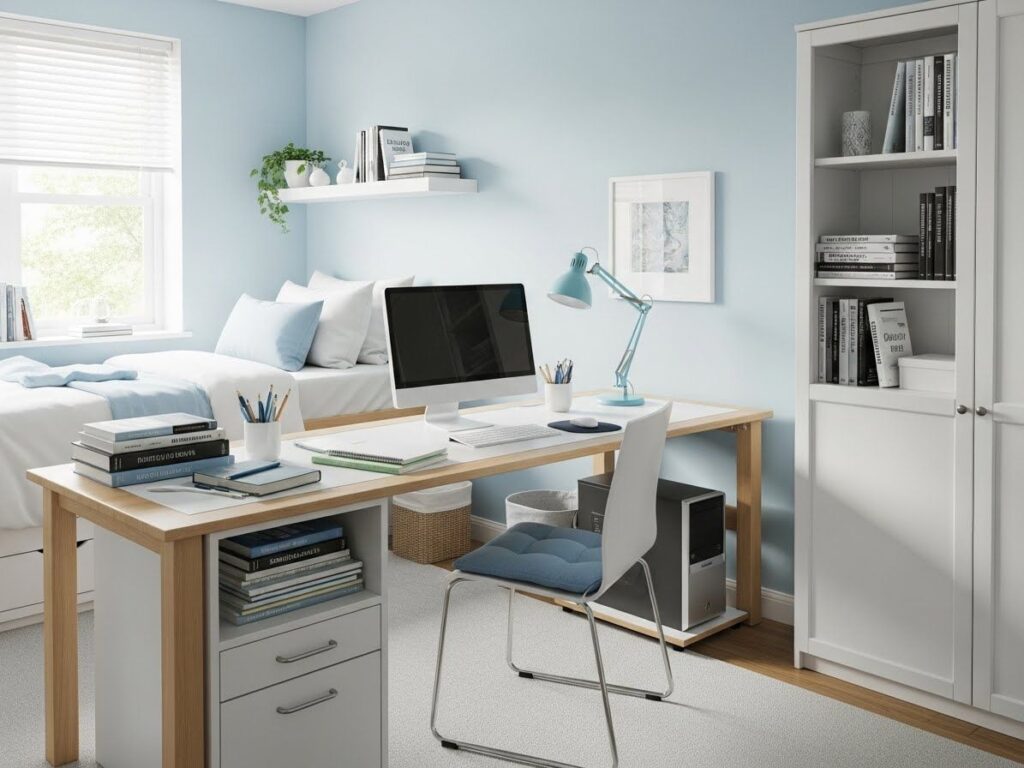
This design works particularly well around desks and study areas, helping students stay focused during long study sessions. It also keeps the dorm room feeling open and uncluttered.
8. Monochrome Gray Dorm Room Aesthetic
A monochrome gray dorm room offers a sleek and modern look that appeals to minimalists. Using multiple shades of gray adds depth while maintaining a cohesive appearance.
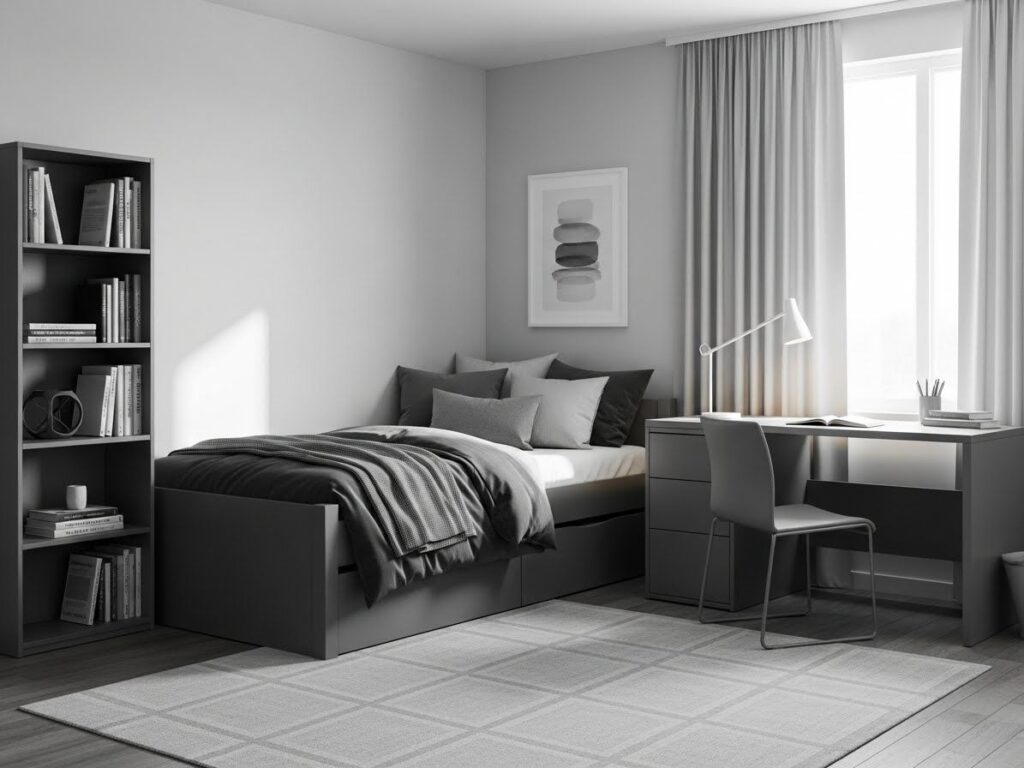
This design works best in single dorm rooms where the student has full control over the decor. Metallic accents or textured fabrics prevent the space from feeling flat or cold.
9. Lavender and Soft Gray for Relaxation
Lavender is widely recognized for its calming effects, making it a smart choice for dorm rooms where rest is essential. When paired with soft gray, lavender feels mature and soothing rather than childish.
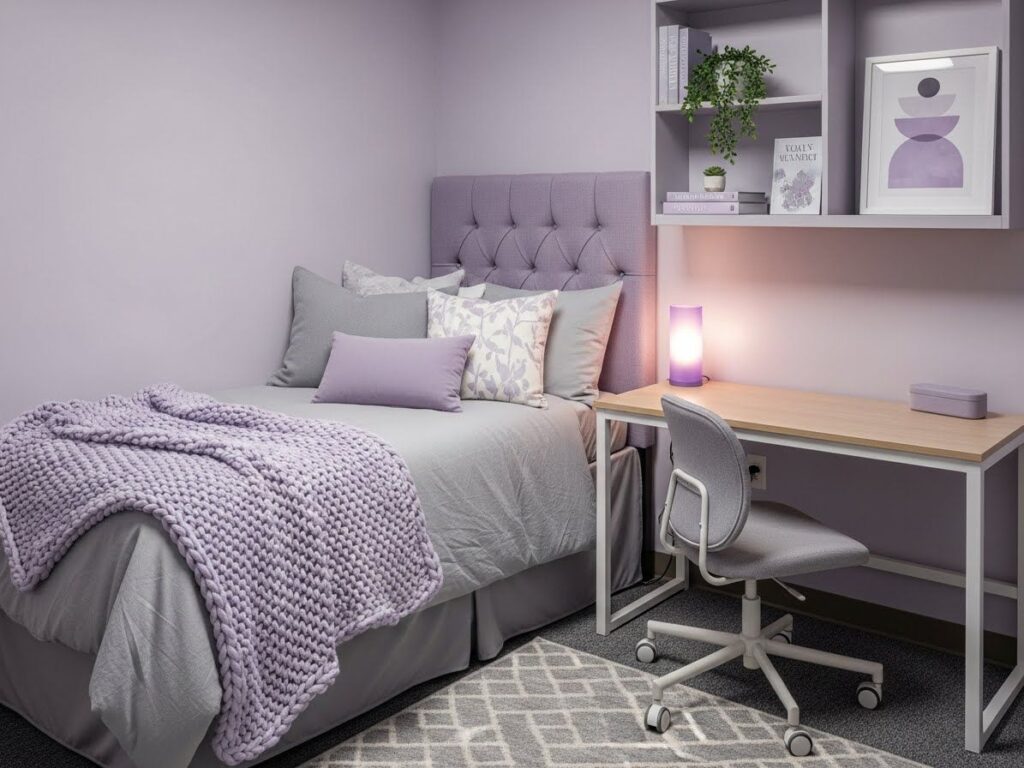
This dorm room color design is ideal for students who struggle with sleep or anxiety, as it promotes relaxation without sacrificing style.
10. Neutral Base with Flexible Accent Colors
A neutral base combined with interchangeable accent colors is one of the most practical Dorm Room Color Designs for college students. Beige, white, or gray foundations allow students to refresh their space easily throughout the year.
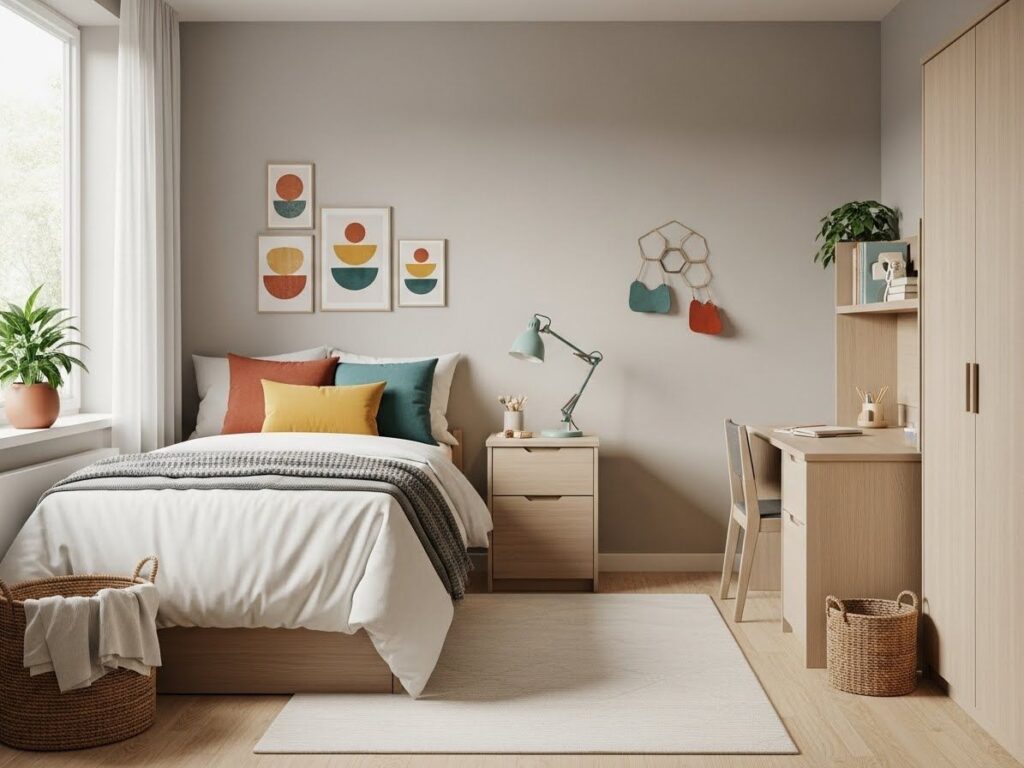
Accent colors can be changed seasonally or based on mood, making this approach perfect for rental-safe dorm design and long-term flexibility.
11. Black, White, and One Bold Accent Color
This high-contrast dorm room color design creates a visually striking yet balanced space. Black and white provide structure, while a single bold accent color adds personality.
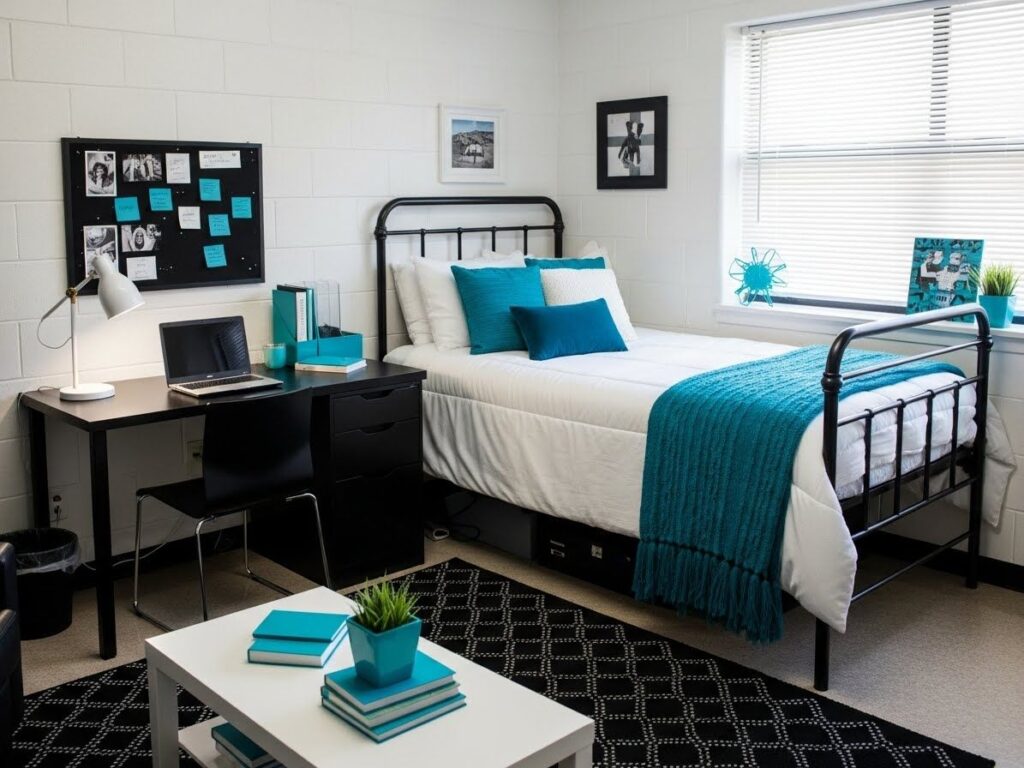
This design is ideal for students who want a bold look without clutter. Keeping the accent color limited ensures the room remains cohesive and dorm-friendly.
12. Taupe and Cream for Cozy Comfort
Taupe and cream create a soft, warm atmosphere that feels comforting after long days on campus. This combination works especially well in shared dorm rooms because it appeals to a wide range of tastes.

The subtle contrast between taupe and cream keeps the room interesting while maintaining a peaceful tone.
13. Forest Green with Natural Beige
Forest green brings a grounding, nature-inspired feel to dorm rooms, especially beneficial for students living in urban campuses. Beige keeps the design balanced and prevents the space from feeling too dark.

This dorm room color design pairs beautifully with plants and natural textures, enhancing overall dorm room aesthetics.
14. All-White Dorm Room with Textural Layers
An all-white dorm room can be incredibly stylish when layered with texture. Different fabrics, subtle patterns, and soft materials prevent the space from looking sterile.

This design maximizes light and is ideal for very small dorm room spaces where openness is key.
15. Dusty Blue and Warm Wood Combination
Dusty blue provides calmness while warm wood adds comfort and visual interest. This color design feels balanced and welcoming, making it ideal for long-term dorm living.
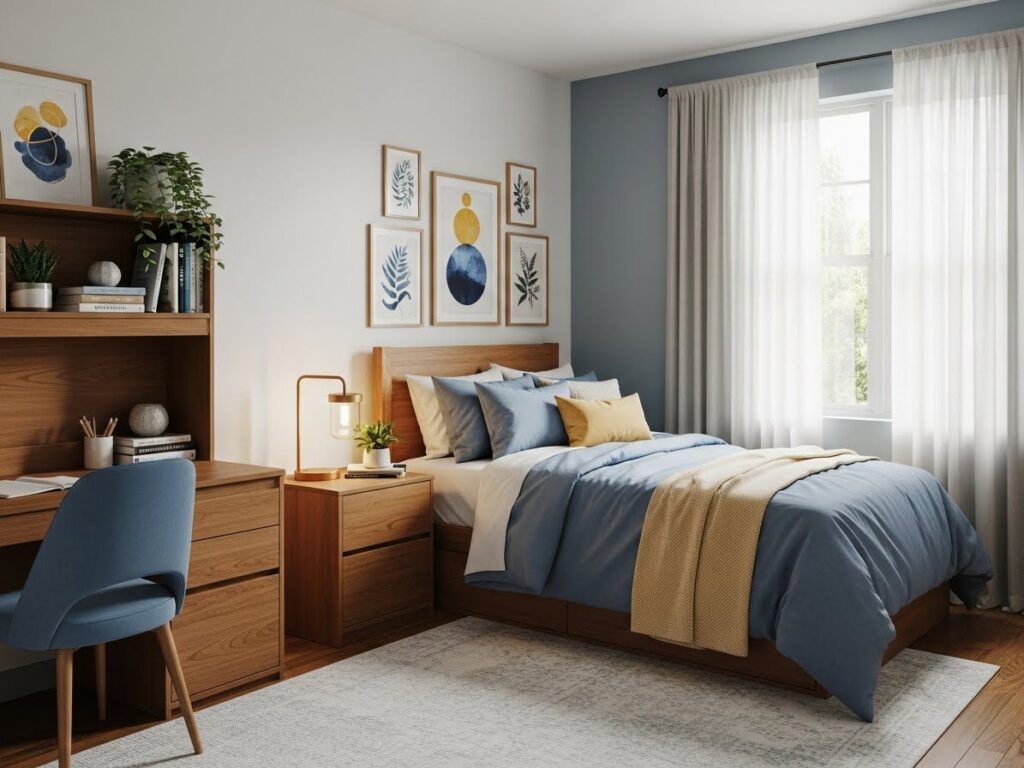
It works well with standard dorm furniture and requires minimal additional decor.
16. Beige, Black, and Linen Neutrals
This neutral-heavy dorm room color palette offers a modern, clean look that is easy to maintain. Beige softens the contrast created by black, while linen textures add warmth.
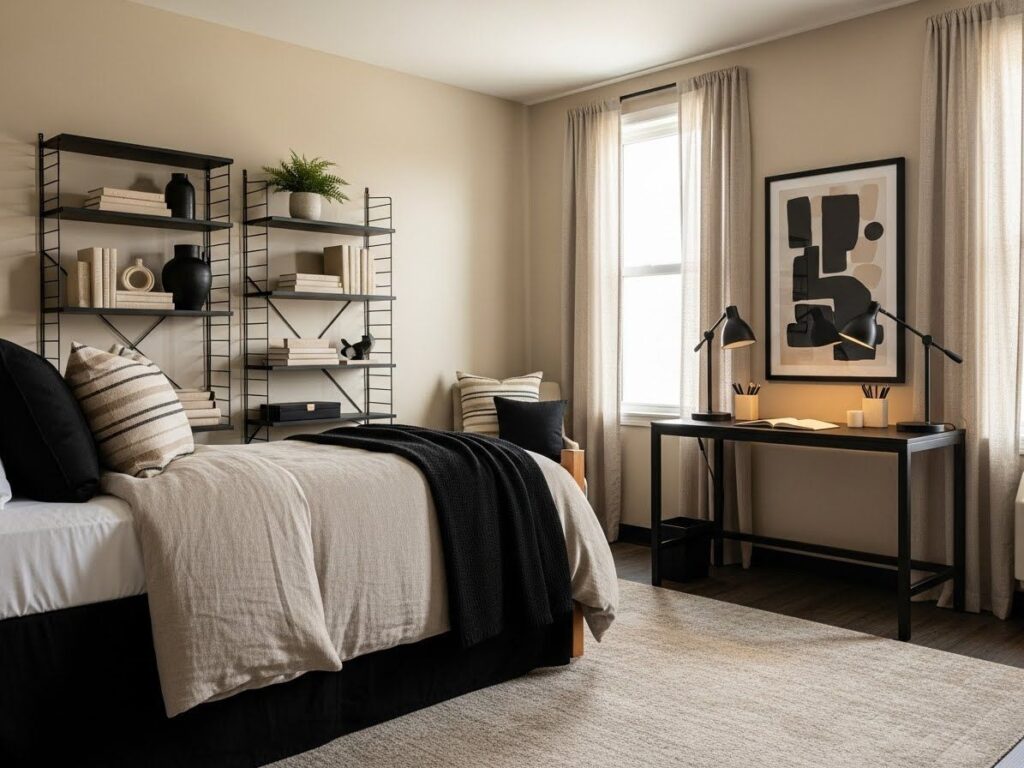
This design is particularly popular in minimalist student housing interiors.
17. Soft Yellow with White and Gray
Soft yellow adds optimism and energy to a dorm room without becoming overwhelming. When paired with white and gray, it creates a cheerful yet balanced environment.

This color design works best as an accent-driven approach, keeping the room bright and uplifting.
Final Thoughts on Dorm Room Color Designs
Choosing the right Dorm Room Color Designs can dramatically improve your college living experience. From calming neutrals to mood-boosting accents, the right palette helps create a space that supports studying, relaxation, and personal expression.
By using neutral base colors, maintaining proper light and dark color balance, and applying accent colors thoughtfully, you can design a stylish, functional dorm room that feels like home—without breaking dorm rules or your budget.
Your dorm room may be temporary, but with the right color design, it can leave a lasting impact on your college journey.