
Introduction:
Contents
- 1 Introduction:
- 2 1. Save Room with Hanging Sliding Doors
- 3 2. Style Up with Sliding Barn Doors
- 4 3. Go Hidden with Pocket Doors
- 5 4. Reflect Light with Mirrored Doors
- 6 5. Clean Look with Frameless Doors
- 7 6. Calm Vibes with Shoji Doors
- 8 7. Flex Space with Sliding Walls
- 9 8. Fit Tight Spaces with Bypass Doors
- 10 9. Gentle Touch with Soft-Close Hardware
- 11 10. Quick Setup with Accordion Doors
- 12 How to Choose the Right Hanging Sliding Door for Your Space
- 13 11. Optimize Kitchen Flow
- 14 12. Bathroom Sliding Door Magic
- 15 13. Recessed Track Closet Doors
- 16 14. Murphy Bed Panels
- 17 15. Floating Barn Door Elegance
- 18 16. Private Zones with Sliding Panels
- 19 17. Use Strong Pocket Door Frame Hardware
- 20 18. Bright Spaces with Glass Sliding Doors
- 21 19. Hide the Mechanism with Hidden Tracks
- 22 20. Go Simple with Minimalist Sliding Doors
- 23 Hanging Sliding Doors: Cost Breakdown
- 24 Sliding Door Materials Compared
- 25 Frequently Asked Questions
- 26 Are sliding doors as secure as traditional doors?
- 27 Conclusion:
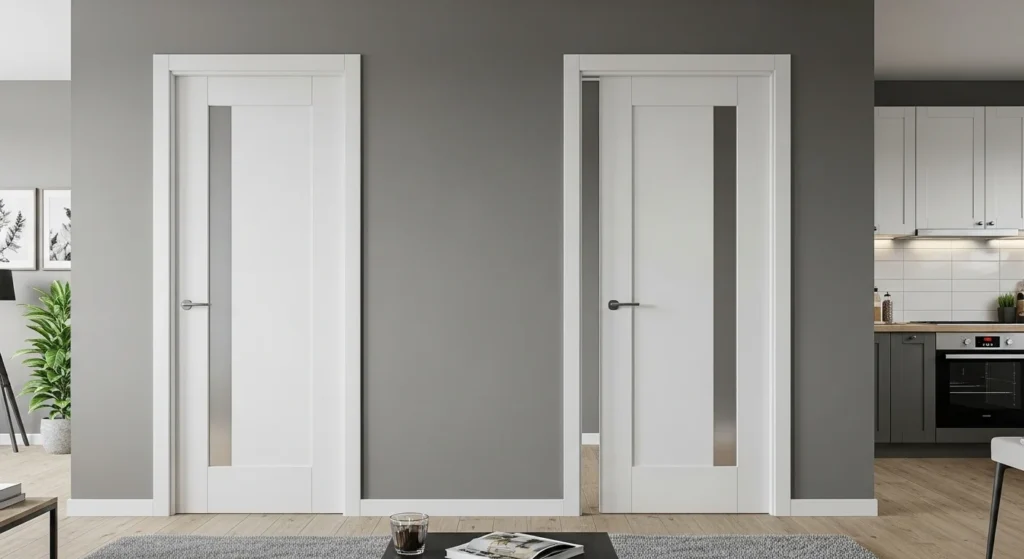
Struggling with cramped rooms and doors that steal precious space? You’re not alone-but what if a simple change could transform your home instantly? From sleek minimalism to smart room dividers, hanging sliding doors are the secret weapon every small-space owner needs.
In this article, we uncover 20 genius ways hanging sliding doors can maximize small spaces, plus we explore stunning Double Doors Design Ideas that bring both style and functionality together. Keep reading-you won’t want to miss a single space-saving trick!
Whether you’re renovating a studio apartment, a starter home, or just one cramped hallway, the right sliding door can instantly make a room feel 20% bigger without moving a single wall.
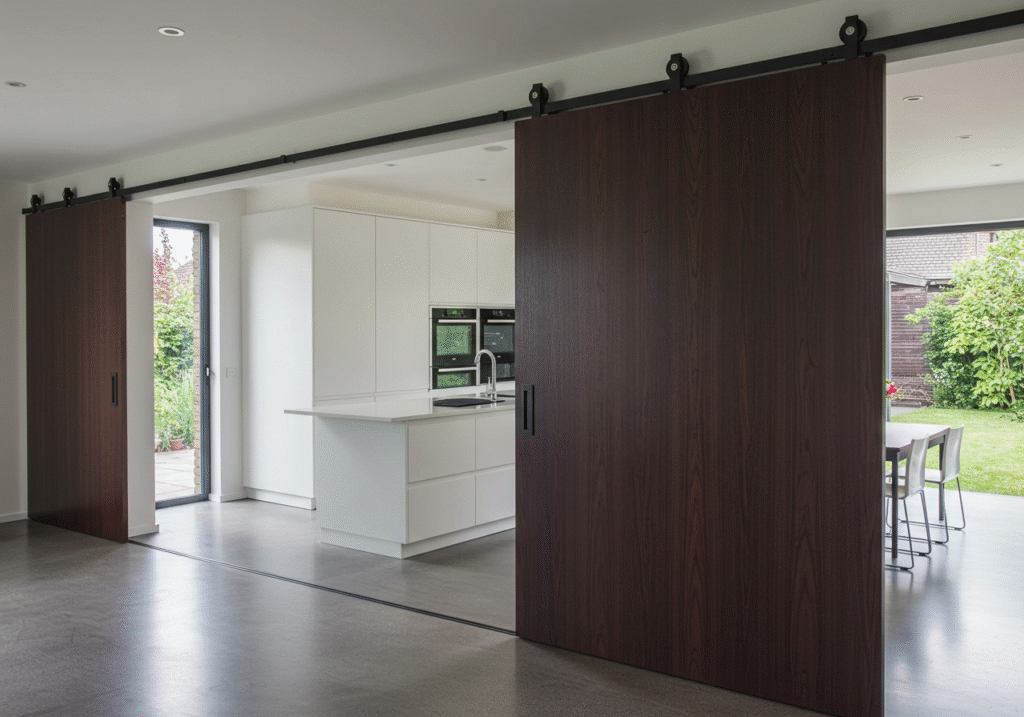
1. Save Room with Hanging Sliding Doors
Traditional hinged doors need 8–12 square feet of swing clearance – space most small rooms simply can’t spare. Hanging sliding doors solve this by moving along a wall-mounted track instead of swinging outward, which means the floor space in front of the door stays completely usable. This makes them ideal for compact bedrooms, tight kitchens, laundry nooks, and any room where furniture placement is already a puzzle. Because the door glides rather than swings, it also removes the risk of a door banging into a bed, dresser, or countertop. For renters and homeowners alike, this is one of the simplest space-saving door solutions available, often requiring no structural changes – just a track, rollers, and a wall with enough clearance to hang the panel.
Ideal for rooms under 100 sq ft
Smooth, quiet gliding function
Zero door-swing clearance needed
Works with existing door openings in most cases
2. Style Up with Sliding Barn Doors
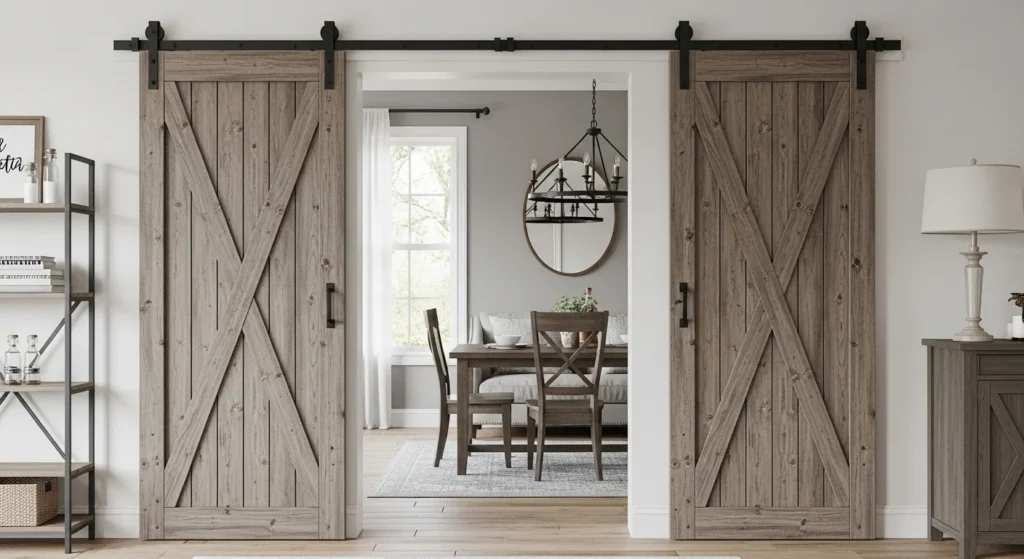
Sliding barn doors have become one of the most popular upgrades in modern and farmhouse-style homes, and for good reason — they double as both a functional door and a statement piece. Mounted on an exposed rail with visible hardware, they add texture and warmth to open floor plans, home offices, and pantries. Unlike traditional doors, barn doors move quietly and divide rooms without slamming, which makes them a practical choice for shared living spaces or homes with young kids. They also pair well with a wide range of finishes — from reclaimed wood to matte black steel track systems so they can lean rustic, industrial, or contemporary depending on the hardware and panel you choose. Because they mount on the wall surface rather than inside the frame, they also free up furniture placement directly beside the doorway.
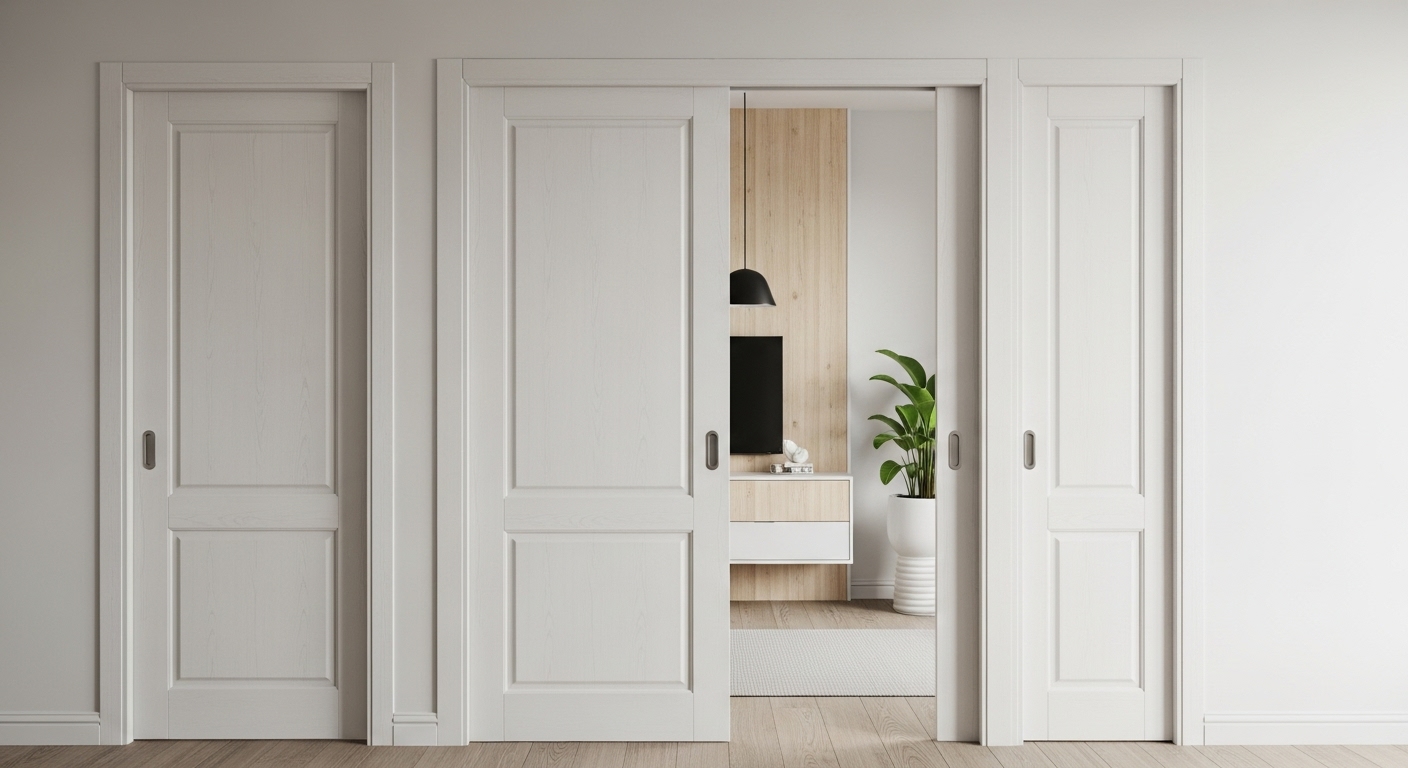
3. Go Hidden with Pocket Doors
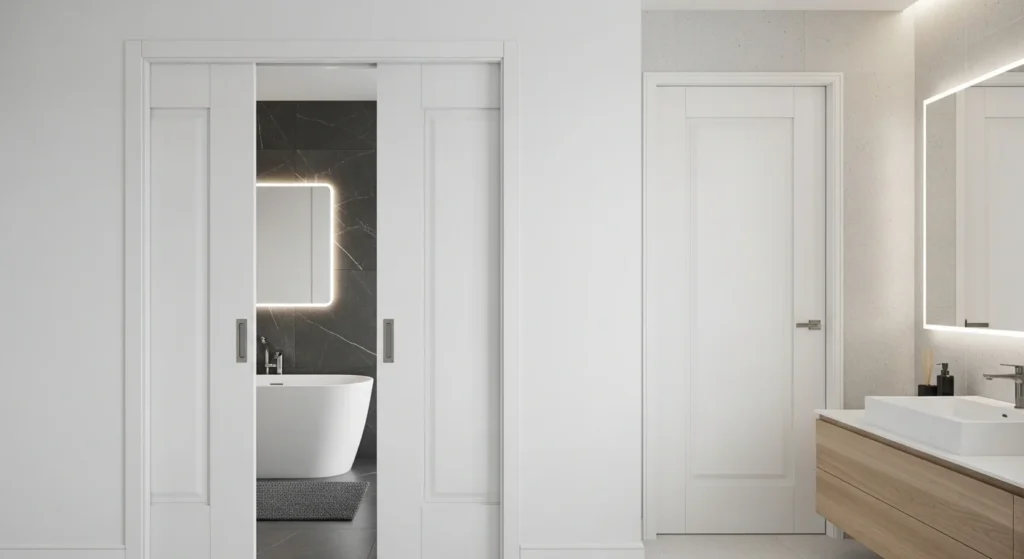
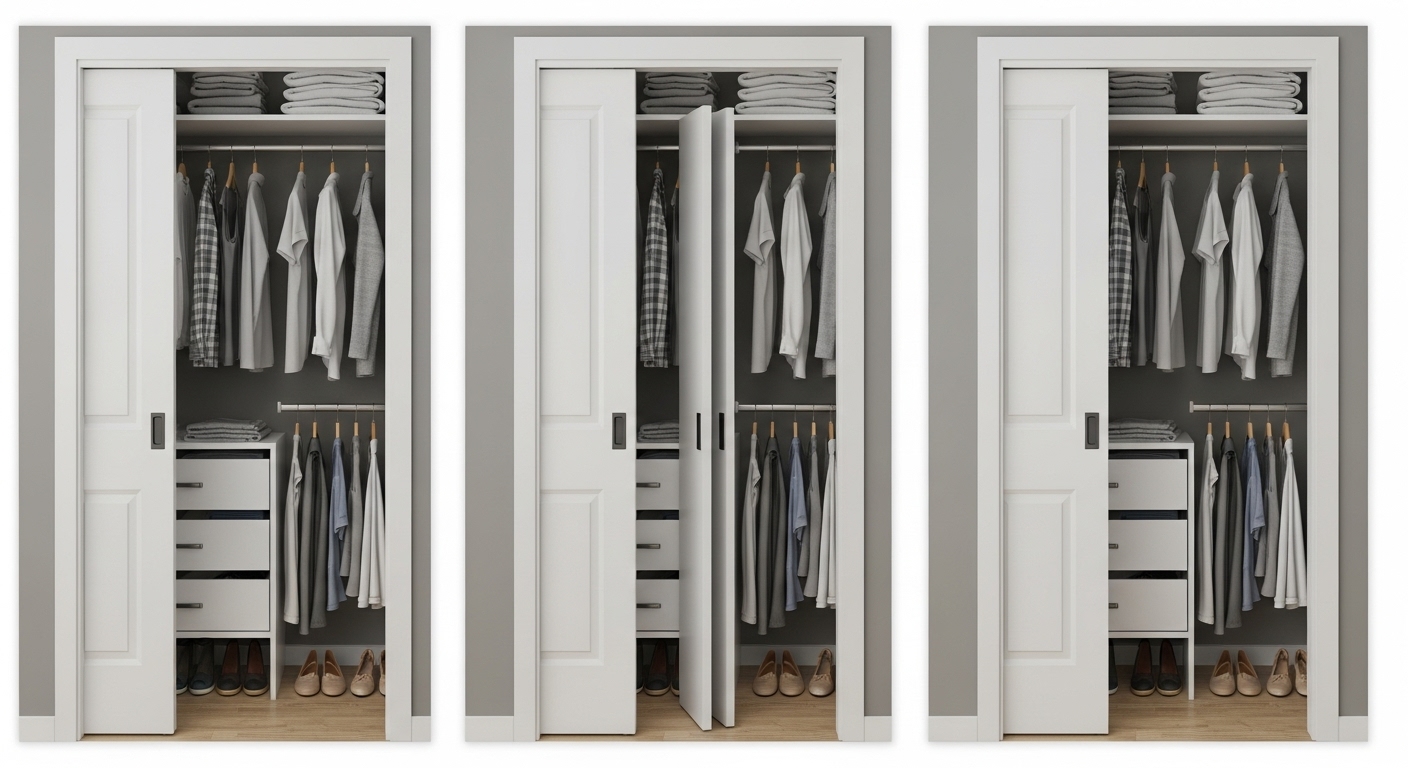
Pocket doors slide directly into a cavity built inside the wall, disappearing completely when open. This makes them one of the most space-efficient door styles available, especially for hallways, bathrooms, and closets where every inch of floor space counts. Because there’s no door panel occupying the room even partially, pocket doors allow for seamless transitions between spaces and make small rooms feel noticeably larger. The trade-off is installation complexity — pocket doors typically require opening up the wall to install a track and pocket frame, so they’re best planned during a renovation rather than as a quick weekend upgrade. Once installed, though, they offer one of the cleanest, most modern solutions for maximizing usable square footage in tight homes.
4. Reflect Light with Mirrored Doors
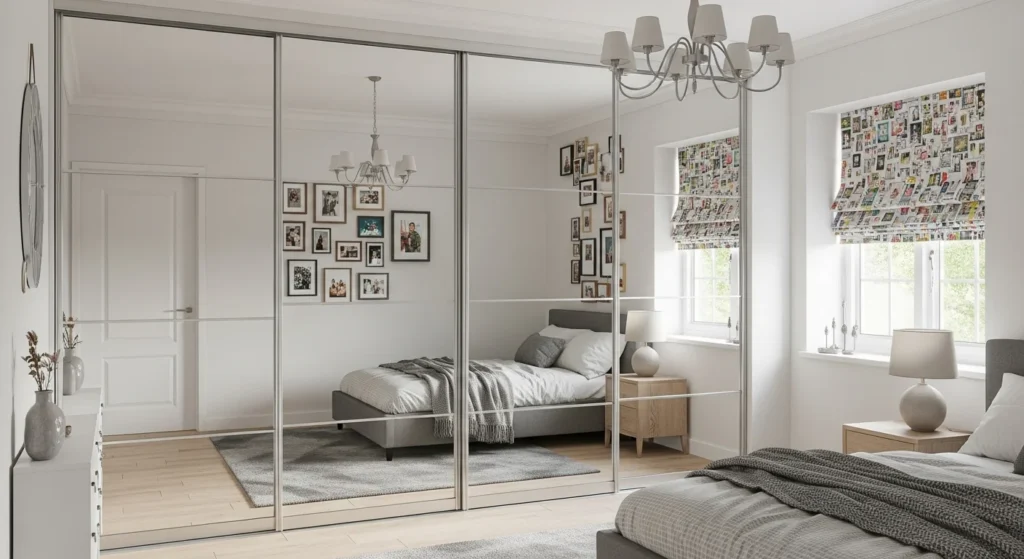
Mirrored sliding doors do double duty: they function as a door and as a light-bouncing surface that makes small rooms feel significantly larger. By reflecting existing natural or ambient light back into the room, they reduce the “boxed-in” feeling common in small bedrooms and closets. They’re especially effective on closet doors, where the mirror also eliminates the need for a separate full-length mirror — a nice space-saving bonus in tight bedrooms. Beyond function, mirrored panels bring a polished, hotel-suite feel to a space, and they work particularly well in rooms with limited window access, where maximizing available light matters most.
5. Clean Look with Frameless Doors
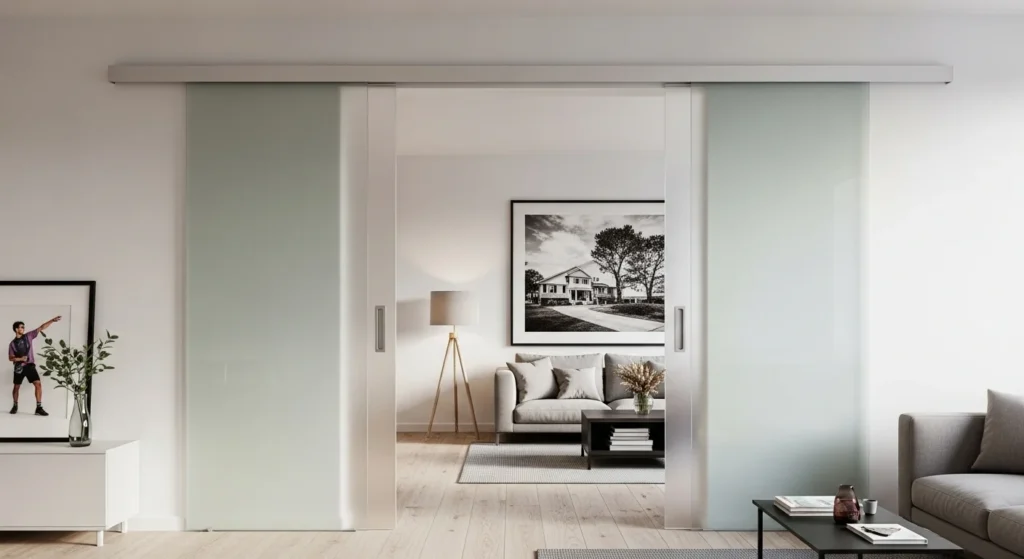
Frameless sliding doors strip away the visible borders and hardware that traditional doors rely on, creating an uninterrupted, minimalist sliding door design. Without a bulky frame drawing the eye, the door blends into the wall and ceiling line, which makes the entire room feel more open and continuous. This style works especially well in living rooms, home offices, and modern kitchens, where clean sightlines matter. Frameless designs are often paired with glass or solid-core panels and soft-close hardware, so they combine a sleek aesthetic with quiet, smooth operation — a favorite for anyone renovating with a contemporary or Scandinavian-inspired look in mind.
6. Calm Vibes with Shoji Doors
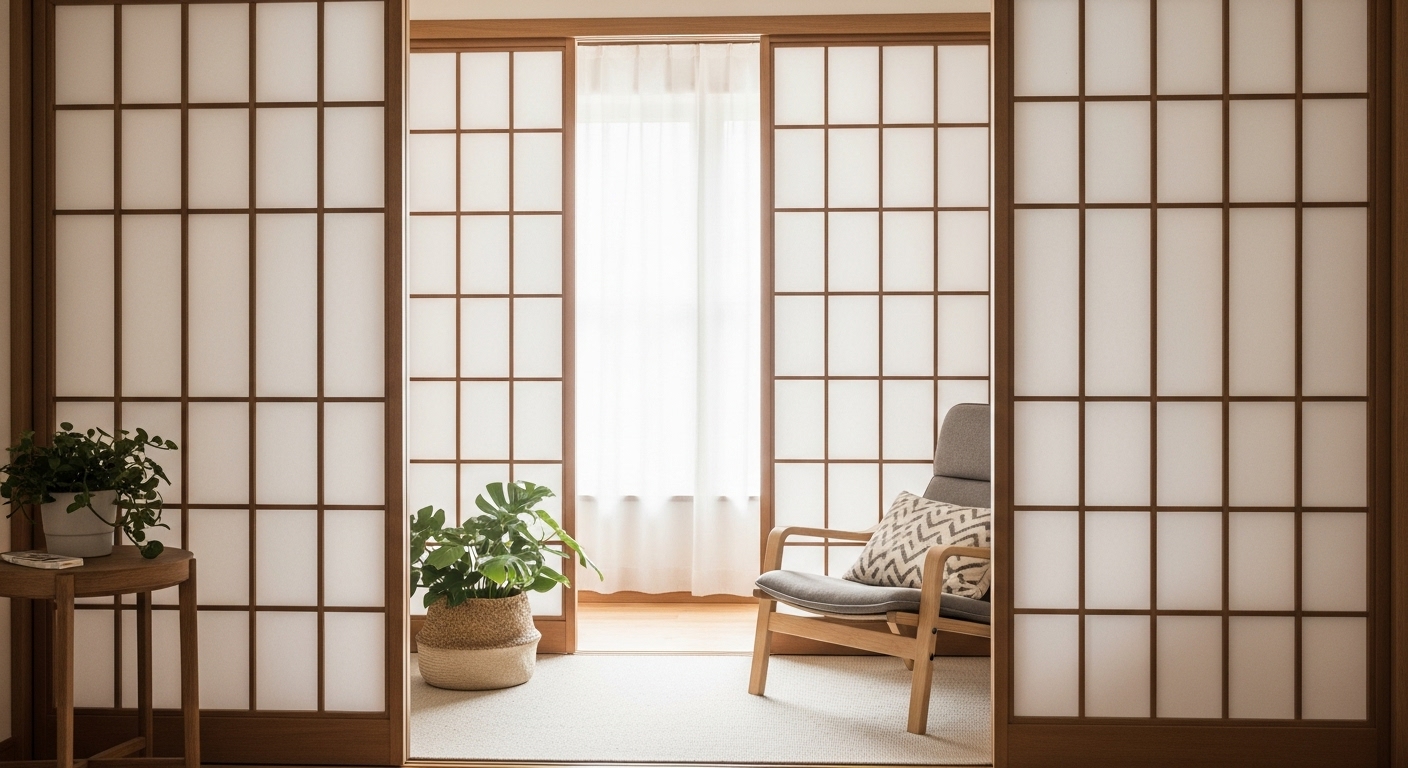
Shoji sliding doors — inspired by traditional Japanese design — use a lightweight wood frame and translucent paper or fabric panels that filter light instead of blocking it entirely. This creates a soft, diffused glow rather than harsh shadows, which is why they work so well in reading nooks, meditation corners, and bedrooms where a calming atmosphere matters. They provide privacy without feeling closed-off, and because the panels are lightweight, the doors glide with very little effort. Shoji doors also add natural texture and a sense of craftsmanship that mass-produced doors often lack, making them a popular choice for anyone leaning into a Japandi or wabi-sabi interior style.
7. Flex Space with Sliding Walls
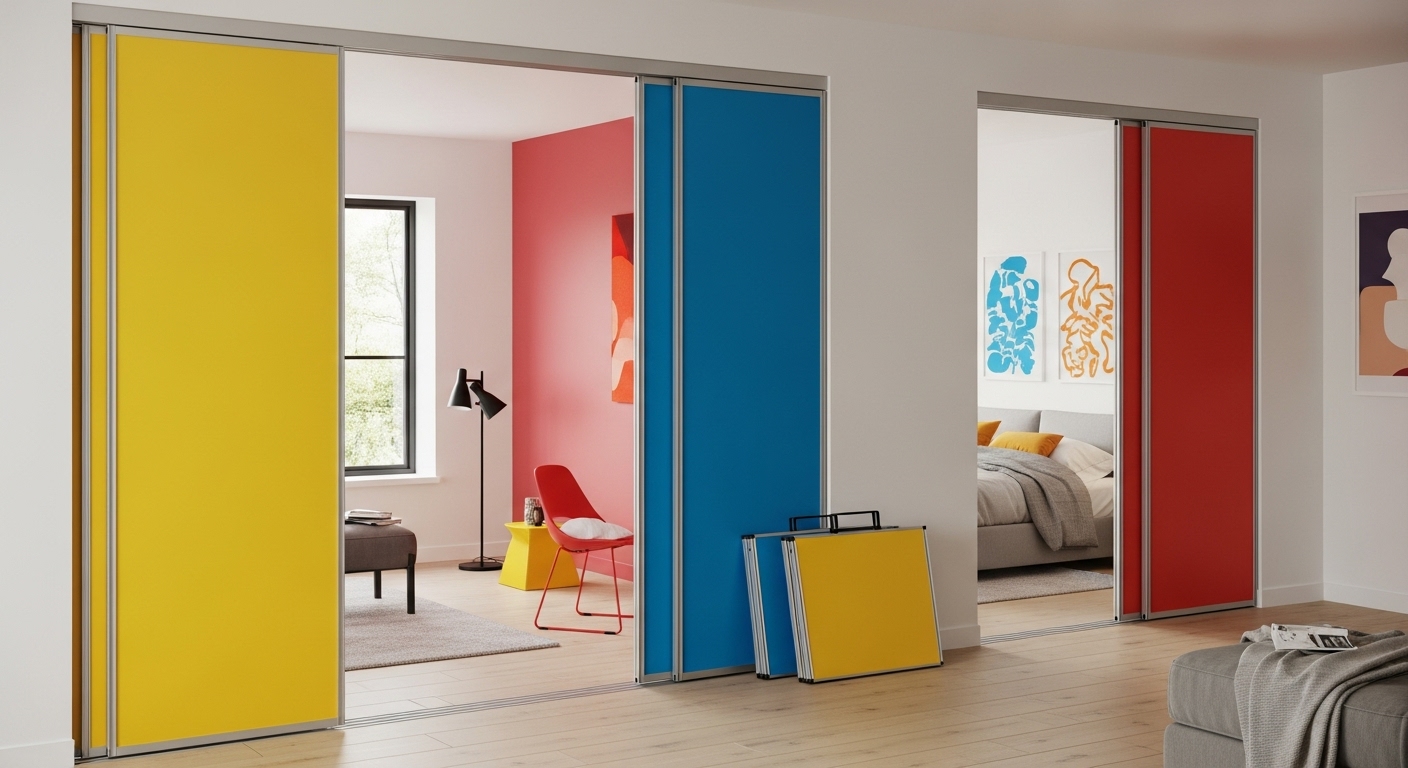
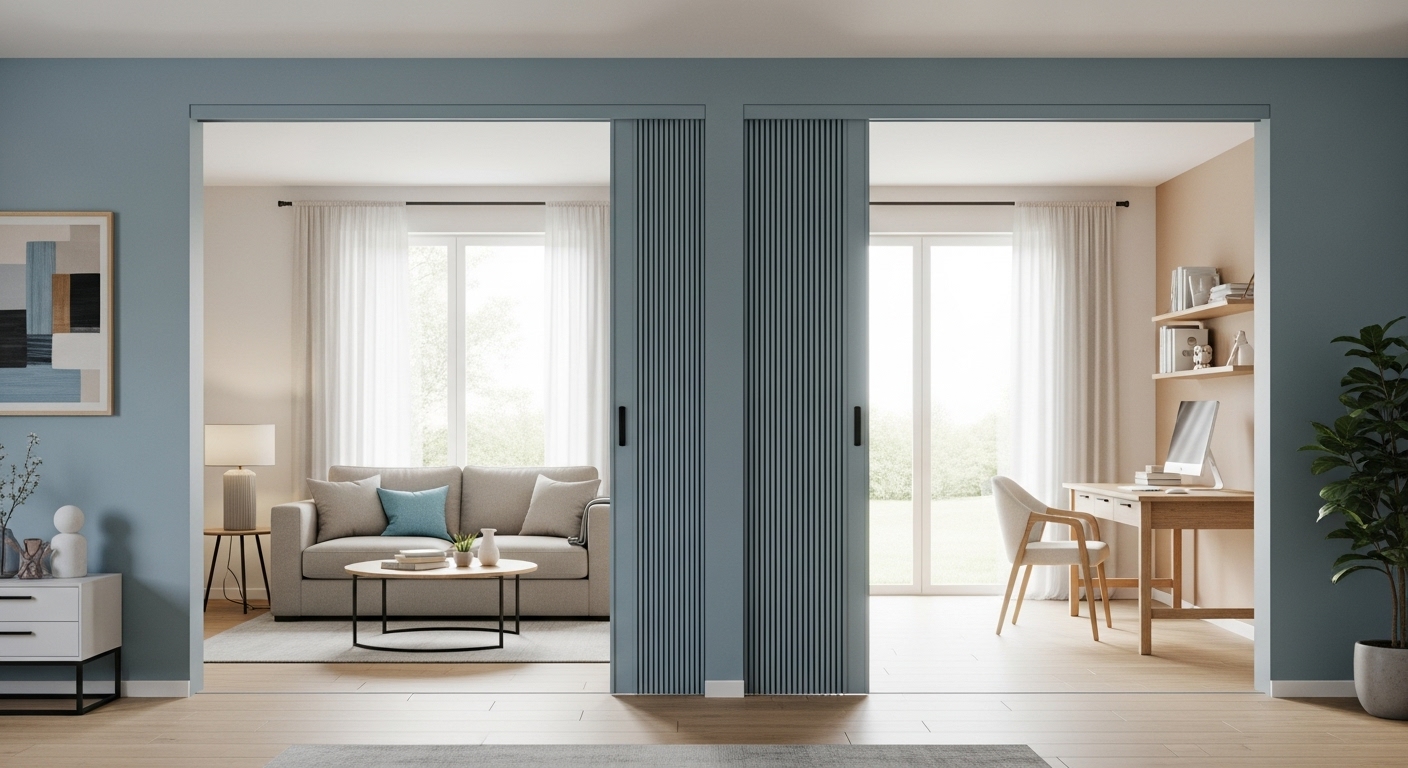
Sliding walls take the room-divider concept a step further than a single door — they’re large panel systems that can section off an entire room when needed and disappear when not. This makes them especially valuable in small apartments and studios, where one room might need to function as a bedroom at night and a living space during the day. Most sliding wall systems are lightweight and mounted on an overhead track, so they can be moved, folded, or stacked to one side in seconds. They’re a genuinely multi-functional solution for open-concept homes that still need occasional privacy or separation.
8. Fit Tight Spaces with Bypass Doors
Bypass doors use two (or more) parallel tracks so panels can slide past each other rather than folding or pocketing into the wall. This makes them a go-to option for closets, since they don’t require the wall cavity a pocket door needs or the side clearance a barn door needs. They’re especially useful in hallway closets and reach-in closets where space on either side of the opening is limited. While bypass doors typically only allow access to half the closet opening at a time, their low installation cost and minimal space requirements make them one of the most practical closet space efficiency upgrades for budget renovations.
9. Gentle Touch with Soft-Close Hardware
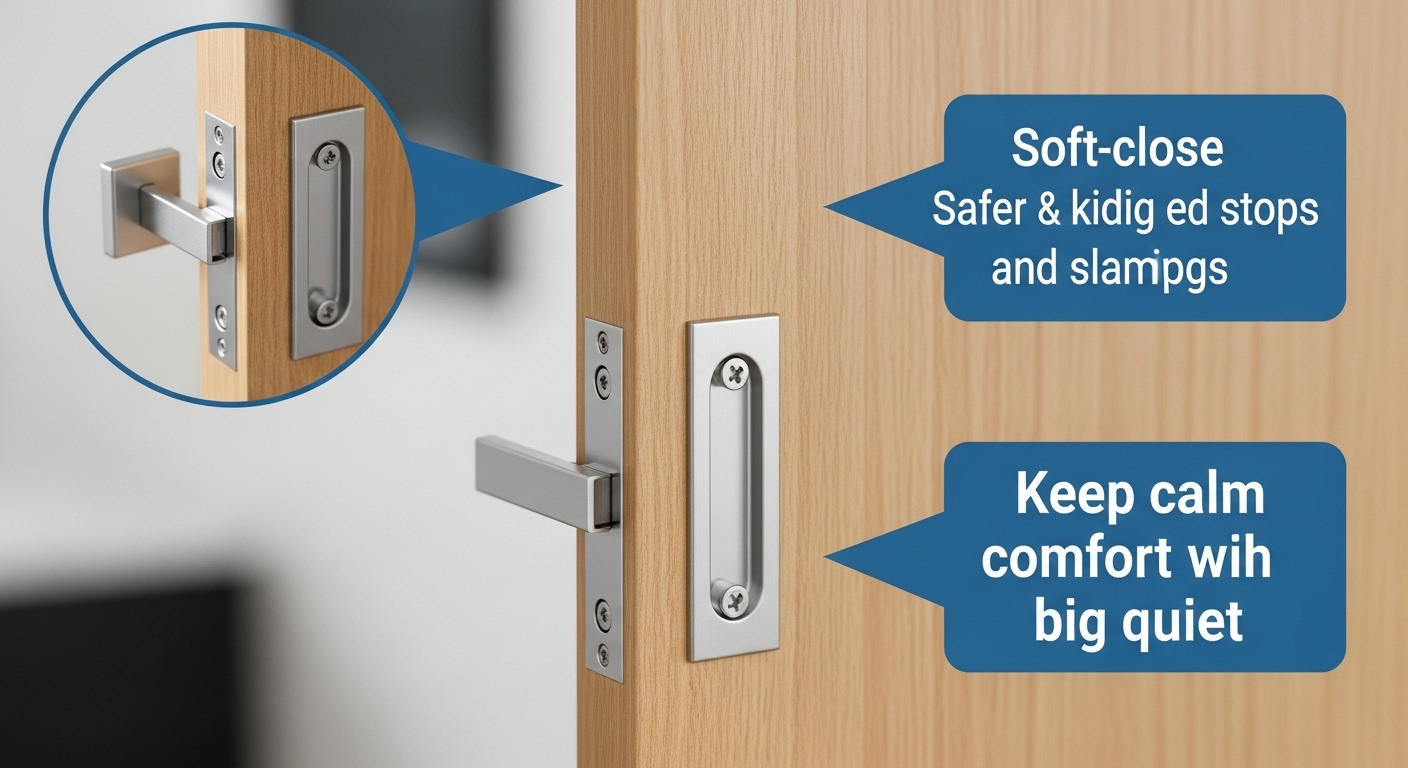
Soft-close sliding door hardware uses a small damper mechanism that slows the door in the final few inches of travel, preventing the loud bang of a door slamming shut. This might sound like a minor feature, but it makes a real difference in homes with young kids, pets, or shared walls, where slamming doors are a constant low-grade annoyance. Soft-close systems also reduce wear on the track and rollers over time, extending the hardware’s lifespan. It’s a relatively inexpensive upgrade — often just a matter of swapping the roller assembly — that adds a noticeable boost in comfort and perceived quality to any sliding door setup.
10. Quick Setup with Accordion Doors
Accordion doors fold in a zig-zag pattern along a track, allowing them to compress into a very narrow footprint when open. This makes them one of the fastest and most affordable ways to divide a room or close off a closet, home office nook, or laundry area. Because they’re lightweight — often vinyl or thin wood-paneled — most accordion doors can be installed by one person in under an hour with basic tools. They’re a popular choice for renters and anyone on a tight renovation budget who still wants a functional room divider without the cost or complexity of a full barn door or pocket door system.
How to Choose the Right Hanging Sliding Door for Your Space
With so many styles available, picking the right one comes down to three questions:
1. How much wall space do you have beside the opening?
Barn doors and bypass doors need clear wall space equal to roughly the width of the door panel. If your walls are covered in windows, outlets, or furniture, a pocket door (which disappears inside the wall) or an accordion door (which folds to a narrow footprint) will fit better.
2. Do you need privacy or just separation?
Solid-core doors, frameless panels, and barn doors offer full privacy and sound dampening. Shoji doors and sliding walls offer visual separation and some acoustic buffering but aren’t ideal for spaces needing full privacy, like a bathroom.
3. What’s your installation budget and timeline?
Surface-mounted options (barn doors, bypass doors, accordion doors) are weekend-friendly DIY projects. Pocket doors require wall modification and are best scheduled during a broader renovation when the wall is already open.
A quick rule of thumb: if you’re renovating on a budget and want the biggest visual impact, a barn door delivers the most style per dollar. If square footage is your top priority, a pocket door or bypass door wins.
11. Optimize Kitchen Flow
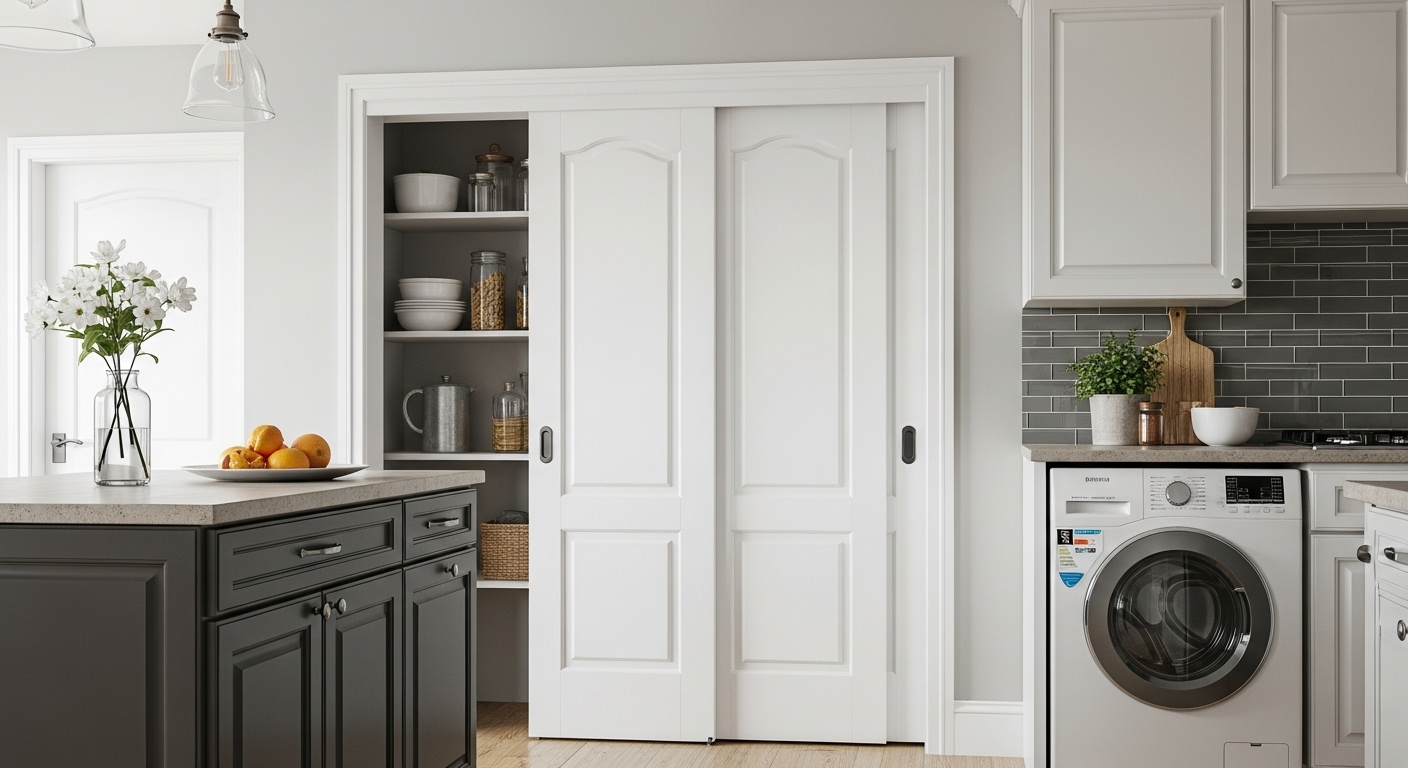
Sliding doors in the kitchen help keep sightlines open between the cooking area and adjoining spaces like a pantry, laundry room, or mudroom entry. Instead of a hinged door swinging into a walkway — a common tripping hazard in galley kitchens — a sliding panel keeps the path clear at all times. This is especially useful near high-traffic zones like the entry from a garage or backyard, where doors are opened and closed frequently throughout the day. Sliding pantry doors also make cleaning easier, since there’s no door swing to navigate around with a mop or vacuum, and glass or frosted panel options let you glance in without fully opening the door.
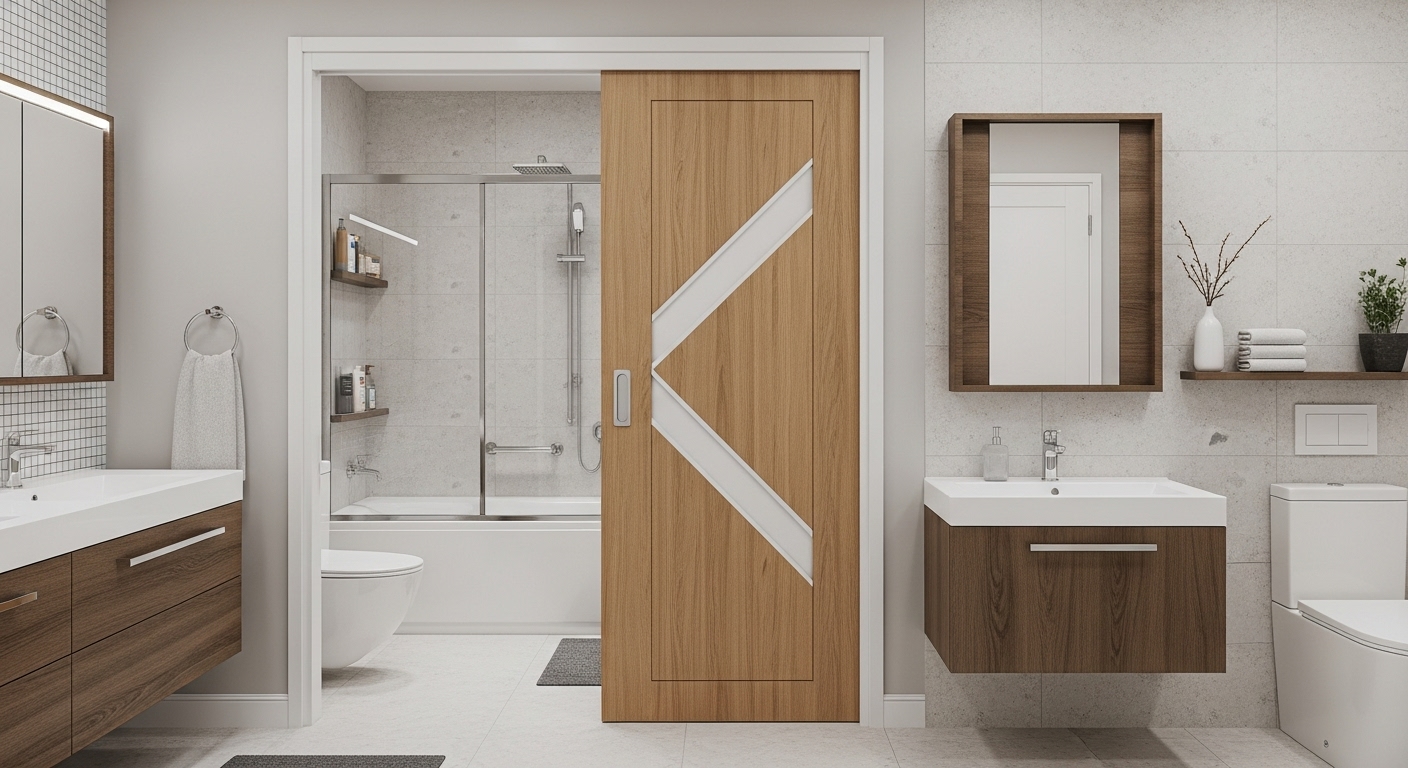
12. Bathroom Sliding Door Magic
In small bathrooms, a swinging door often has to clear the sink, toilet, or tub — which can make the layout feel cramped or even limit fixture placement. Sliding doors eliminate that constraint entirely, since they travel along the wall rather than into the room. This is particularly useful in powder rooms, ensuite bathrooms, and any space under 40 square feet, where a swinging door radius can eat up nearly a third of the usable floor. Pocket doors are the most popular bathroom option since they vanish completely, but a well-sealed barn door with a privacy latch also works well for guest bathrooms.
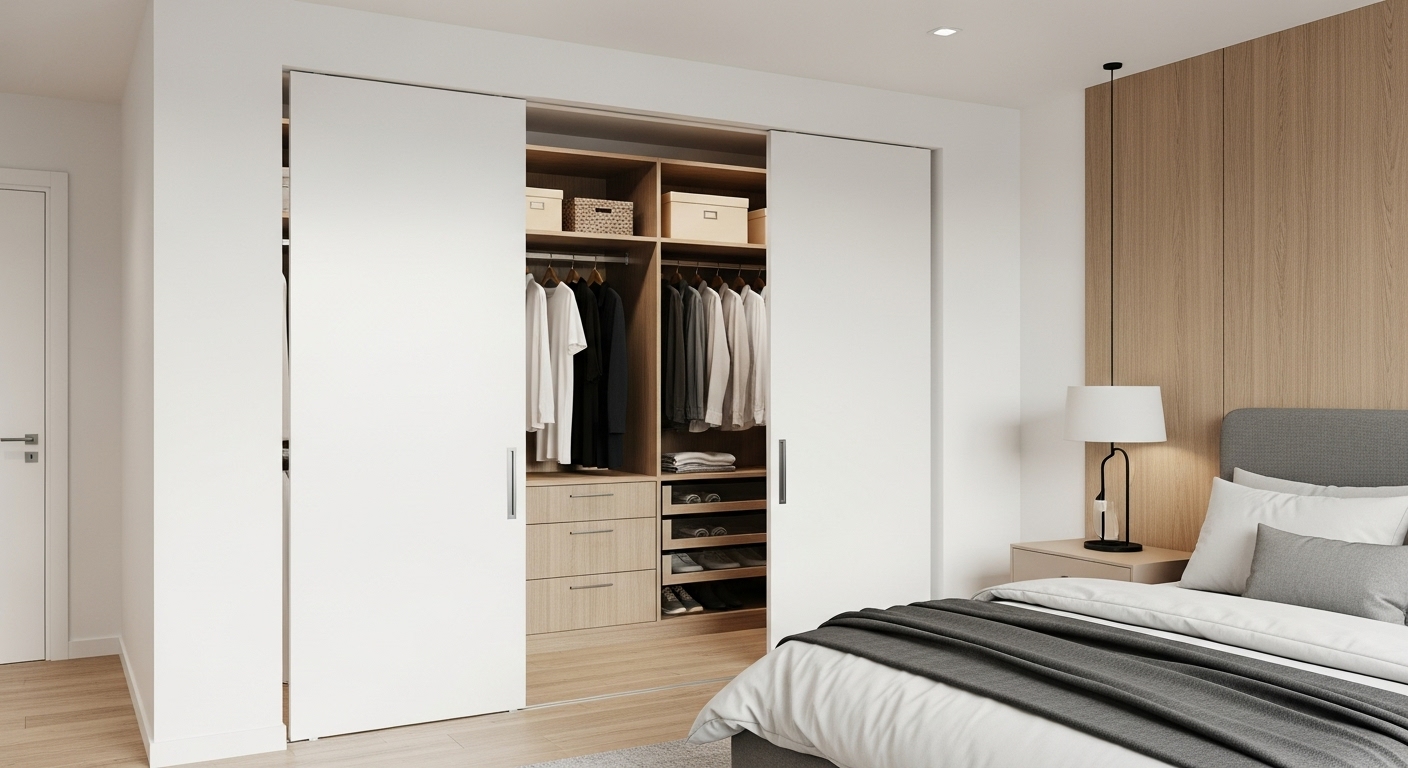
13. Recessed Track Closet Doors
A recessed track system tucks the door’s hardware into a routed channel in the wall or ceiling, so nothing protrudes into the room. This creates an ultra-clean, almost invisible mechanism — ideal for modern and minimalist interiors where visible hardware would clash with the design. Recessed tracks are especially popular for walk-in closets, where a flush, gallery-like look is often the goal. Because the track sits below the ceiling line or inside a wall pocket rather than mounted on the surface, the door glides smoothly while keeping the closet opening visually seamless with the surrounding wall.
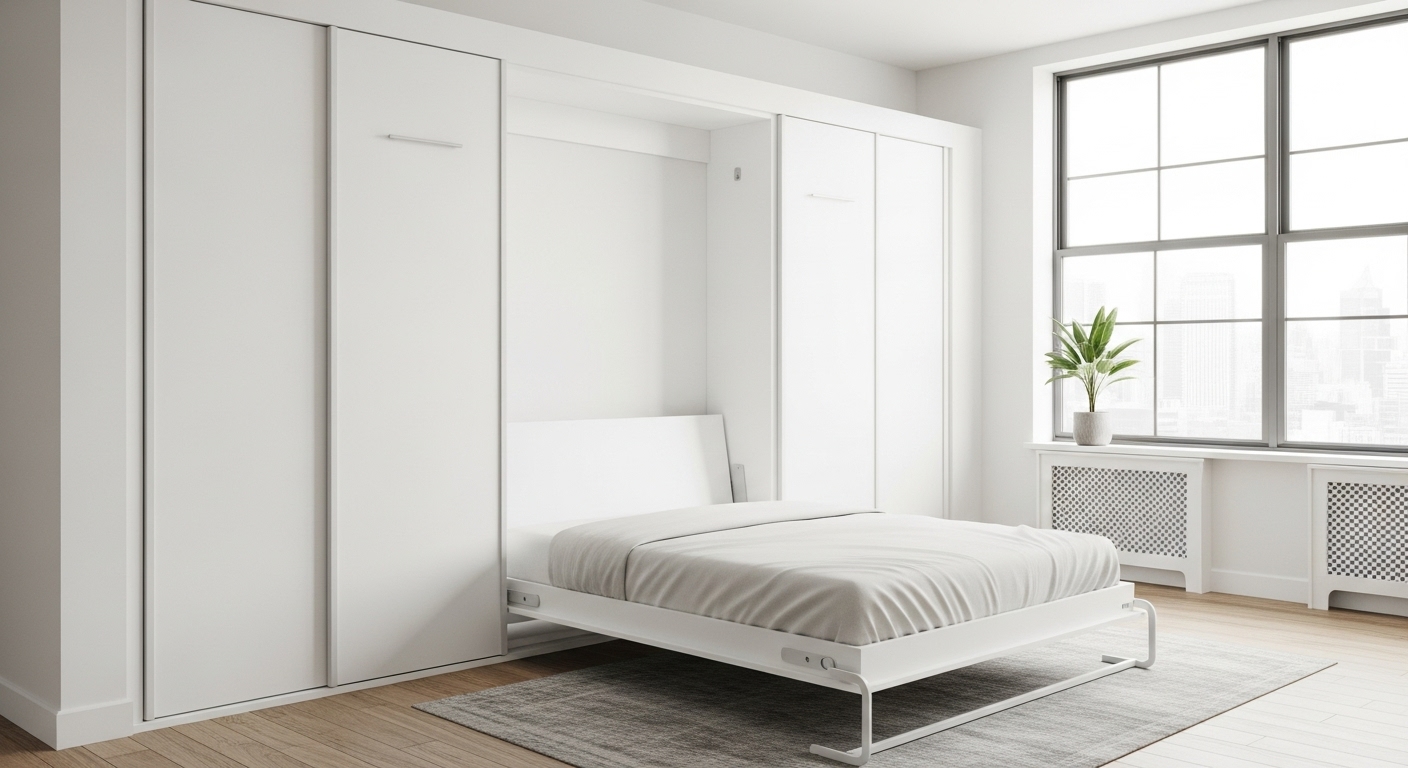
14. Murphy Bed Panels
Sliding panels are a popular way to conceal a Murphy bed during the day, transforming a bedroom into a home office, studio, or guest room in seconds. Rather than a permanent visible bed frame, the sliding panel creates a clean wall-like appearance when the bed is folded away, which matters most in studio apartments and multi-purpose guest rooms. Many homeowners pair the sliding panel with built-in shelving on either side, turning the whole wall into a functional storage-and-sleep unit. It’s one of the most effective small-space upgrades for anyone who needs a room to serve two completely different purposes.
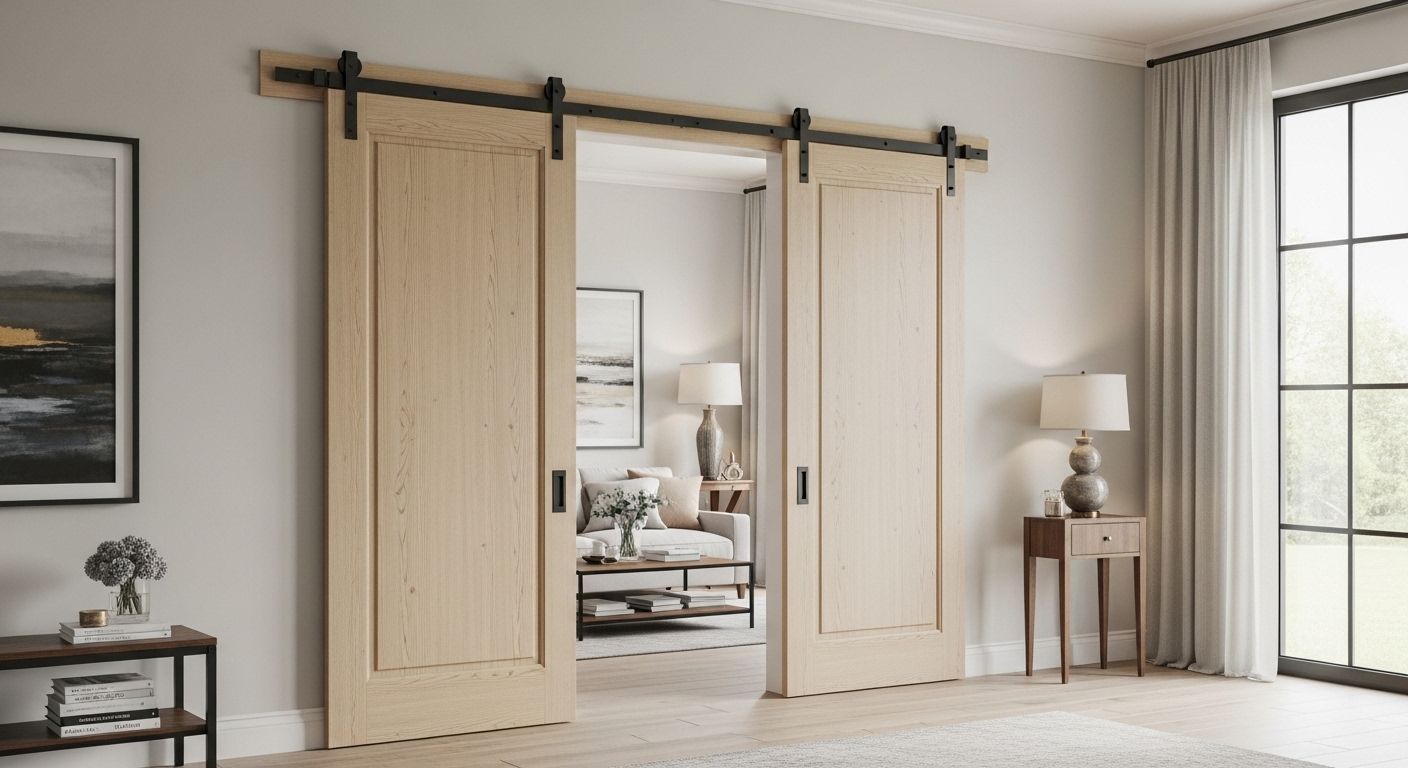
15. Floating Barn Door Elegance
Floating barn doors use an engineered top-mounted track and roller system with no bottom guide or floor track, which gives the door a “floating” appearance as it glides. This not only looks sleek and modern, it also removes the tripping hazard and cleaning hassle that a floor track can create. Because there’s no bottom rail to align, installation is typically faster than traditional barn door systems, and the finished look works especially well in hallways, tight corners, and open-concept spaces where a floor track would visually clutter the transition between rooms.
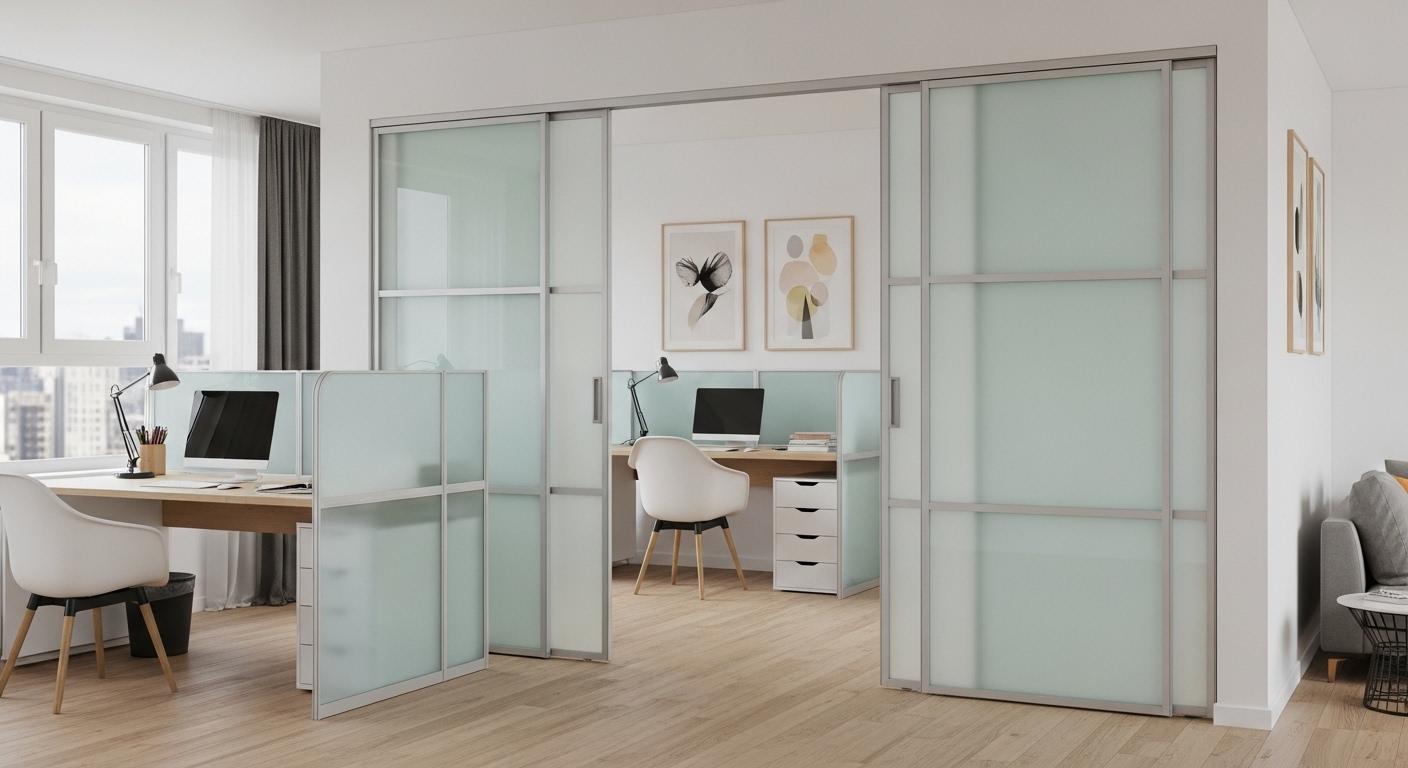
16. Private Zones with Sliding Panels
As more homes double as workspaces, sliding panels have become a popular way to carve out a private zone without committing to permanent construction. A single panel or small track system can section off a corner of a living room or bedroom into a makeshift home office, giving video-call privacy during the day and disappearing back into an open layout in the evening. Because the panels are lightweight and quick to reposition, they offer flexibility that a built wall simply can’t — ideal for renters or anyone whose space needs change from week to week.
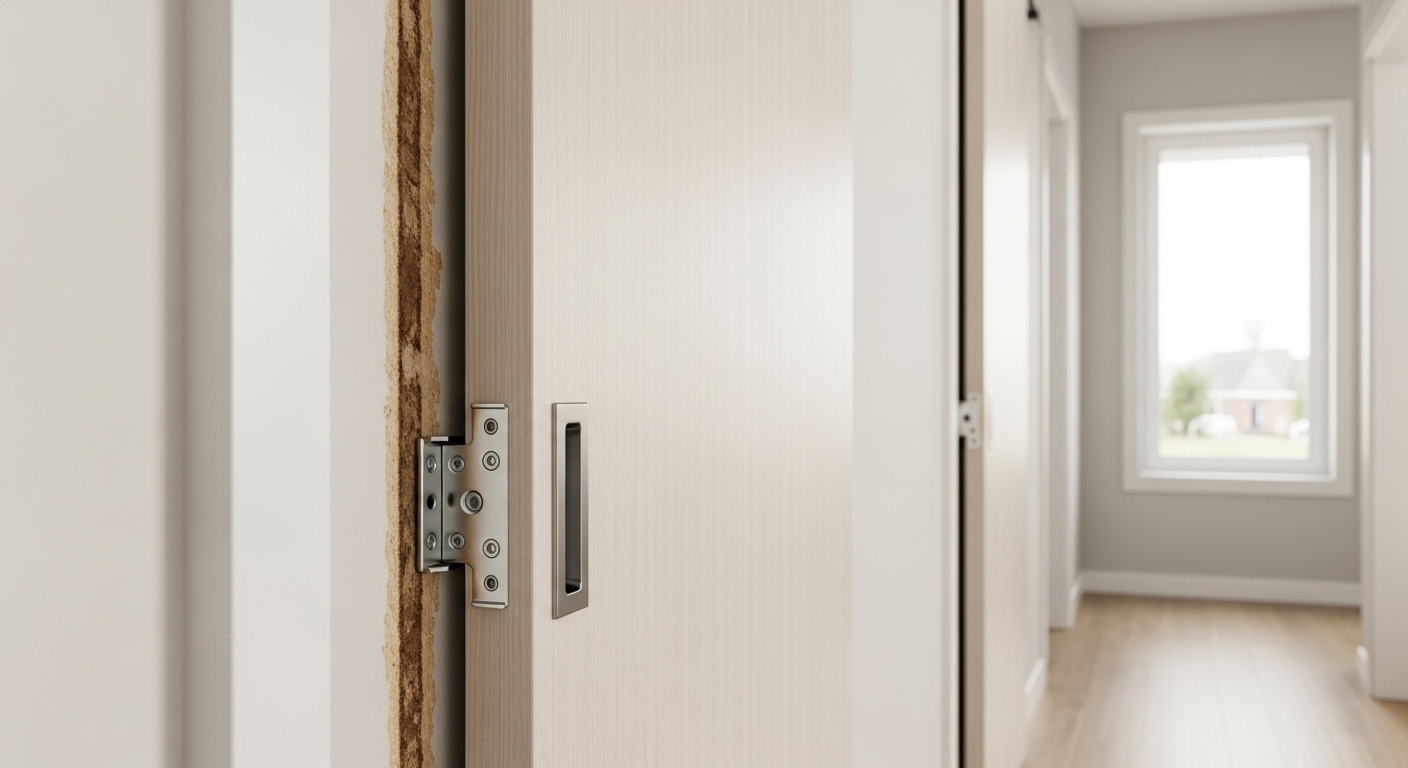
17. Use Strong Pocket Door Frame Hardware
The frame hardware behind a pocket door does most of the heavy lifting — it needs to support the door’s weight over thousands of open-close cycles without sagging, sticking, or coming loose from the wall studs. Investing in a quality steel frame kit rather than a budget option pays off long-term, since frame failures are notoriously difficult to repair once drywall is closed up around them. A well-installed pocket door frame should feel just as sturdy as a standard door frame, and it’s especially important in higher-traffic areas like hallway bathrooms, where the door gets used dozens of times a day.
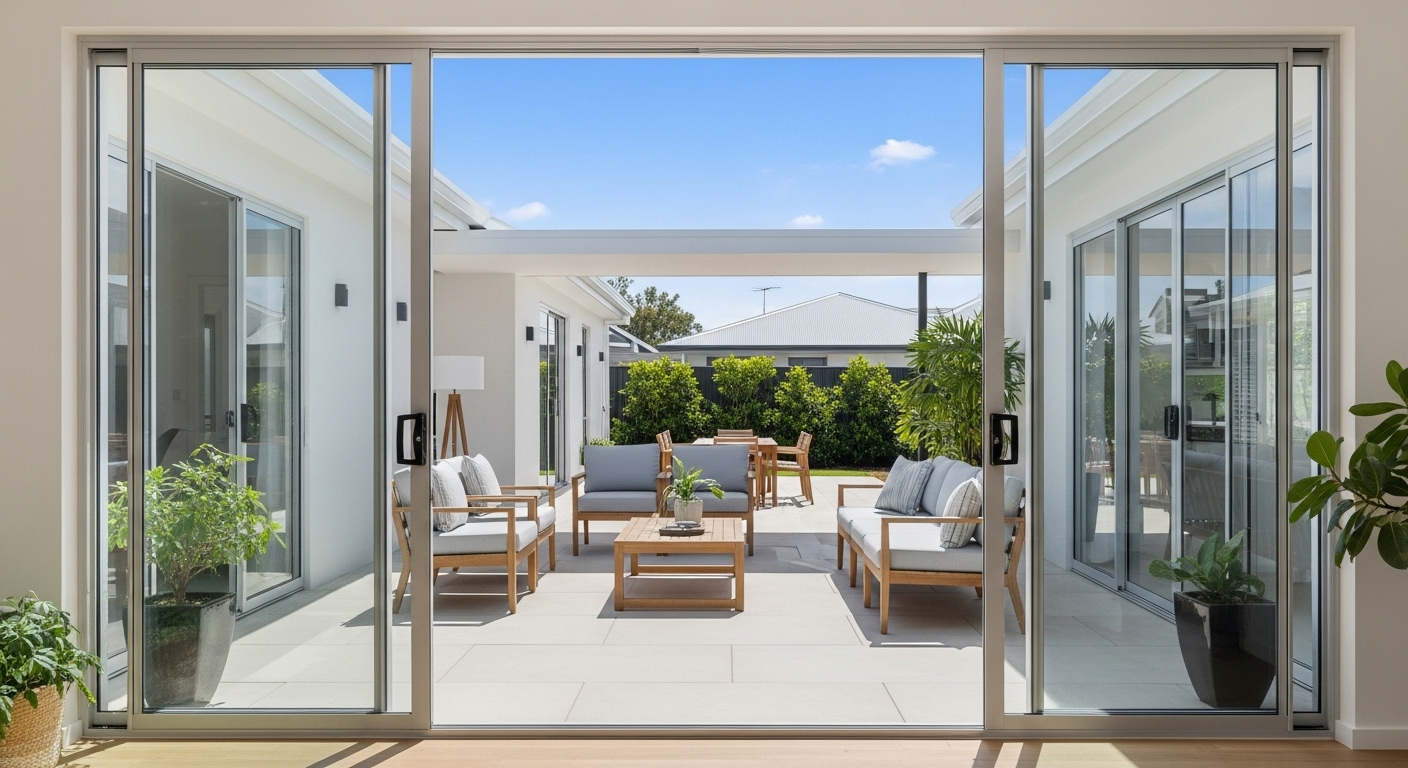
18. Bright Spaces with Glass Sliding Doors
Glass sliding doors are one of the most effective ways to visually expand a small room, since they let light travel freely between spaces instead of blocking it at a solid barrier. This works especially well connecting an indoor living area to a patio, sunroom, or backyard, where the glass creates a sense of continuity between inside and outside. Frosted or reeded glass options offer a middle ground — allowing light through while still providing privacy — which makes them a popular choice for home offices, bathrooms, and bedrooms that still want a bright, open feel without full visibility.
19. Hide the Mechanism with Hidden Tracks
Hidden track systems route the door’s rail into the ceiling or a recessed wall channel, so no visible hardware is left exposed. The result is a seamless, almost architectural look, where the door appears to glide with no visible mechanism at all. This style is especially popular in high-end modern renovations, where designers want the door itself — not the hardware — to be the visual focus. Because the track is enclosed, it also tends to collect less dust and stays cleaner over time than an exposed rail system.
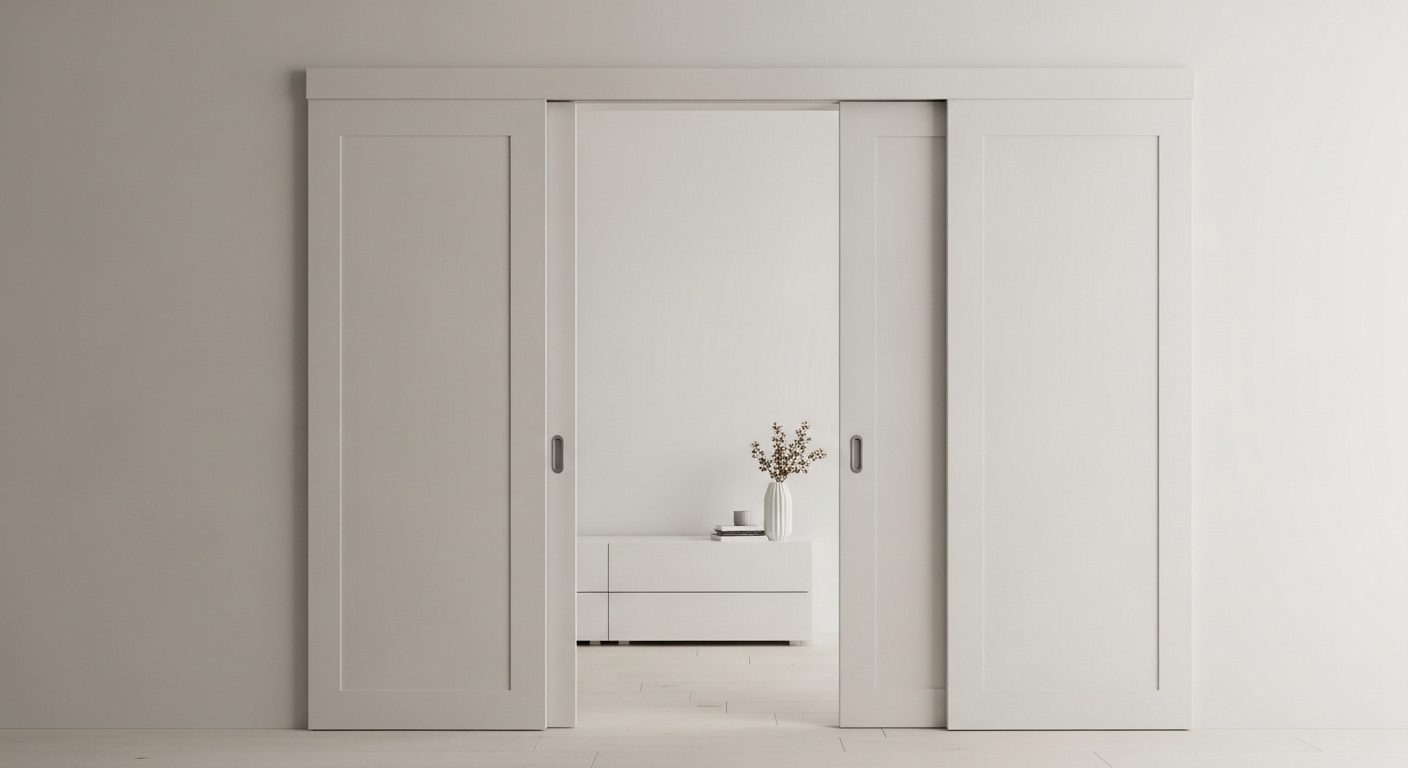
20. Go Simple with Minimalist Sliding Doors
Minimalist sliding doors strip away ornamentation entirely — no visible hinges, decorative trim, or bulky hardware, just a clean flat panel and a slim track. This makes them one of the most versatile options on this list, since a plain panel blends into almost any design style, from Scandinavian to industrial to mid-century modern. They’re particularly effective in small-room optimization, since a busy or ornate door can visually “shrink” a room by drawing the eye, while a minimalist panel lets the space itself take center stage.
Hanging Sliding Doors: Cost Breakdown
Budget is usually the deciding factor between door styles. Here’s a general cost range for materials and hardware (installation labor varies by region and is not included):
| Door Style | Typical Cost Range | Best For |
|---|---|---|
| Bypass closet doors | $150–$400 | Budget closet upgrades |
| Accordion doors | $100–$350 | Fast, temporary dividers |
| Standard barn door (hardware + panel) | $250–$800 | Statement pieces, open layouts |
| Frameless / minimalist panel | $300–$900 | Modern living rooms, offices |
| Mirrored sliding closet doors | $200–$600 | Bedrooms, small closets |
| Glass sliding doors | $400–$1,500+ | Patios, sunrooms, bright interiors |
| Pocket doors (incl. frame kit) | $500–$1,800+ | Bathrooms, hallways (renovation projects) |
| Shoji-style doors | $300–$1,000 | Reading nooks, calming spaces |
Sliding Door Materials Compared
| Material | Pros | Cons |
|---|---|---|
| Solid wood | Durable, classic look, good sound dampening | Heavier, needs sturdier hardware, higher cost |
| Engineered wood / MDF | Budget-friendly, easy to paint | Less durable in humid rooms |
| Glass | Maximizes light, modern look | Less privacy unless frosted, needs careful installation |
| Mirror | Doubles as a mirror, brightens rooms | Shows fingerprints/smudges, breakable |
| Metal-framed panel | Sleek, industrial look, low maintenance | Can feel cold stylistically, may show scratches |
Frequently Asked Questions
Do hanging sliding doors provide good soundproofing?
It depends on the style. Solid-core panels with weatherstripping offer decent sound dampening, similar to a standard interior door. Glass, shoji, and lightweight accordion doors offer much less acoustic privacy, so they’re better suited to visual separation than full soundproofing needs, like a home office next to a nursery.
Can I install a sliding barn door without professional help?
Yes, in most cases. Surface-mounted barn door kits are one of the more DIY-friendly upgrades on this list, typically requiring a stud finder, level, and basic tools. Pocket doors, on the other hand, usually require opening the wall and are better handled by a contractor or during a larger renovation.
Are sliding doors as secure as traditional doors?
Standard sliding doors can be fitted with privacy latches, but they generally don’t offer the same lock security as a deadbolt-equipped hinged door. For bedrooms or bathrooms where privacy matters, look for hardware specifically designed with a privacy lock/latch rather than a purely decorative pull
What’s the smallest room where a sliding door makes sense?
Even a room as small as a 3×4-foot laundry closet benefits from a sliding door, since it eliminates the swing radius entirely. Bypass or accordion doors work particularly well in these ultra-tight spaces.
Do sliding doors work well in older homes?
Yes, though wall condition matters. Surface-mounted barn doors and bypass doors work with almost any wall type. Pocket doors require the wall cavity to be free of plumbing, wiring, or structural elements, so it’s worth having a contractor check before committing to that style in an older home.
Conclusion:
Small homes deserve big ideas. Hanging sliding doors bring charm, light, and space. From pocket doors to mirrored panels, they serve both a purpose and beauty. They support privacy, movement, and comfort.
Use these smart options to maximize your living space. With the right choice, your rooms will feel brighter and more open. You’ll enjoy smooth transitions and a cleaner layout. Let your home shine with ease and elegance – one sliding door at a time.