

A farmhouse mudroom is a functional entryway space designed with rustic charm and practicality, often connecting the outdoors to the main living areas. It serves as a transitional area to store shoes, coats, and outdoor gear, keeping the home tidy and organized. Famous for its cozy yet utilitarian design, a farmhouse mudroom typically features elements like shiplap walls, sliding barn doors, sturdy benches with built-in storage, and hooks for hanging items.
It emphasizes natural materials such as wood and wicker, paired with neutral tones that evoke warmth and simplicity. The combination of functionality and style makes farmhouse mudrooms a favorite for families seeking an inviting and well-organized home.
Designing the Perfect Farmhouse Mudroom
Contents
- 1 Designing the Perfect Farmhouse Mudroom
- 2 Farmhouse Mudroom Storage Solutions
- 3 Decorating with Farmhouse Charm
- 4 Choosing Durable Flooring
- 5 Using a Neutral Color Palette
- 6 Incorporating Functional Farmhouse Furniture
- 7 Small Mudroom vs. Large Mudroom: What Actually Fits
- 8 DIY Farmhouse Mudroom Makeover
- 9 Enhancing Mudroom Utility
- 10 Farmhouse Mudroom Budget Guide
- 11 Frequently Asked Questions
- 11.1 How much space do I need for a functional mudroom?
- 11.2 Can I add a mudroom to a home that doesn’t have one?
- 11.3 What flooring holds up best to consistent mud and moisture?
- 11.4 Do I need a sliding barn door, or does a regular door work fine?
- 11.5 How do I keep a mudroom from becoming a dumping ground for clutter?
- 12 Conclusion:
Creating the ideal farmhouse mudroom starts with thoughtful planning. A functional layout and rustic elements ensure the space is both practical and charming.
Tips for Farmhouse Mudroom Design:
Choose practical layouts. A combined mudroom-laundry setup makes sense in smaller homes where dedicating separate square footage to each isn’t realistic — placing a stackable washer/dryer along one wall while keeping the entry storage on the opposite side lets both functions coexist without feeling cramped. If you have pets, a small pet station (a built-in feeding nook or a low bench for leash storage) near the door keeps muddy paws and gear contained to one zone rather than tracking through the house.
Install sliding barn doors. Beyond the rustic look, barn doors solve a real space problem — a swinging door needs floor clearance a mudroom often can’t spare once a bench, cubbies, and boot trays are in place. A single or double-track sliding door lets you close off the mudroom from the main living space (useful for containing mess or noise) without sacrificing any usable floor area. For more on choosing the right track and hardware, see our guide on hanging sliding doors for small spaces.
Use reclaimed wood accents. Reclaimed wood brings texture and history that new lumber can’t replicate, but it’s worth sourcing carefully — salvage yards and reclaimed building material suppliers are more reliable than random online listings for wood that’s been properly treated and is safe for interior use. Even a single reclaimed wood element (a shelf, a bench top, or wall trim) is often enough to establish the look without needing to reclaim the entire space.
Farmhouse Mudroom Storage Solutions
A clutter-free mudroom relies on smart storage solutions. These options not only keep the area organized but also maintain the farmhouse aesthetic.
Best Storage Ideas:
Built-in cubbies. Individual cubbies work best when sized to the people actually using them – a family with kids benefits from lower cubbies at a height they can reach independently, while an all-adult household can standardize cubby height throughout. Name labels (painted, engraved, or simple tags) aren’t just decorative – they meaningfully cut down on the “whose shoes are these” chaos in a busy household and encourage everyone to actually put things back in their own spot.
Open shelving units. Open shelving keeps frequently grabbed items like hats, gloves, and sunscreen visible and within easy reach, which matters more in a mudroom than almost any other storage space in the house, since these items are usually grabbed in a hurry on the way out the door. Keep the top shelf for less-used seasonal items and the lower, more accessible shelves for daily essentials.
Wicker storage baskets. Beyond the texture they add, baskets are useful precisely because they’re not fully organized internally – they’re ideal for the miscellaneous small items (dog leashes, sunglasses, umbrellas) that don’t have an obvious single home elsewhere. Choose baskets with handles if they’ll be pulled on and off shelves regularly, since handleless baskets are harder to maneuver one-handed while also holding a coat or bag.
Decorating with Farmhouse Charm
Décor plays a crucial role in achieving the rustic farmhouse look. Thoughtfully selected accents can elevate your mudroom’s style.
You may need to know about the Kitchen Sink Design with Cabinet Ideas
Must-Have Farmhouse Décor:
Vintage coat hooks. Cast iron or aged-brass hooks read as more authentically farmhouse than a uniform modern hook rail, and mismatched vintage hooks (sourced from flea markets or antique shops) can actually work in your favor here, adding a collected-over-time feel that’s hard to replicate with anything bought as a matching set.
Shiplap wall accents. Shiplap doesn’t need to cover an entire wall to read as farmhouse — a lower half-wall of shiplap paired with a simple paint color above is often more budget-friendly and just as effective as floor-to-ceiling coverage, especially in a smaller mudroom where full coverage can start to feel visually heavy.
Farmhouse lighting fixtures. Lantern-style pendants or industrial sconces do double duty as both functional lighting and a design anchor for the whole room — since a mudroom often lacks natural light (it’s frequently a converted garage entry, back hallway, or small addition), a warm-toned fixture matters more here than in almost any other room for setting the overall mood.
Choosing Durable Flooring
Mudrooms are high-traffic areas, so durable and easy-to-maintain flooring is a must. Your flooring choice should complement the farmhouse theme while standing up to everyday use.
Flooring Options for Farmhouse Mudrooms:
Porcelain or ceramic tile. Beyond durability, tile’s main advantage in a mudroom is how easily it handles standing water and mud without warping or staining — look specifically for a matte or textured finish rather than glossy tile, since wet, muddy floors combined with a slippery glossy surface is a real slip hazard in this particular room.
Sealed wood flooring. If you want the warmth of wood without tile’s harder, colder feel underfoot, a properly sealed hardwood or engineered wood floor can hold up in a mudroom — but it requires more diligence than tile, including prompt drying of any standing water and periodic resealing to prevent moisture damage at the seams.
Weather-resistant rugs. A rug positioned directly at the entry point does double duty: it protects whatever flooring is underneath from the most concentrated mud and moisture, and it gives everyone a clear, obvious spot to wipe shoes before continuing into the room. Choose a rubber-backed or specifically outdoor-rated rug rather than a standard indoor rug, since standard rug backing can trap moisture against the floor.
Using a Neutral Color Palette
A neutral color palette is essential for creating a calm and cohesive farmhouse mudroom. Soft hues enhance the rustic charm and provide a perfect backdrop for natural materials.
Popular Neutral Shades:
- Beige, white, and light gray. These lighter tones matter especially in mudrooms because the room is so often naturally dark — a converted garage entry or back hallway rarely gets much direct light, and a light color palette does real work reflecting whatever light is available rather than just looking pretty on a paint swatch.
- Earthy tones. If you want more warmth than a pure neutral palette provides, terracotta, warm taupe, or a deep sage green paired with reclaimed wood accents brings the same farmhouse warmth without straying into a busier, more colorful palette that can clash with the room’s utilitarian purpose.
Incorporating Functional Farmhouse Furniture
Furniture in a farmhouse mudroom should serve both form and function. Pieces that combine storage with seating are ideal for this space.
Furniture Ideas:
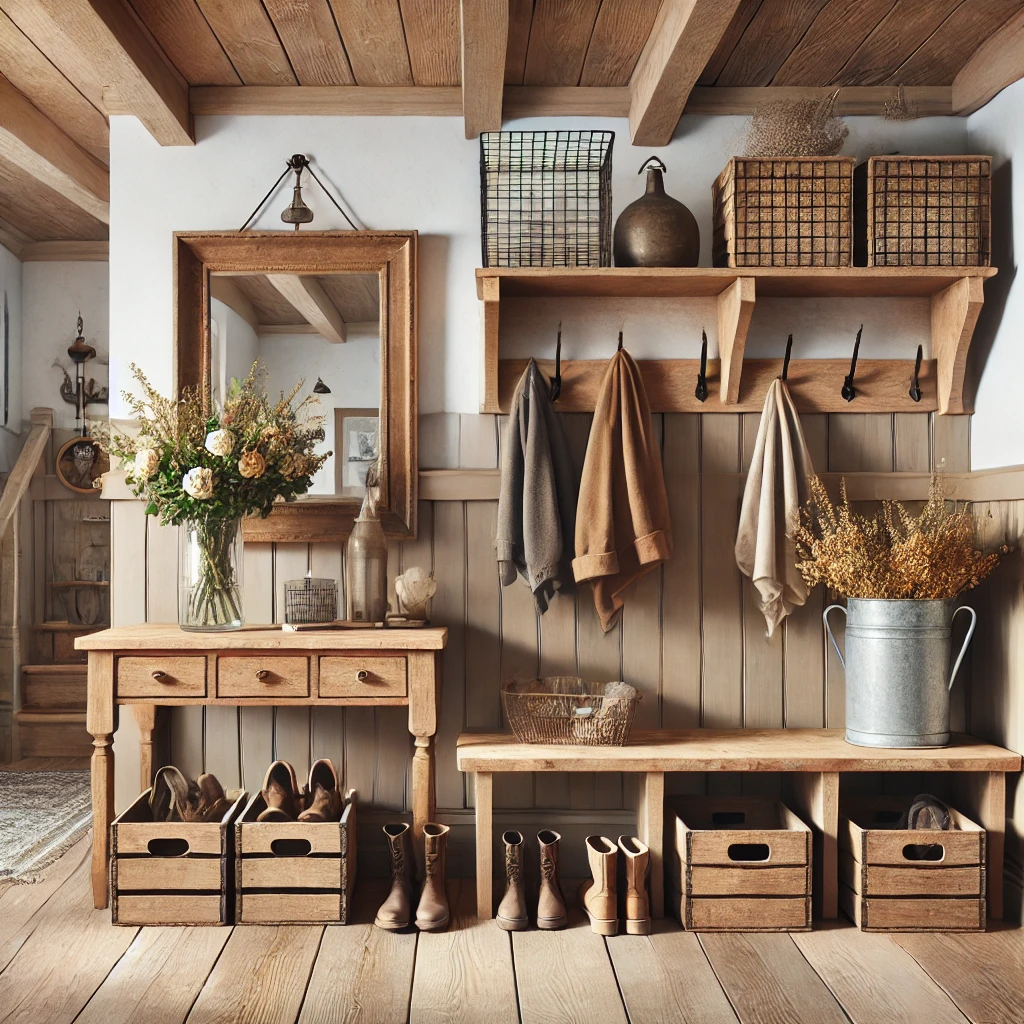
Farmhouse entryway bench. Hidden storage under the seat is the real value here — look specifically for a lift-top or drawer-style bench rather than open-underneath styles if hiding clutter, not just displaying it, is the priority. Bench depth matters too: aim for at least 16-18 inches to comfortably sit while putting on shoes, not just perch.
Wooden storage benches. A dedicated storage bench (rather than a combined bench-and-shelf unit) makes sense in mudrooms with enough separate wall space for open shelving or cubbies elsewhere, letting the bench focus purely on seating and enclosed storage rather than trying to do everything in one piece of furniture.
Custom cabinets for mudrooms. In smaller or oddly-shaped mudrooms, custom or semi-custom cabinetry is often the only way to use every inch of available space efficiently — a slightly awkward nook or angled wall that off-the-shelf furniture can’t accommodate is exactly where a custom build earns its higher price tag.
Small Mudroom vs. Large Mudroom: What Actually Fits
Not every idea above works in every mudroom — the right combination depends heavily on your available square footage.
Small mudrooms (under 40 sq ft, often a converted closet or narrow hallway): Prioritize vertical storage and multi-purpose pieces. A single narrow bench with hooks mounted directly above it, plus one or two wall-mounted cubbies, typically fits without feeling cramped. Skip freestanding furniture like a full storage cabinet — wall-mounted solutions preserve floor space that a small room can’t spare.
Mid-size mudrooms (40–80 sq ft): This is where a full bench-and-cubby combination, open shelving, and a small rug at the entry all fit comfortably together. It’s also usually enough space for a mudroom-laundry combination if you’re working with a stackable washer/dryer rather than side-by-side units.
Large mudrooms (80+ sq ft, often a dedicated addition): Enough space to add a utility sink, a dedicated pet station, a full-size (non-stacked) laundry setup, and a small workstation for mail and keys — essentially treating the space as a genuine multi-purpose room rather than just an entryway.
As a rule of thumb, measure your available wall length first — most mudroom furniture (benches, cubbies, cabinets) is sold or built based on linear feet of wall space, which is usually the limiting factor before floor area is.
DIY Farmhouse Mudroom Makeover
A DIY makeover is a cost-effective way to create a farmhouse mudroom that feels personal and unique. With a little creativity, you can design a stylish and functional space without breaking the bank.
DIY Ideas:
Repurpose old furniture. An old dresser with drawers removed from the lower section can become an open-cubby storage unit with minimal carpentry; a vintage bench frame just needs a new seat cushion and a coat of paint to fit a farmhouse mudroom. Look first at furniture you already own or can find secondhand before buying anything new-built for this purpose.
Handmade decorations. Simple painted signs (“Welcome,” family name, or a fun house rule like “leave your shoes here”) are one of the lowest-cost, highest-charm additions to a farmhouse mudroom, and they’re genuinely simple to make with basic stencils and leftover paint.
Affordable farmhouse décor. Thrift stores and online marketplaces are particularly good sources for this specific style, since farmhouse decor often intentionally looks aged or “collected over time” — meaning secondhand pieces frequently look more authentic than buying everything new from a big box store.
Enhancing Mudroom Utility
Beyond storage and décor, a mudroom should also serve as a multifunctional space that supports your daily activities.
Features to Add:
Utility sink. Beyond washing up after yard work, a utility sink earns its keep for rinsing muddy boots, cleaning paint brushes, or bathing a small dog without hauling everything to the main bathroom. If plumbing access is a concern, check whether the mudroom shares a wall with an existing bathroom or laundry room, since that dramatically reduces installation cost and complexity.
Pet station. A dedicated pet station works best when it addresses the full routine, not just storage — hooks for leashes, a spot for food and water bowls, and ideally a small washable mat or basin for wiping paws before pets continue into the house.
Workstation. Even a narrow console table with a drawer is enough to function as a workstation for sorting mail and keeping keys from disappearing into pockets or bags. A small corkboard or wall-mounted organizer above it adds a spot for reminders, permission slips, or anything that needs to be seen on the way out the door.
Farmhouse Mudroom Budget Guide
Costs vary significantly depending on whether you’re furnishing an existing space or undertaking a full addition. Here’s a general range:
| Item | Budget Option | Mid-Range Option |
|---|---|---|
| Entryway bench (with storage) | $150–$350 | $400–$900 |
| Wall-mounted cubbies (per section) | $50–$120 | $150–$350 |
| Open shelving unit | $60–$150 | $200–$450 |
| Vintage/farmhouse coat hooks (set) | $20–$50 | $60–$150 |
| Weather-resistant entry rug | $40–$100 | $120–$300 |
| Shiplap wall treatment (per wall) | $150–$400 (DIY) | $500–$1,200 (installed) |
| Sliding barn door (incl. hardware) | $250–$800 | $900–$2,000 |
| Utility sink installation | $300–$600 (fixture) | $800–$2,000+ (incl. plumbing) |
| Custom mudroom cabinetry | $800–$2,000 | $2,500–$6,000+ |
A functional refresh using a bench, hooks, and a rug can often be done for under $500. A full built-in mudroom system with custom cabinetry and a utility sink represents a much larger renovation investment worth planning as its own project.
Frequently Asked Questions
How much space do I need for a functional mudroom?
Even 20-30 square feet is enough for a basic setup — a narrow bench with hooks above it and a small shelf. A full-featured mudroom with a laundry combination or utility sink typically needs 60+ square feet to avoid feeling cramped.
Can I add a mudroom to a home that doesn’t have one?
Yes — a back entry hallway, an underused section of a garage, or even a large closet near a side or back door can often be converted into a functional mudroom without a full home addition. A side or back entrance with direct outdoor access is the most practical location if you have a choice.
What flooring holds up best to consistent mud and moisture?
Porcelain or ceramic tile is generally the most durable and easiest to clean for a high-traffic, high-moisture mudroom, though sealed wood flooring can work if you’re diligent about wiping up standing water and resealing periodically.
Do I need a sliding barn door, or does a regular door work fine?
A regular hinged door works perfectly well functionally — the sliding barn door is primarily a space-saving and style choice, most valuable in smaller mudrooms where floor clearance for a swinging door is limited.
How do I keep a mudroom from becoming a dumping ground for clutter?
Designated spots for every category (a specific hook, cubby, or bin for each type of item) make the biggest difference — clutter tends to build up when items don’t have an obvious “home,” not necessarily from a lack of storage overall.
Conclusion:
A well-organized farmhouse mudroom combines functionality with rustic charm. By incorporating clever storage solutions, durable materials, and farmhouse-inspired accents like shiplap walls or sliding barn doors, you can create a space that’s both stylish and practical — one that matches your actual square footage and household needs rather than a one-size-fits-all layout.
Use the size guide above to figure out what realistically fits your space, and the budget guide to plan what you can tackle now versus save for a larger renovation down the line. Consider adding a farmhouse shed for additional storage, keeping outdoor gear, tools, or seasonal items neatly tucked away outside the mudroom itself.
If you’re planning a broader entryway or storage refresh, check out our guides on Hanging Sliding Doors for Small Spaces for barn door hardware options, our Laundry Room category if you’re combining functions, or the full Mudroom category for more layout inspiration.