
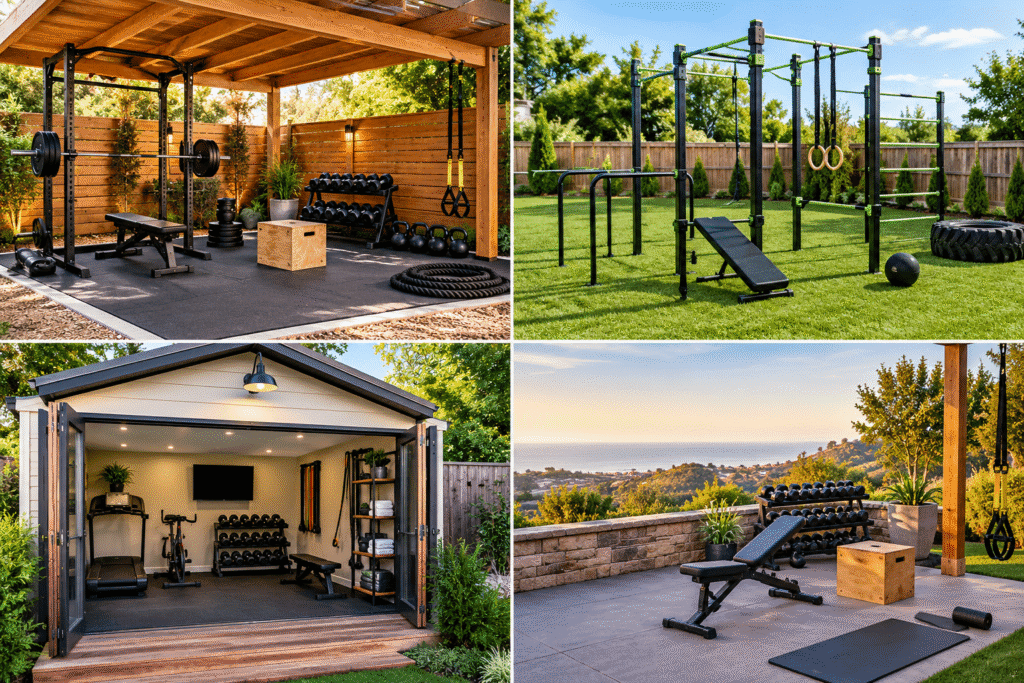
Creating a workout space outside is a great way to enjoy fresh air while staying active at home. You do not need a large garden, expensive gym machines, or a separate building to make it work. With the right layout, even a small patio, rooftop, or unused corner of your backyard can become a comfortable place to exercise. These outdoor gym ideas will help you build a space that matches your home, budget, fitness goals, and personal style.
From modern workout stations and simple DIY equipment to covered fitness areas and fun exercise spaces for kids, there are many ways to design an outdoor gym. Some ideas focus on strength training, while others are better for yoga, stretching, cardio, or family activities. Whether you prefer a clean modern look or a natural rustic design, these backyard outdoor gym ideas will help you make the most of your outdoor space.
1. Create a Simple Backyard Workout Corner
Contents
- 1 1. Create a Simple Backyard Workout Corner
- 2 2. Design a Modern Outdoor Gym
- 3 3. Build a DIY Outdoor Gym on a Budget
- 4 4. Set Up a Small Backyard Gym
- 5 5. Create a Covered Outdoor Gym
- 6 6. Build a Rooftop Outdoor Gym
- 7 7. Make a Rustic Outdoor Fitness Space
- 8 8. Add an Outdoor Gym Under a Pergola
- 9 9. Design an Outdoor Gym With Artificial Grass
- 10 10. Turn Your Patio Into a Home Gym
- 11 11. Create an Outdoor Gym With a Pull-Up Bar
- 12 12. Add a Compact Outdoor Weightlifting Station
- 13 13. Design an Outdoor Gym for Yoga and Stretching
- 14 14. Build an Outdoor Gym With a Treadmill or Exercise Bike
- 15 15. Create an Outdoor Gym With a Privacy Screen
- 16 16. Make a Family-Friendly Outdoor Gym for Kids
- 17 17. Build an Outdoor Obstacle Course
- 18 18. Create a Calisthenics Workout Area
- 19 19. Design an Outdoor Gym With a Garden View
- 20 20. Create an Outdoor Gym With a Storage Shed
- 21 21. Set Up a Garage-to-Backyard Outdoor Gym
- 22 22. Design an Outdoor Gym With a Punching Bag
- 23 23. Create a Minimalist Outdoor Gym
- 24 24. Add an Outdoor Gym to a Side Yard
- 25 25. Build a Complete Outdoor Fitness Zone
- 26 How to Plan Your Outdoor Gym at Home
- 27 What Flooring Is Best for an Outdoor Gym?
- 28 How to Protect Your Outdoor Gym Equipment
- 29 Final Thoughts
- 30 Frequently Asked Questions
- 30.1 1. How do I build an outdoor gym in my backyard?
- 30.2 2. What are the best outdoor gym ideas for small backyards?
- 30.3 3. Can I build a DIY outdoor gym on a budget?
- 30.4 4. Can I make an outdoor gym on a rooftop?
- 30.5 5. How can I protect an outdoor gym from rain?
- 30.6 6. Are outdoor gyms good for children?
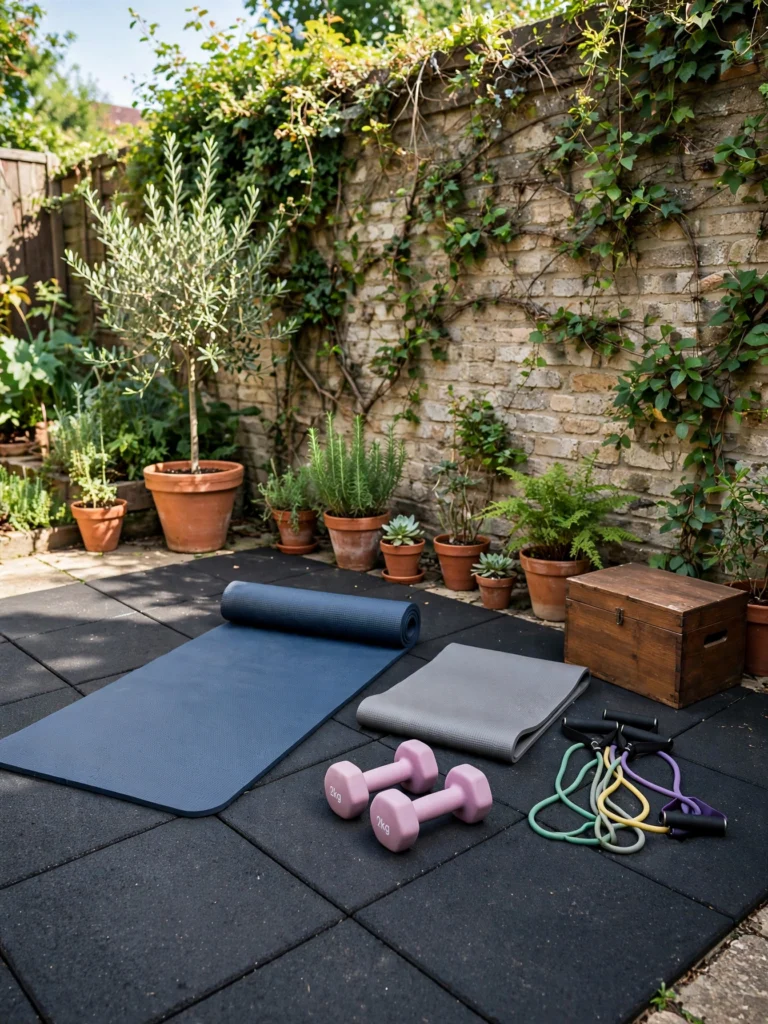
A simple workout corner is one of the easiest outdoor gym ideas for backyards because it does not require a major renovation. Choose a flat area near a garden wall, fence, or patio and add outdoor exercise mats, a pair of dumbbells, resistance bands, and a small storage box. Keep the equipment you use most often within easy reach so you can start exercising without spending time setting everything up.
To make the area feel more inviting, add a few potted plants and choose flooring that suits your workout routine. Rubber gym tiles can provide a more stable surface for many exercises, while a level patio may work well for stretching and bodyweight workouts. This simple setup is ideal for beginners who want to exercise at home without filling their entire backyard with equipment.
2. Design a Modern Outdoor Gym
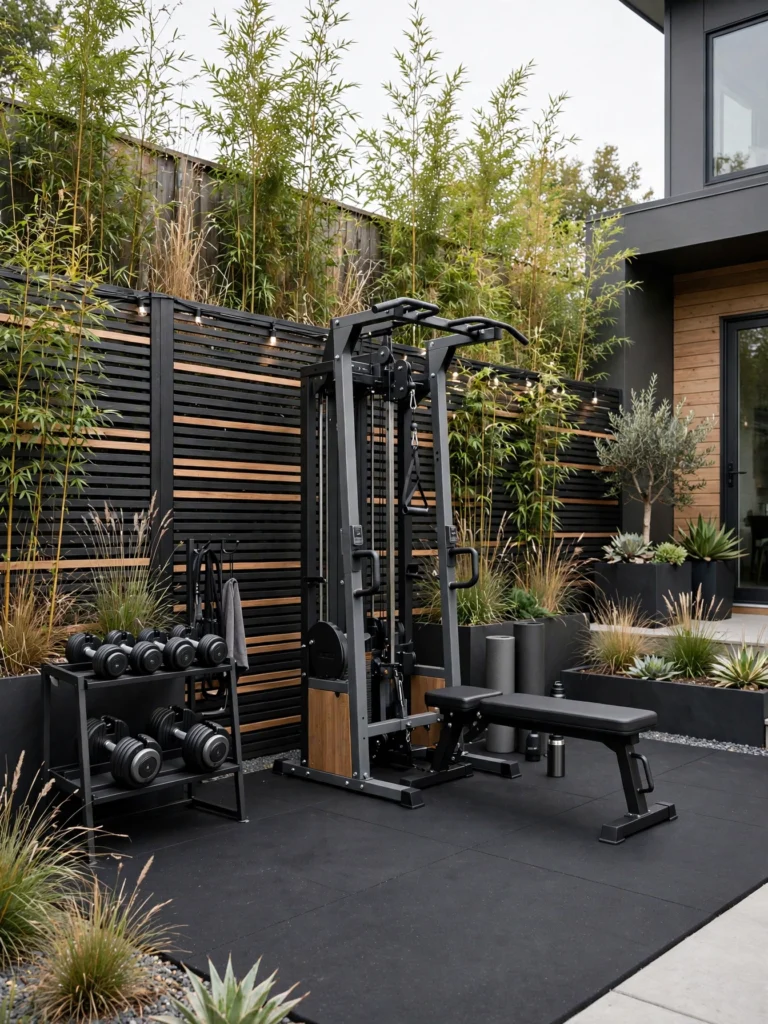
Modern outdoor gym ideas for backyards often feature clean lines, simple colors, and practical equipment. Start with black rubber flooring, a slim metal storage rack, and a compact strength-training station. Shades of black, gray, and natural wood can help the gym match a contemporary home while keeping the design neat and uncluttered.
Add a privacy screen or a row of tall plants to create a separate workout zone. If you have enough space, include a weight bench, adjustable dumbbells, and a pull-up station designed for outdoor use. Choose weather-resistant materials and keep the layout open so you can move between exercises comfortably without making the backyard feel crowded.
3. Build a DIY Outdoor Gym on a Budget
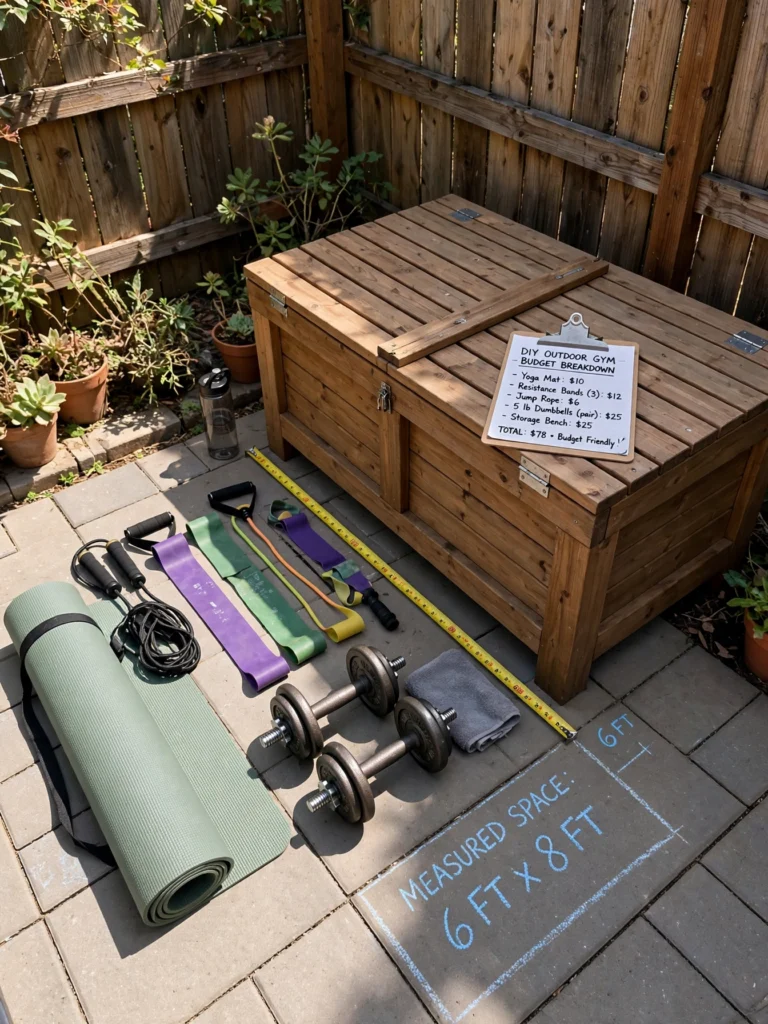
Outdoor gym ideas for backyards DIY projects can save money when you begin with basic equipment instead of purchasing a complete gym system. A yoga mat, resistance bands, jump rope, and a pair of suitable weights can support many home workouts. You can also reuse a sturdy outdoor storage bench for organizing smaller items, provided it is safe and suitable for that purpose.
Before adding larger equipment, measure your available space and write down the exercises you plan to do. This helps you avoid buying machines you rarely use. Keep all equipment on a stable surface, and make sure any wall-mounted bars or workout frames are professionally secured or installed according to the manufacturer’s instructions. A low-cost gym should still be safe, comfortable, and easy to maintain.
4. Set Up a Small Backyard Gym
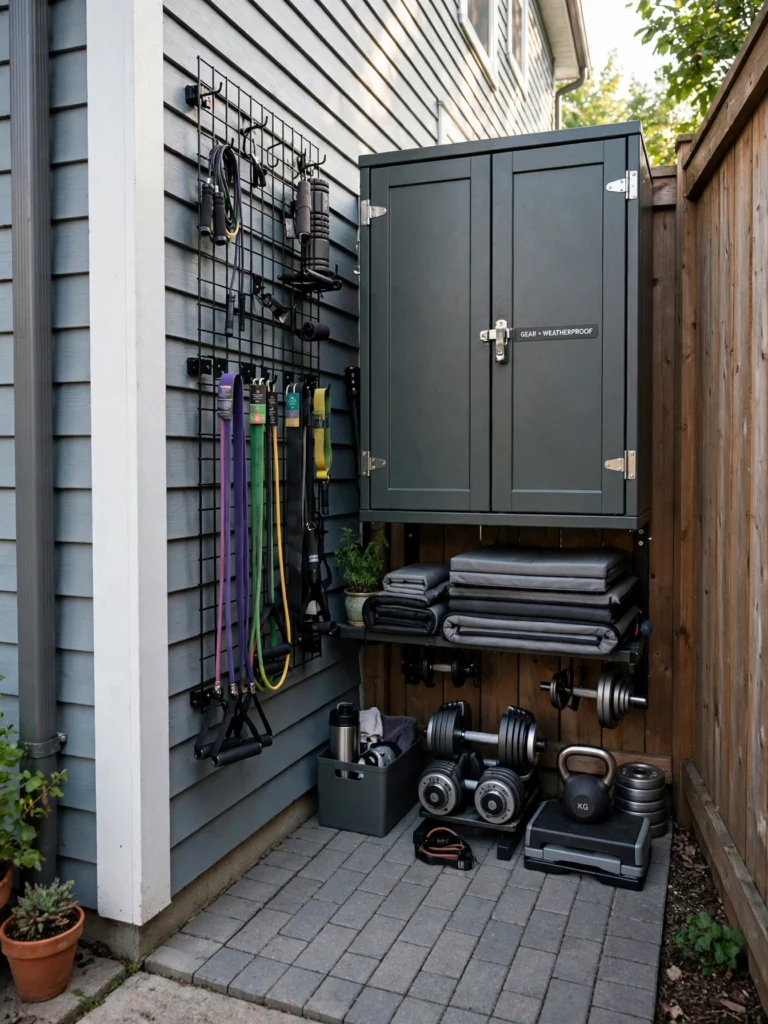
Small backyard gym ideas work best when every item serves a clear purpose. Instead of adding several large machines, choose foldable exercise mats, resistance bands, adjustable weights, and compact equipment that can be stored after each session. A narrow section beside the house or a small paved corner may provide enough room for stretching, squats, lunges, and other bodyweight exercises.
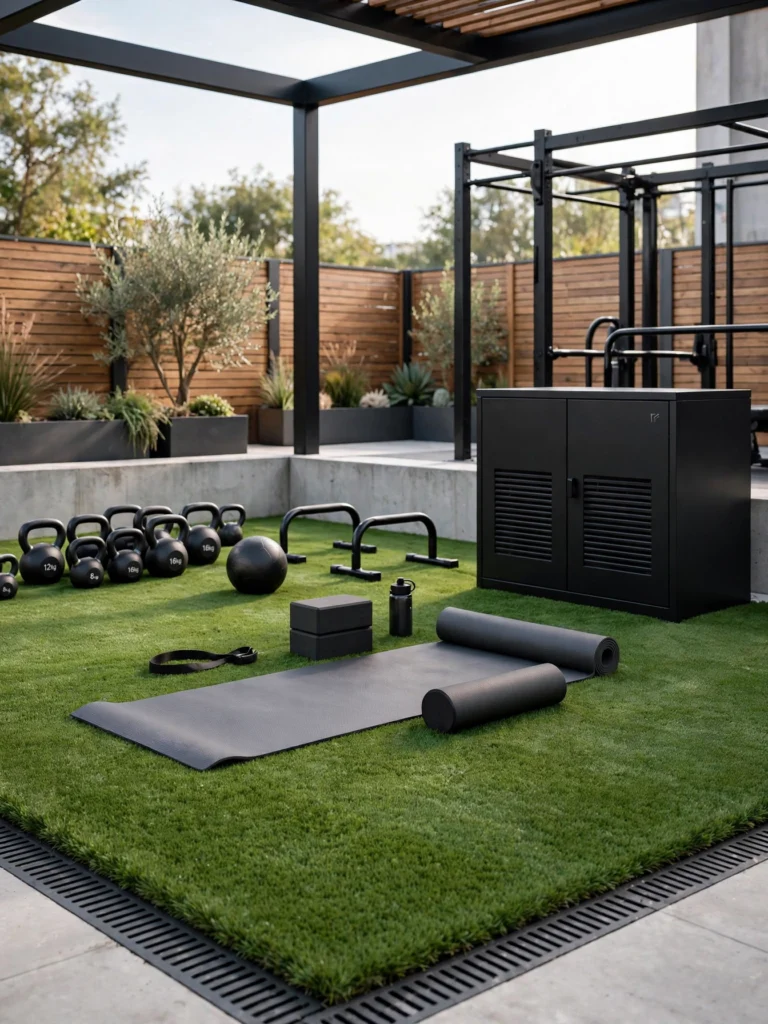
Use vertical storage to keep the ground clear and make the area feel larger. Wall-mounted storage can hold bands and lightweight accessories when installed on a suitable surface, while weatherproof cabinets can protect equipment from rain and dust. Measure the space before purchasing anything, and leave enough room around each exercise station for safe movement.
5. Create a Covered Outdoor Gym
A covered outdoor gym is useful for homeowners who want some protection from direct sunlight and light rain. You could use an existing covered patio, a properly built pergola with a suitable roof, or a dedicated outdoor shelter. Place rubber flooring beneath the workout area and choose equipment that is rated for outdoor conditions.
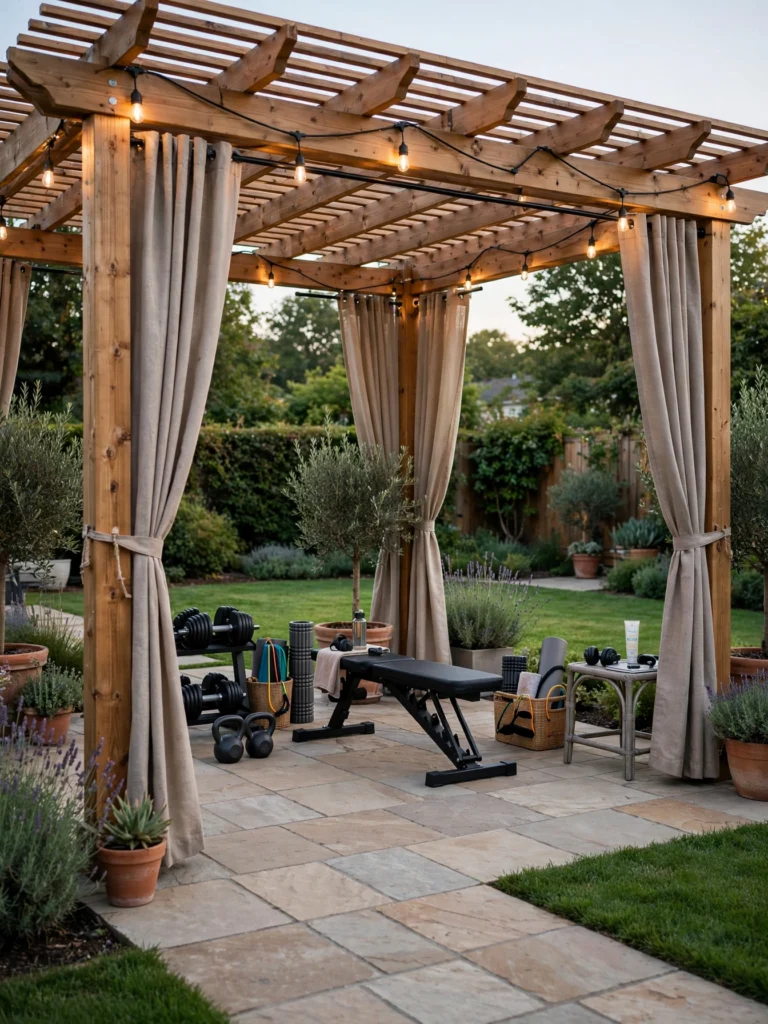
A covered space also gives you more flexibility when planning your workout routine. You can add a bench, dumbbells, resistance bands, and a small fan if the electrical setup is suitable for outdoor use. Remember that a roof does not automatically make equipment waterproof, and open-sided shelters may still allow rain and moisture inside. Good drainage and airflow will help protect your gym.
6. Build a Rooftop Outdoor Gym
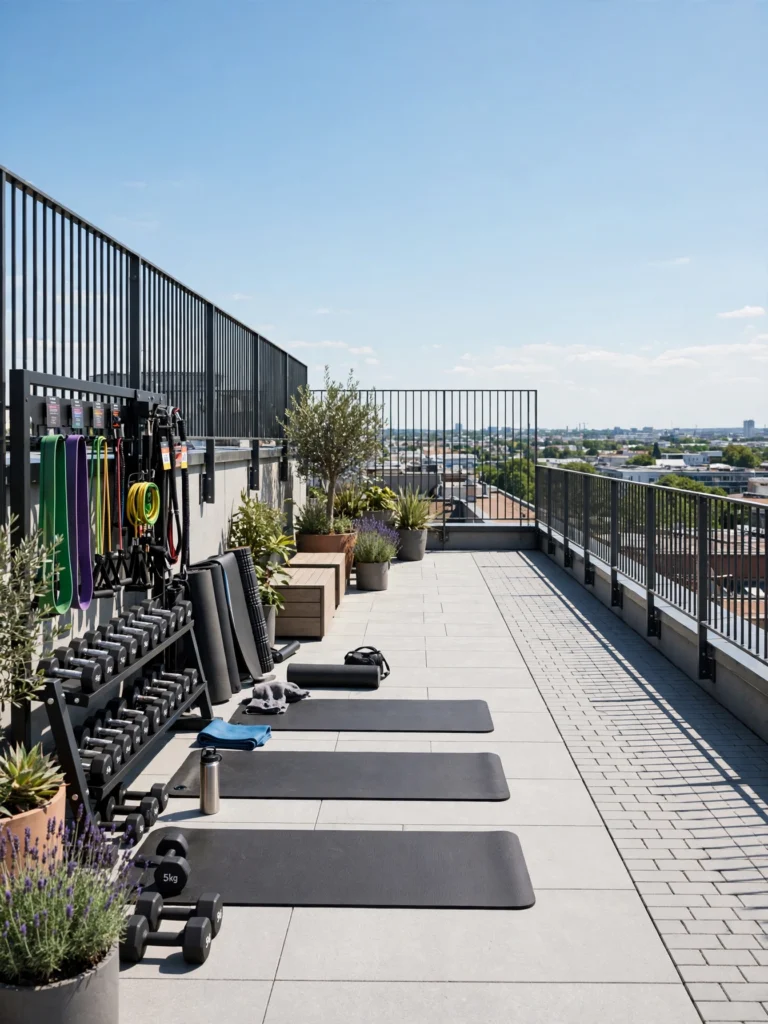
Rooftop outdoor gym ideas can turn an unused terrace into a convenient fitness area with open views and plenty of natural light. Start with lightweight equipment such as resistance bands, exercise mats, and compact dumbbells. Arrange everything along one side of the terrace, leaving clear walking paths and keeping exercise stations away from the edges.
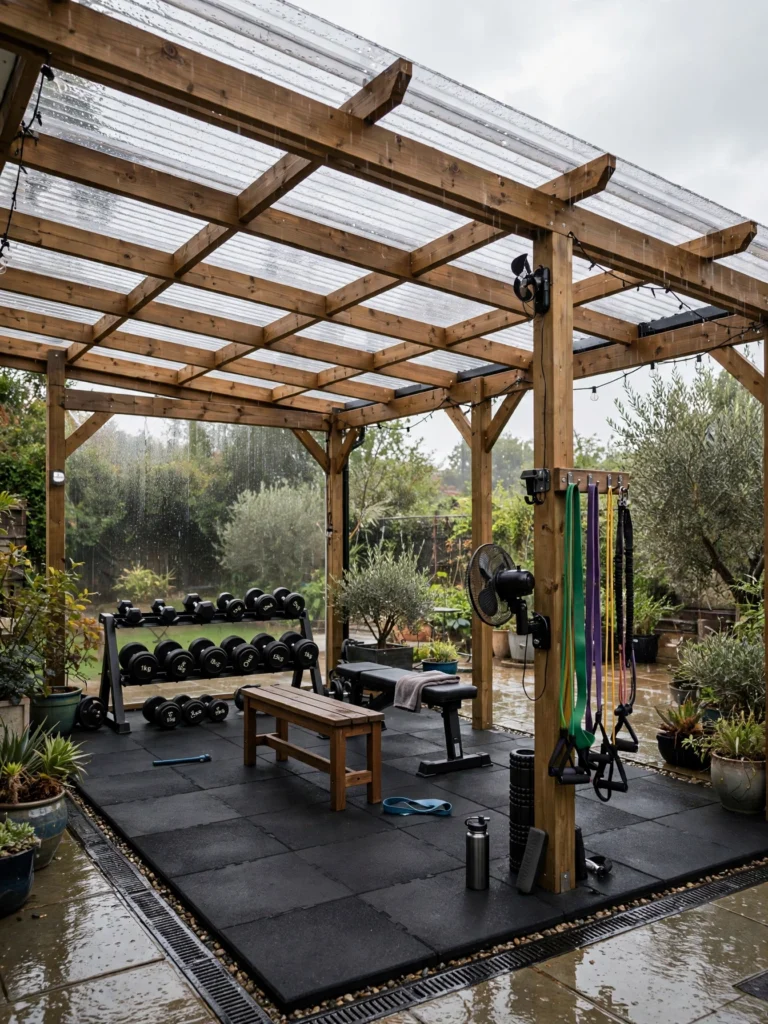
Safety should come before decoration when creating a rooftop gym. Confirm that the roof can support the equipment and people using it, and have a qualified professional assess structural capacity when needed. Use suitable outdoor flooring, secure loose items against wind, and install compliant guardrails. Avoid heavy weight machines or dropping weights unless the roof has been assessed for those loads.
7. Make a Rustic Outdoor Fitness Space
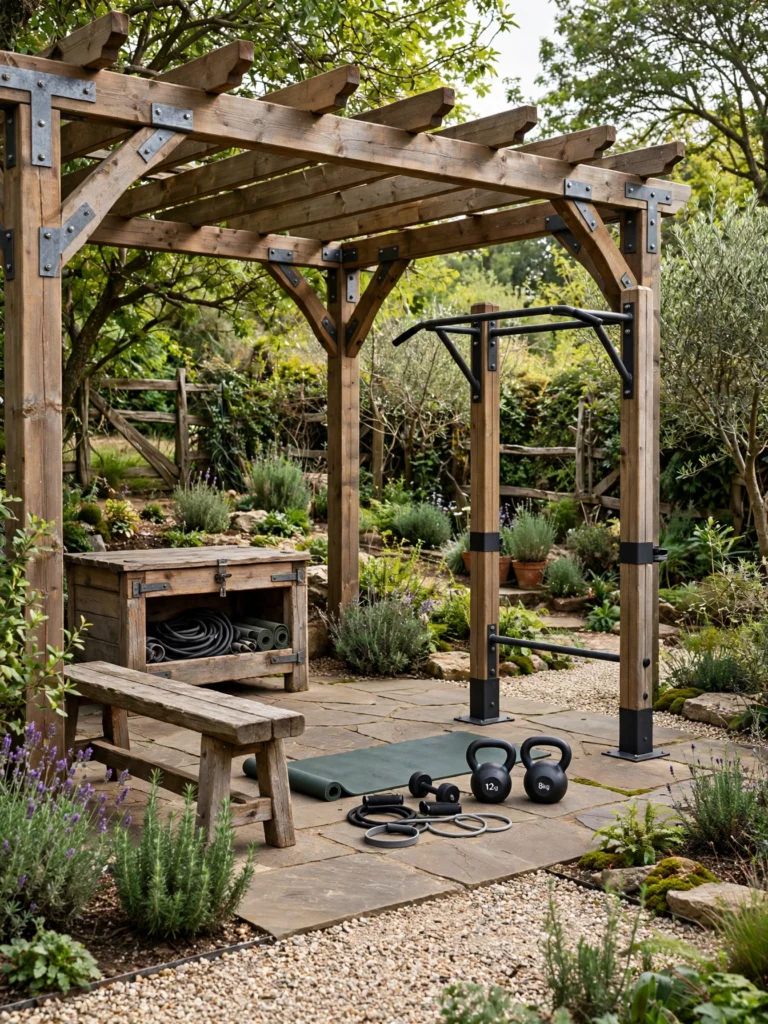
Rustic outdoor gym ideas are perfect for people who enjoy natural materials and a relaxed garden setting. Use a wooden pergola, stone paving, and simple outdoor storage to create a workout area that blends with the landscape. A timber bench can provide a place to rest between exercises, while a few plants and gravel borders can make the space feel connected to the garden.
You can keep the equipment simple with a yoga mat, resistance bands, kettlebells, and a freestanding pull-up station made for outdoor use. Choose properly treated wood and weather-resistant metal to reduce damage from moisture and changing temperatures. Avoid using untreated timber for equipment that carries body weight, and inspect all wooden structures regularly for cracks, rot, or loose connections.
8. Add an Outdoor Gym Under a Pergola
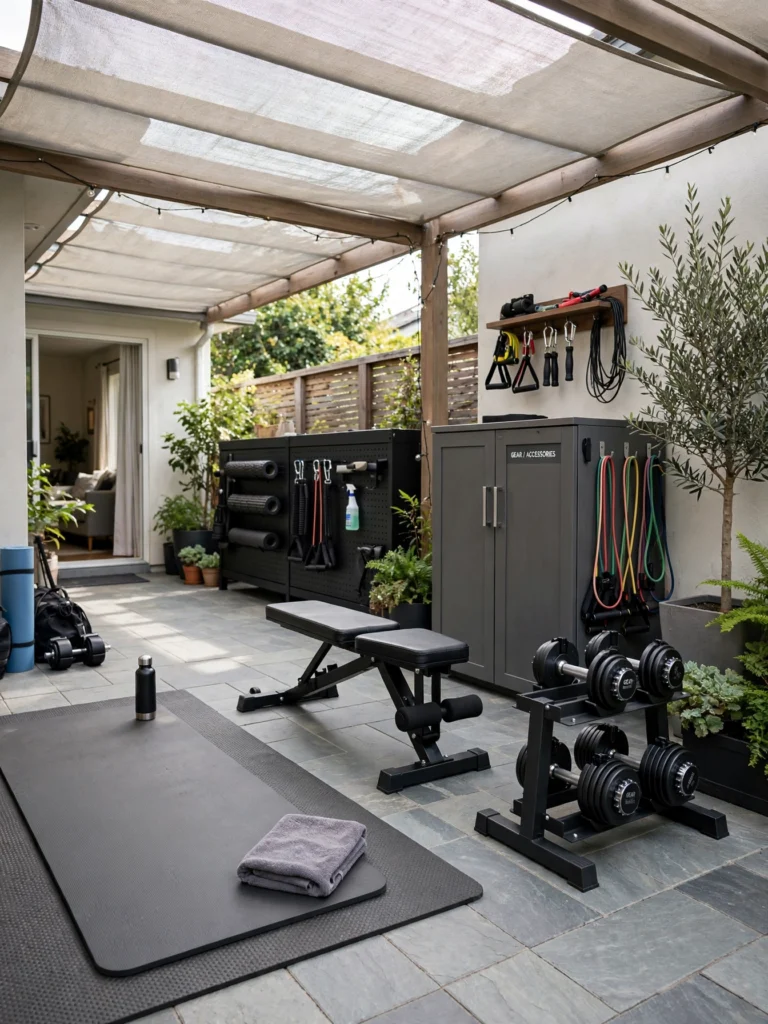
A pergola can give your backyard gym a defined shape without completely closing off the outdoor setting. Place a workout bench and compact exercise equipment beneath the structure, then use outdoor curtains or privacy panels where appropriate to create a little separation from the rest of the garden. This arrangement works well in medium-sized yards where homeowners want both an exercise area and a relaxing outdoor space.
For a more finished look, choose flooring that matches the patio and add weather-resistant lighting for early morning or evening workouts. If you plan to hang a punching bag, suspension trainer, or other body-weight equipment, make sure the structure is specifically designed and rated for those loads. A decorative pergola should never be assumed to be strong enough to support exercise equipment.
9. Design an Outdoor Gym With Artificial Grass
Artificial grass can give an outdoor workout area a fresh green appearance without the need for regular mowing. It works particularly well for stretching, yoga, mobility exercises, and bodyweight workouts when installed over a suitable, stable base. You can place a workout mat on top when extra cushioning or grip is needed.
Combine the green surface with black exercise equipment and a small outdoor storage cabinet for a neat, modern finish. Before installation, check that the artificial turf provides suitable drainage and does not become excessively hot in direct sunlight. For heavy weights, machines, or high-impact movements, use a stable surface designed for the equipment instead of relying on soft turf alone.
10. Turn Your Patio Into a Home Gym
A patio is often one of the most practical places to create outdoor gym ideas at home because it already offers a relatively level surface. Move unnecessary furniture to one side and create a dedicated area for a workout mat, adjustable dumbbells, resistance bands, and a compact bench. This setup can support a variety of exercises without requiring a separate garden building.
To make the patio feel like a proper gym, keep the equipment organized and use a weatherproof cabinet for smaller accessories. If the patio receives strong afternoon sunlight, consider adding suitable shade or scheduling workouts during cooler hours. Check the flooring for slippery patches and uneven areas, particularly after rain, before using weights or performing exercises that require balance.
11. Create an Outdoor Gym With a Pull-Up Bar
A pull-up station can add an effective upper-body workout option to a backyard gym. Choose a freestanding outdoor frame or a purpose-built installation that is rated for the intended loads. Position it on a level surface with enough clearance above and around the bar to perform pull-ups, assisted movements, and other exercises without hitting nearby walls or branches.
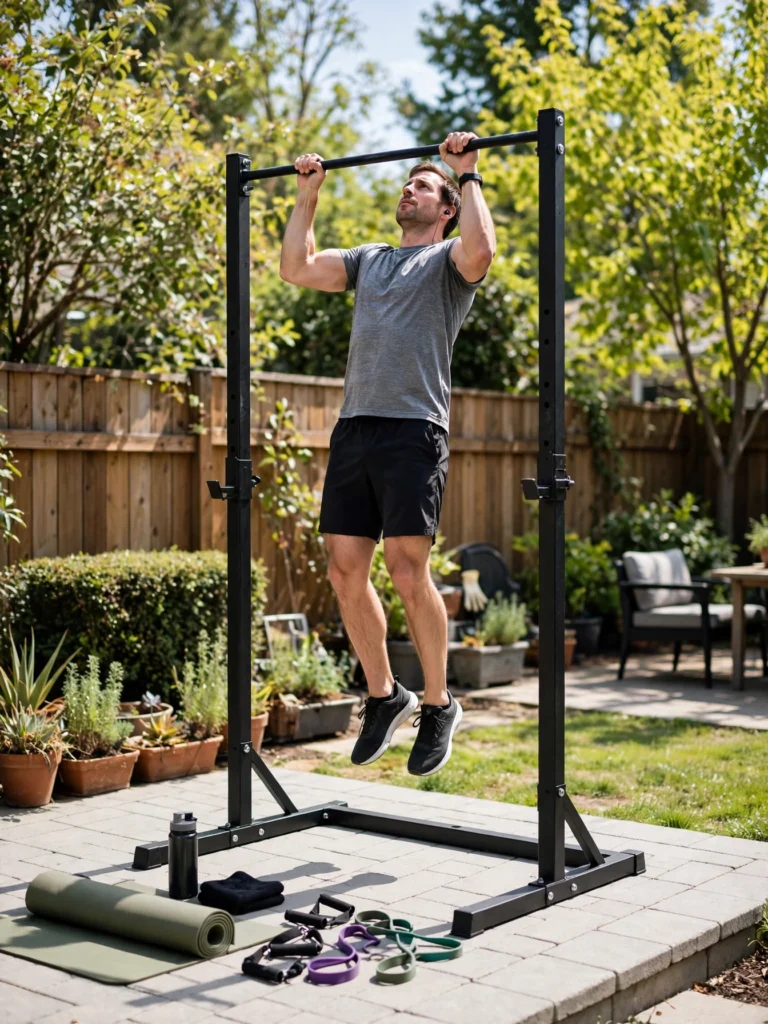
You can build the rest of the workout area around this single piece of equipment. Add a mat for stretching, resistance bands for assisted pull-ups, and a storage box for accessories. If you prefer a wall-mounted or overhead bar, use an appropriate structural support and proper installation hardware. Test the setup according to the manufacturer’s instructions before putting your full body weight on it.
12. Add a Compact Outdoor Weightlifting Station
A dedicated weightlifting station can help you train for strength without taking over the whole garden. Begin with a suitable outdoor weight bench, adjustable dumbbells, and a secure storage rack. Keep the equipment on a stable, load-appropriate surface, and arrange the weights so you can pick them up and return them without crossing other workout areas.
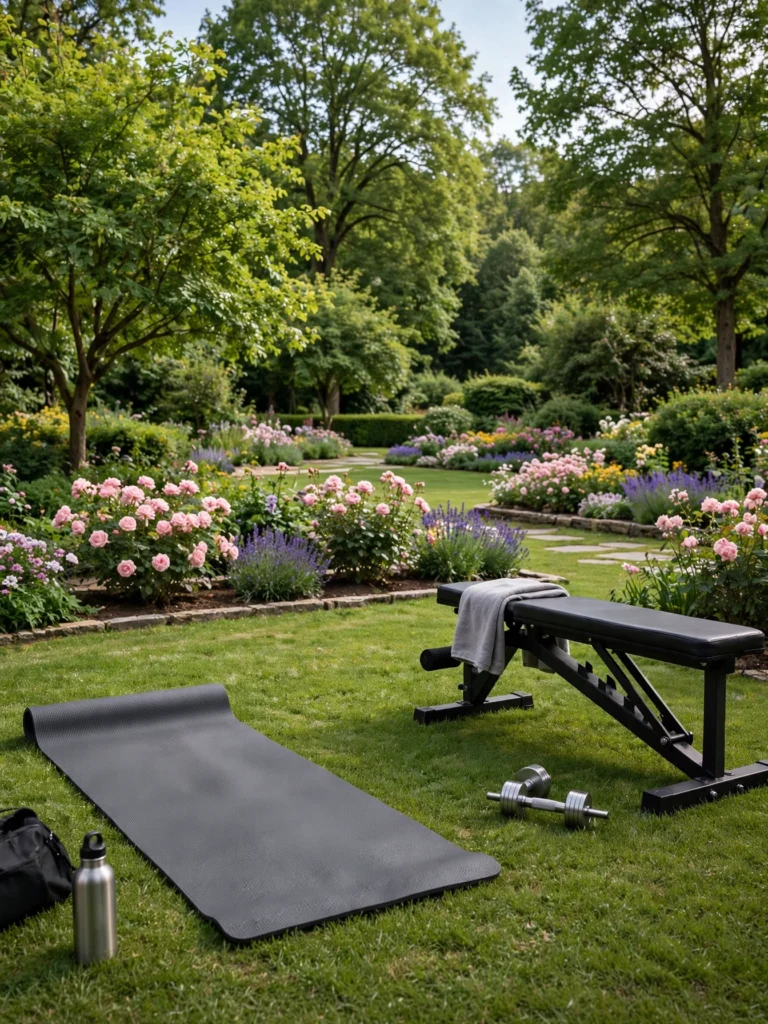
If you plan to use a barbell, squat rack, or heavier weights, make sure the equipment is designed for the load and the ground can support it. Avoid placing heavy equipment on weak decking or soft ground without proper assessment. Weather protection is also important because rust, worn grips, and damaged moving parts can make weight training less safe.
13. Design an Outdoor Gym for Yoga and Stretching
An outdoor yoga space can be one of the simplest backyard fitness projects because it needs very little equipment. Choose a quiet garden corner with a flat surface, then add a yoga mat, a few cushions, and a small shelf or basket for blocks and straps. Plants, natural stone, and gentle lighting can help the area feel peaceful without filling it with unnecessary decorations.
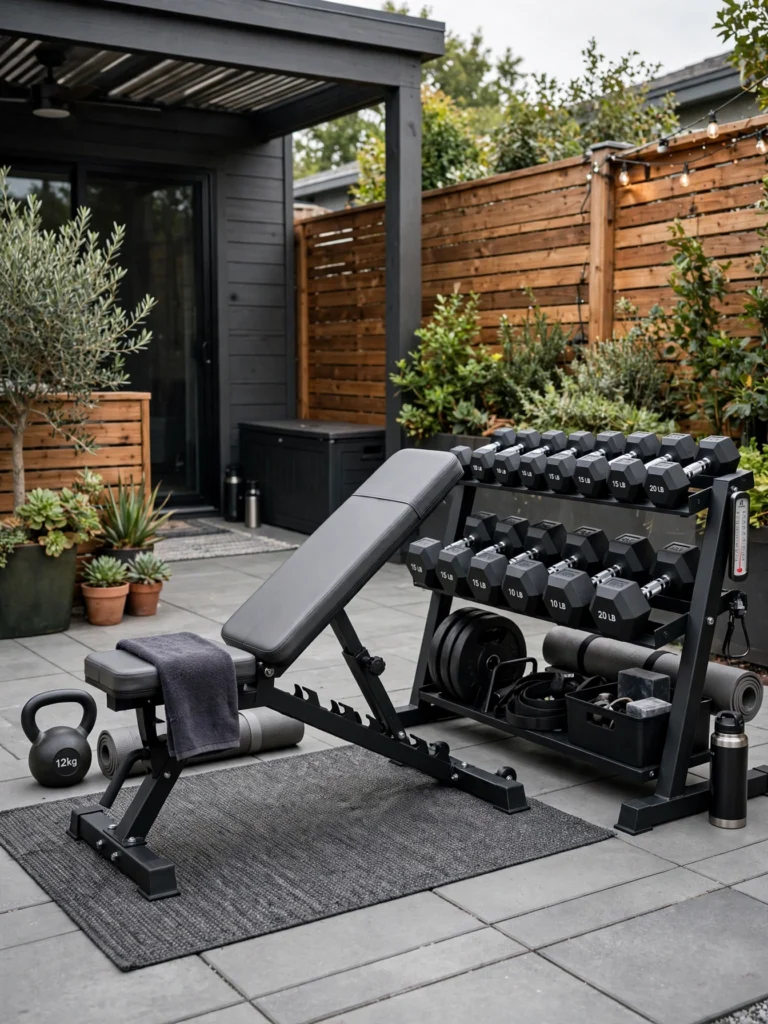
This type of gym is useful for yoga, stretching, breathing exercises, and gentle mobility routines. If your backyard is exposed to wind, choose accessories that can be stored easily and use a mat with good grip. Make sure the ground is free of sharp stones, slippery patches, and uneven edges so you can move through poses comfortably.
14. Build an Outdoor Gym With a Treadmill or Exercise Bike
If you enjoy walking, running, or cycling, an outdoor cardio station may suit your fitness goals. A treadmill or exercise bike can be placed beneath a properly designed shelter, provided the manufacturer allows the equipment to be used in that environment. Choose a dry, level location with enough room for access, ventilation, and safe movement around the machine.
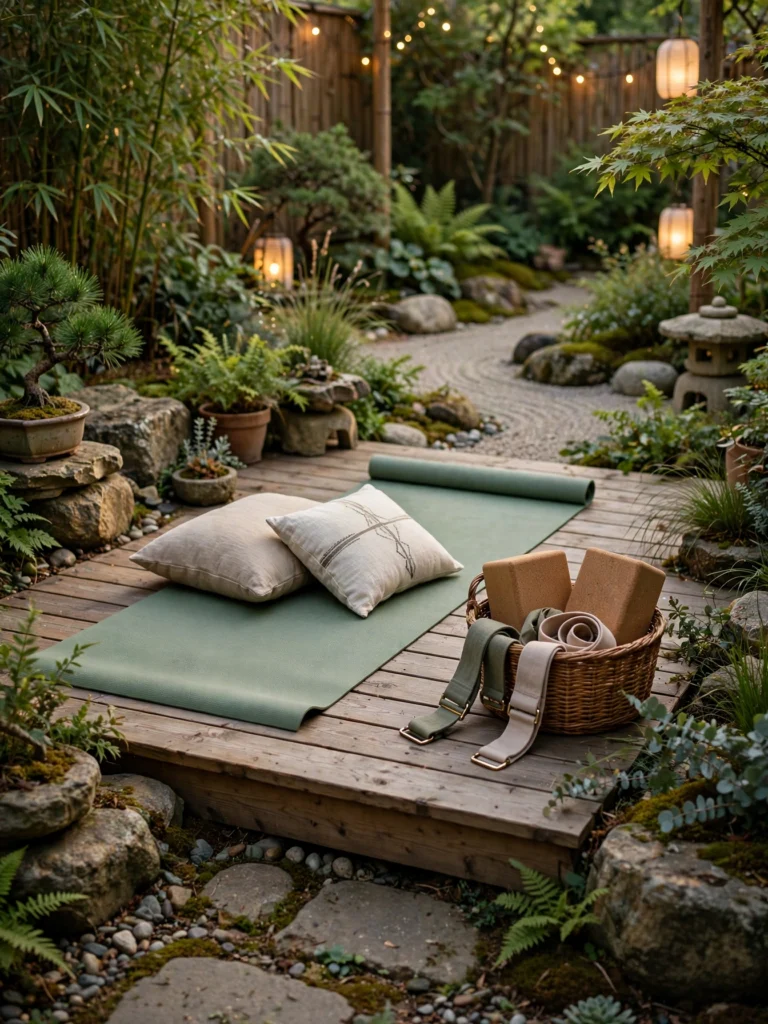
Outdoor conditions can damage electronics, metal parts, and upholstery, so do not assume that an indoor machine is suitable for open-air use. Check the manufacturer’s environmental and temperature requirements before installing it outside. If you want a simpler option, an exercise mat, jump rope, and a clear space for step exercises can provide cardio choices with less equipment and easier storage.
15. Create an Outdoor Gym With a Privacy Screen
A privacy screen can help separate your workout area from neighboring homes and busy parts of the garden. Choose a suitable outdoor screen made from timber, metal, composite panels, or other weather-resistant materials. Position it where it blocks unwanted views without making the exercise space dark, cramped, or difficult to ventilate.
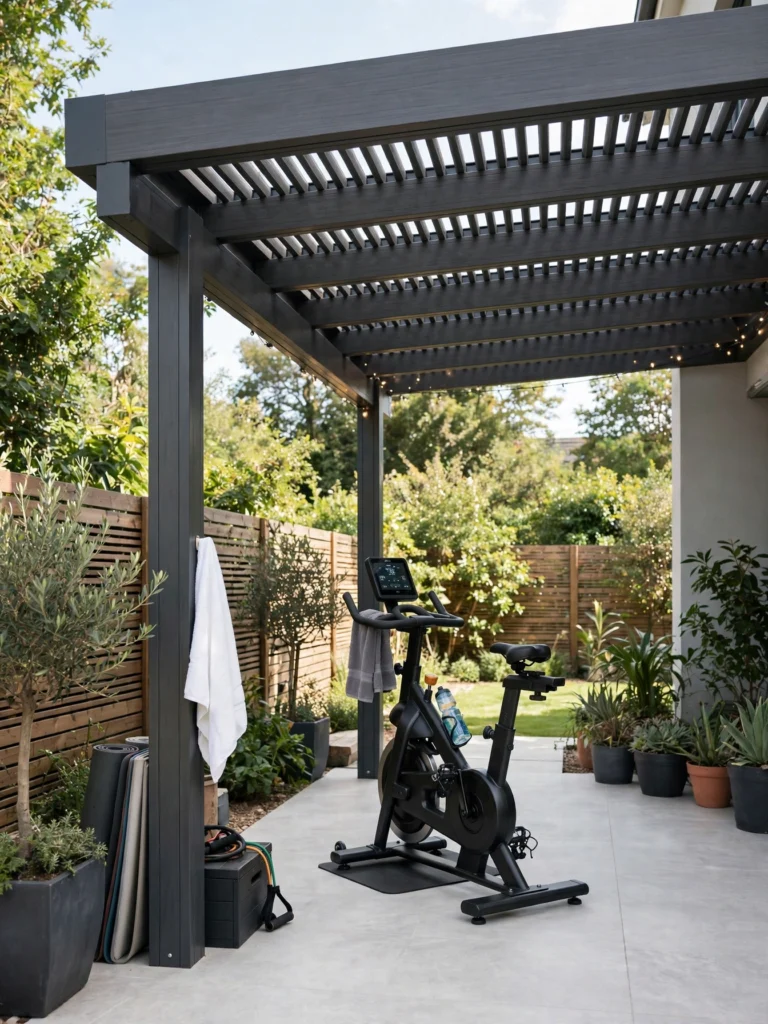
You can place a bench and small equipment rack against the screen to keep the rest of the gym open. Tall plants can soften the appearance and create a natural boundary, while a simple color scheme helps the space feel coordinated. Make sure freestanding screens are secure in windy conditions and do not block access routes or create hazards around exercise equipment.
16. Make a Family-Friendly Outdoor Gym for Kids
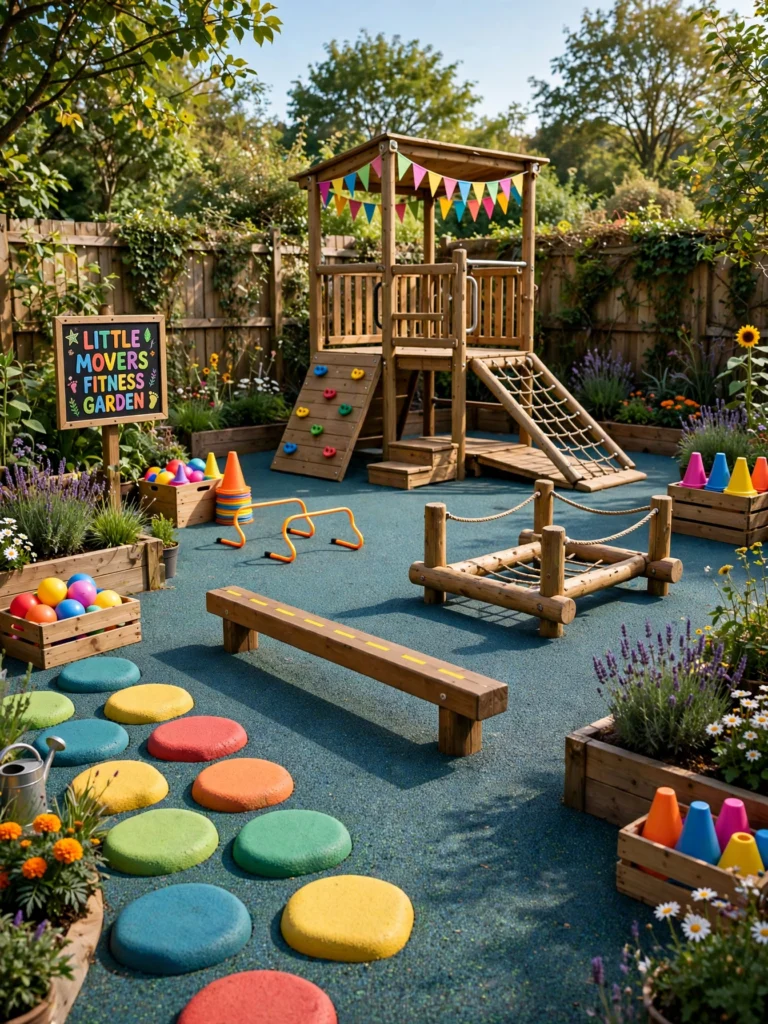
Outdoor gym ideas for kids can encourage children to move more while enjoying time outside. Create a play-and-movement zone with age-appropriate stepping stones, balance activities, low climbing equipment, and an open area for jumping or simple games. Choose equipment designed for children’s ages and abilities rather than assuming adult gym machines will be suitable for them.
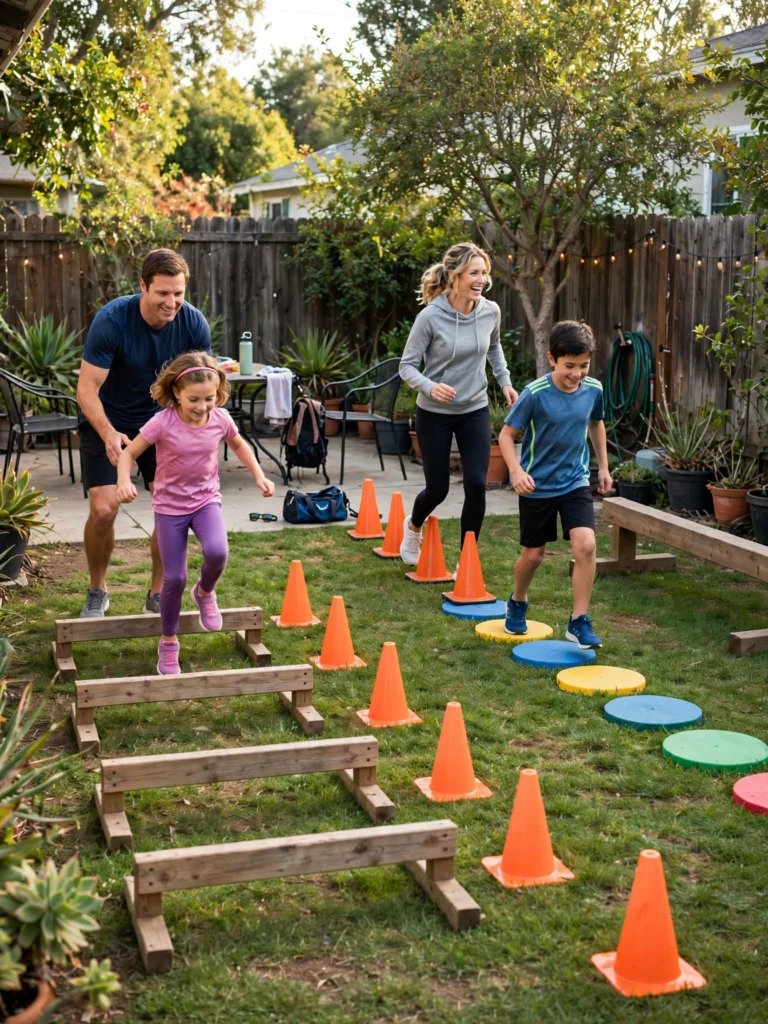
Safety is especially important in a children’s workout area. Use appropriate impact-absorbing surfacing under climbing and elevated play equipment, follow the manufacturer’s installation instructions, and inspect the equipment regularly. Keep the space away from vehicle areas, sharp garden tools, and other hazards. Adult supervision is essential, especially when children are using climbing frames, bars, or equipment with moving parts.
17. Build an Outdoor Obstacle Course
An outdoor obstacle course can make backyard exercise more enjoyable for children and adults. Use low hurdles, agility cones, stepping markers, and a clearly marked path to create stations for jumping, balancing, weaving, and running. You can change the arrangement every week to introduce new challenges without buying a large amount of equipment.
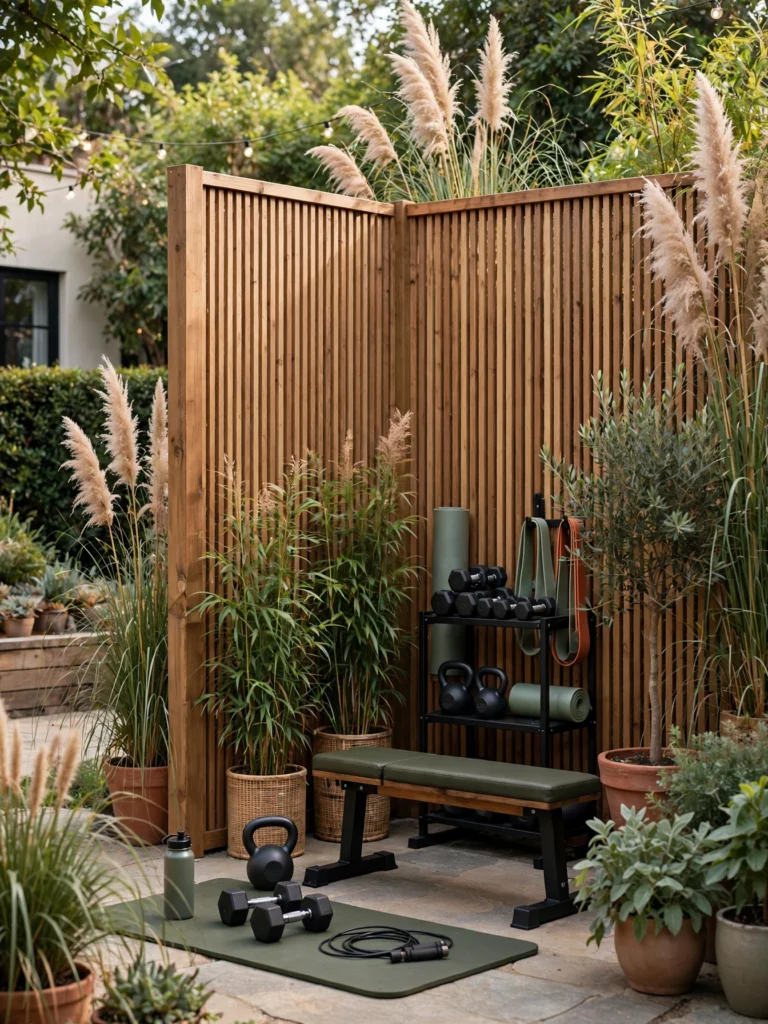
For a DIY version, choose simple, stable items that will not tip easily or create sharp edges. Keep the obstacles low enough for the intended users and leave generous space between stations. Avoid slippery surfaces, unstable homemade climbing structures, and obstacles that require risky jumps. A safe obstacle course can support coordination, movement, and family fitness while keeping the backyard flexible for other activities.
18. Create a Calisthenics Workout Area
Calisthenics focuses on bodyweight exercises such as push-ups, squats, lunges, and pull-ups. You can create a useful outdoor calisthenics space with a clear floor area, an exercise mat, and a purpose-built pull-up or dip station. This approach is ideal for people who prefer training with their own body weight instead of using several heavy machines.
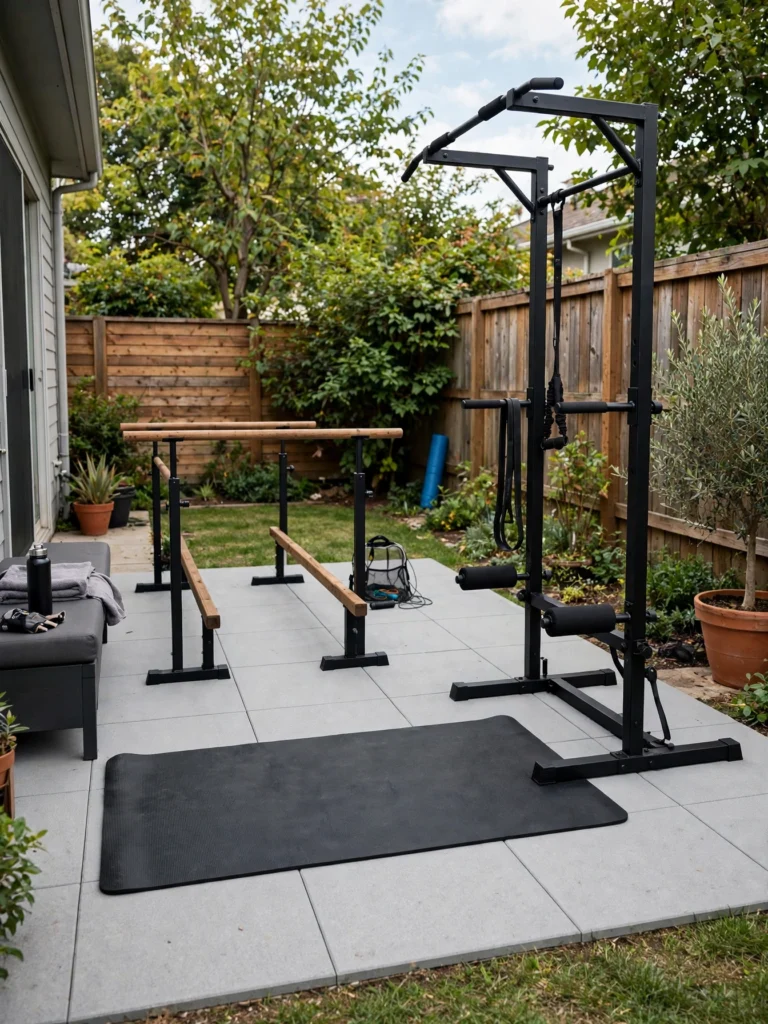
Choose a level surface with enough room to extend your arms and legs during different movements. If you add parallel bars or a climbing frame, make sure they are designed for exercise and properly anchored. Beginners can start with easier variations of each movement and increase the difficulty gradually. Keeping the space simple makes it easier to adjust your routine as your strength and fitness improve.
19. Design an Outdoor Gym With a Garden View
A garden-view gym combines exercise with the natural beauty of your backyard. Position your workout mat, stationary bike, or weight bench so you can see flower beds, trees, or a landscaped lawn while exercising. A pleasant view can make the space more inviting and help you enjoy spending time outdoors.
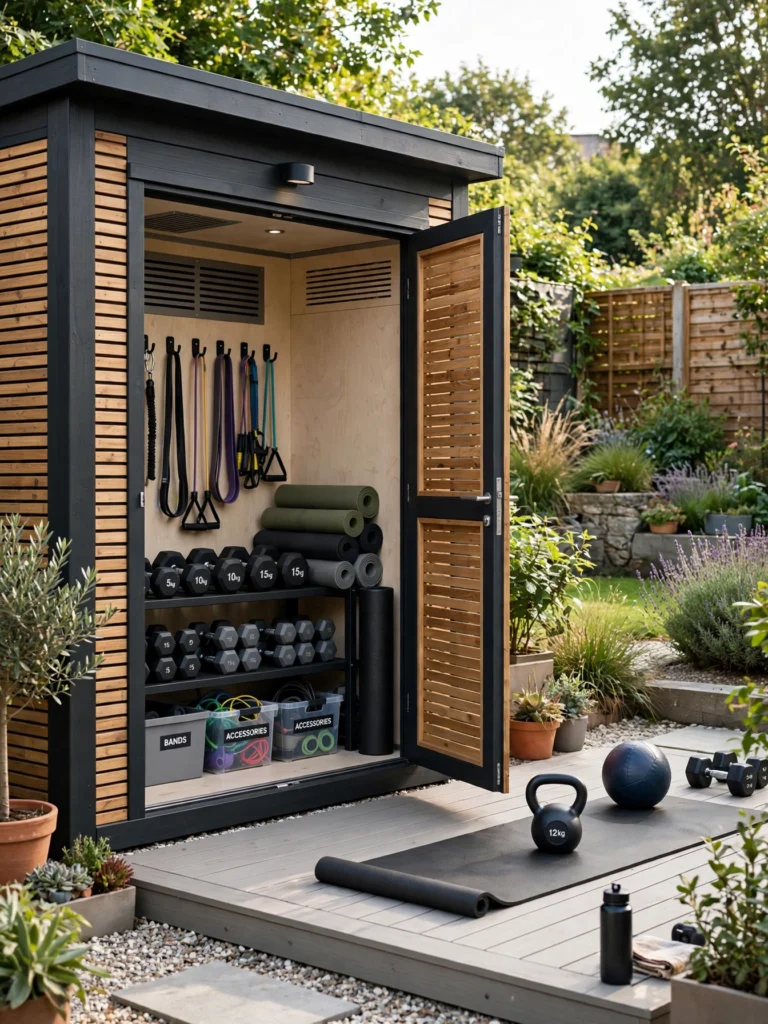
Use low planting around the workout area so plants do not interfere with equipment or movement. A small bench and weather-resistant storage unit can keep the design practical, while a few carefully chosen plants can connect the gym with the rest of the garden. Avoid placing equipment on uneven decorative stones or near roots that may lift the surface over time.
20. Create an Outdoor Gym With a Storage Shed
A small outdoor shed can protect your workout equipment and provide a dedicated place to exercise. Choose a shed with enough interior space for your planned equipment, suitable ventilation, and a floor designed to support the intended loads. You can store weights, resistance bands, mats, and other accessories inside while using the nearby garden or patio for outdoor workouts.
If you want to exercise inside the shed as well, consider the ceiling height, door width, lighting, and available floor area before purchasing equipment. Proper airflow is important during exercise, especially in warm weather. Keep the floor dry and clear of clutter, and check whether the structure is suitable for heavier equipment before using it as a full gym.
21. Set Up a Garage-to-Backyard Outdoor Gym
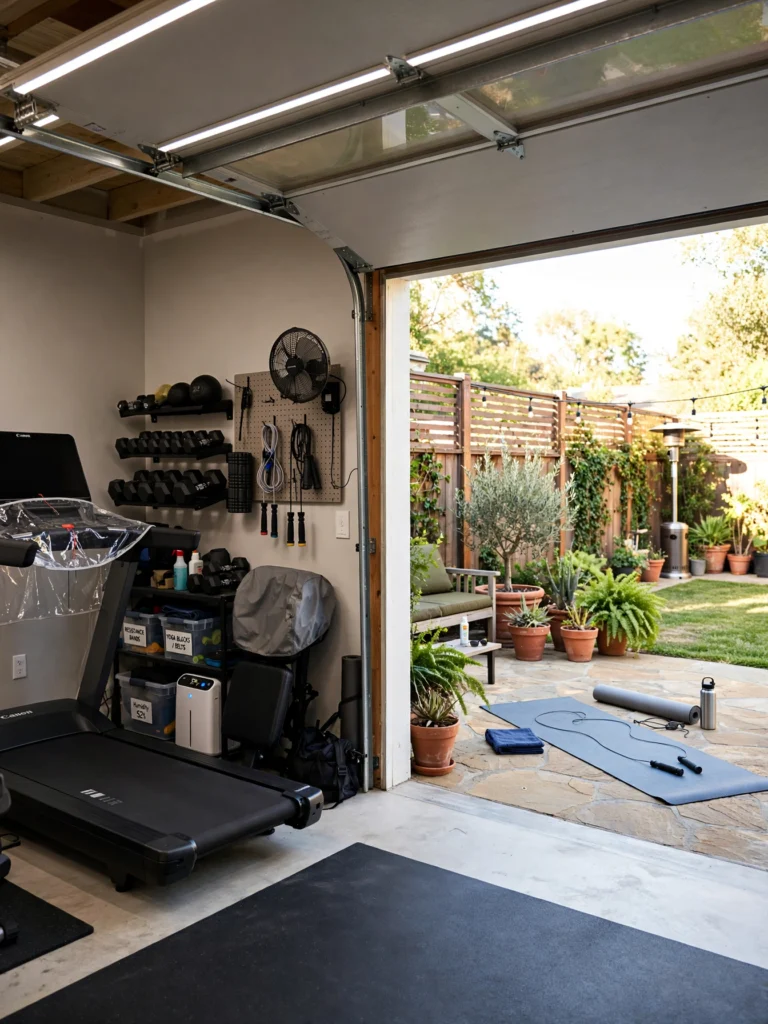
If your garage opens directly onto the backyard, you can create a flexible indoor-outdoor workout space. Place weather-sensitive equipment inside the garage and reserve the patio or garden for activities such as stretching, jumping rope, and bodyweight exercises. This arrangement lets you move between the two areas depending on the weather and the type of workout you want to complete.
Keep the transition between the garage and yard clear so you do not trip over equipment or uneven door thresholds. Use suitable outdoor flooring where needed and store weights indoors if they are not rated for exposure to moisture. A shared setup can also save space because you do not need to duplicate every piece of equipment outside.
22. Design an Outdoor Gym With a Punching Bag
A punching bag can add boxing practice and cardio workouts to your outdoor fitness routine. Choose a bag and mounting system suitable for outdoor use, then place it in an area with enough clearance for movement around all sides. A freestanding bag may be easier to position than a hanging model, while a mounted bag requires a support designed to handle repeated dynamic forces.
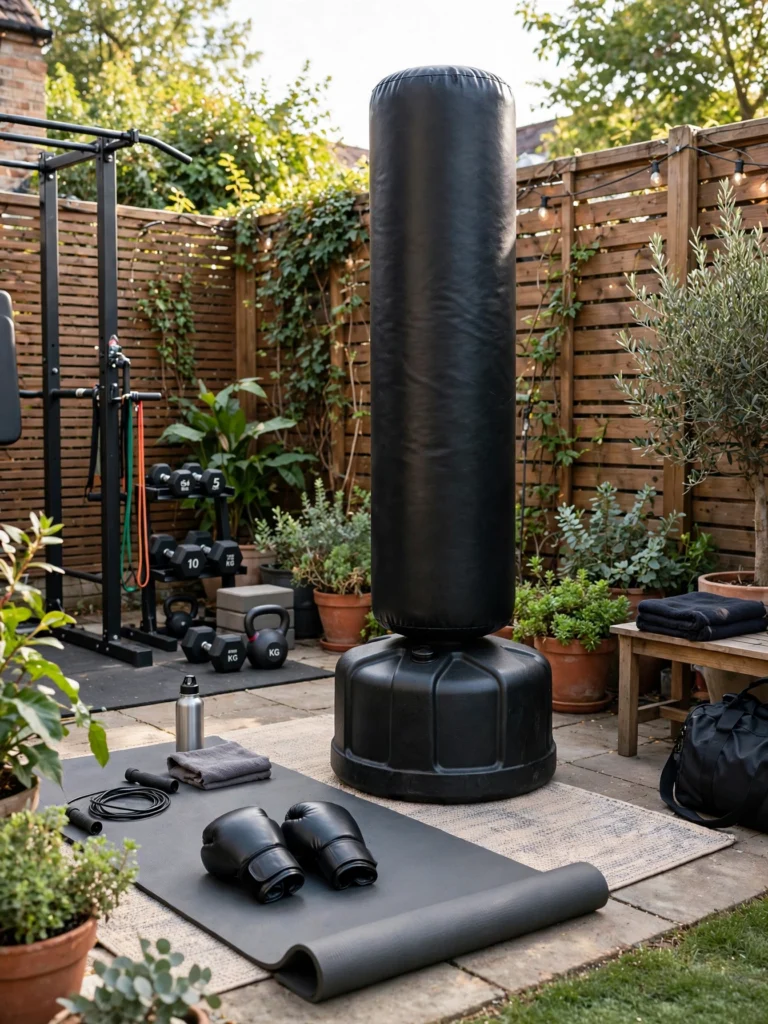
Add a pair of boxing gloves, hand wraps, and a mat for warm-ups and footwork drills. Protect the bag from rain and direct sunlight according to the manufacturer’s instructions, since weather exposure can damage the outer material. Start with controlled movements and learn proper technique before increasing the intensity of your sessions.
23. Create a Minimalist Outdoor Gym
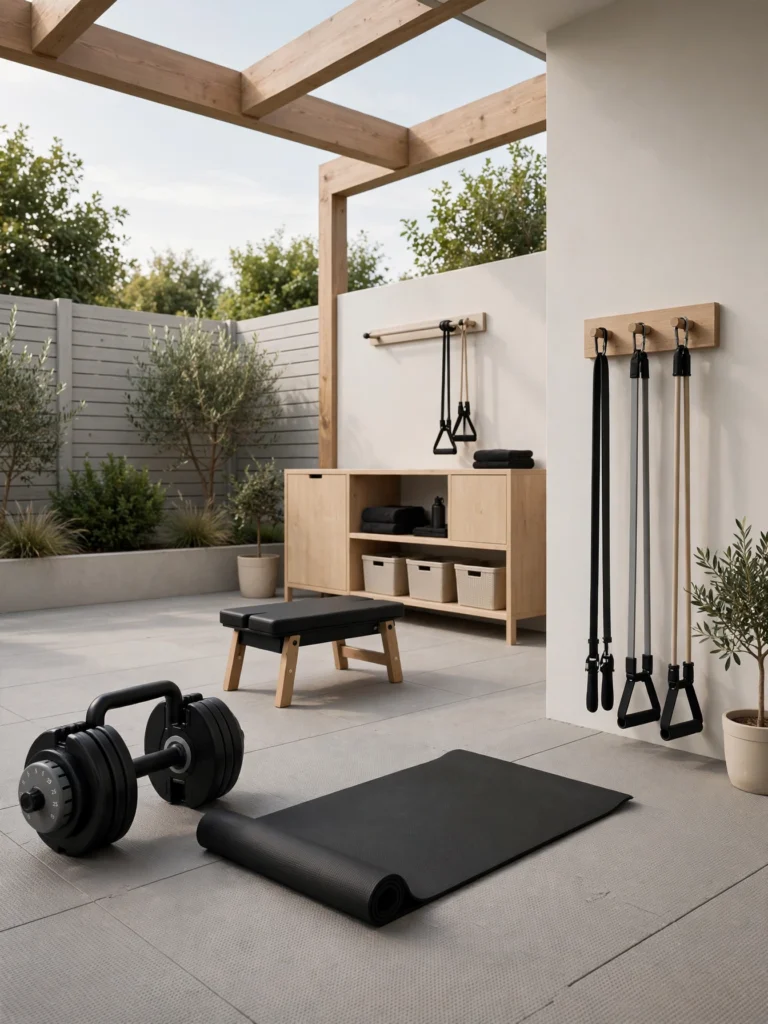
Minimalist outdoor gym ideas focus on keeping the design simple and free from unnecessary equipment. Use a small number of useful items, such as adjustable dumbbells, a mat, resistance bands, and a compact bench. Neutral flooring, clean storage, and a limited color palette can help the gym look modern while leaving plenty of open space for different exercises.
The main advantage of a minimalist setup is that it can be easier to maintain and adapt. You can change your workout without moving several large machines, and accessories can be stored away when the space is needed for other purposes. Before buying more equipment, think about whether it adds a new exercise option or simply takes up valuable room.
24. Add an Outdoor Gym to a Side Yard
A side yard that feels too narrow for a seating area may still work for certain fitness activities. Measure the width and length, then consider a long exercise mat, resistance bands, a jump rope, or a compact station designed for the available space. Keep the layout simple and avoid equipment that requires more clearance than the area can safely provide.
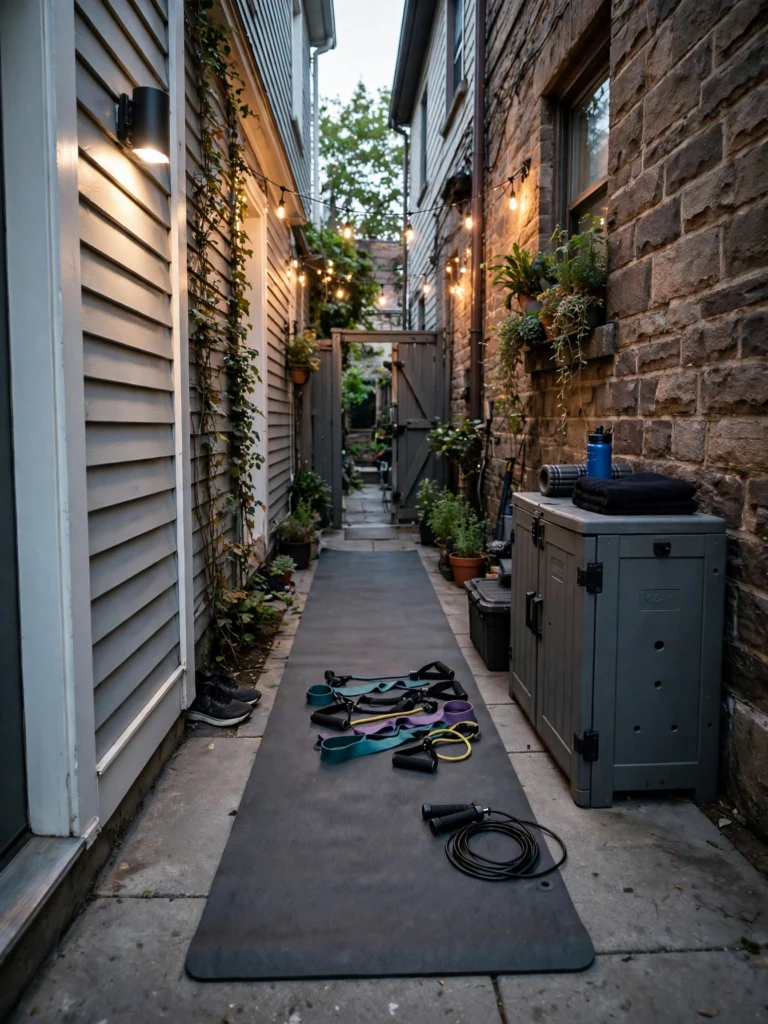
Improve the space with a level walking surface, suitable lighting, and a small weatherproof storage cabinet if there is room. Check drainage carefully because narrow side yards can collect water between buildings. Make sure there is enough ventilation and that gates, pathways, and access points remain unobstructed. This is a practical option for homeowners who want to exercise outdoors without using the main garden.
25. Build a Complete Outdoor Fitness Zone
If you have a larger backyard, you can divide the area into different exercise zones. Create one section for strength training with a bench and weights, another for cardio with space for jumping rope or agility drills, and a third for yoga and stretching. Use changes in flooring, planters, or low screens to define each area without making the garden feel closed off.
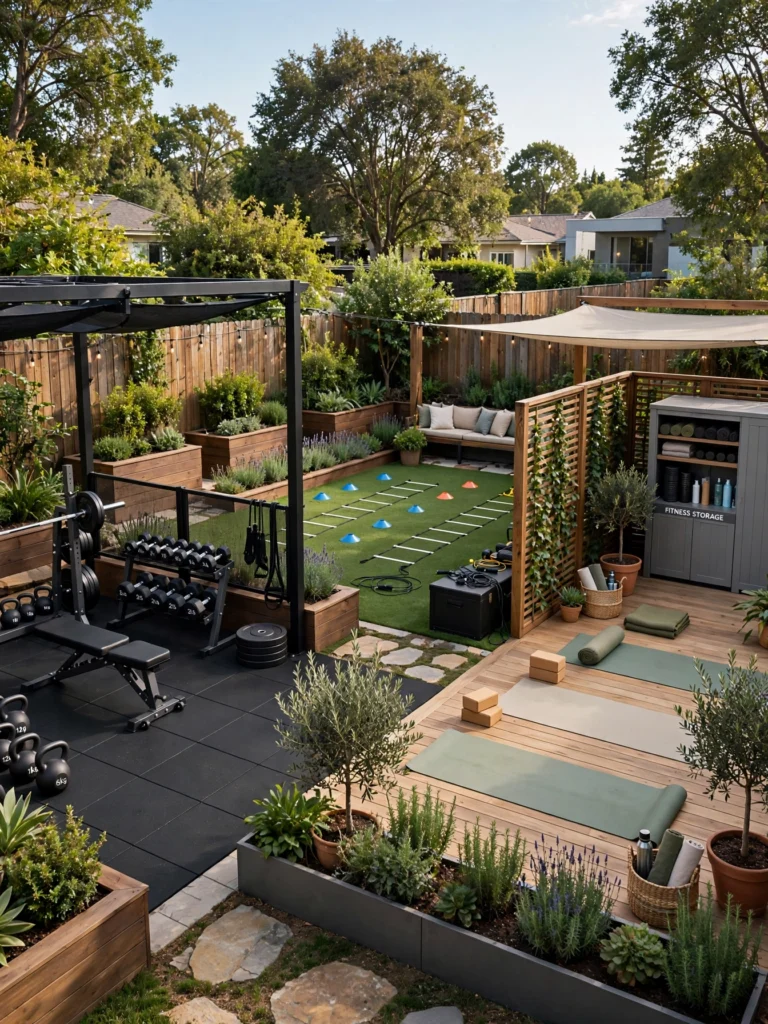
A complete outdoor fitness zone should balance appearance, safety, and everyday convenience. Choose durable equipment, provide shade where practical, and use suitable storage to protect accessories from the weather. Leave clear routes between the stations and plan for drainage, lighting, and regular maintenance. With thoughtful planning, your backyard can become a flexible home gym that supports different workouts throughout the year.
How to Plan Your Outdoor Gym at Home
Before choosing between these outdoor gym ideas, consider the size of your available space and the exercises you enjoy most. A small patio may be enough for yoga, resistance bands, and bodyweight training, while a larger backyard can support separate strength and cardio stations. Measure the area first, check the ground conditions, and make a list of the equipment you will actually use.
Your climate and budget should also influence the design. In sunny areas, shade and heat-resistant materials can make workouts more comfortable. In rainy or humid climates, drainage, corrosion-resistant equipment, and suitable weather protection are especially important. If you are planning a rooftop gym, heavy equipment installation, or a structure for hanging body weight, seek appropriate professional advice before starting.
What Flooring Is Best for an Outdoor Gym?
The best flooring depends on the type of exercise you plan to do. Rubber tiles designed for outdoor use may suit strength-training areas, while a stable patio can work for many bodyweight exercises and stretching routines. Artificial grass may be suitable for lighter activities when it has a proper base and good drainage, but it is not automatically the right surface for heavy weights or high-impact movements.
Avoid slippery tiles, loose stones, uneven paving, and surfaces that become unstable when wet. If your gym includes a weight bench, rack, or heavy machines, check that the ground can support the equipment safely. Use mats where appropriate, but do not rely on a thin exercise mat to correct an uneven or unsuitable floor.
How to Protect Your Outdoor Gym Equipment
Outdoor equipment needs regular care because rain, sunlight, dust, and changing temperatures can shorten its useful life. Choose products specifically rated for outdoor use whenever possible, and follow the manufacturer’s cleaning and maintenance instructions. Store smaller accessories in a weatherproof container and cover equipment only in a way that allows moisture to escape rather than trapping condensation underneath.
Inspect metal parts for corrosion, check bolts and fittings for looseness, and look for cracks or damage in benches and frames. Dry wet equipment before storing it and remove dirt that could affect moving parts or grips. Regular checks are particularly important for pull-up stations, climbing equipment, weight racks, and other structures that support body weight.
Final Thoughts
The best outdoor gym ideas are the ones that suit your space, budget, and fitness routine. You can create a simple exercise corner with a mat and resistance bands, build a modern backyard gym with strength equipment, or turn a covered patio into a comfortable workout area. Even a small side yard or rooftop can offer useful possibilities when you plan the layout carefully and choose suitable equipment.
Start with a few essential items, make safety a priority, and add more features as your needs change. Whether you prefer DIY backyard gym ideas, rustic garden designs, modern outdoor fitness stations, or exercise spaces for kids, a well-planned setup can make staying active at home more convenient and enjoyable.
Frequently Asked Questions
1. How do I build an outdoor gym in my backyard?
Start by choosing a level area with enough room for your planned exercises. Add basic equipment such as a mat, resistance bands, and suitable weights, then consider flooring, storage, shade, and weather protection. Make sure all equipment is designed for its intended use and installed safely.
2. What are the best outdoor gym ideas for small backyards?
Compact equipment is usually the best choice for small backyards. Resistance bands, adjustable dumbbells, foldable mats, and a suitable pull-up station can support different workouts without taking up too much room. Vertical storage and a simple layout help keep the area organized.
3. Can I build a DIY outdoor gym on a budget?
Yes. Start with affordable accessories such as a jump rope, exercise mat, and resistance bands. Add other equipment gradually based on your fitness goals. Avoid cutting costs on structural supports, anchoring systems, or surfaces that must safely support heavy equipment.
4. Can I make an outdoor gym on a rooftop?
A rooftop gym may be possible if the roof can safely support the people and equipment using it. Have a qualified professional assess structural capacity when needed, provide suitable guardrails, and secure equipment against wind. Lightweight accessories are often easier to accommodate than heavy gym machines.
5. How can I protect an outdoor gym from rain?
Choose equipment rated for outdoor conditions, provide suitable shelter where practical, and store accessories in weatherproof containers. Ensure good drainage and follow the manufacturer’s guidance for cleaning, covering, and maintaining each item.
6. Are outdoor gyms good for children?
An outdoor movement area can encourage children to stay active and enjoy outdoor play. Use age-appropriate equipment, suitable protective surfacing, safe installation, and adult supervision. Keep children away from heavy adult weights and machines that are not designed for their use.