
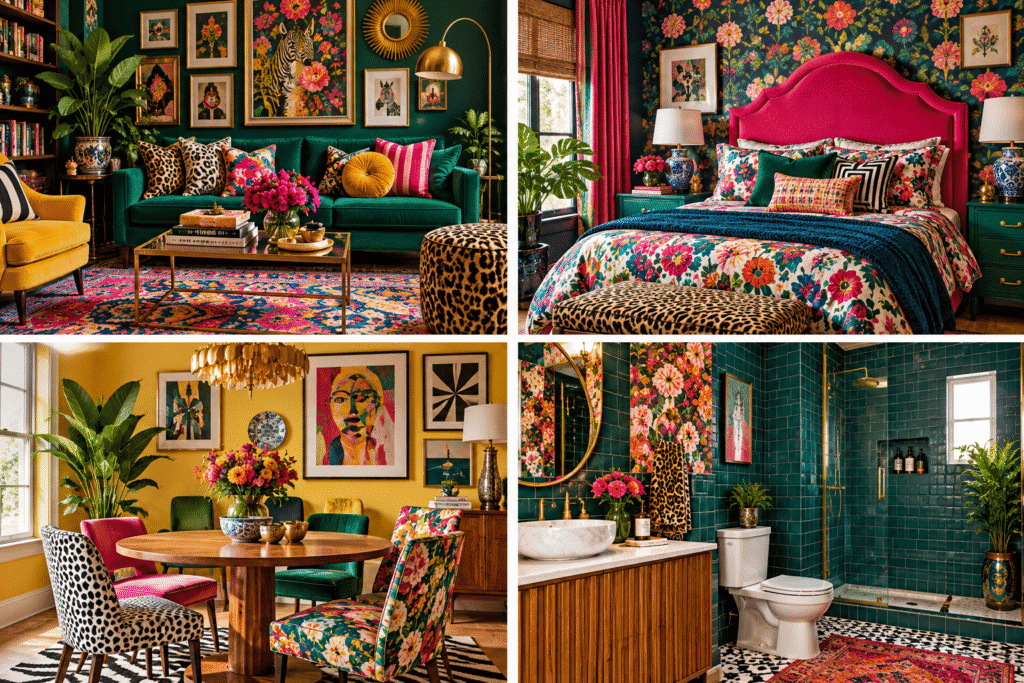
More is more and that is exactly the point. Maximalist decor throws out the “less is more” rulebook and replaces it with bold colors, clashing patterns, layered textures, and rooms packed with personality. If you have ever felt like your home was too safe, too beige, or too matched, maximalism is the trend that gives you permission to go bigger.
Maximalism shares a lot of DNA with dopamine decor, since both styles use color and pattern to create a happier, more expressive home. But maximalism pushes even further, treating every wall, shelf, and surface as an opportunity for visual storytelling. Where dopamine decor asks “what colors make me happy,” maximalism asks “what do I love, and how do I display all of it at once, on purpose.”
This guide walks through what maximalist decor actually is, where it came from, the sub-styles you can choose from, how to build a room from the ground up, and how to avoid the mistakes that turn “maximalist” into “cluttered.”
What Is Maximalist Decor?
Contents
- 1 What Is Maximalist Decor?
- 2 Maximalist Decor vs. Dopamine Decor vs. Minimalism
- 3 Maximalist Decor Sub-Styles
- 4 Key Elements of Maximalist Design
- 5 Maximalist Decor Ideas by Room
- 6 Best Color and Pattern Pairings for Maximalism
- 7 Maximalist Decor for Renters
- 8 Seasonal Maximalism
- 9 How to Do Maximalist Decor on a Budget
- 10 DIY Maximalist Projects to Try This Weekend
- 11 Maximalist Decor for Kids’ Rooms and Shared Spaces
- 12 Common Maximalist Decor Mistakes to Avoid
- 13 Quick Maximalist Decor Starter Checklist
- 14 Frequently Asked Questions
- 15 Final Thoughts
Maximalist decor is an interior design style built around abundance instead of restraint. Instead of choosing one accent color, maximalism layers several. Instead of one pattern, it mixes stripes, florals, and geometrics in the same room. Instead of hiding collections in closets, maximalism puts them on open shelves, gallery walls, and curated vignettes.
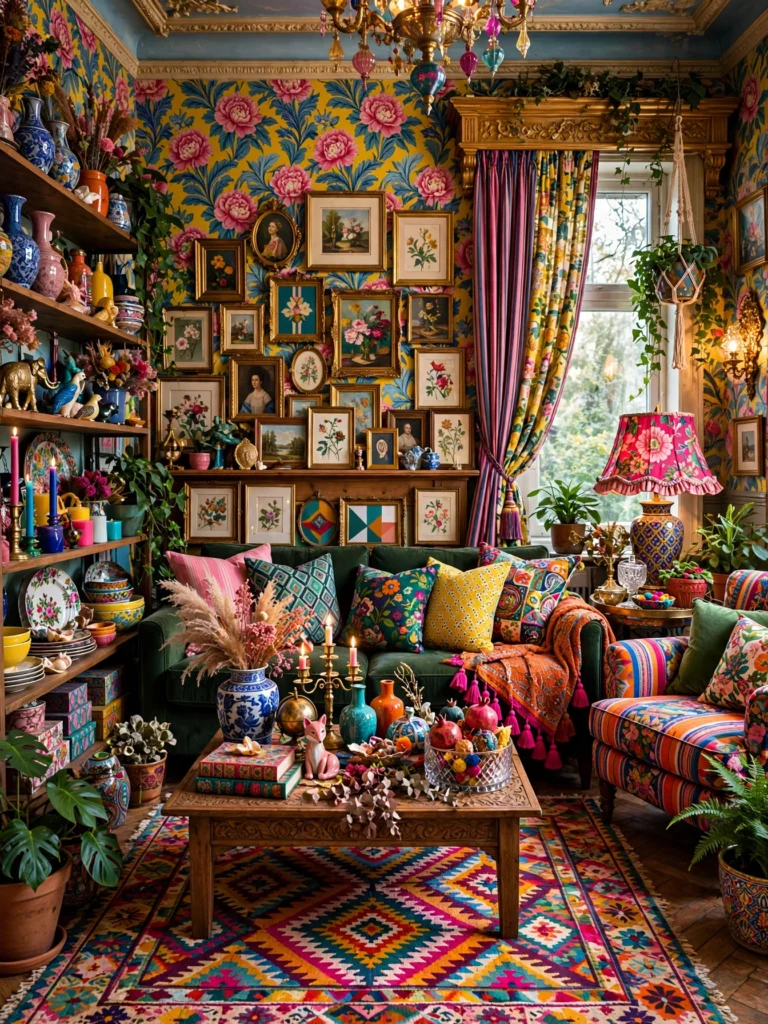
Core traits of maximalist design include:
- Saturated, high-contrast color palettes
- Multiple patterns mixed with intention
- Collections displayed proudly instead of hidden
- Rich textures like velvet, brass, and lacquer
- Gallery walls and layered artwork
- Furniture treated as statement pieces
- Rooms that tell a story about the people who live there
Where minimalism removes, maximalism curates abundance. Done well, it never feels cluttered it feels alive, layered, and deeply personal.
A Quick History of Maximalism
Maximalism is not a brand-new invention. Its roots trace back to Victorian-era interiors, where wallpapered walls, dense furniture arrangements, and collected curiosities were the norm. The style resurfaced in the 1980s with postmodern design, faded during the beige-and-gray minimalist wave of the 2010s, and has come roaring back over the past few years as homeowners push back against sterile, showroom-style interiors.
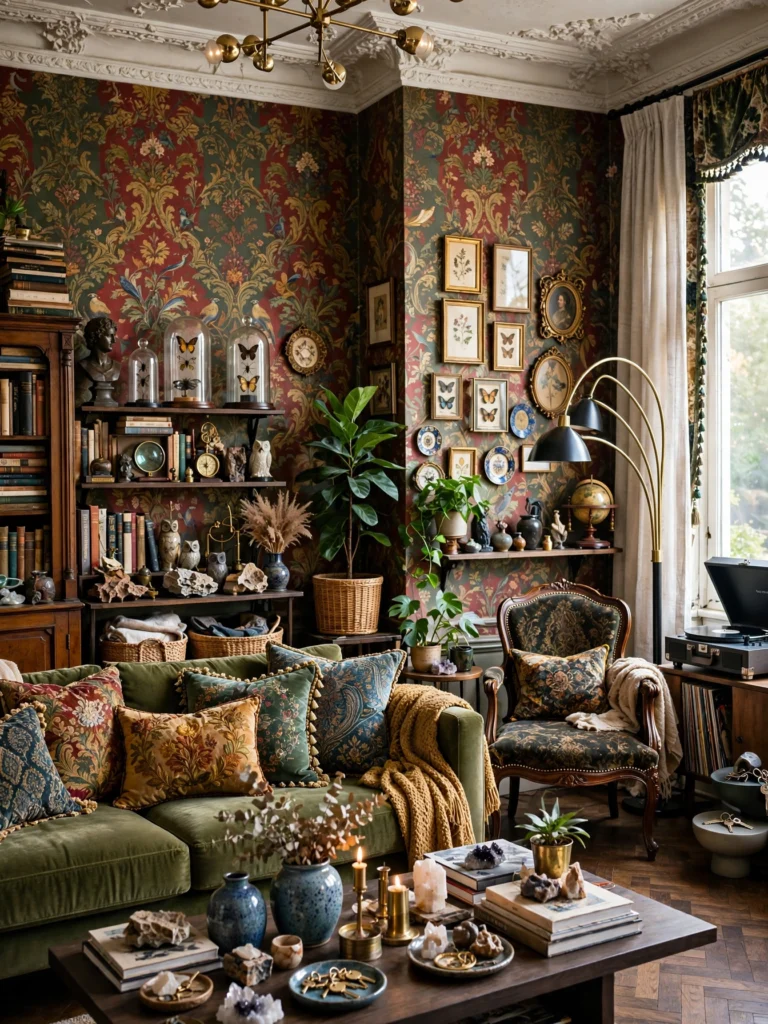
The current maximalist revival is closely tied to social media but instead of copying one influencer’s exact living room, most people are using maximalism as a framework for building something that looks like nobody else’s home. That is really the heart of the trend: personal expression over trend-chasing.
Maximalist Decor vs. Dopamine Decor vs. Minimalism
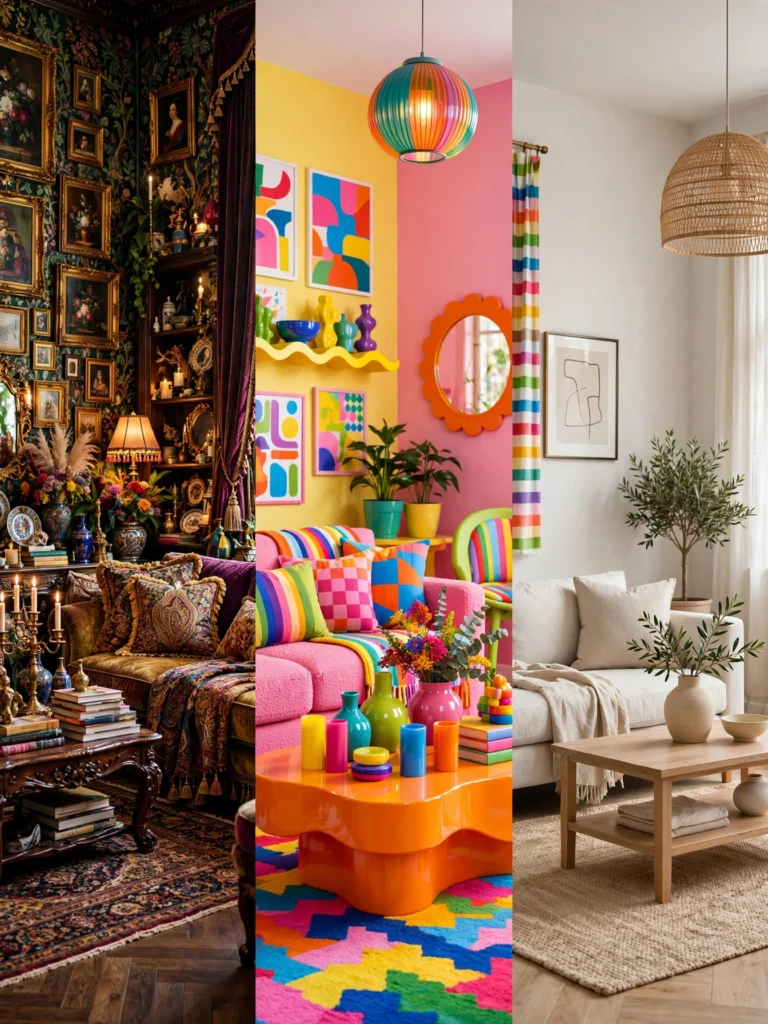
These three trends often get mixed up, so here is how they compare:
| Style | Color Approach | Pattern Use | Best For |
|---|---|---|---|
| Maximalist Decor | Saturated, layered, multiple accent colors | Heavy pattern mixing across furniture, walls, textiles | People who love drama and collecting |
| Dopamine Decor | Bright, mood-boosting colors | Playful patterns, but more curated | People who want joy without full-on maximalism |
| Minimalism | Neutral, muted | Little to none | People who want calm, uncluttered spaces |
If dopamine decor is “add color for joy,” maximalism is “add everything you love, all at once, on purpose.” Many homeowners actually land somewhere in the middle — starting with a dopamine decor mindset and slowly working toward a fuller maximalist room as their confidence (and collection of favorite objects) grows.
Maximalist Decor Sub-Styles
One of the best things about maximalism is that it is not one single look. It is a framework that flexes to fit almost any taste. Here are five popular directions to help you find your version of “more.”
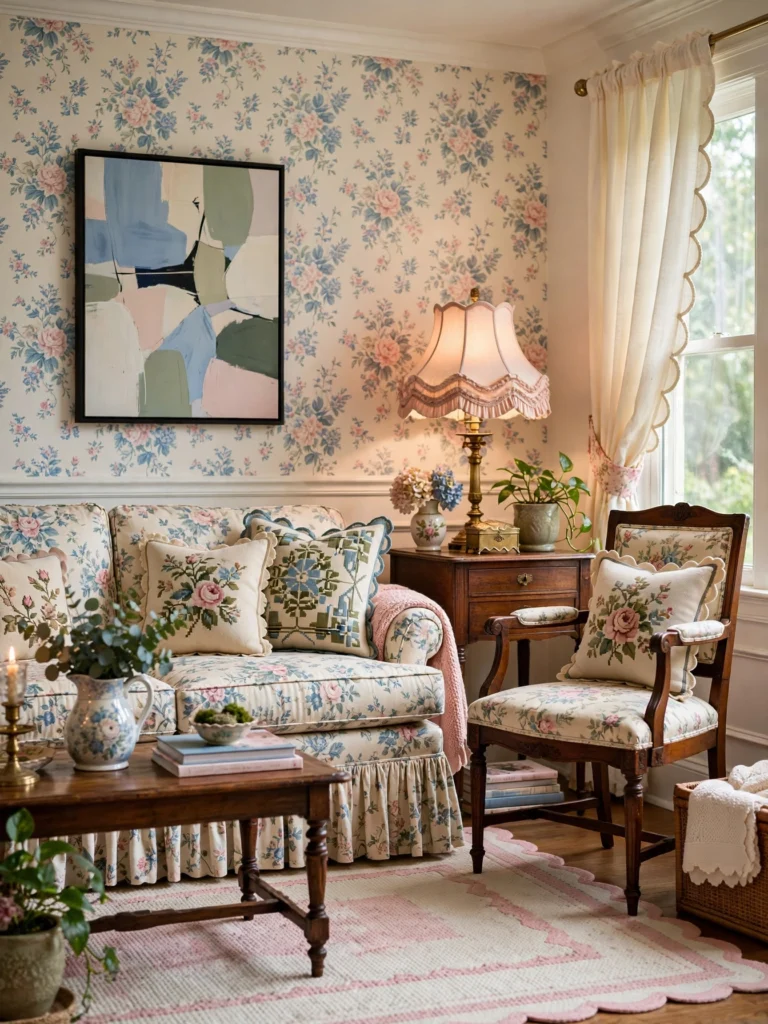
1. Grandmillennial Maximalism
This sub-style mixes traditional, slightly old-fashioned pieces think chintz florals, needlepoint pillows, and skirted furniture with a modern, younger sensibility. Grandmillennial rooms lean into scalloped edges, ruffled lampshades, and inherited or vintage furniture paired with contemporary art.
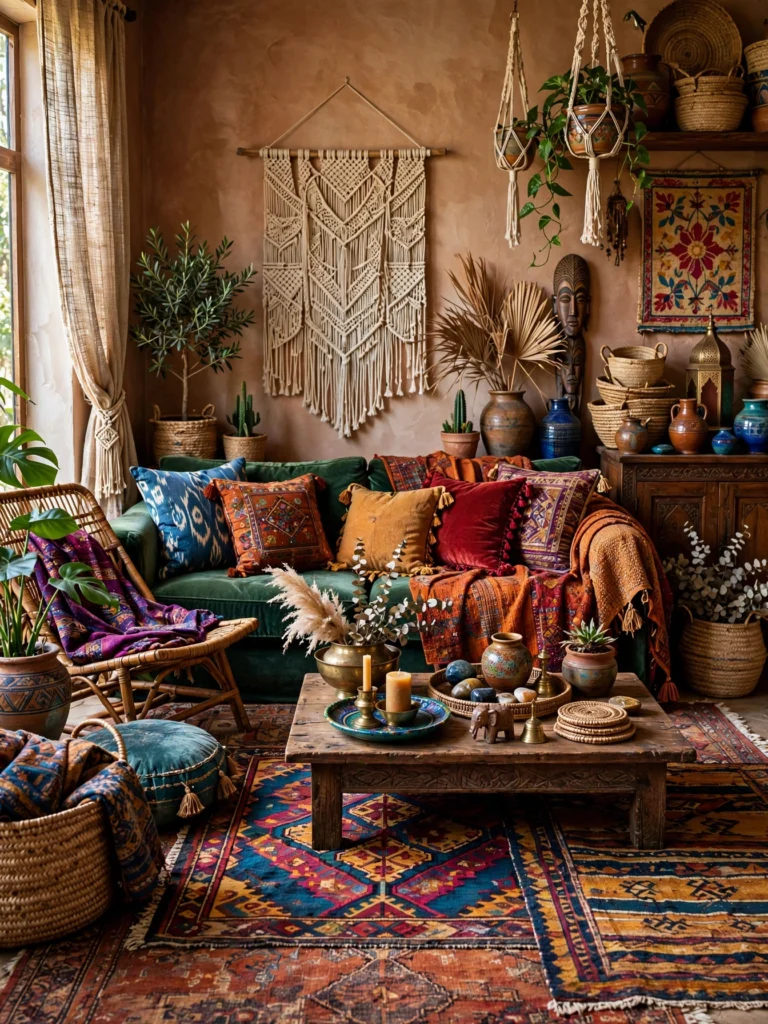
2. Bohemian Maximalism
A close cousin of boho decor, this version leans on global textiles, macrame, layered rugs, and warm earthy colors mixed with jewel tones. It feels collected from travels rather than curated from a single store.
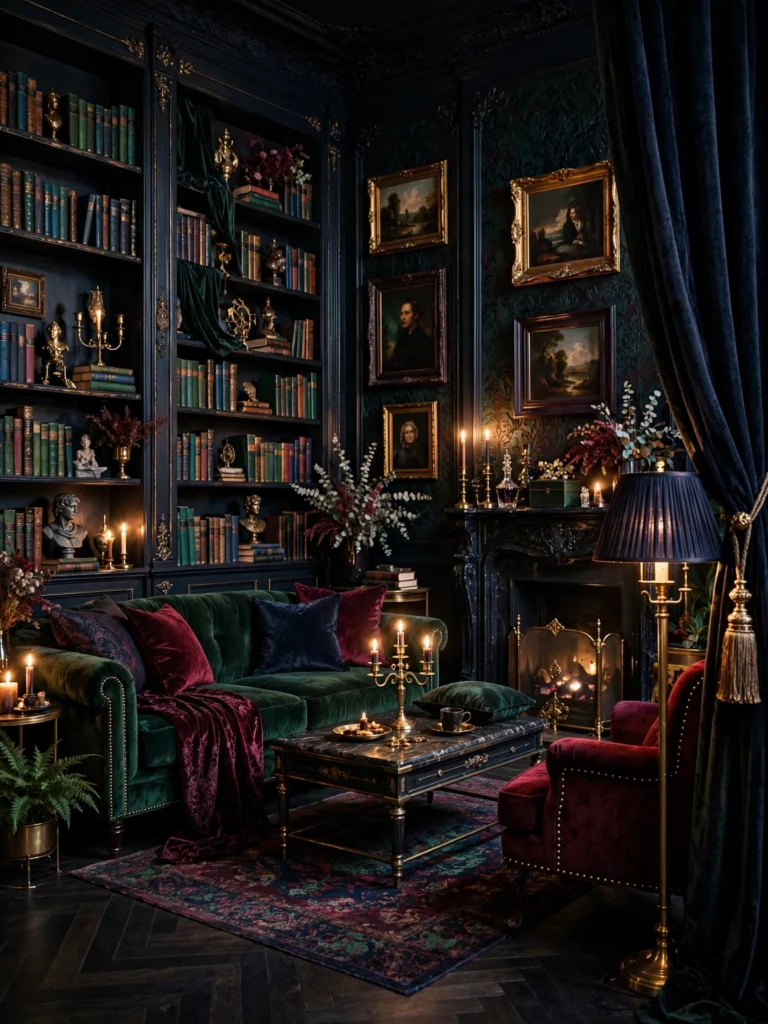
3. Dark Maximalism (Moody Maximalism)
Instead of bright, cheerful colors, dark maximalism uses deep jewel tones emerald, burgundy, navy, black paired with brass, velvet, and dramatic lighting. It feels closer to a boutique hotel or a cozy, dramatic library.
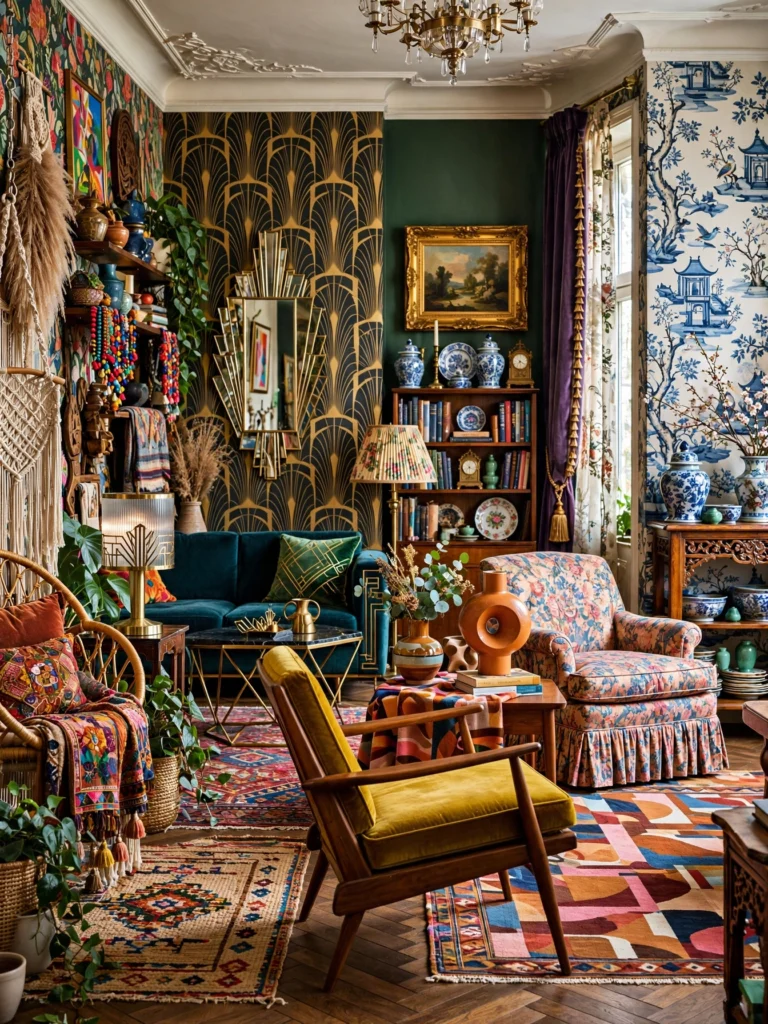
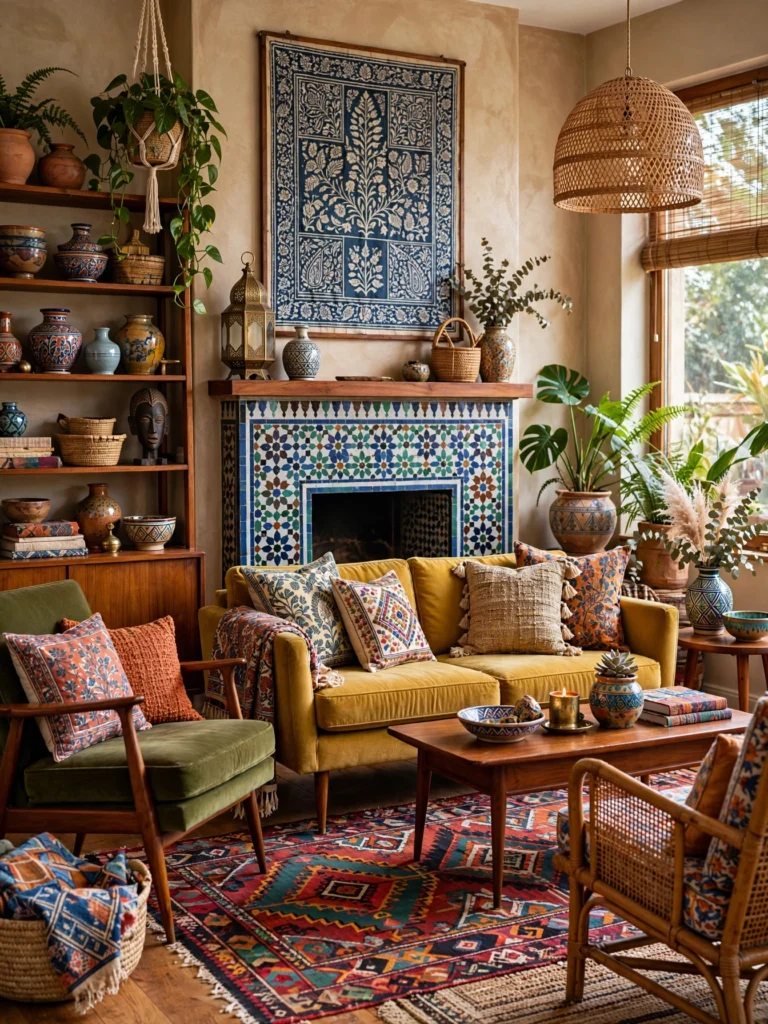
4. Global Eclectic Maximalism
This style pulls patterns and objects from many cultures and travel destinations, mixing them thoughtfully rather than matching them. Moroccan tile, Indian block prints, and mid-century furniture might all live in the same room.
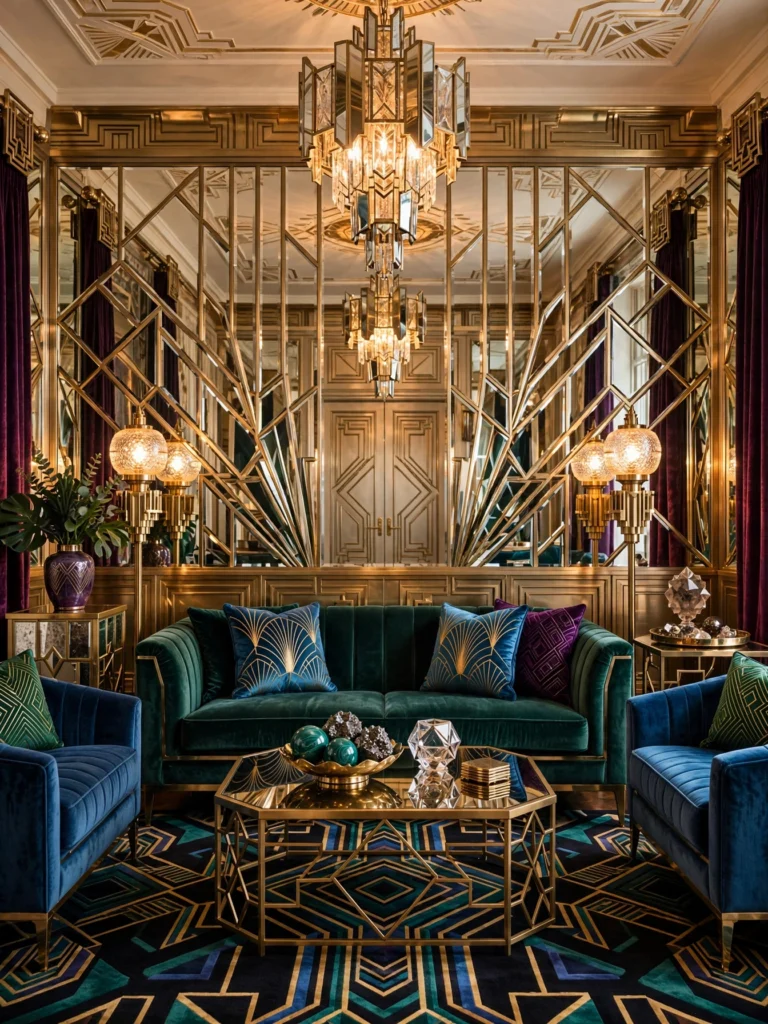
5. Art Deco Maximalism
Bold geometric patterns, mirrored and brass surfaces, jewel-toned velvet, and glamorous lighting define this sub-style. It leans more polished and symmetrical than other maximalist directions, making it a good entry point for people who want boldness with more structure.
You do not need to pick just one. Most real maximalist homes blend two or three of these directions based on what the homeowner already owns and loves.
Key Elements of Maximalist Design
1. Bold, Saturated Color Palettes
Maximalist rooms rarely stick to one color story. Instead, they build depth with three or more strong colors working together.
A helpful starting framework is a maximalist twist on the classic 60-30-10 rule:
- 60% dominant color usually a deep, saturated wall or upholstery color
- 30% secondary color a contrasting or complementary shade used in rugs, curtains, or a second piece of furniture
- 10% accent color a bold pop used in pillows, art, or accessories
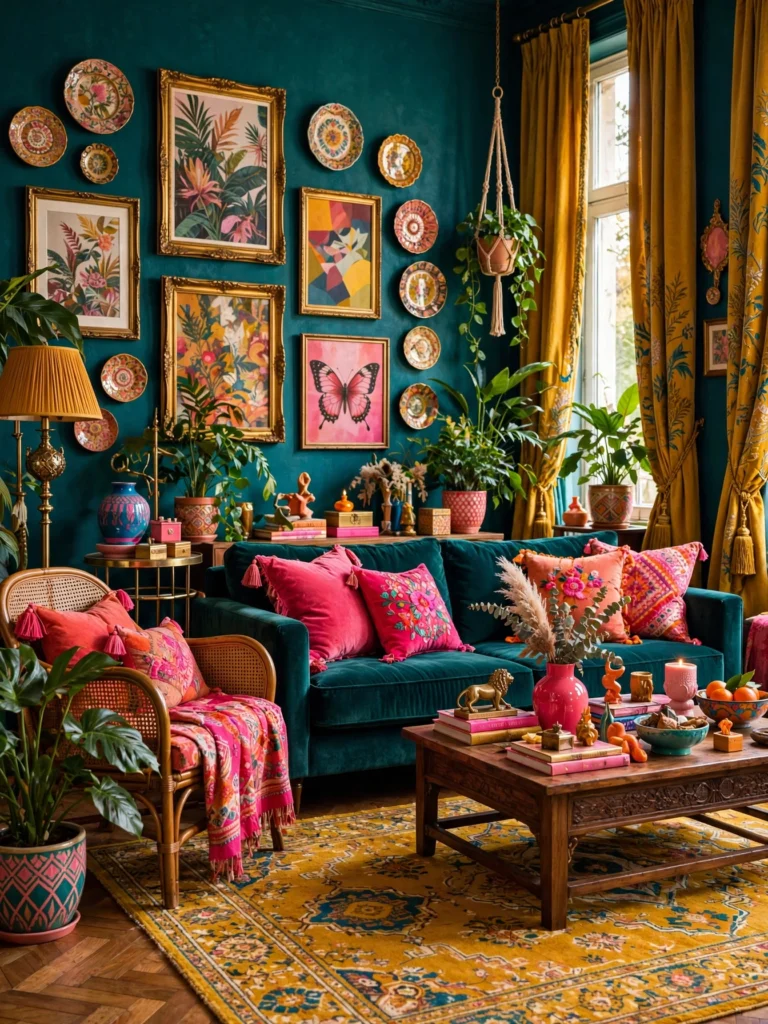
The difference between a maximalist version of this rule and a traditional one is intensity every one of those percentages gets a saturated color instead of a neutral.
Popular maximalist color combinations:
| Combo | Mood |
|---|---|
| Emerald + Mustard + Blush | Rich and glamorous |
| Cobalt Blue + Burnt Orange + Cream | Warm and adventurous |
| Deep Plum + Fuchsia + Gold | Dramatic and luxe |
| Forest Green + Terracotta + Black | Earthy and bold |
| Teal + Coral + Brass | Playful and warm |
| Burgundy + Navy + Camel | Moody and rich |
Start with a jewel-tone base, then add a warm accent and a neutral to keep the room grounded. For more full-room palette planning, see our guide to whole-home color palettes.
2. Fearless Pattern Mixing
This is the trait that most defines maximalism. Florals sit next to stripes, checkerboards meet paisley, and animal print shows up on a single accent chair.
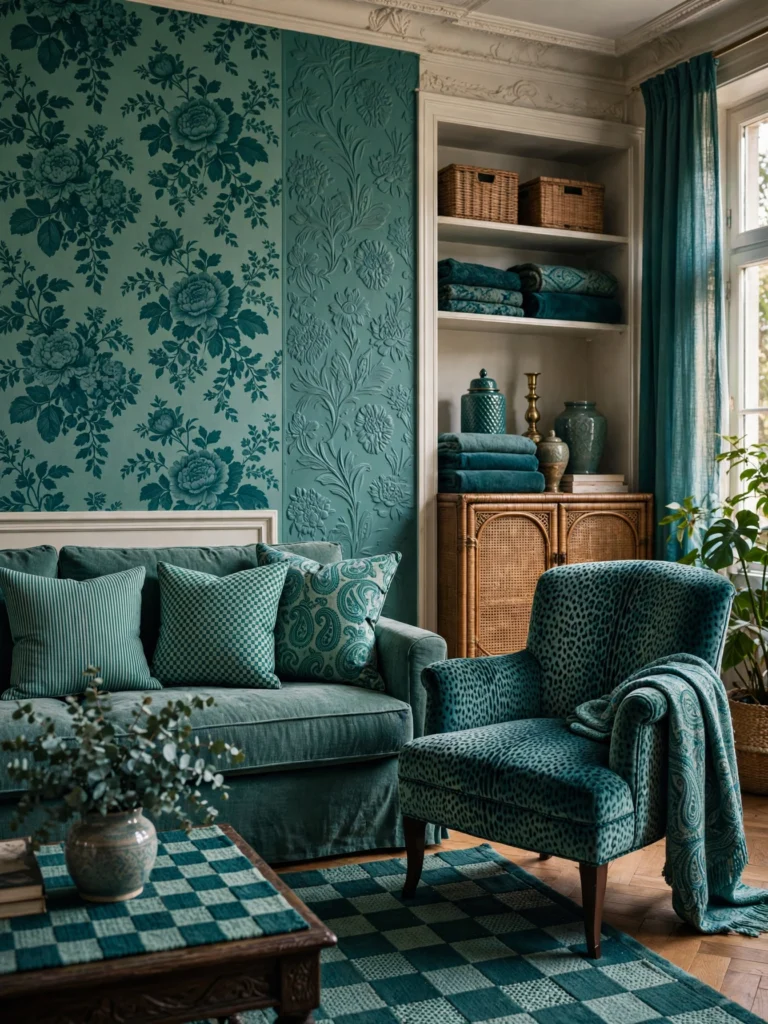
Pattern mixing rules that actually work:
- Vary the scale pair a large floral with a small geometric
- Repeat one color across all patterns to tie them together
- Use a solid texture (velvet, linen) to give the eye a resting point
- Start small with a patterned rug or pillow before committing to patterned wallpaper
- Limit yourself to three to five patterns per room so the mix reads as intentional
A simple formula many designers use is: one large-scale pattern, one medium stripe or geometric, and one small-scale print, all sharing at least one common color.
3. Layered Textures and Materials
Maximalism is tactile as much as it is visual. Look for combinations of:
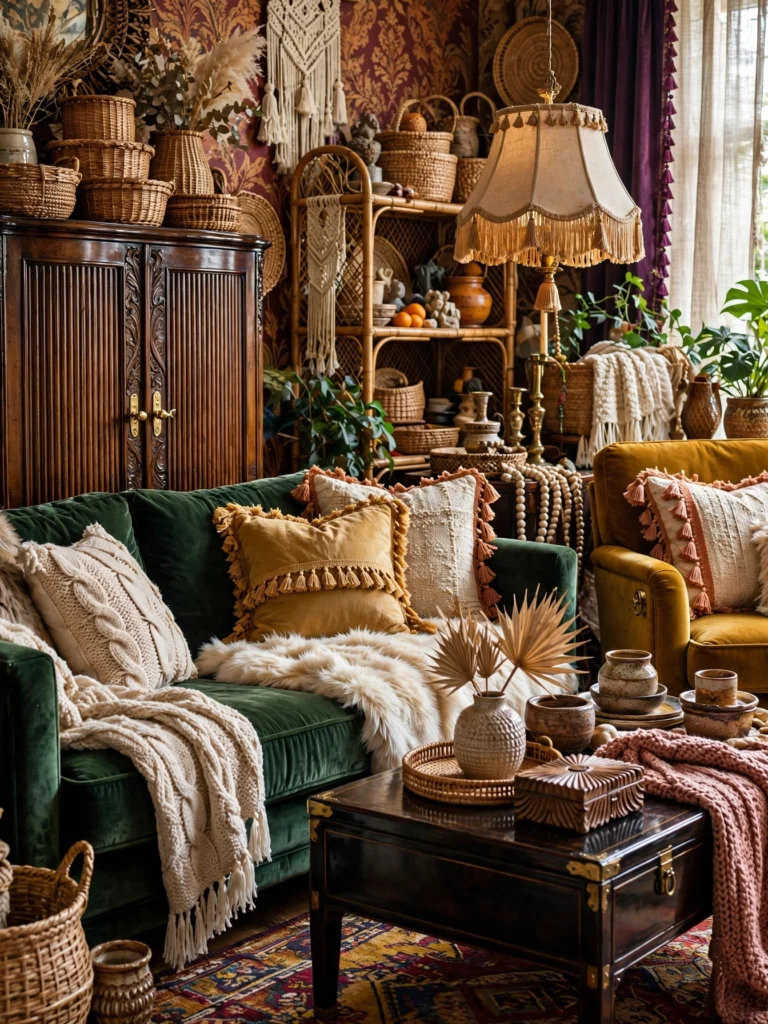
- Velvet upholstery
- Brass or gold hardware
- Lacquered furniture
- Woven baskets and rattan
- Faux fur or chunky knit throws
- Fringe trim on pillows and lampshades
- Carved or fluted wood furniture
Texture is what keeps an all-bold room from feeling flat. A velvet sofa next to a rattan chair next to a lacquered side table gives the eye three different tactile experiences in one seating area.
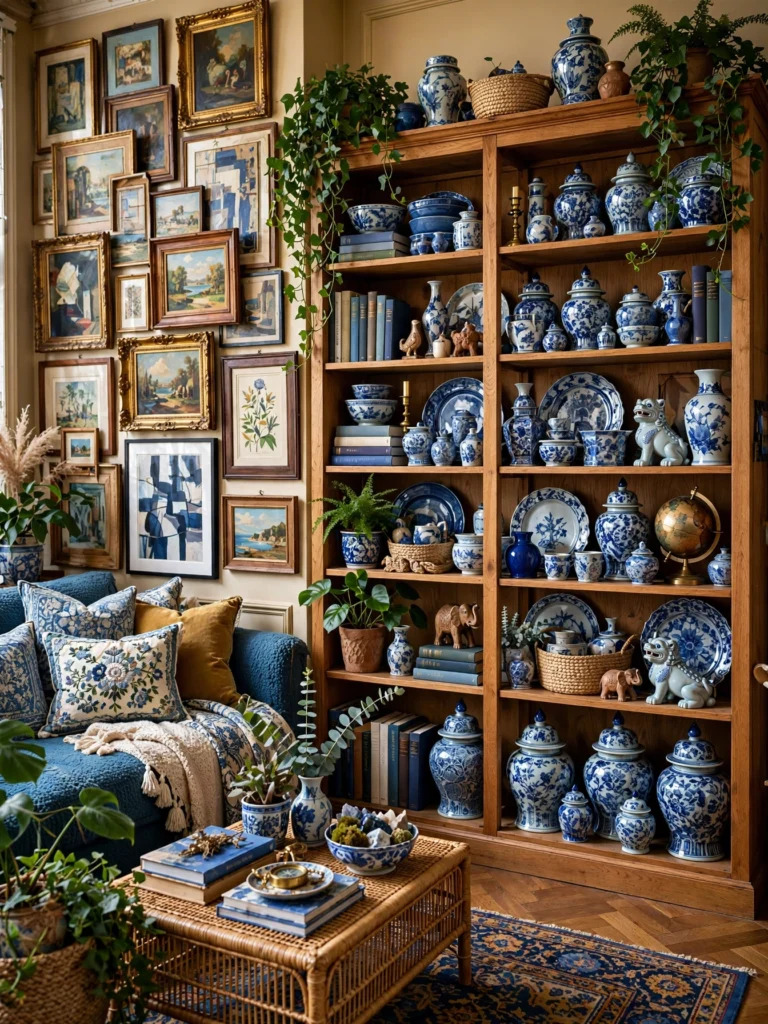
4. Curated Collections on Display
Maximalist homes treat books, art, plants, and travel finds as decor, not clutter. Open shelving, gallery walls, and layered artwork all work in this style. Group collections by color or category rather than scattering them randomly a shelf of blue-and-white ceramics reads as curated, while the same objects spread across five rooms reads as clutter. For wall-specific inspiration, check out our wall decor ideas and photo wall guides.
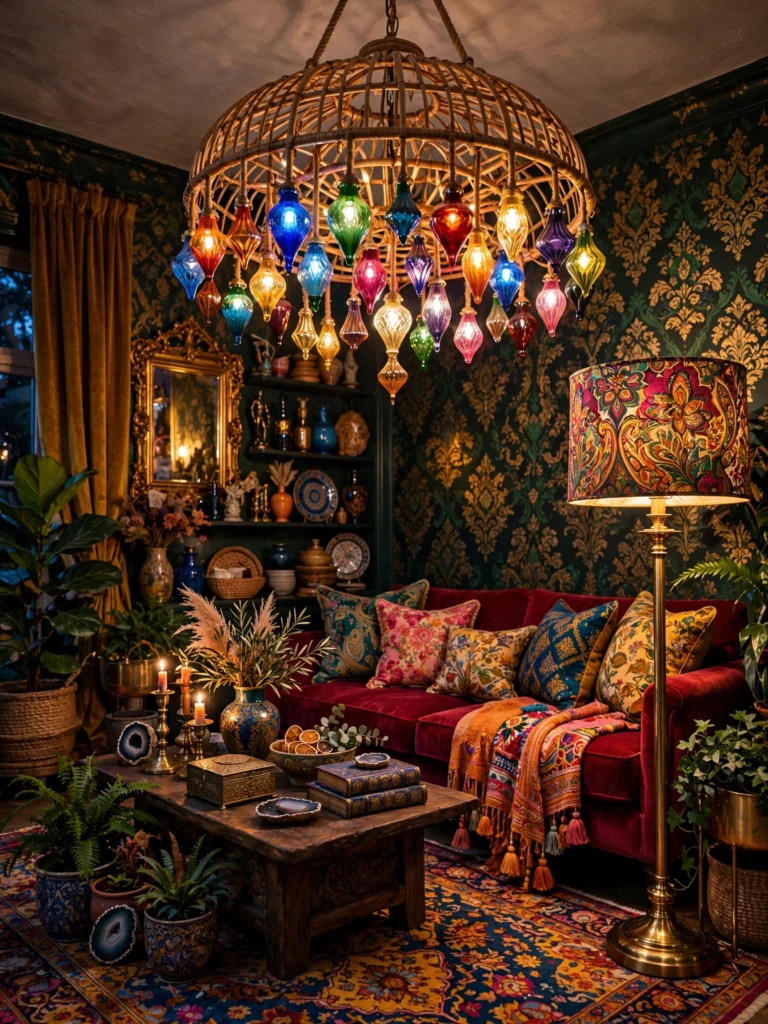
5. Statement Lighting
Lighting deserves its own mention because it is one of the fastest ways to add drama without repainting or reupholstering anything. A colorful glass pendant, an oversized rattan chandelier, or a brass floor lamp with a patterned shade can anchor an entire room.
Maximalist Decor Ideas by Room
Living Room
The living room is the easiest place to go full maximalist since it usually has the most furniture and wall space to play with.
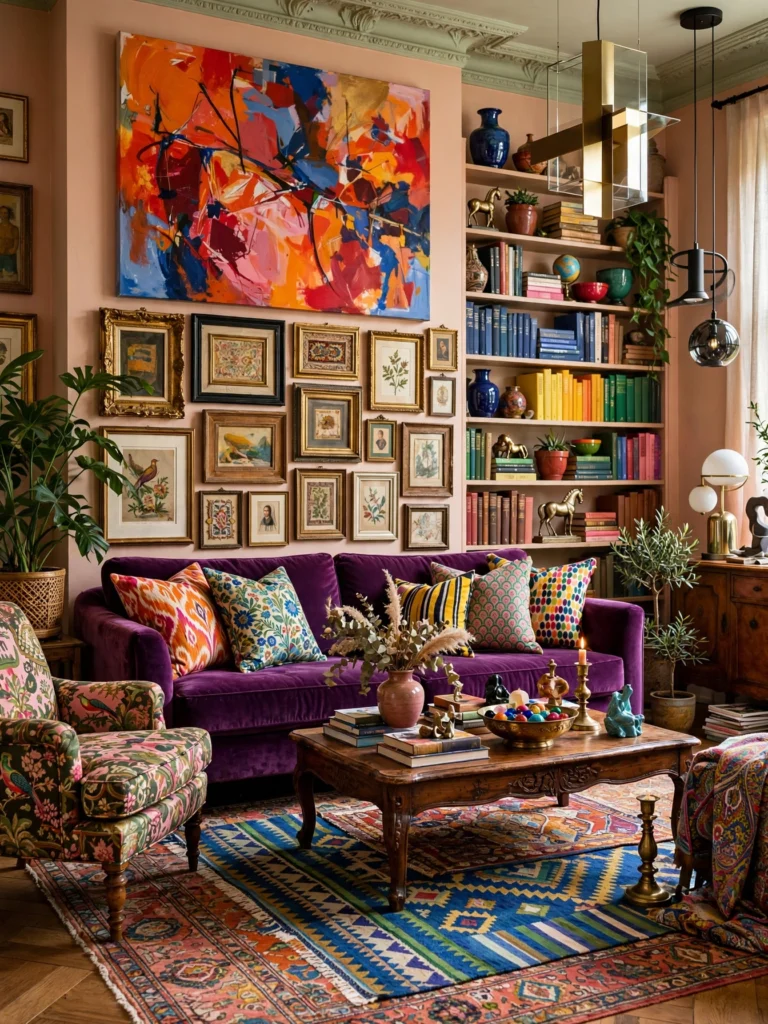
Try these ideas:
- Layer a patterned rug over patterned upholstery
- Add a gallery wall with mismatched frames
- Choose a velvet sofa in an unexpected jewel tone
- Mix vintage furniture with modern lighting
- Group multiple patterned throw pillows instead of matching sets
- Add a bold, oversized piece of artwork as a focal point
- Use bookshelves as a color-blocked display, not just storage
Mini scenario: A neutral gray sofa gets an emerald velvet reupholstery, a striped rug in mustard and cream goes underneath, and five mismatched patterned pillows in complementary jewel tones finish the look — all without buying a single new piece of furniture.
For more room-specific layouts, see our full living room ideas guide, and if you are working with limited square footage, our small living room guide shows how to scale these ideas down.
Bedroom
A maximalist bedroom can still feel restful if you anchor it with one dominant pattern.
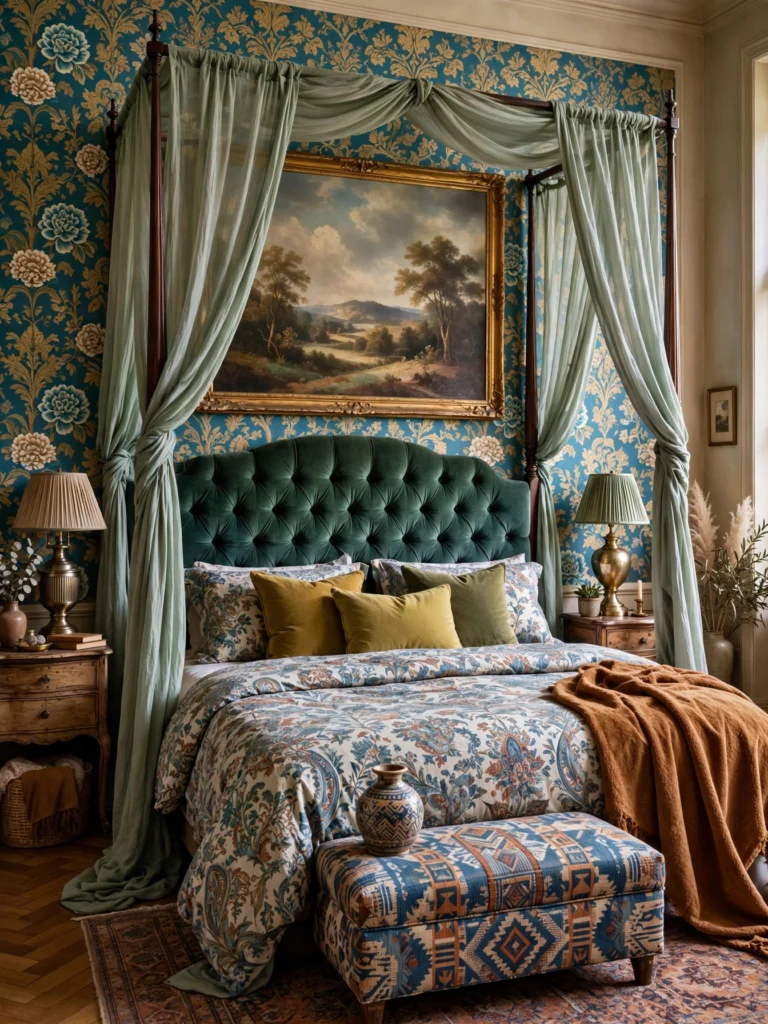
Bedroom upgrades:
- Choose a bold patterned wallpaper for one wall
- Layer patterned bedding with solid throw pillows
- Add a statement headboard in velvet or tufted fabric
- Hang an oversized piece of art above the bed
- Mix metallic lighting fixtures with vintage nightstands
- Add a patterned bench or ottoman at the foot of the bed
- Use canopy curtains or a four-poster frame for extra drama
Working with a smaller bedroom or apartment layout? Our apartment bedroom decor guide shows how to fit bold style into tight spaces without overwhelming the room.
Kitchen
Maximalism in the kitchen usually shows up through color and display rather than pattern overload, since kitchens need to stay functional.
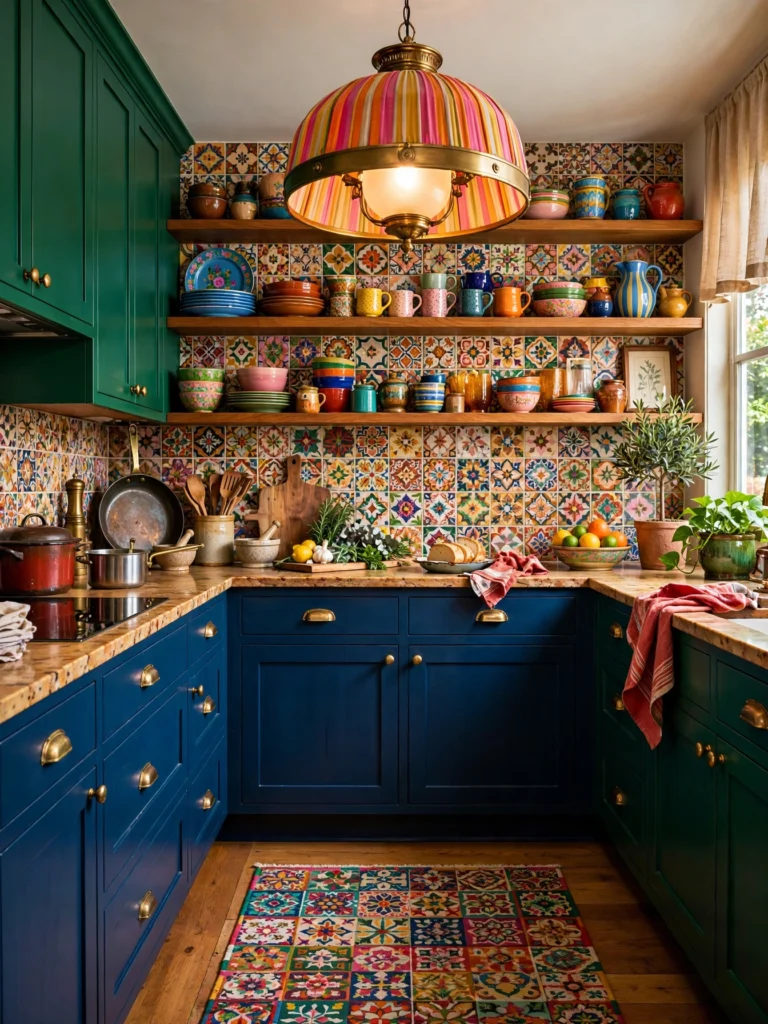
- Paint cabinets in a saturated color like emerald or navy
- Display colorful dishware on open shelves
- Add a patterned tile backsplash
- Use a bold pendant light as a focal point
- Layer vintage and modern cookware on display
- Add a colorful runner rug in front of the sink or stove
- Choose brass or unlacquered hardware for warmth
Browse more inspiration in our kitchen ideas collection.
Bathroom

- Choose a bold, humidity-friendly wallpaper
- Add patterned tile flooring or a statement tile shower surround
- Use brass or black fixtures for contrast
- Display plants and colorful towels
- Add a vintage-style vanity or repurposed dresser
- Hang a gallery of small framed art on one wall
Dining Room
Dining rooms are an underrated place to go bold, since they are used for shorter periods and can handle more drama than an everyday living space.
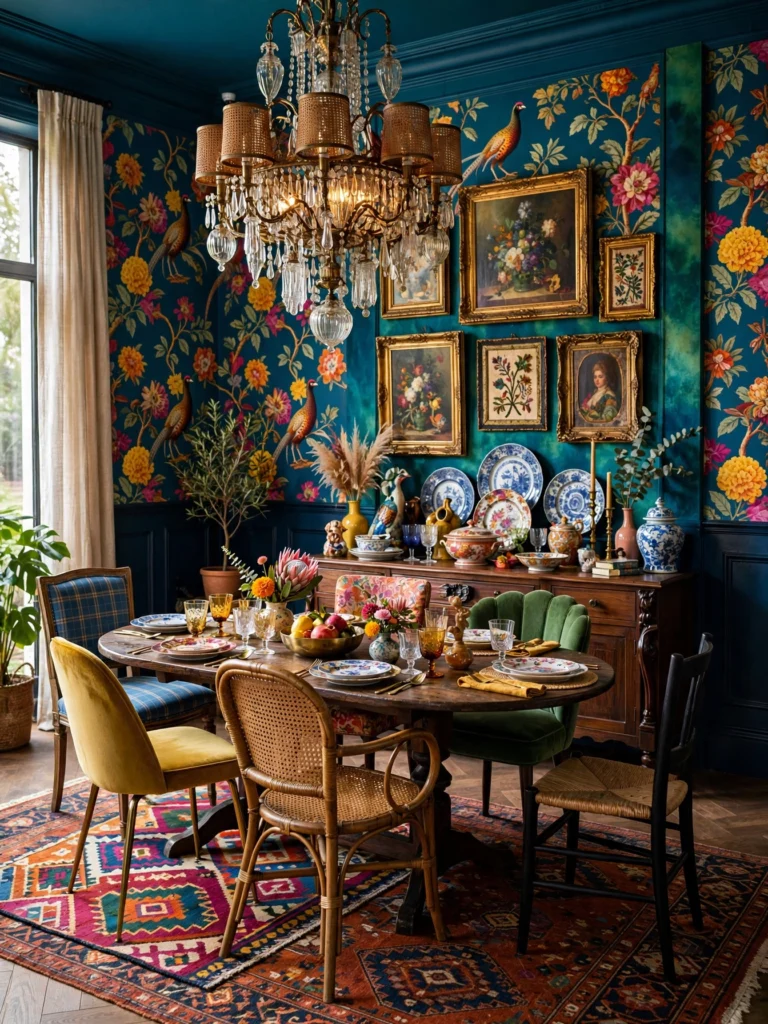
- Choose a saturated wall color or bold wallpaper
- Mix dining chairs instead of buying a matching set
- Add a statement chandelier or pendant light
- Layer a patterned rug under the table
- Display collected china, glassware, or art on a sideboard
See our full dining room guide for more layout and styling ideas.
Entryway and Hallway
The entryway sets the tone for the whole home, so it is a great place to introduce your maximalist palette before guests reach the rest of the house.
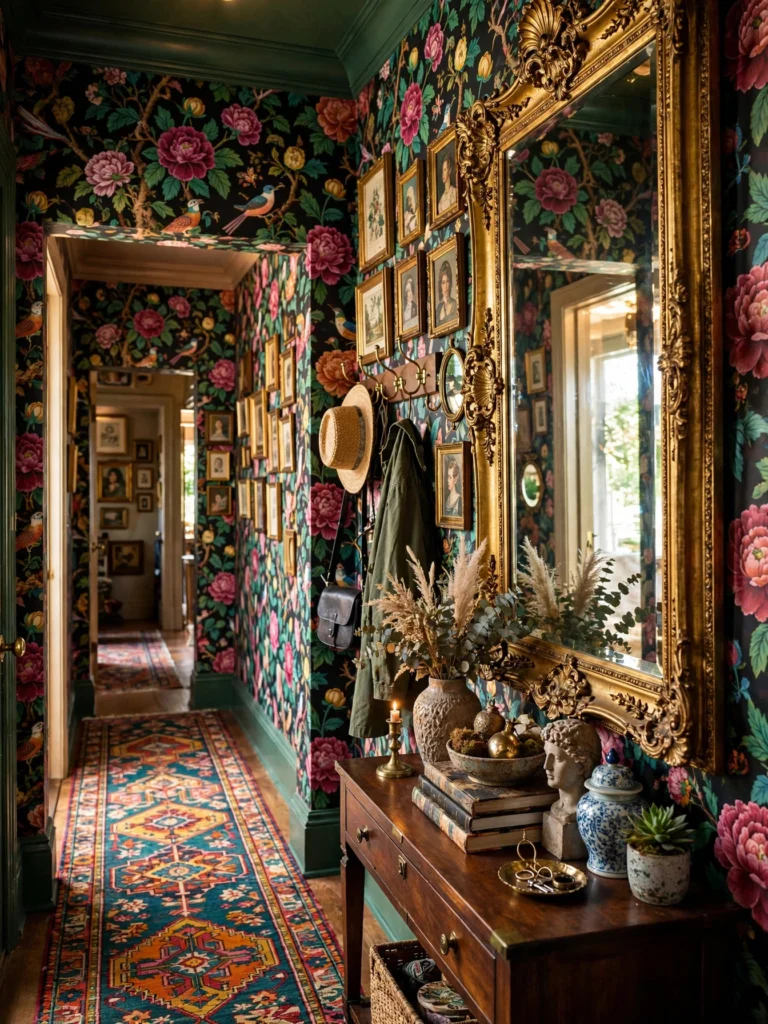
- Hang bold wallpaper or a large mirror with a statement frame
- Add a patterned runner rug
- Use a console table to display collected objects or art
- Layer hooks, art, and a mirror on one wall for a mini gallery moment
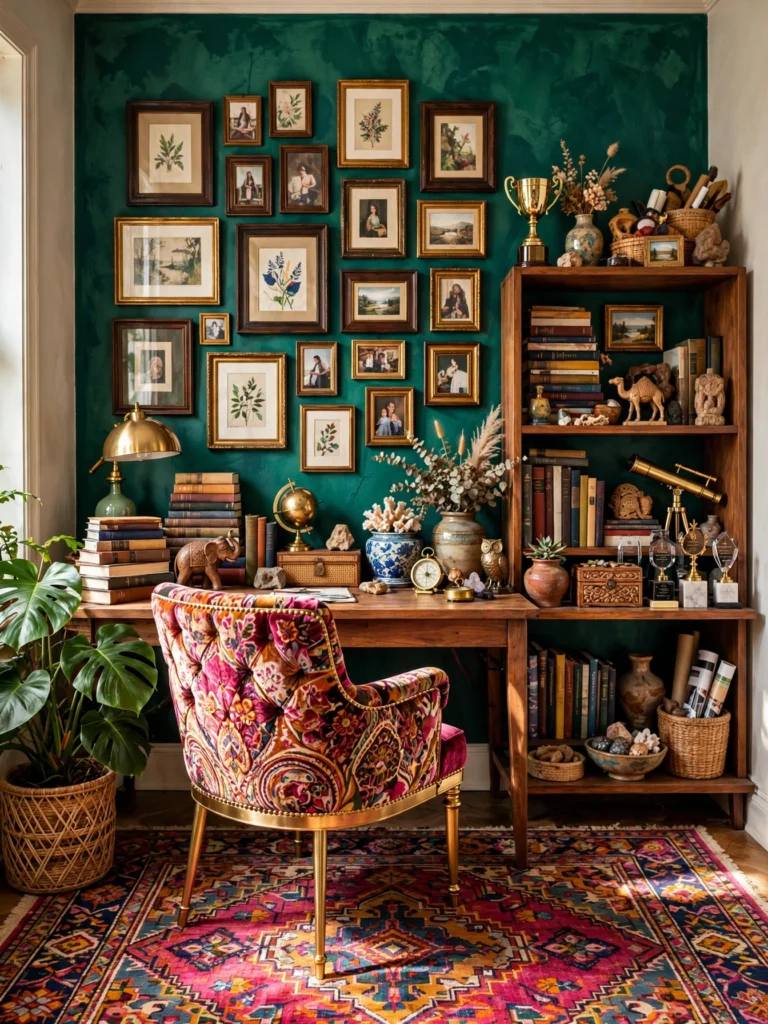
Home Office
- Add a richly patterned area rug our rug guide has more pairing ideas
- Choose a statement desk chair
- Hang a gallery wall of art and personal photos
- Use a bold accent wall behind the desk
- Display books, awards, and travel finds on open shelving
Best Color and Pattern Pairings for Maximalism
| Pairing | Why It Works |
|---|---|
| Floral + Stripe | Classic contrast in scale and structure |
| Animal Print + Solid Jewel Tone | Grounds a bold print without overwhelming |
| Geometric + Botanical | Balances structure with organic shapes |
| Checkerboard + Paisley | High contrast, works best in small doses |
| Ikat + Solid Velvet | Global pattern paired with a rich, simple texture |
| Plaid + Floral | Traditional grandmillennial pairing |
Maximalist Decor for Renters
You do not need to own your home to try this trend. Rentals can go maximalist with fully reversible changes:
- Use removable wallpaper for an accent wall
- Add patterned peel-and-stick tile over existing backsplash or flooring
- Bring in bold furniture and rugs rather than modifying built-ins
- Use tension curtain rods instead of drilled hardware
- Swap cabinet knobs and put the originals in a labeled bag for move-out
- Lean on layered textiles pillows, throws, and rugs since they travel with you
Seasonal Maximalism
Maximalist homes are easy to refresh seasonally without a full redecorate, since the bones of the style (bold color, pattern, texture) already exist.
- Fall/Winter: swap in richer jewel-tone throws, add candles, and layer in warmer metallics like brass and bronze
- Spring/Summer: rotate in lighter florals, swap heavy velvet pillow covers for linen or cotton prints, and add fresh greenery
- Holidays: maximalist homes tend to shine during the holidays since the layered, collected aesthetic already matches festive decorating
How to Do Maximalist Decor on a Budget
Maximalism does not require a full renovation. Small, intentional additions go a long way, and much of the “expensive-looking” effect comes from layering, not spending.
Affordable ways to start:
- Thrift patterned furniture and reupholster later
- Use peel-and-stick wallpaper for a bold accent wall
- Swap solid pillow covers for patterned ones
- Shop vintage and estate sales for statement pieces our vintage home decor guide has more ideas
- Paint one piece of furniture in a saturated color instead of buying new
- Frame fabric remnants or wrapping paper as inexpensive wall art
- Rearrange what you already own into new, bolder groupings before buying anything new
Maximalist Decor Shopping List
| Category | What to Look For | Budget Tip |
|---|---|---|
| Rugs | Bold pattern, jewel-tone base | Layer two smaller thrifted rugs instead of one large new one |
| Pillows | Mixed prints, shared accent color | Buy pillow covers only and reuse existing inserts |
| Wall Art | Oversized statement piece + small gallery pieces | Frame vintage textiles or postcards |
| Lighting | Colorful glass, rattan, or brass fixtures | Swap just the lampshade for an instant refresh |
| Furniture | One or two statement pieces, rest neutral | Reupholster a thrifted chair instead of buying new |
DIY Maximalist Projects to Try This Weekend
If you want to test the style before committing to a full room redo, these small projects deliver a big visual impact in a single weekend:
1. Reupholster one chair in a bold fabric A single accent chair is a low-risk way to introduce a saturated color or large-scale print without touching the rest of the room.
2. Build a mini gallery wall Gather five to nine frames in different sizes and finishes, lay them out on the floor first, then hang them with a mix of art, mirrors, and small shelves.
3. Paint the inside of a bookshelf or cabinet Painting just the back panel of a bookshelf in a saturated color instantly makes everything displayed on it pop, without repainting an entire wall.
4. Layer two rugs Place a smaller patterned rug on top of a larger neutral one for instant texture and visual depth in a living room or bedroom.
5. Make a fabric-wrapped headboard A plywood headboard wrapped in bold patterned fabric and secured with a staple gun is one of the most affordable ways to add drama to a bedroom.
6. Create a color-blocked accent wall Instead of a single flat color, paint two or three geometric blocks of saturated color for a bolder, more graphic statement wall.
Maximalism translates naturally to kids’ rooms, since bold color and pattern already feel playful and age-appropriate.
- Mix patterned bedding with a solid painted wall for balance
- Use removable wall decals for an easy, damage-free pattern
- Display favorite toys, books, and art on open shelving instead of hiding them in bins
- Choose a bold rug that can hide everyday wear and stains
- Let the room evolve over time as tastes change, rather than designing it to look “finished” on day one
Common Maximalist Decor Mistakes to Avoid
1. Mixing too many bold patterns without a unifying color Pick one color that repeats across every pattern in the room so the mix reads as intentional rather than random.
2. Skipping solid surfaces entirely Every maximalist room needs a few solid, calm surfaces — a plain rug, a solid sofa, a bare wall — so the eye has somewhere to rest.
3. Ignoring furniture scale and flow Bold rooms still need functional layouts. Do not sacrifice walkways or seating comfort for the sake of style.
4. Treating it as one style instead of a personal mix The best maximalist rooms blend boho, boho ideas, vintage, and modern pieces rather than copying one influencer’s exact room.
5. Adding everything at once Maximalism looks best when it is collected over time. Rooms that are curated slowly, piece by piece, tend to feel more authentic than ones filled in a single shopping trip.
6. Forgetting lighting A maximalist room lit only by one overhead fixture will feel flat no matter how bold the colors are. Layer in lamps, sconces, and accent lighting.
Quick Maximalist Decor Starter Checklist
| Item | Easy Upgrade |
|---|---|
| Sofa | Add 3+ mismatched patterned pillows |
| Walls | Try a bold wallpaper or gallery wall |
| Bedroom | Layer patterned bedding with a statement headboard |
| Kitchen | Paint cabinets a saturated color |
| Shelving | Display collections instead of hiding them |
| Lighting | Choose a brass or colorful statement fixture |
| Rugs | Layer two patterned rugs for depth |
| Furniture | Reupholster one thrifted piece in a bold fabric |
Frequently Asked Questions
Is maximalist decor going out of style? No maximalism has grown steadily as more homeowners move away from all-neutral interiors in favor of personality-driven spaces, and its many sub-styles keep it feeling fresh rather than trend-locked.
How do I mix patterns without it looking messy? Repeat one shared color across every pattern in the room, vary the scale of each print so they do not compete, and limit yourself to three to five patterns per space.
Can maximalist decor work in a small space? Yes. Small rooms often handle bold color and pattern well since there is less surface area for it to feel overwhelming, and a single bold wall or piece of furniture can carry an entire small room.
What is the difference between maximalist and dopamine decor? Dopamine decor focuses on color choices that boost mood, while maximalism goes further by layering pattern, texture, and collected objects throughout the entire room.
Do I need matching furniture for maximalist decor to work? No mismatched furniture is actually a core part of the style. A shared color palette or one repeated material (like brass hardware) is usually enough to tie mismatched pieces together.
How much does it cost to redecorate in a maximalist style? Costs vary widely, but many homeowners start with under a hundred dollars by thrifting furniture, using peel-and-stick wallpaper, and swapping pillow covers before investing in larger statement pieces.
Is maximalism harder to keep clean than minimalism? Not necessarily. More surfaces means more to dust, but open shelving and displayed collections can also make cleaning more visible and motivating, since nothing is hidden behind closed doors.
Final Thoughts
Maximalist decor is for anyone who has ever felt like their home needed more color, more pattern, and more personality. It is not about clutter — it is about curating everything you love into one expressive, layered space. Start with one bold pillow, one patterned rug, or one saturated accent wall, and build from there over time. Once you start layering color and pattern with intention, there is no going back to beige.
If you want a gentler entry point before committing to a full maximalist room, start with our dopamine decor guide, or explore our broader interior design collection for more room-by-room inspiration.