
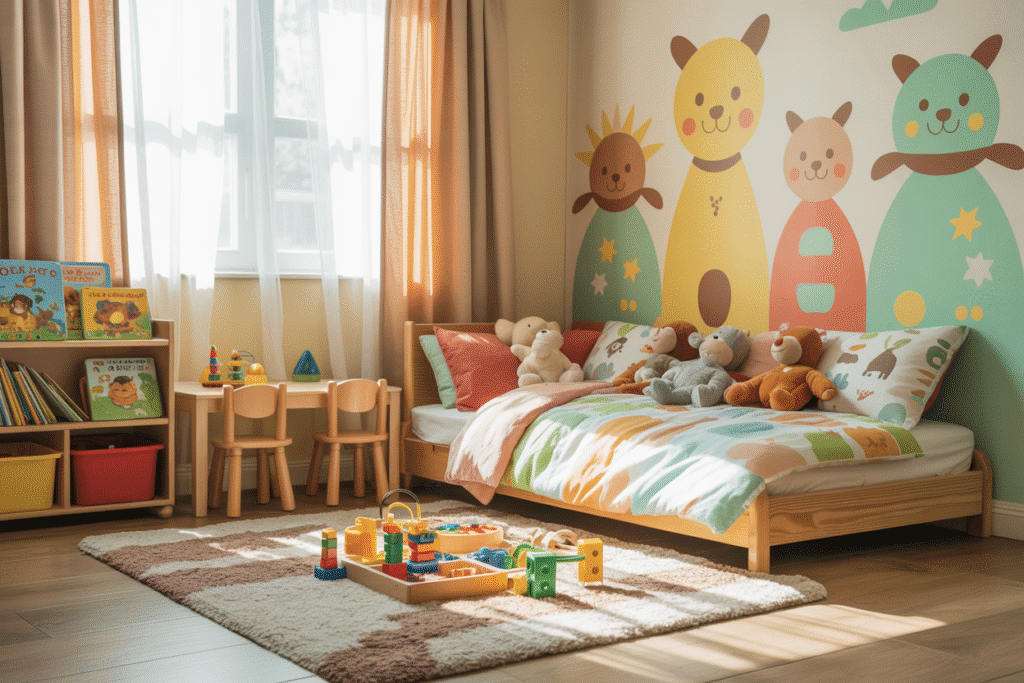
Moving a child from a crib to a “big kid” room is an important milestone. The transition can feel emotional for both parents and toddlers, so the key is to make the space feel safe, familiar, and exciting at the same time. In 2026, toddler room transitions focus on gentle design changes, safety upgrades, and playful independence. Below are 15 practical and creative ideas to help you smoothly transition your toddler’s room.
1. Convert Crib to Toddler Bed
Contents
- 1 1. Convert Crib to Toddler Bed
- 2 2. Floor Bed Setup for Independence
- 3 3. Add a Reading Nook Corner
- 4 4. Use Soft Night Lighting
- 5 5. Add Familiar Nursery Elements
- 6 6. Low Furniture for Easy Access
- 7 7. Fun Wall Decals Instead of Paint
- 8 8. Add a Small Play Area
- 9 9. Choose a Low Toddler Bed with Rails
- 10 10. Keep a Consistent Bedtime Routine Area
- 11 11. Use Soft and Neutral Color Palette
- 12 12. Add Step Stool for Independence
- 13 13. Label Storage Bins with Pictures
- 14 14. Add Personal Touch with Name Decor
- 15 15. Gradual Room Transition Approach
- 16 Final Thoughts
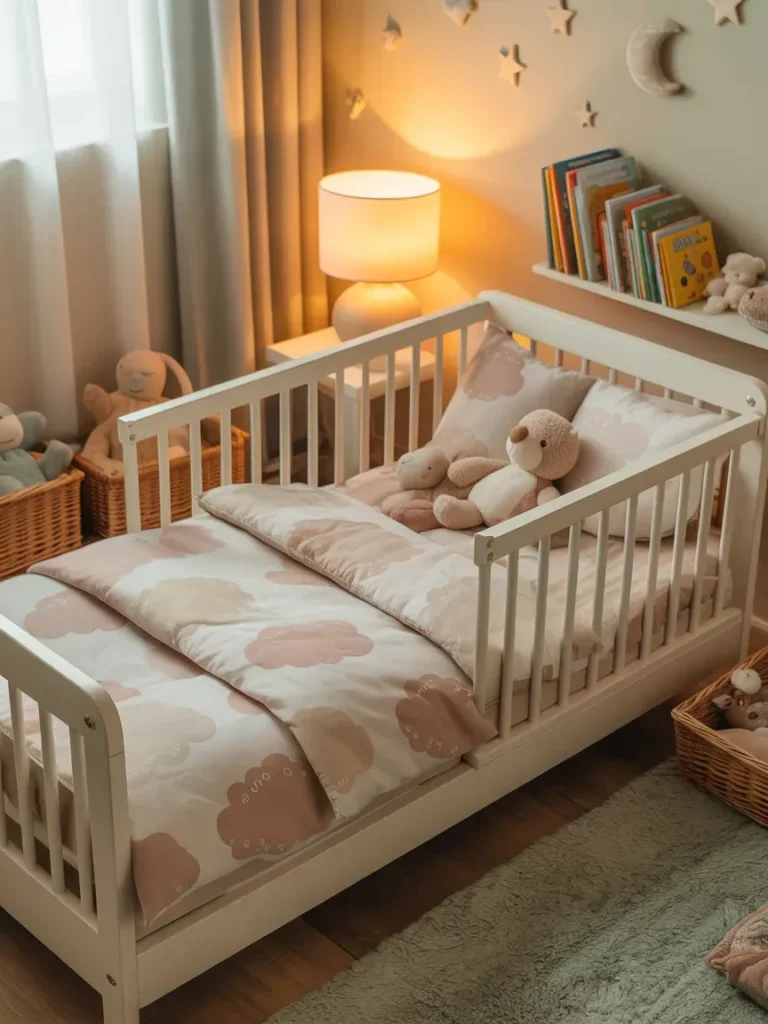
The easiest first step is converting the crib into a toddler bed if your furniture allows it. This keeps the sleeping environment familiar while giving your child more independence. The low height also ensures safety and reduces fear of falling.
2. Floor Bed Setup for Independence
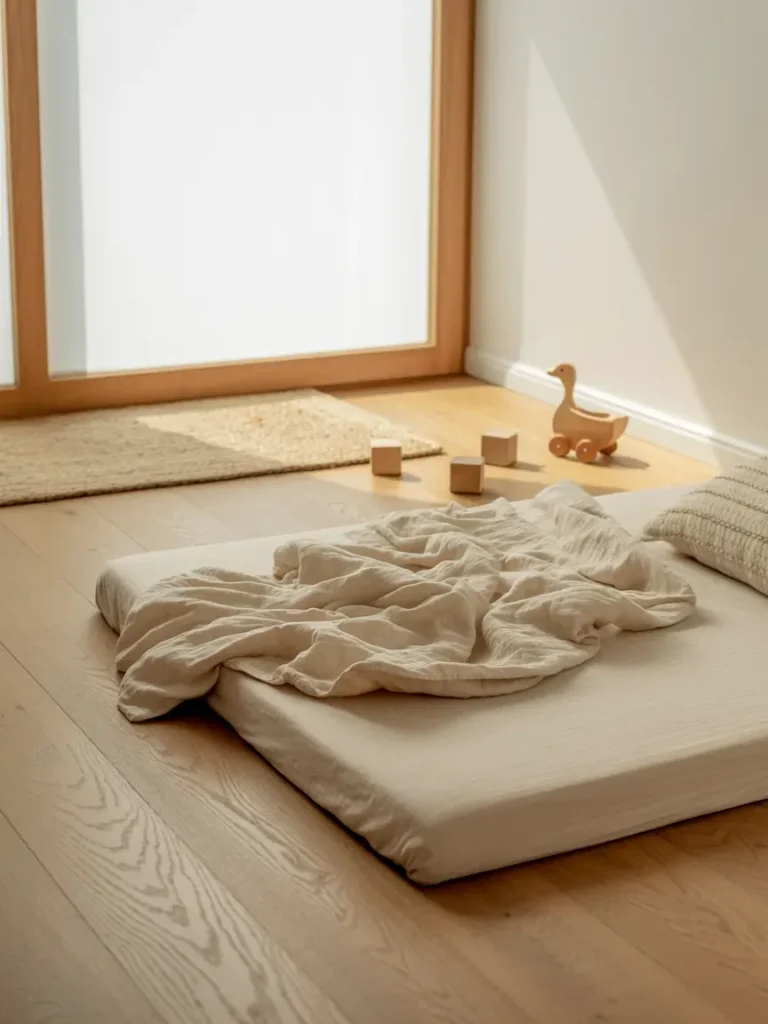
A floor bed is a modern 2026 trend that places the mattress directly on a low platform or the floor. This encourages independence because toddlers can safely get in and out of bed on their own. It also reduces the risk of falling and makes the room feel open and playful.
3. Add a Reading Nook Corner
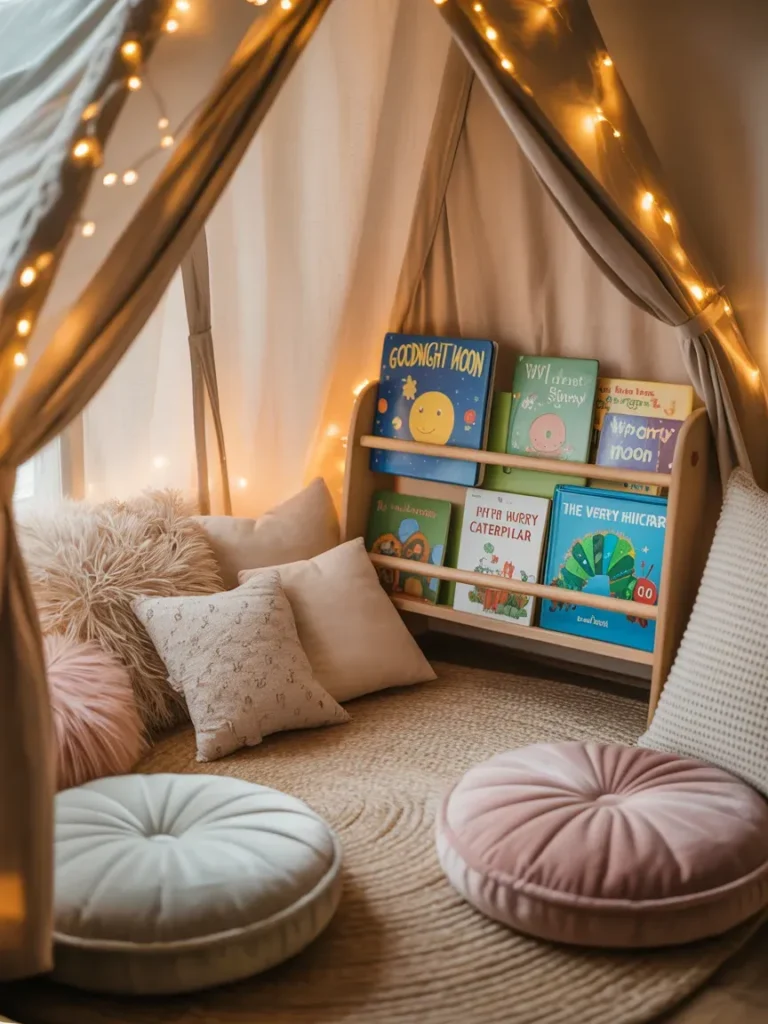
Creating a small reading corner helps toddlers feel excited about their new room. A soft chair, cushions, and a small bookshelf encourage quiet time and early reading habits. It also makes the room feel more personal and cozy.
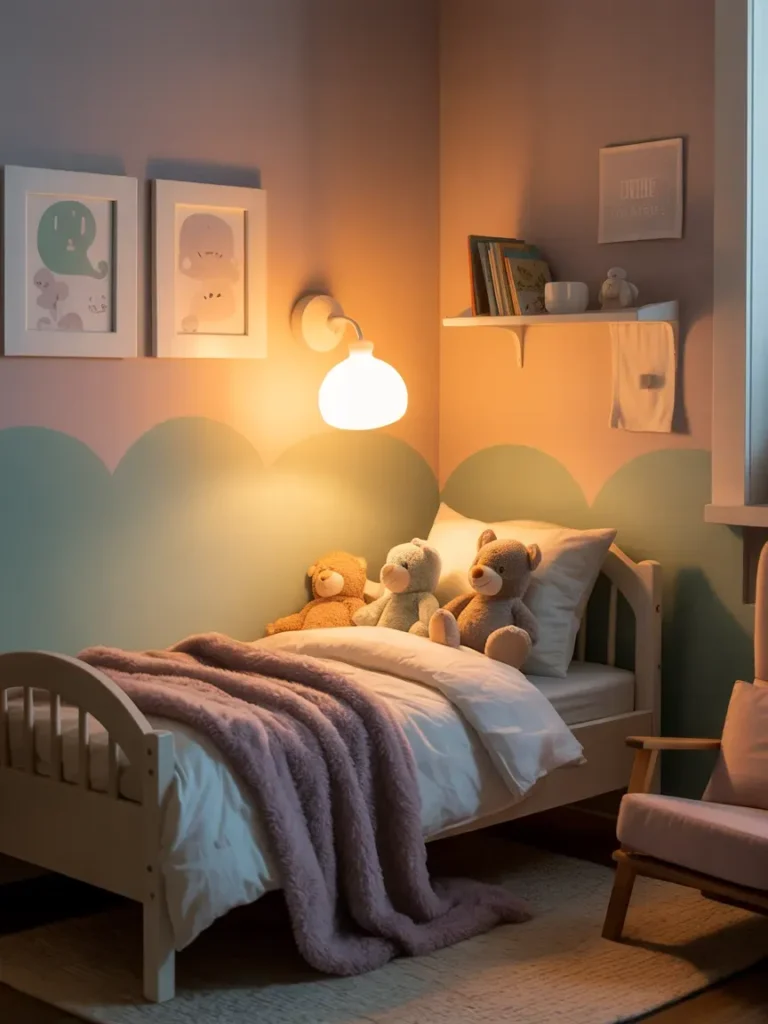
4. Use Soft Night Lighting
Night lights are important during the transition because they help reduce fear of darkness. Soft LED lamps or wall lights create a calming environment and help toddlers feel safe throughout the night.
5. Add Familiar Nursery Elements
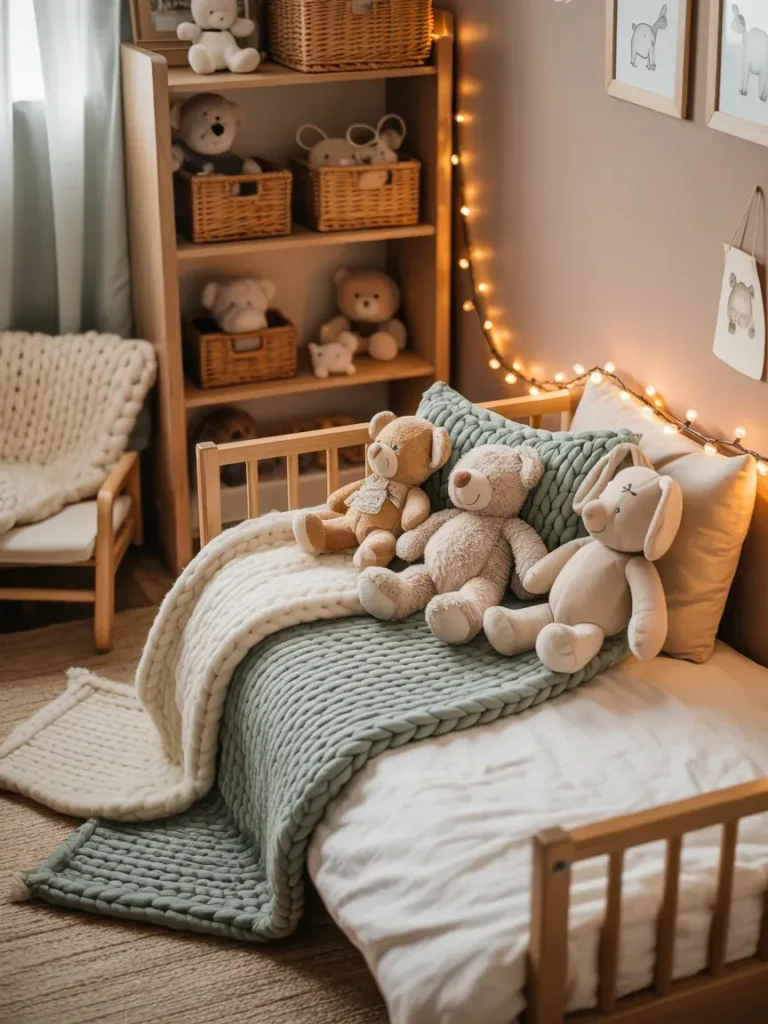
Keeping a few familiar items from the nursery—like blankets, stuffed toys, or wall decor, helps ease emotional transition. It creates a sense of comfort and continuity in the new room.
6. Low Furniture for Easy Access
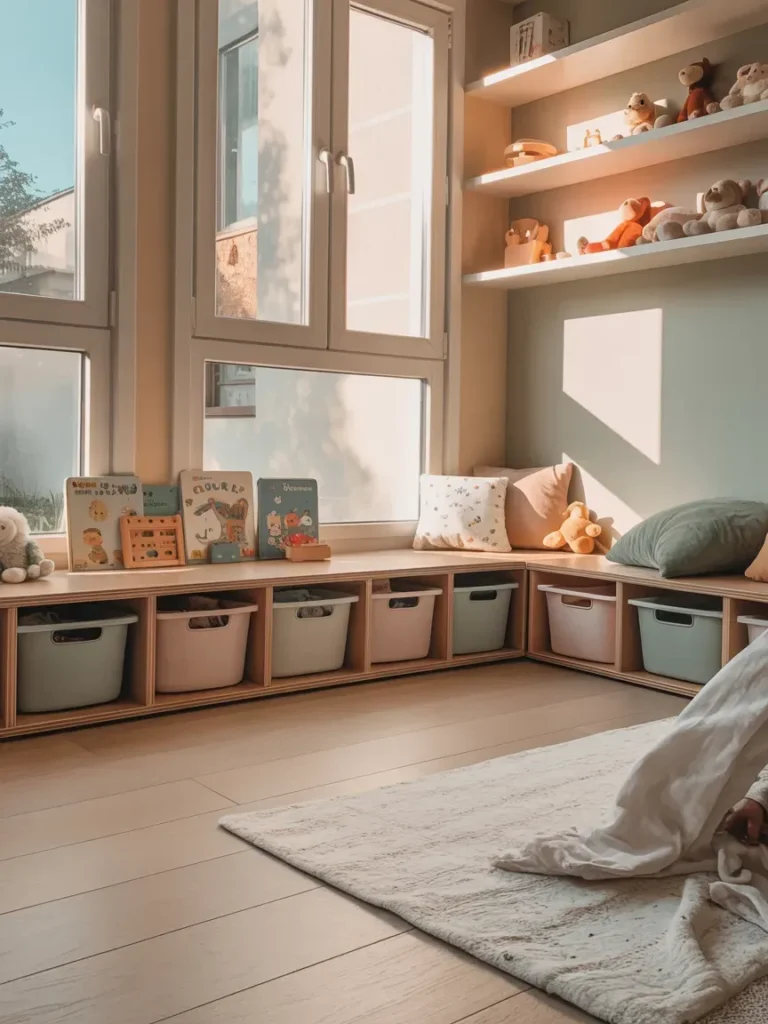
Low shelves, low beds, and accessible toy storage help toddlers feel independent and confident. Everything should be within reach so they can explore and organize their own space.
7. Fun Wall Decals Instead of Paint
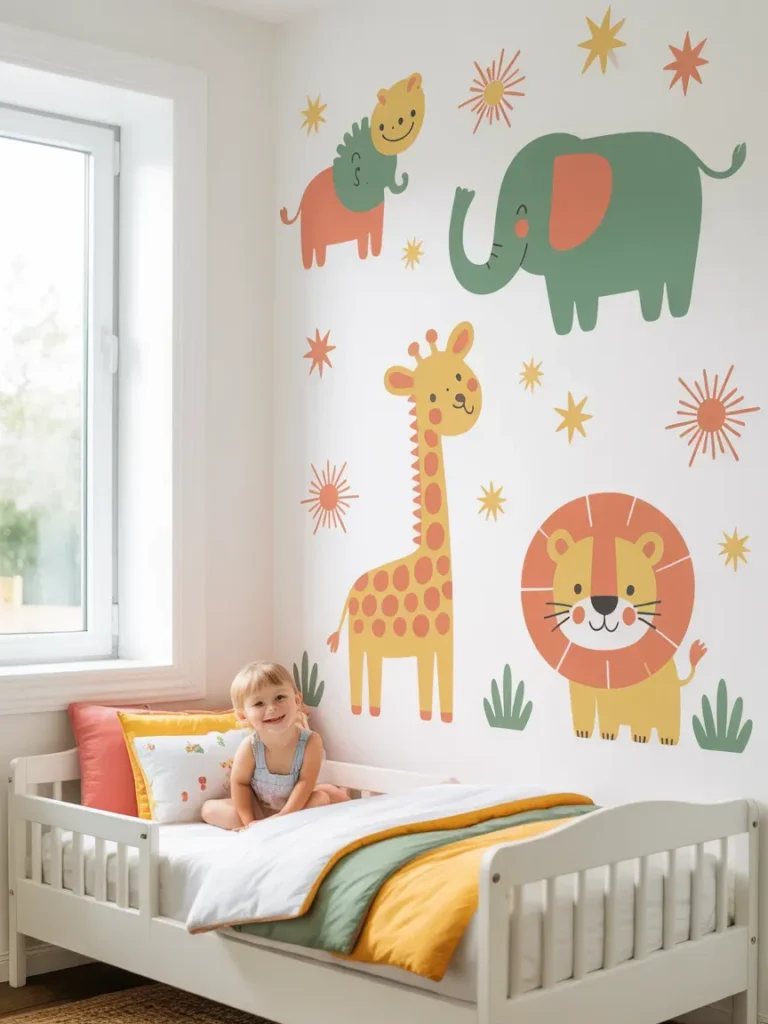
Wall decals are a great way to refresh the room without permanent changes. They are easy to apply and remove, making them perfect for evolving toddler interests like animals, stars, or cars.
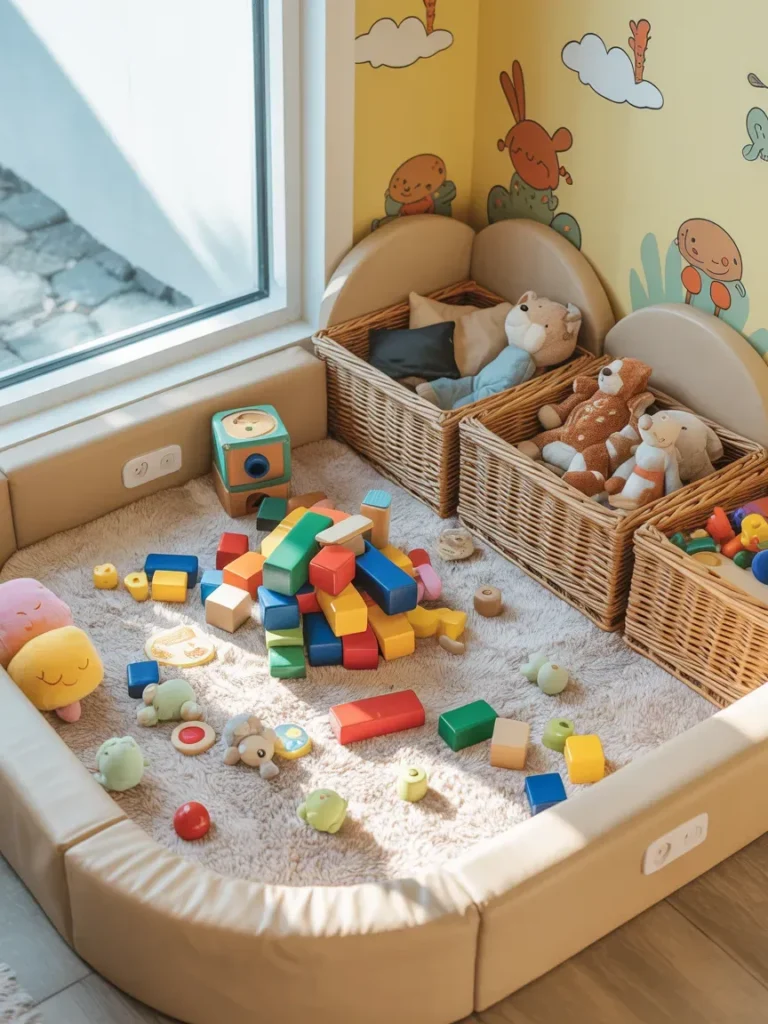
8. Add a Small Play Area
A dedicated play space helps toddlers feel like their room is fun and safe. Soft mats, toy bins, and open floor space encourage creativity and movement.
9. Choose a Low Toddler Bed with Rails
A toddler bed with safety rails provides extra security during sleep. It helps prevent falls while still giving the child freedom to climb in and out independently.
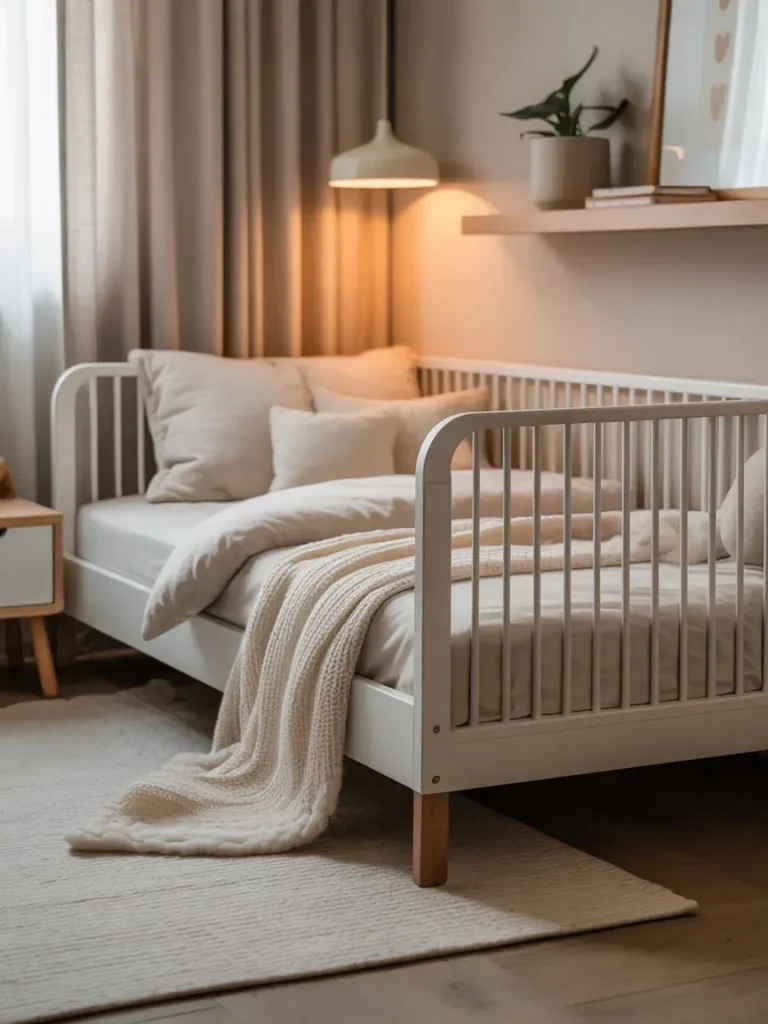
10. Keep a Consistent Bedtime Routine Area
Creating a small bedtime routine corner—like reading books or cuddling space—helps toddlers adjust emotionally. Routine brings comfort and reduces bedtime resistance.
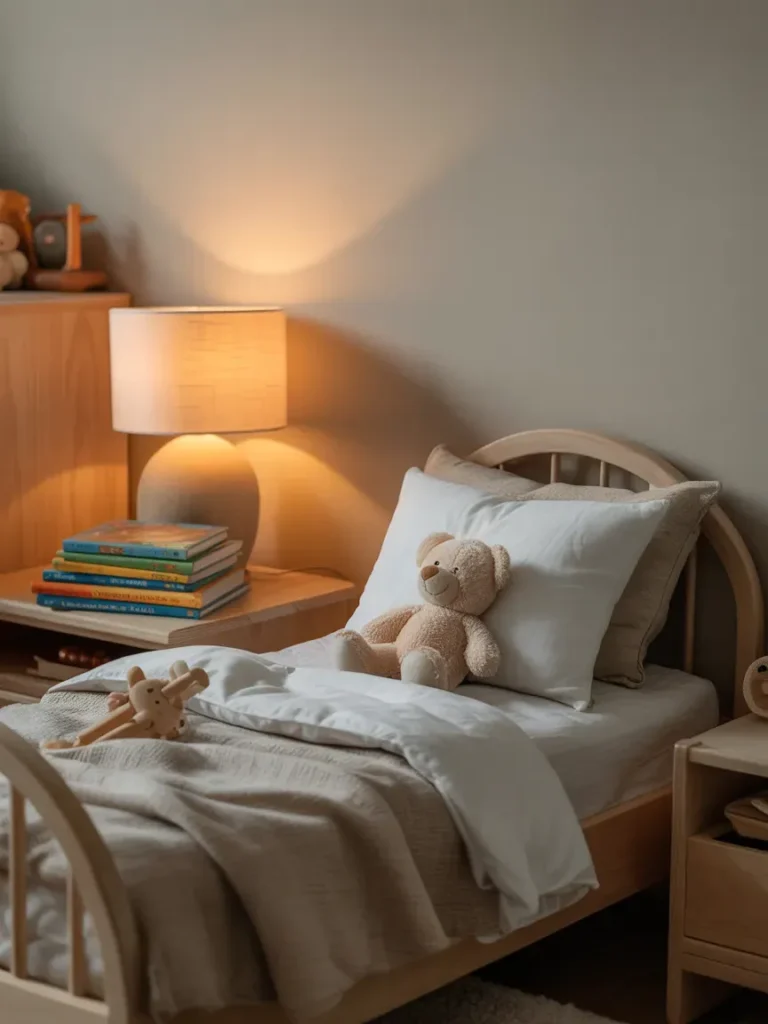
11. Use Soft and Neutral Color Palette
Soft colors like beige, pastel pink, light blue, and warm white make the room calm and soothing. This helps toddlers sleep better and reduces overstimulation.
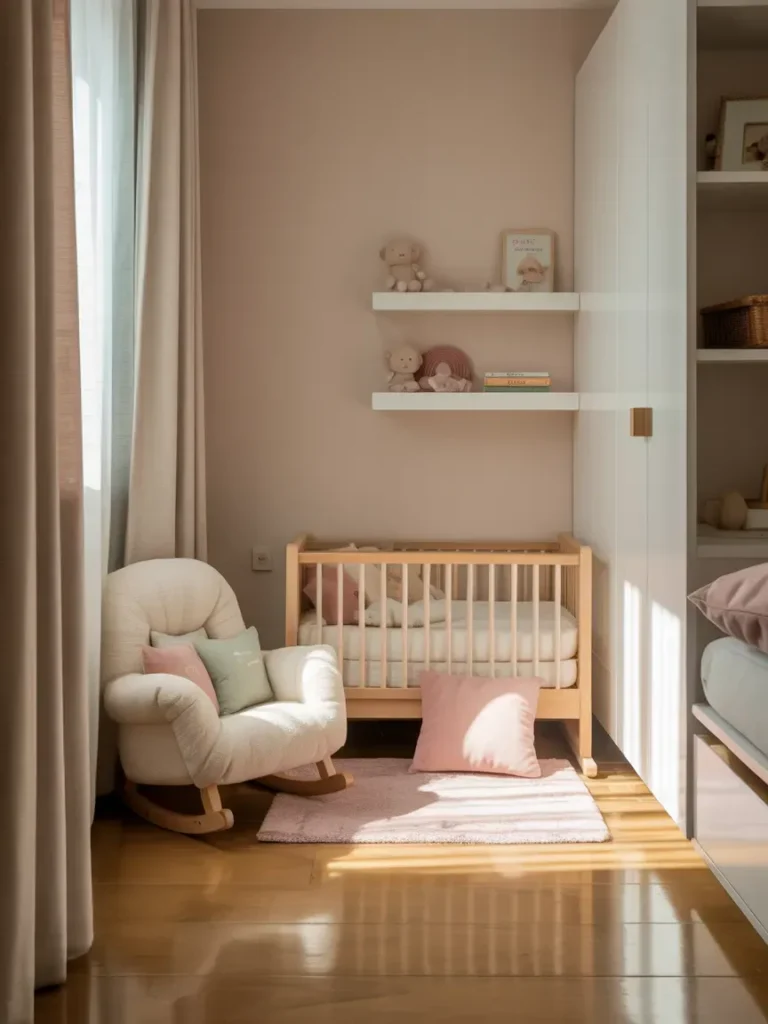
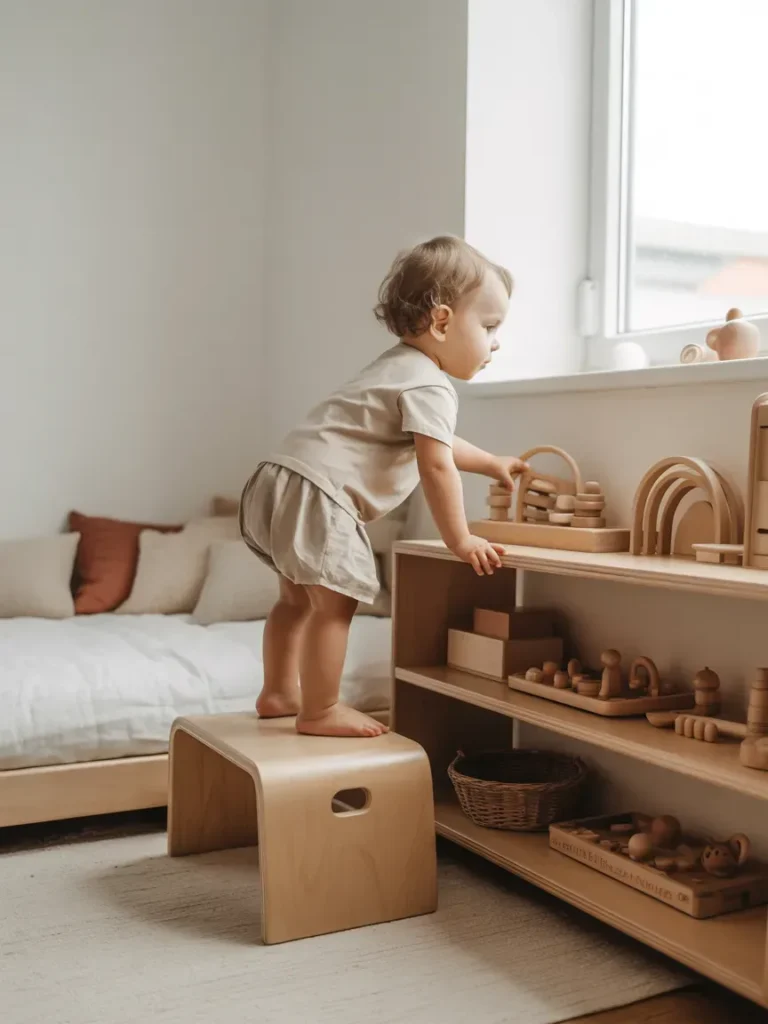
12. Add Step Stool for Independence
A small step stool helps toddlers reach sinks, beds, or shelves safely. It supports independence and builds confidence in daily routines.
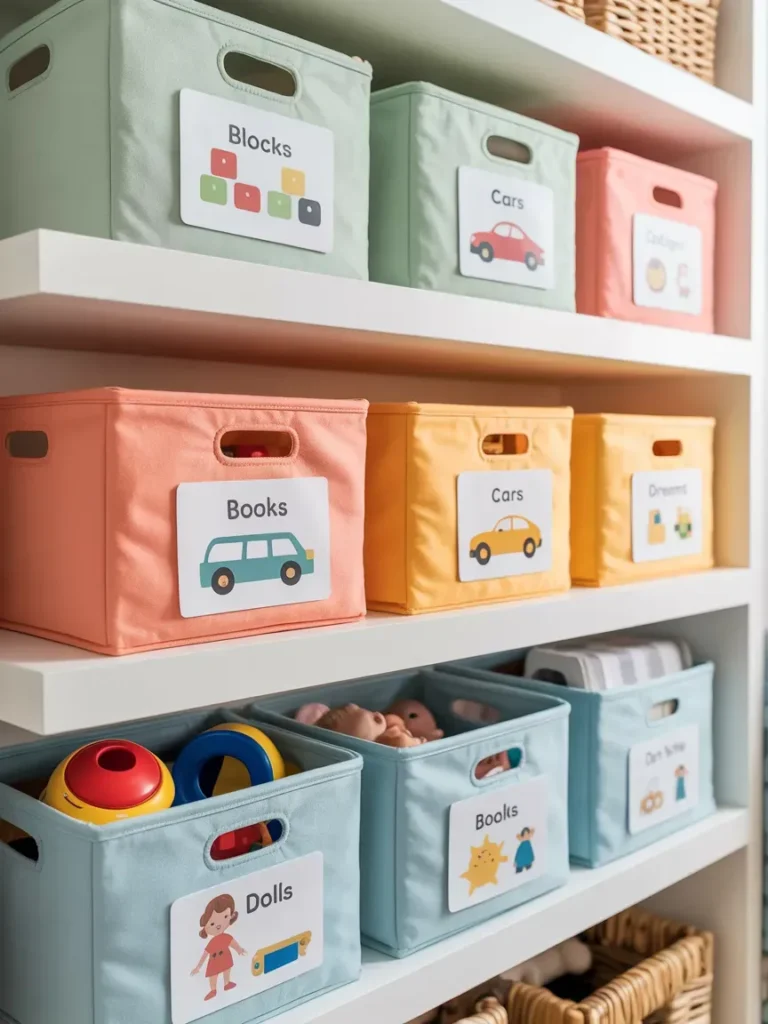
13. Label Storage Bins with Pictures
Using labeled bins with pictures helps toddlers learn organization skills. It makes cleanup easier and encourages responsibility in a fun way.
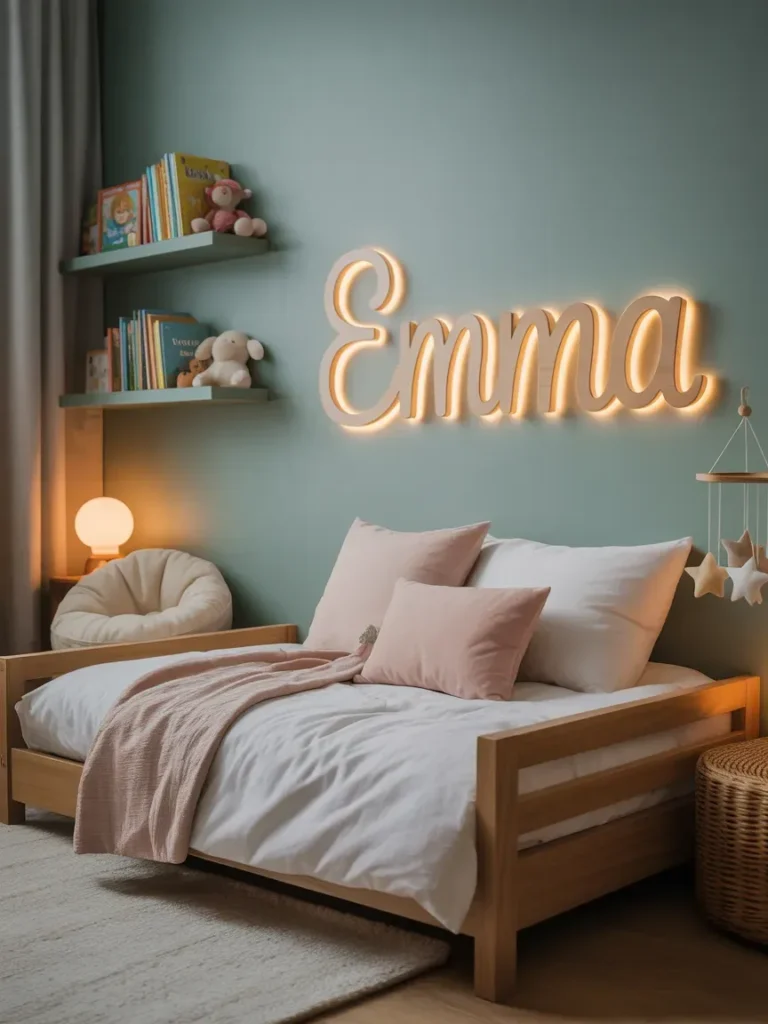
14. Add Personal Touch with Name Decor
Adding the child’s name on the wall or above the bed makes the room feel personal and special. It helps toddlers feel ownership of their space.
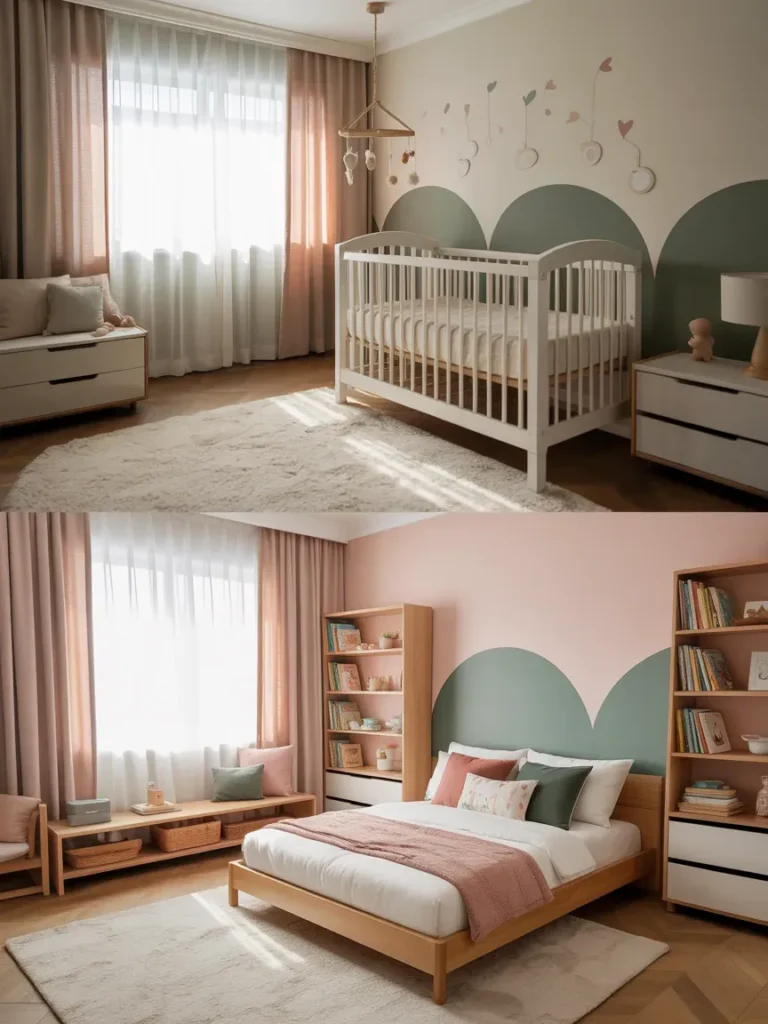
15. Gradual Room Transition Approach
Instead of changing everything at once, gradually introduce new furniture and decor. This reduces stress and helps toddlers adjust comfortably over time.
Final Thoughts
Toddler room transitions in 2026 are all about comfort, safety, and emotional ease. The goal is not just to redesign a room but to help a child feel confident and secure in their growing independence. Small, gradual changes combined with familiar elements create the smoothest and happiest transition experience.