
Introduction
Contents
- 1 Introduction
- 1.1 2. Add a Statement Mirror
- 1.2 3. Install Wall Sconces Instead of Floor Lamps
- 1.3 4. Incorporate Vertical Storage
- 1.4 5. Use a Narrow Console Table
- 1.5 6. Hang Oversized Artwork
- 1.6 7. Add a Runner Rug with Stripes
- 1.7 8. Keep Decor Minimal
- 1.8 9. Install Sliding or Pocket Doors
- 1.9 10. Use Glass or Reflective Finishes
- 1.10 11. Add Crown Molding or Vertical Panels
- 1.11 12. Maintain Consistent Flooring
- 2 Final Thoughts
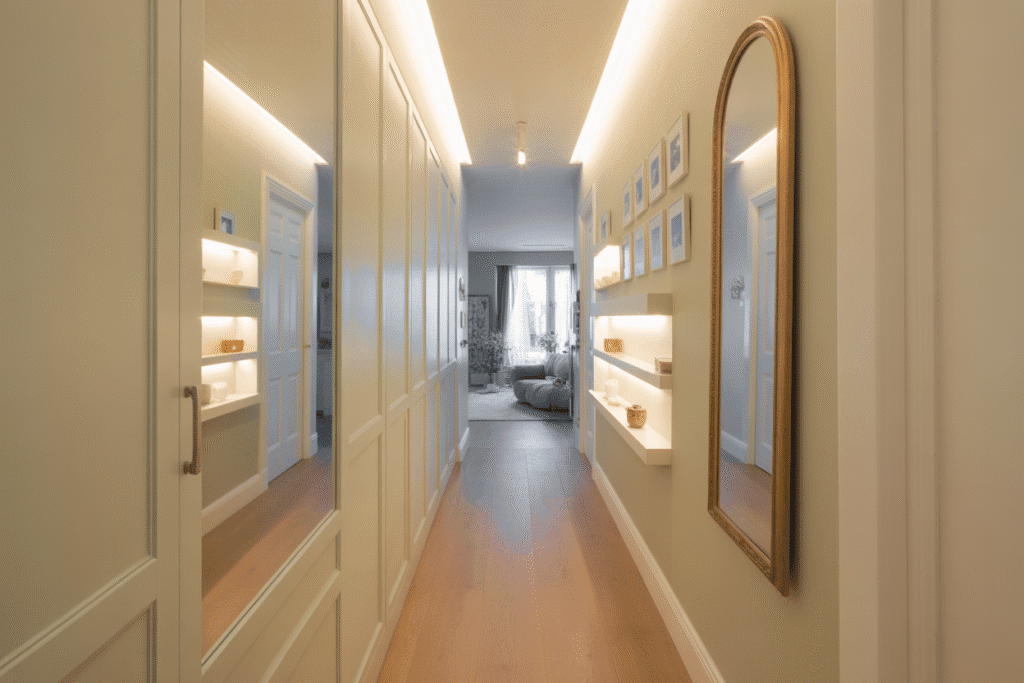
A small hallway can easily feel dark, narrow, and overlooked—but it has huge potential to transform the overall feel of your home. With a few smart design tricks, even the tiniest corridor can appear brighter, wider, and more welcoming. These hallway ideas are simple, stylish, and perfect for creating the illusion of more space without major renovations.
1. Use Light, Neutral Paint Colors
Soft shades like white, cream, or light gray instantly make a hallway feel open and airy. Lighter colors reflect natural and artificial light, reducing that boxed-in feeling common in tight spaces.
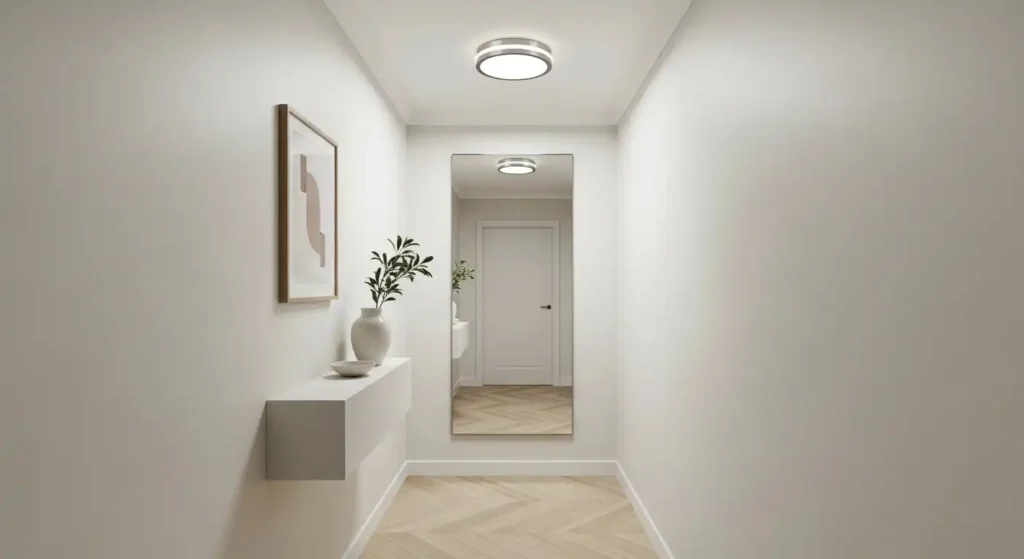
For added depth, choose a satin or eggshell finish to subtly bounce light around the corridor. A cohesive neutral palette also helps the hallway flow seamlessly into adjoining rooms.
2. Add a Statement Mirror
Mirrors are one of the most effective ways to visually double your space. A large mirror reflects both light and surrounding decor, instantly expanding the hallway’s appearance.
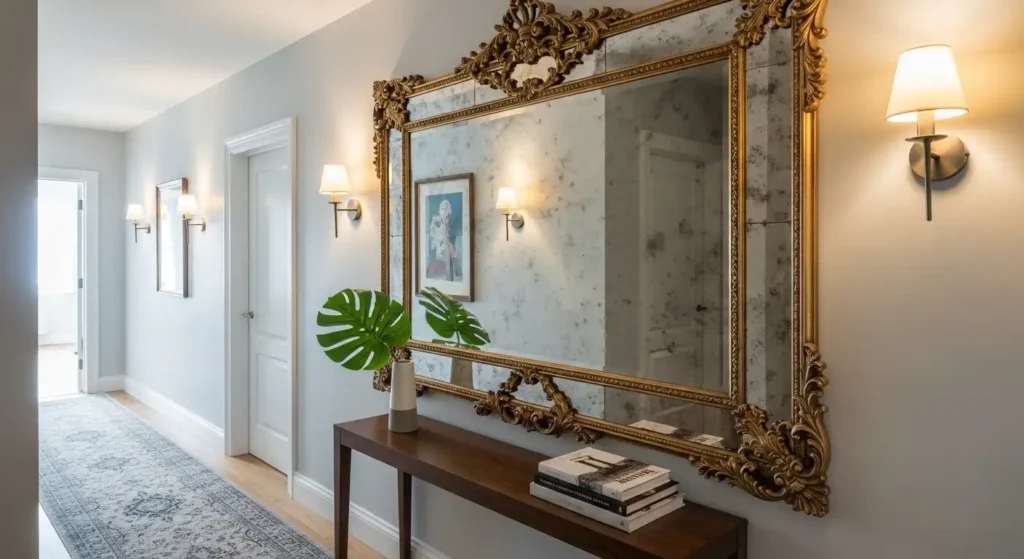
Position it opposite a light source or doorway for maximum impact. Even a slim vertical mirror can create the illusion of higher ceilings.
3. Install Wall Sconces Instead of Floor Lamps
Floor lamps take up valuable square footage in a narrow hallway. Wall-mounted sconces free up floor space while adding elegant, layered lighting.
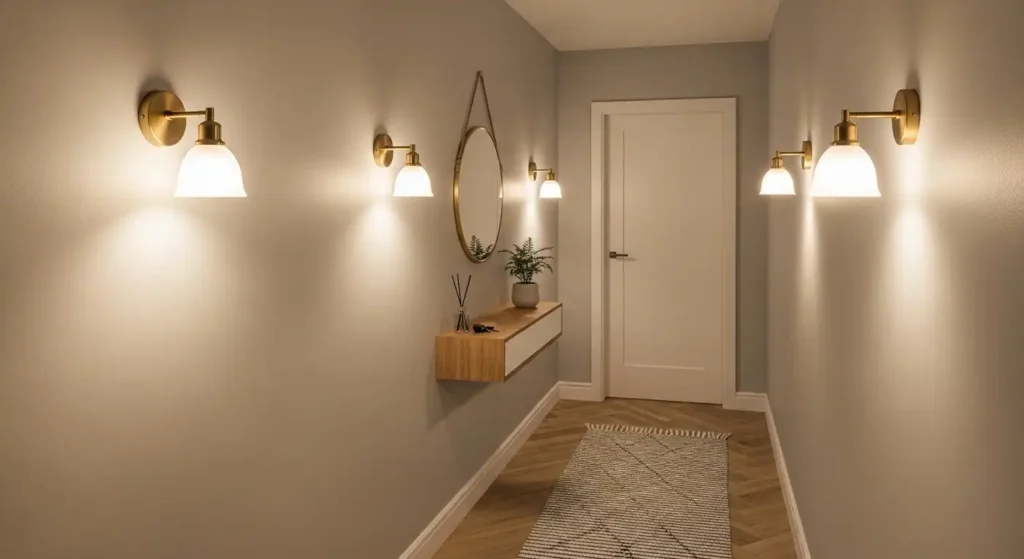
Choose sleek, minimal designs to keep the look clean and uncluttered. Proper lighting eliminates shadows that make small hallways feel cramped.
4. Incorporate Vertical Storage
When floor space is limited, think upward. Tall shelves, slim cabinets, or vertical hooks draw the eye higher and make ceilings appear taller.
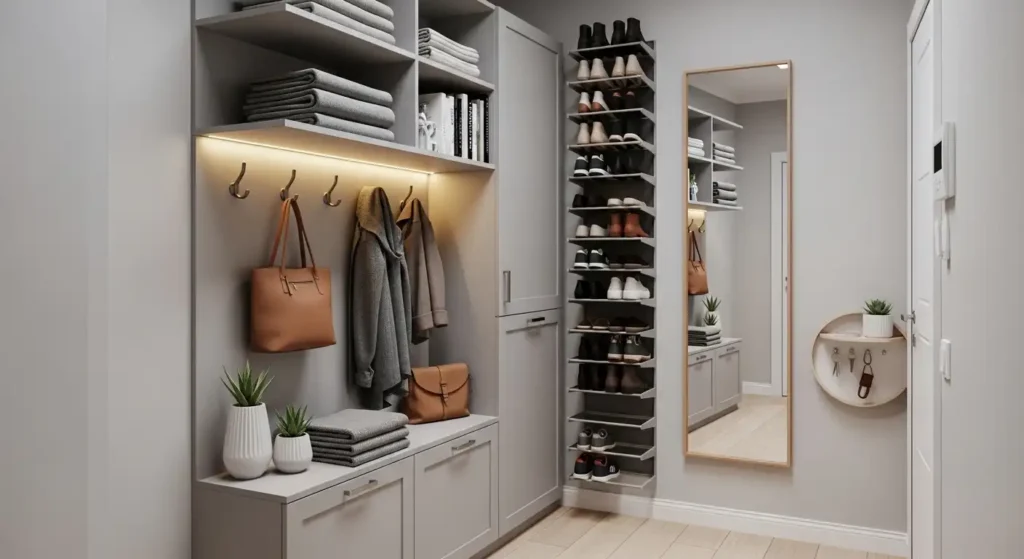
Keeping items off the floor reduces visual clutter, which instantly makes the hallway feel larger and more organized.
5. Use a Narrow Console Table
A slim console table adds style and function without overwhelming the space. Look for designs that are shallow but long to maximize surface area while maintaining flow.
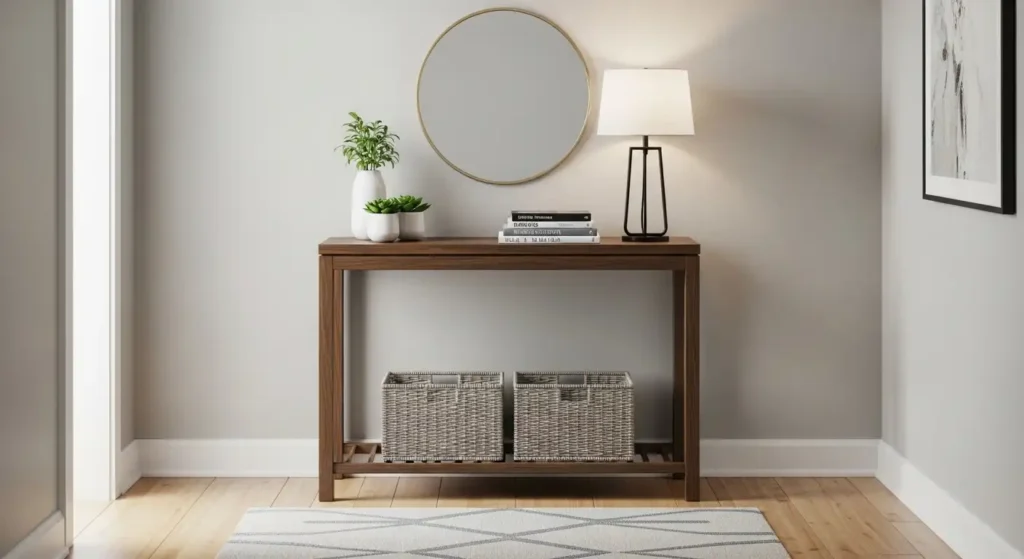
Pair it with a mirror or artwork above to create a balanced focal point that doesn’t crowd the hallway.
6. Hang Oversized Artwork
One large piece of art creates more visual space than multiple small frames. Oversized artwork draws the eye forward, making the hallway appear longer.
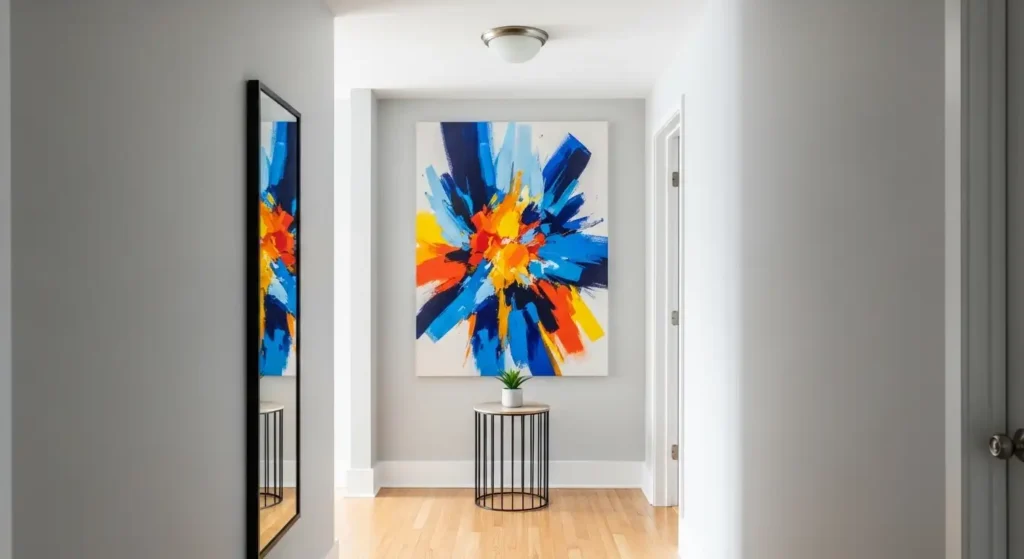
Stick to simple frames and light backgrounds to maintain an airy feel. This keeps the walls interesting without making them feel busy.
7. Add a Runner Rug with Stripes
A striped runner rug can visually elongate your hallway. Horizontal stripes make it feel wider, while vertical stripes emphasize length.
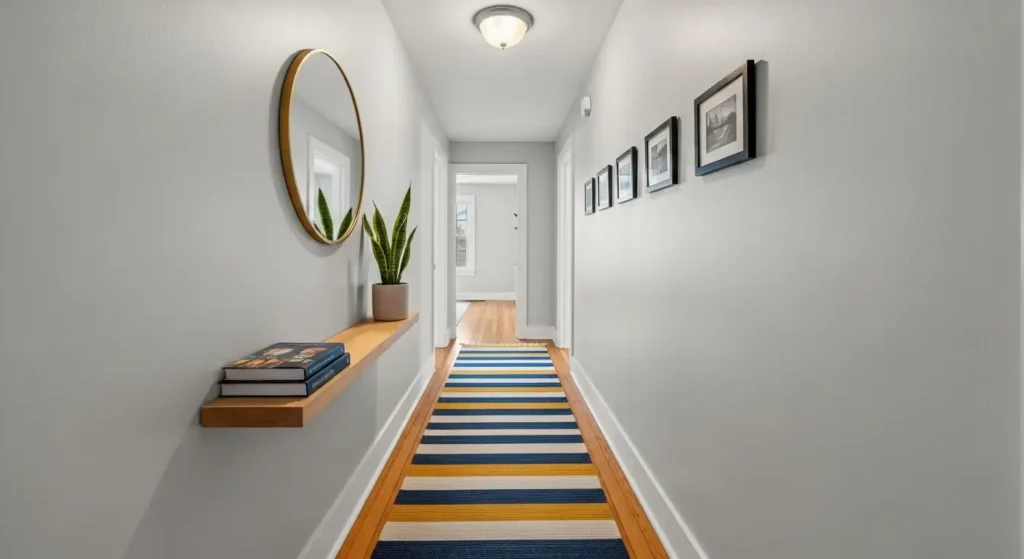
Choose light tones or subtle patterns to avoid overwhelming the space. A well-placed runner also adds warmth and softness underfoot.
8. Keep Decor Minimal
Too many decorative elements can make a small hallway feel chaotic. Focus on a few intentional pieces that enhance rather than crowd the space.
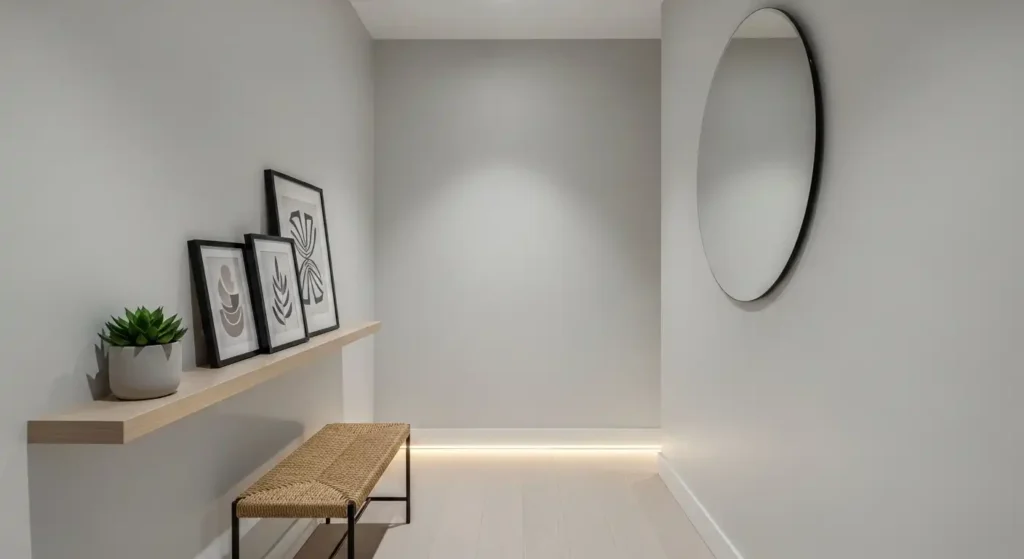
Clean lines and open surfaces create breathing room, which helps the hallway feel more expansive.
9. Install Sliding or Pocket Doors
Traditional doors swing inward and take up precious space. Sliding or pocket doors eliminate that issue and create a streamlined look.
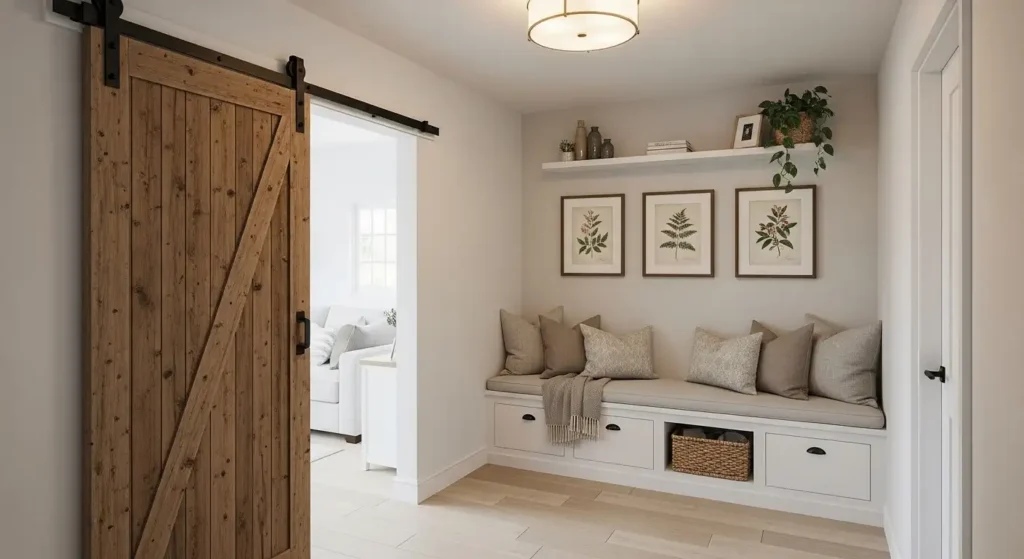
This simple architectural change can dramatically improve flow, especially in tight apartment layouts.
10. Use Glass or Reflective Finishes
Glass accents, glossy paint, and metallic details reflect light beautifully. These finishes bounce brightness around the hallway, making it feel more open.
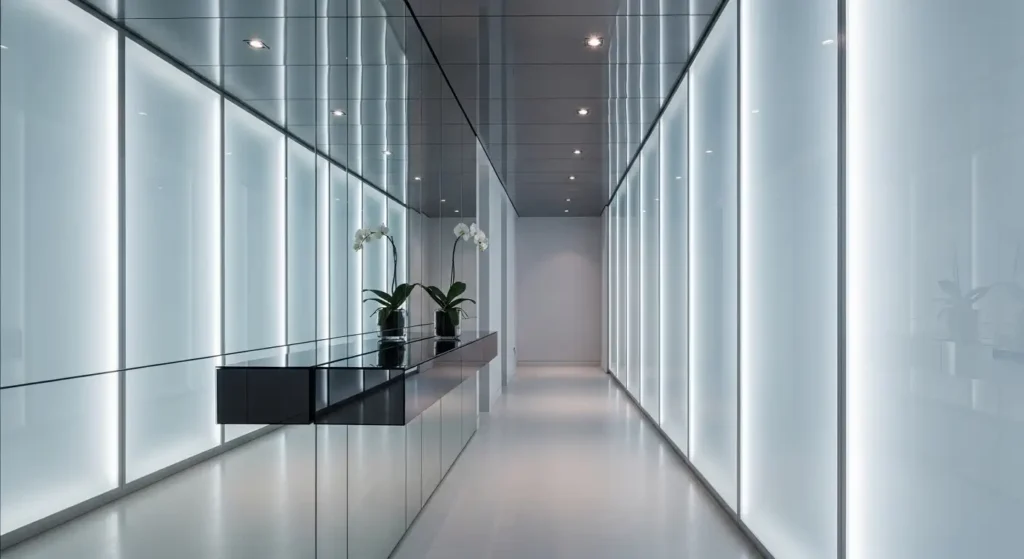
Even mirrored closet doors can dramatically enhance depth in a narrow corridor.
11. Add Crown Molding or Vertical Panels
Subtle architectural details draw the eye upward. Crown molding or vertical wall panels add height and sophistication without taking up space.
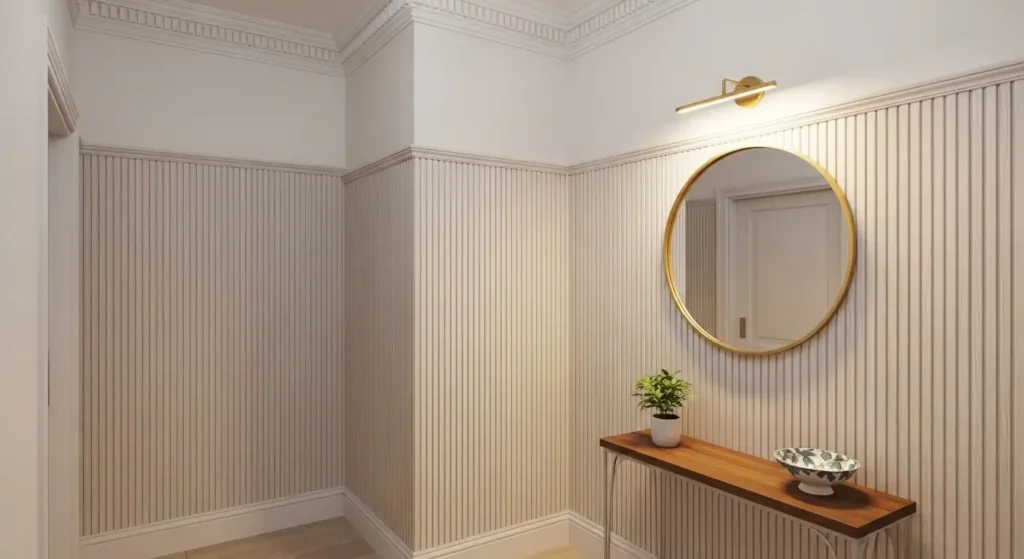
These elements create dimension and structure, helping the hallway feel thoughtfully designed rather than cramped.
12. Maintain Consistent Flooring
Using the same flooring from adjacent rooms into the hallway creates visual continuity. When the floor flows seamlessly, the space feels larger and uninterrupted.
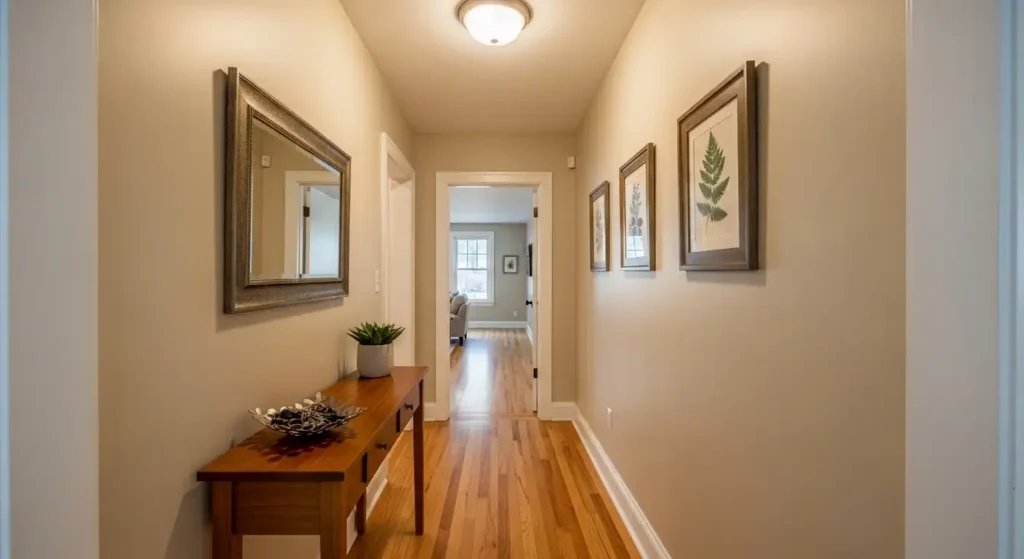
Avoid abrupt transitions or busy patterns that break up the visual line. Consistency is key to making small areas appear expansive.
Final Thoughts
Small hallways don’t have to feel tight or forgotten. With smart lighting, reflective surfaces, vertical design tricks, and a clutter-free approach, you can instantly make your home feel bigger and brighter. Try incorporating even a few of these ideas to transform your hallway into a stylish, spacious-looking passage that sets the tone for your entire home.