
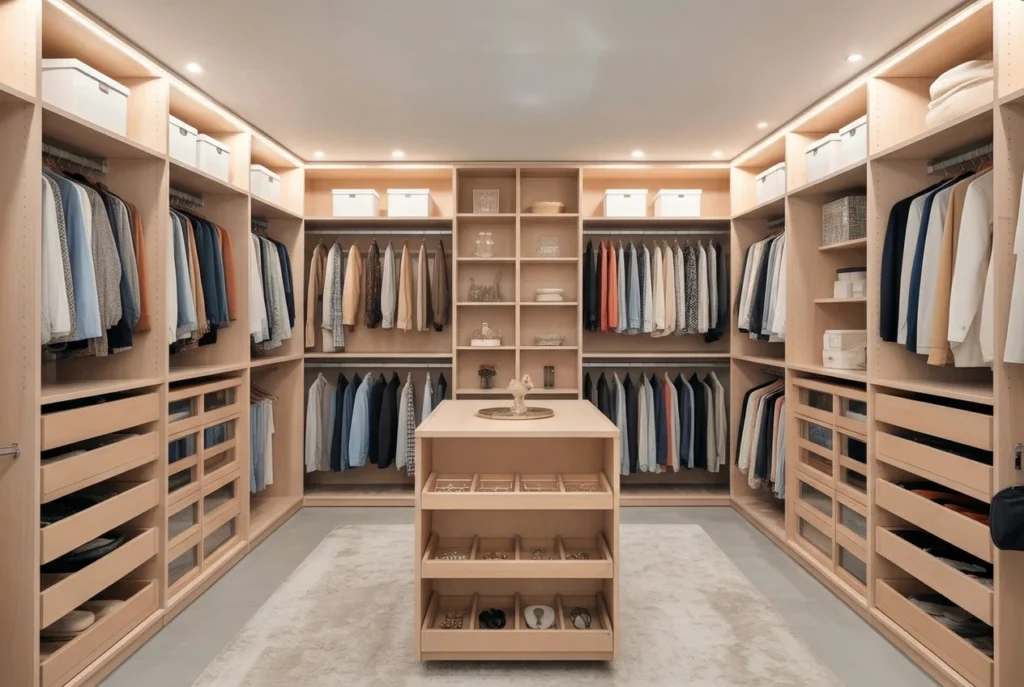
Introduction
Contents
- 1 Introduction
- 2 Choosing the Right System for Your Closet Type
- 3 Closet Organization Budget Guide
- 4 Frequently Asked Questions
- 4.1 Where should I start if I can only tackle one or two ideas right now?
- 4.2 Do I need to hire a professional for closet organization systems?
- 4.3 How do I organize a shared closet with limited space?
- 4.4 What’s the best way to organize a very small reach-in closet?
- 4.5 How often should I reorganize or declutter my closet?
- 5 Final Thoughts
A cluttered closet can make even the most beautiful bedroom feel chaotic. The good news is that a few smart organization ideas can completely transform your space without a full renovation. Whether you have a tiny reach-in or a spacious walk-in, the right strategy can maximize every inch. Before you start your makeover, explore these must-see closet organization ideas for serious inspiration. Most of these updates take an afternoon or less, use tools you likely already own, and can be undone or adjusted just as easily if your storage needs change down the road.
1. Double Hanging Rods
Adding a second rod beneath your existing one is one of the highest-impact, lowest-cost upgrades you can make to a reach-in or walk-in closet, since it takes advantage of vertical space that’s typically wasted above shorter hanging garments. This works especially well for separating categories that don’t need full-length hanging room — shirts, folded pants, and jackets can all hang on a lower rod while dresses, robes, and long coats stay on a single upper rod elsewhere in the closet. Most closet systems allow for an adjustable second rod installed at roughly 40 inches below the existing one, giving enough clearance for shirts and folded trousers without garments dragging on the closet floor.
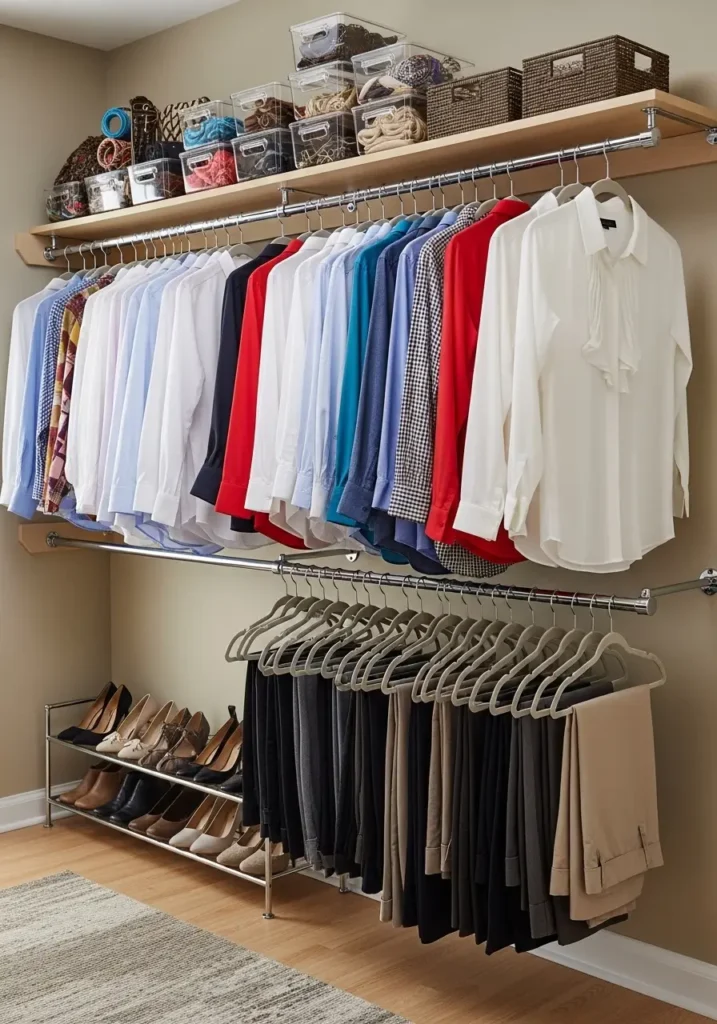
This simple upgrade works especially well in small closets with high ceilings. By using vertical space wisely, you create a cleaner and more functional layout. If you’re not ready for a permanent install, tension-mounted closet rod extenders are a renter-friendly alternative that require no drilling.
2. Add Clear Storage Bins
Clear bins solve one of the most common closet frustrations: forgetting what you own because it’s buried in an opaque box. Being able to see contents at a glance means you’re far more likely to actually use seasonal items, rarely worn accessories, or off-season clothing instead of letting them sit forgotten on a high shelf. Stackable clear bins with matching dimensions also make far better use of shelf space than a mismatched assortment of boxes, since uniform sizing allows for tighter, gap-free stacking.
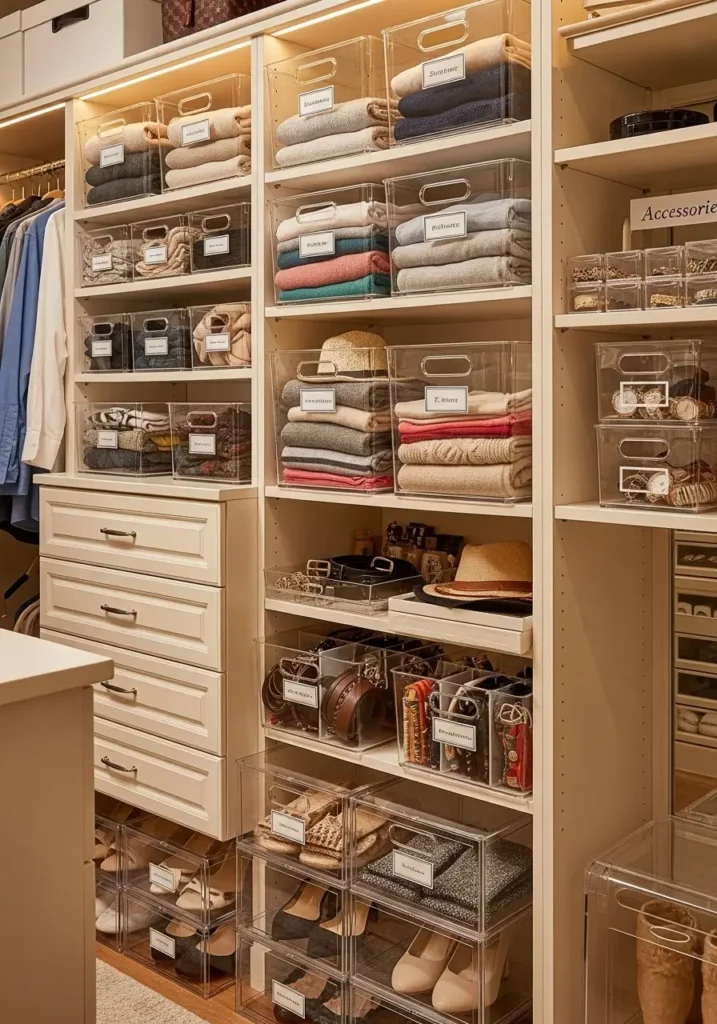
Label each bin for even better organization. Stack them neatly on shelves to keep everything tidy and dust-free. For frequently accessed bins, keep them at eye level or below — reserve the highest shelves for genuinely seasonal items you only need to grab once or twice a year.
3. Use Matching Hangers
Switching every hanger in your closet to a single matching style is one of the most visually transformative — and least expensive — closet upgrades available. A mismatched mix of wire, plastic, and wooden hangers in different colors creates visual noise even in an otherwise well-organized closet, while a uniform set of slim velvet or wooden hangers instantly gives the space a boutique, curated feel. Slim velvet hangers in particular can free up 30-40% more hanging space compared to bulky plastic hangers, since their thin profile lets garments sit closer together without wrinkling.
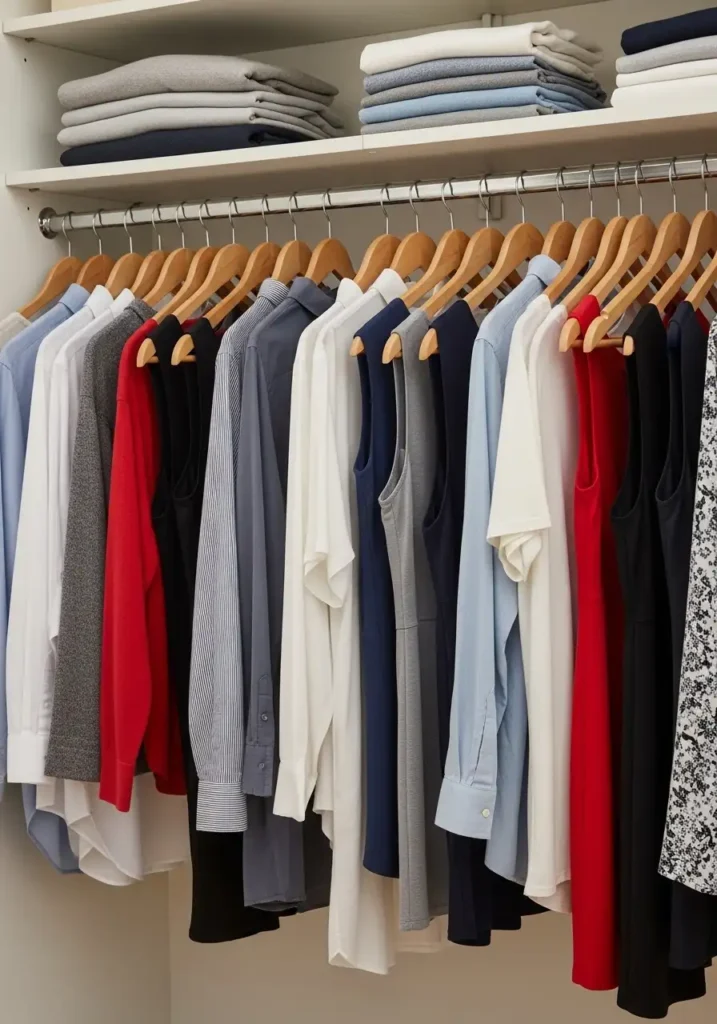
Uniform hangers prevent clothes from slipping and keep your closet visually cohesive. This small change makes a surprisingly big impact. Buying hangers in bulk sets is typically far more cost-effective per hanger than purchasing them individually or in small packs.
4. Install Shelf Dividers
Shelf dividers are a small hardware addition that solves a persistent annoyance: leaning stacks of folded sweaters, jeans, or handbags that slowly topple into each other every time you pull one item from the middle. By creating fixed vertical sections on an open shelf, dividers let you maintain distinct, tidy stacks without needing to refold the entire shelf every few days. Most dividers clip or slide onto existing shelving without tools, making this one of the easiest upgrades on this list to install in under 15 minutes.
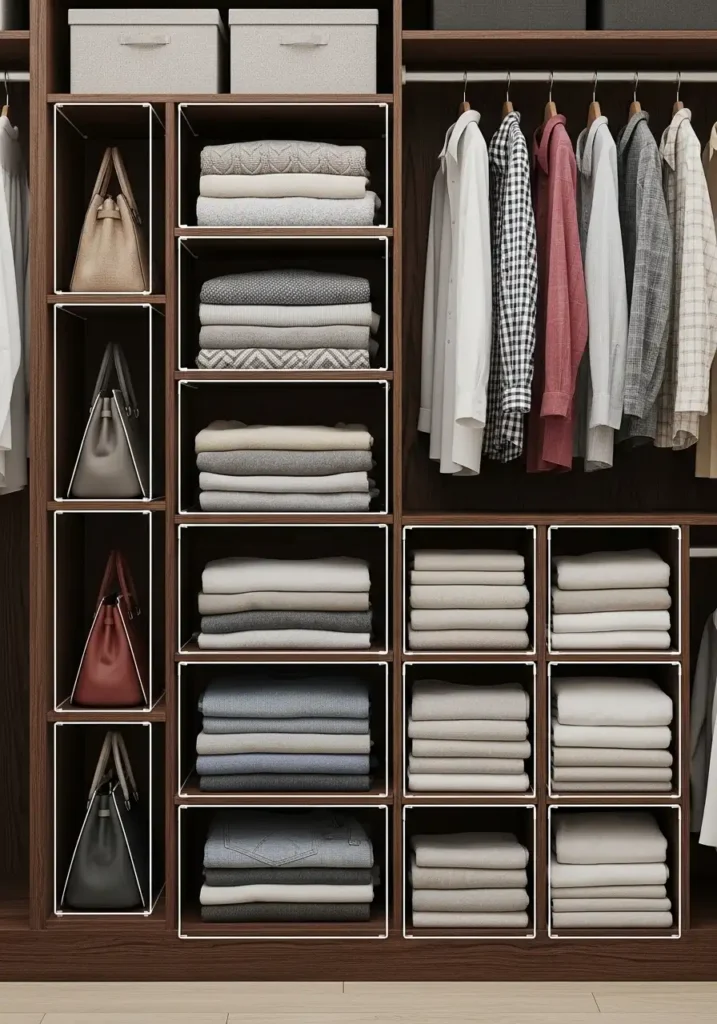
These dividers are easy to install and adjust as needed. Your shelves will look organized and boutique-worthy in minutes. Clear acrylic dividers tend to blend into most closet styles better than metal or wood, since they don’t compete visually with the folded items themselves.
5. Incorporate Drawer Organizers
Drawers are often the messiest part of an otherwise organized closet, since small items like socks, undergarments, and jewelry have no natural boundaries once tossed in loose. Drawer organizers — either fixed grid inserts or adjustable divider systems — create designated compartments so every item has its own space rather than sliding into one jumbled pile every time the drawer opens and closes. Adjustable inserts are worth the slightly higher cost over fixed ones, since they let you reconfigure compartment sizes as your wardrobe or accessory collection changes over time.
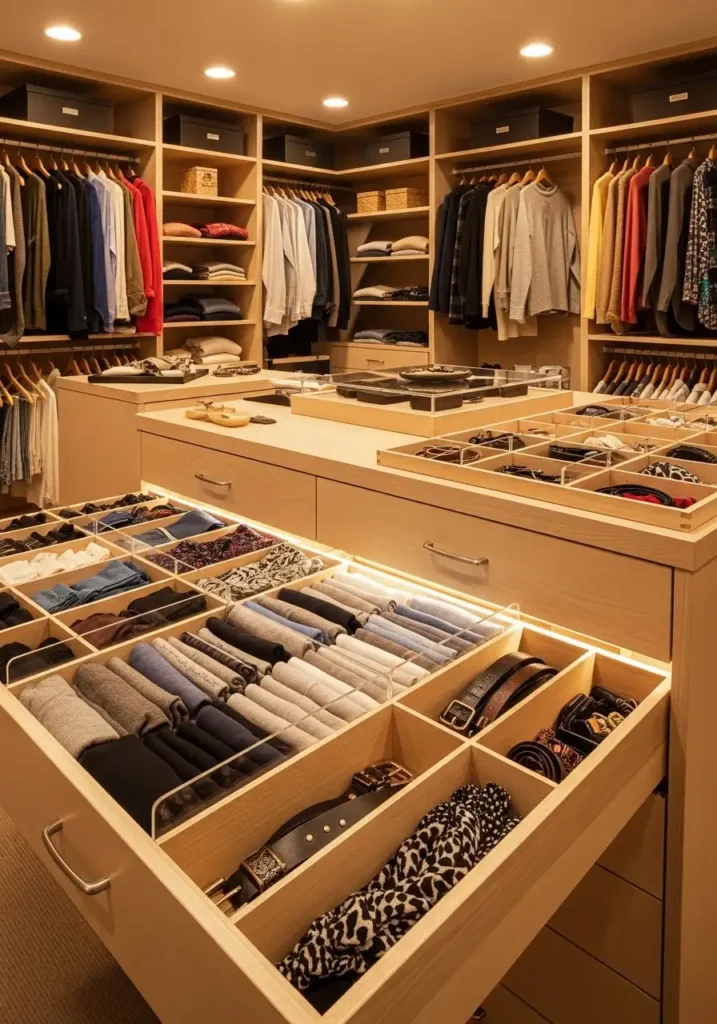
Choose adjustable inserts to customize each drawer. This ensures every item has its own designated space. For jewelry specifically, a lined organizer tray prevents necklaces from tangling and protects delicate pieces from scratching against harder items.
6. Add Over-the-Door Storage
The back of a closet door is one of the most consistently underused spaces in a bedroom, and an over-the-door organizer converts it into genuinely useful storage without needing any wall modification or permanent installation. These typically hang from the top of the door using hooks, making them fully removable if you change your mind or move. Pocket-style organizers work well for shoes, folded accessories, or small grooming items, while a hook-based version suits bags, scarves, or robes better.
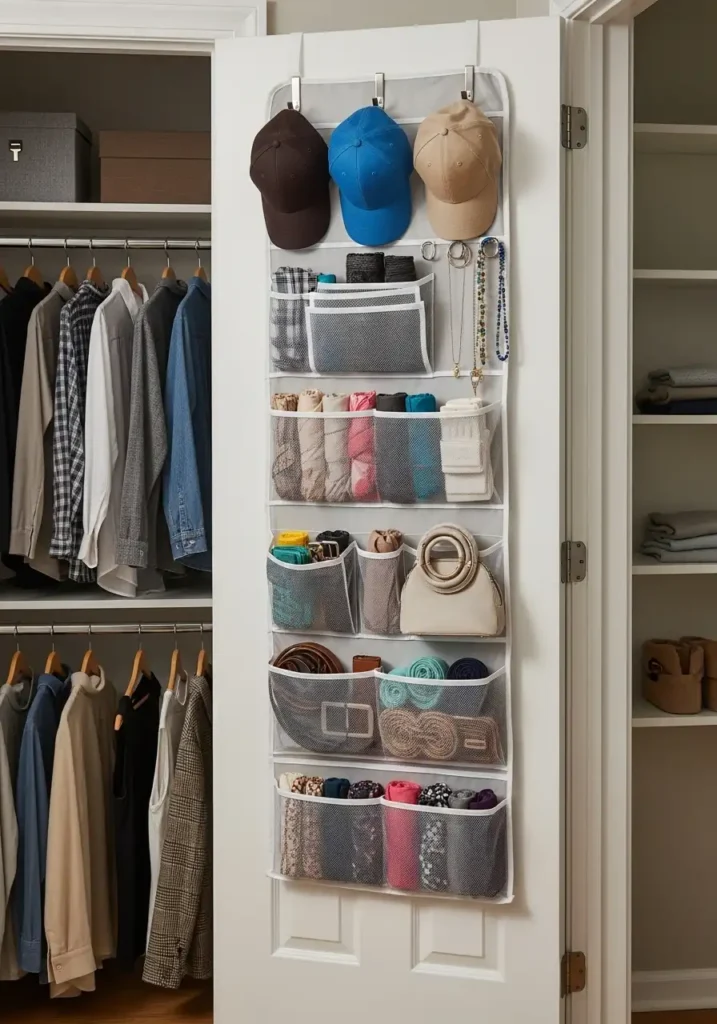
Over-the-door organizers can hold shoes, scarves, or even jewelry. This solution keeps frequently used items accessible without crowding shelves. It’s especially helpful for smaller closets. Just confirm the organizer’s weight capacity before loading it up with heavier items like shoes, since cheaper units can sag or pull away from the door over time.
7. Create a Shoe Wall
A dedicated shoe storage zone keeps footwear from becoming the default clutter that accumulates on a closet floor, and it makes your daily routine faster since you’re not digging through a pile to find a matching pair. Floating shelves, angled shoe racks, or modular cubbies all work, and the right choice largely depends on your collection size — a small rotating rack suits a handful of pairs, while a full wall of cubbies makes more sense for a larger collection. Angled shoe shelves, which tilt the shoe slightly forward, tend to fit more pairs into the same vertical space than flat shelving while also making the toe of each shoe easier to see at a glance.
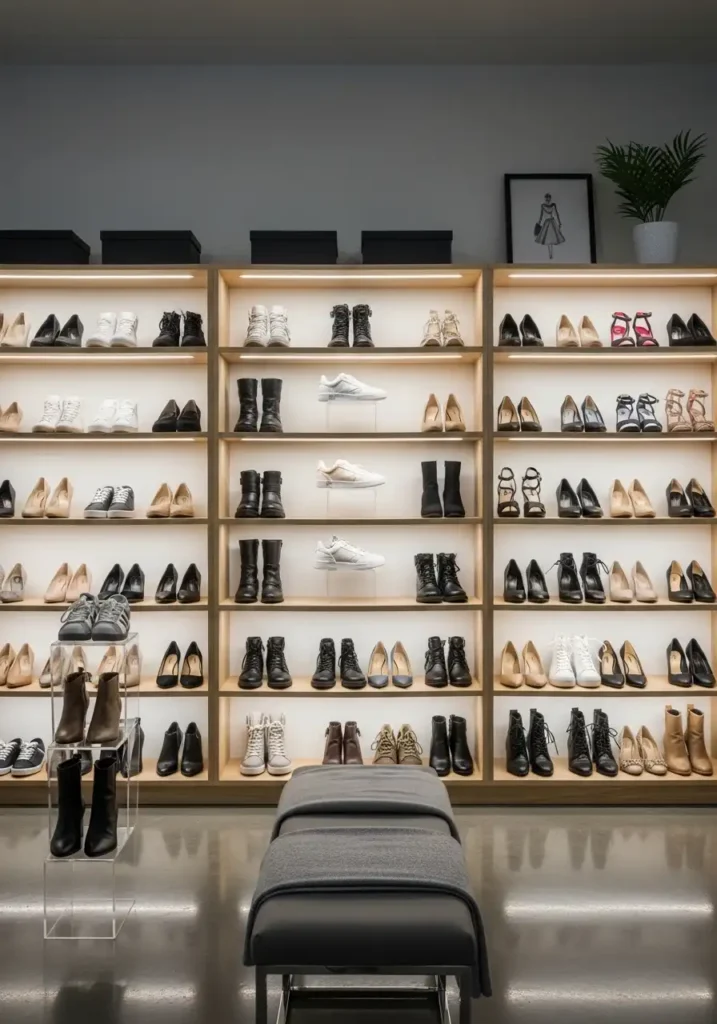
Organizing shoes by style or color adds both function and visual appeal. It turns your collection into a stylish feature. For sneakers or shoes you wear often, keep them at a lower, easy-to-reach level; reserve higher shelves for special-occasion pairs you access less frequently.
Choosing the Right System for Your Closet Type
Not every idea on this list fits every closet — the right combination depends largely on size and layout:
Small reach-in closets: Prioritize vertical space first. Double hanging rods, over-the-door storage, and adjustable shelving give you the biggest return without needing extra floor space. Skip anything that requires a dedicated floor footprint, like a closet island.
Larger reach-in or narrow walk-in closets: Add shelf dividers, clear bins, and a dedicated shoe zone once the vertical basics are covered. This is usually the sweet spot for adding drawer organizers too, since there’s typically at least one built-in drawer unit to work with.
Spacious walk-in closets: This is where a closet island, full-length adjustable shelving systems, and dedicated lighting make the most sense, since there’s enough square footage to treat the space almost like a small dressing room rather than pure storage.
Shared or family closets: Color-coding by person (not just by category) alongside labeled bins tends to work better than a single organizing system, since multiple people are pulling items from the same space throughout the day.
8. Use Baskets for Accessories
Baskets bring warmth and texture to a closet in a way that hard plastic bins and metal shelving can’t, while still solving the same core problem — containing small, loose accessories that would otherwise clutter a shelf. Belts, hats, clutches, and scarves all tend to slide around and create visual mess on an open shelf, but a basket corrals them into one tidy, grab-and-go unit. Woven baskets in particular photograph well and tend to suit a wider range of closet aesthetics than uniform plastic bins, making them a popular choice for anyone planning to share their closet makeover on Pinterest or Instagram.
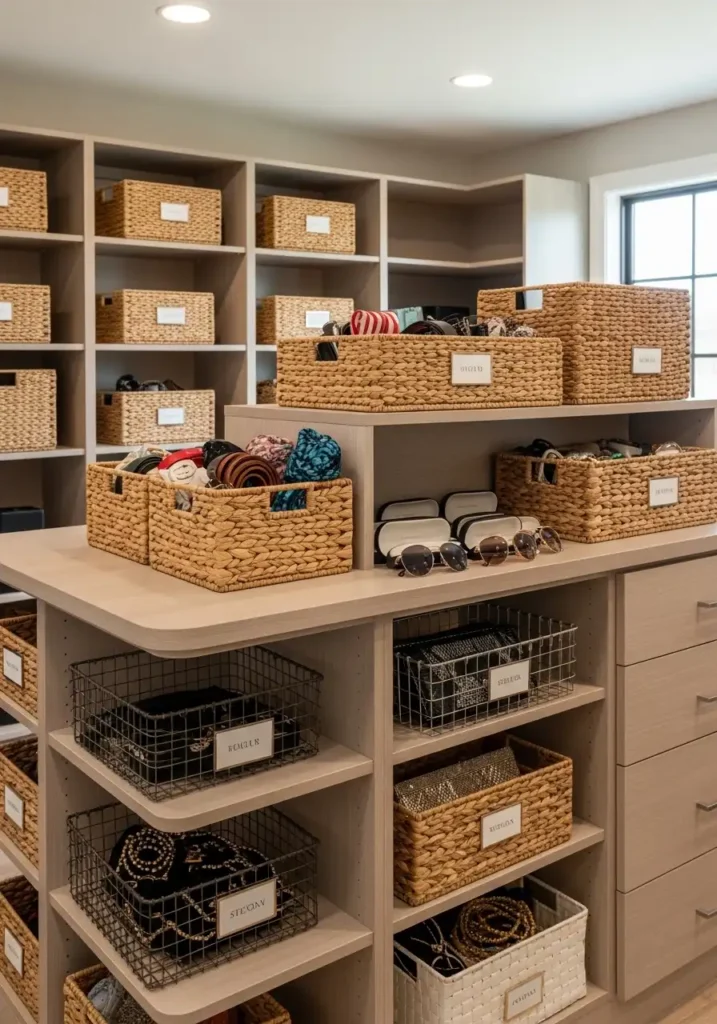
Slide them onto shelves for a clean, uniform look. Choose neutral tones for a minimalist feel or woven styles for warmth. Labeling baskets — even with a simple tag — saves time compared to opening several to find the right one.
9. Add Hooks for Quick Access
Hooks solve a very specific problem: the items you use daily but don’t want to fully hang or fold, like a robe, tomorrow’s outfit, or a bag you’re grabbing on the way out the door. Installing a short row of sturdy hooks on any unused wall space — even a narrow strip beside the door frame — gives these items a proper home instead of letting them pile up on a chair or the closet floor. Look for hooks rated for at least 10-15 pounds if you’re planning to hang heavier bags or robes, since lightweight decorative hooks can bend or pull loose under real daily use.
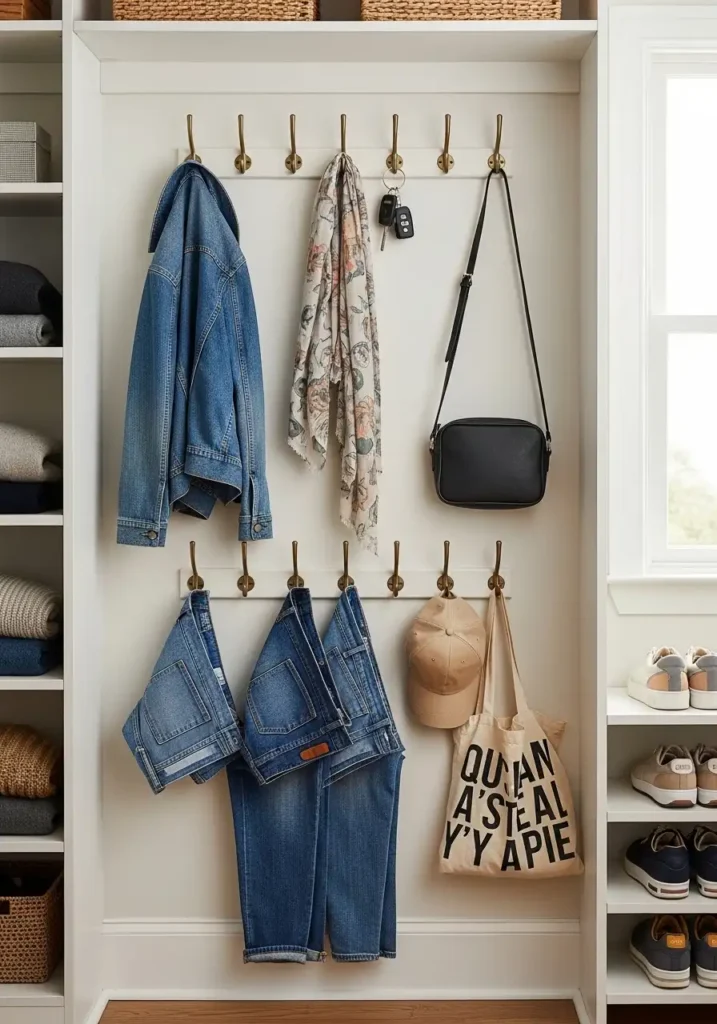
Install a row of sturdy hooks on unused wall space. This prevents clutter from piling up on chairs or floors. A mix of single hooks and a multi-hook rail gives you flexibility for both single items and grouped accessories like scarves.
10. Install Adjustable Shelving
Fixed shelving locks you into whatever spacing the original installer chose, which rarely matches how you actually want to store things — adjustable shelving solves this by letting you reposition shelf heights as your wardrobe and storage needs change. This is especially valuable if your clothing mix shifts seasonally, since winter sweaters and bulky items need more vertical clearance than folded summer t-shirts. Most adjustable shelving systems use a track-and-bracket design that lets you reconfigure the entire layout in minutes without new hardware or tools beyond a screwdriver.
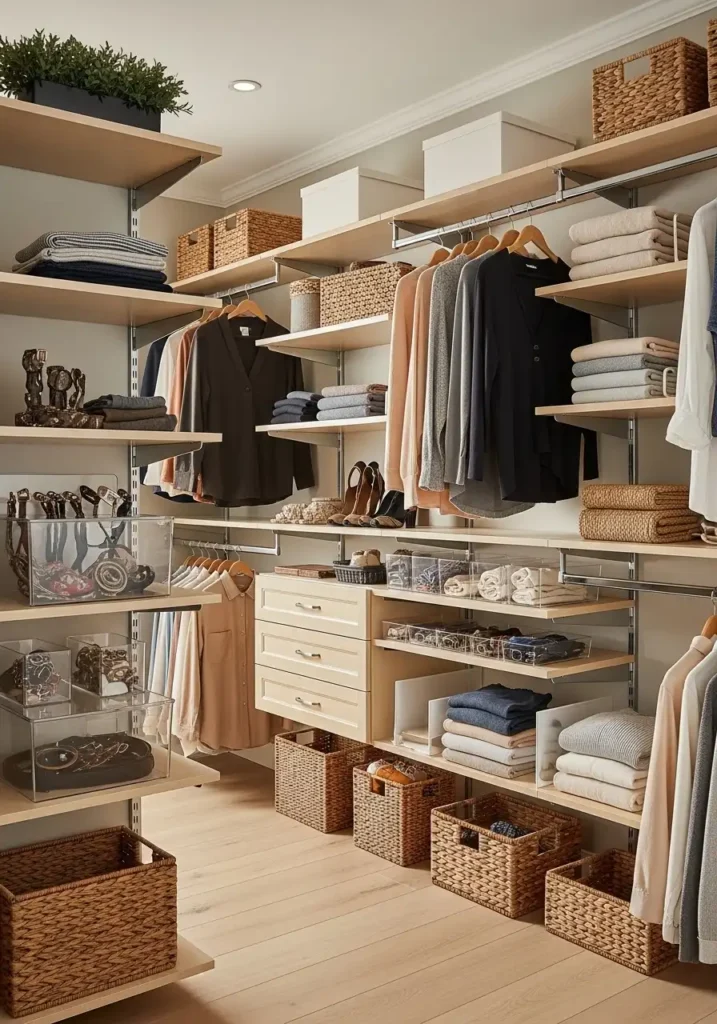
Customizing shelf heights maximizes efficiency. You’ll avoid wasted space and create a more tailored system. This is also one of the better long-term investments on this list, since the system adapts with you rather than needing replacement as your storage needs evolve.
11. Use a Closet Island (If Space Allows)
A closet island is the most ambitious addition on this list, and it’s really only practical in larger walk-in closets with enough clearance on all sides to walk around comfortably. In exchange for the space commitment, an island typically adds drawer storage for accessories or folded items, plus a flat surface for folding laundry, laying out an outfit, or setting down a bag while getting dressed. Beyond pure function, a well-chosen island — especially one with a stone or wood-finished top — becomes a genuine design centerpiece, elevating the whole space from storage room to a boutique-style dressing area.
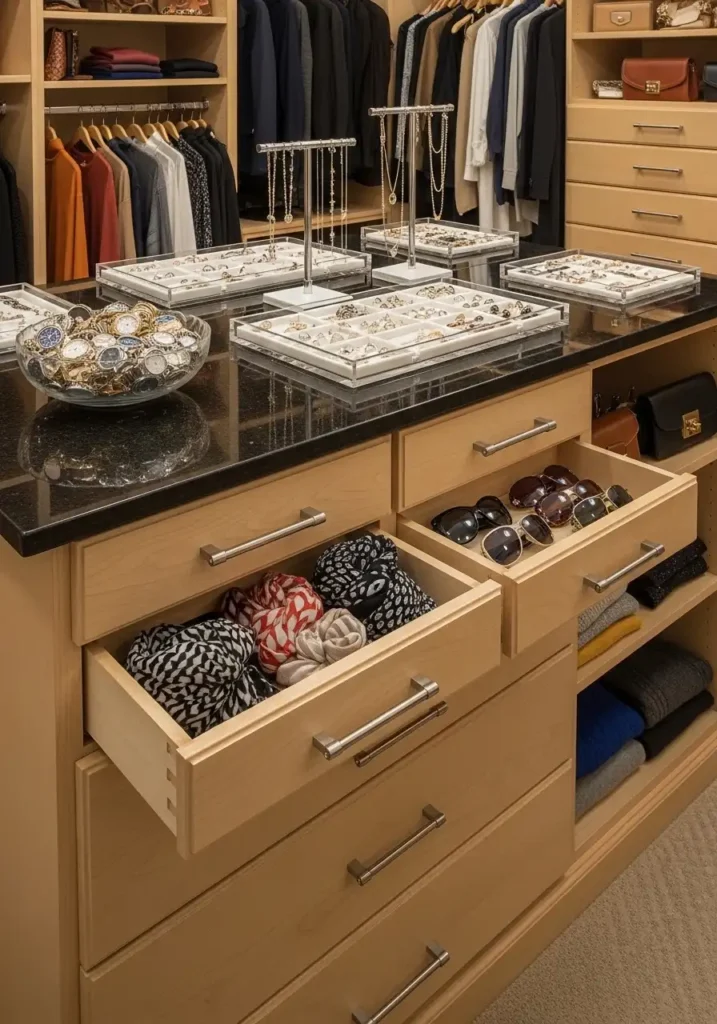
An island can also serve as a focal point. It elevates the entire closet into a luxurious dressing area. If a full built-in island isn’t in the budget, a freestanding dresser or vintage chest can achieve a similar function at a fraction of the cost.
12. Add Lighting for Visibility
Poor lighting undermines every other organization effort on this list — even a perfectly sorted closet feels chaotic if you can’t clearly see what’s on a shelf or in a bin. LED strip lights along shelving edges and battery-powered puck lights in dark corners are both inexpensive, tool-free options that dramatically improve visibility without an electrician. Motion-activated versions are worth the small price premium, since they turn on automatically when you open the door and off again once you leave, avoiding the hassle of a separate switch.
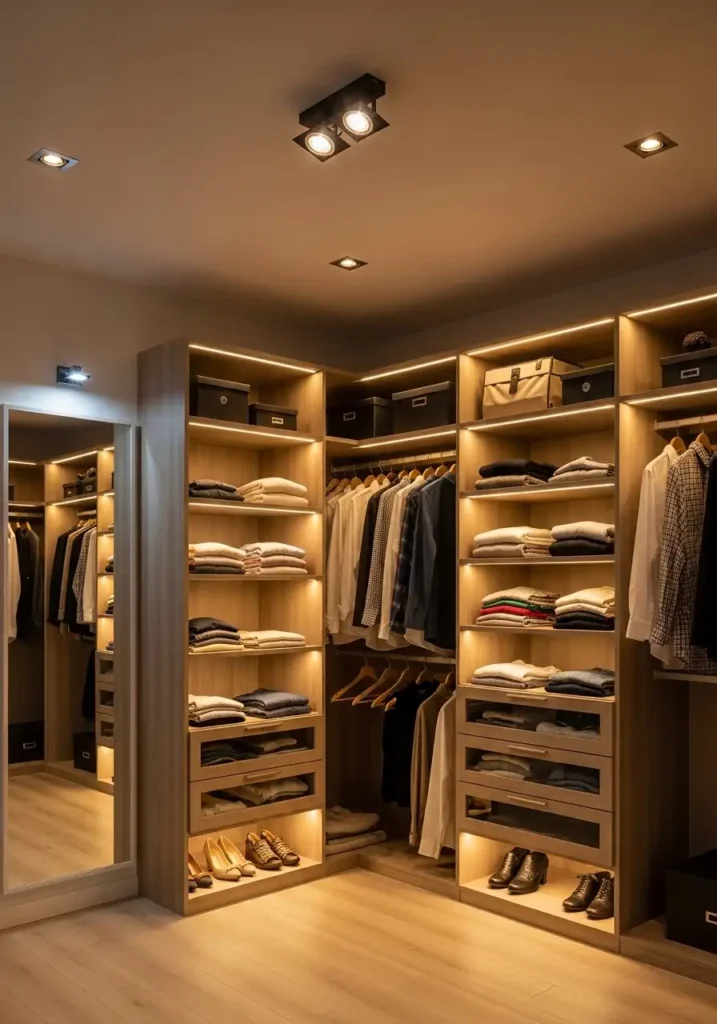
Good lighting helps you find items quickly and enhances the overall aesthetic. It also makes your space feel more polished and intentional. Aim for a warm white light rather than a cool, clinical tone — it renders clothing colors more accurately and feels more inviting.
13. Organize by Category and Color
This final idea ties every other upgrade together: once you have the physical systems in place (rods, bins, dividers, shelves), organizing by category first and color second is what makes the closet function well day to day. Grouping by category — all tops together, all pants together, all dresses together — means you’re never searching multiple areas for the same type of item, while a secondary color arrangement within each category adds a visual rhythm that makes the whole closet look intentional rather than simply tidy.
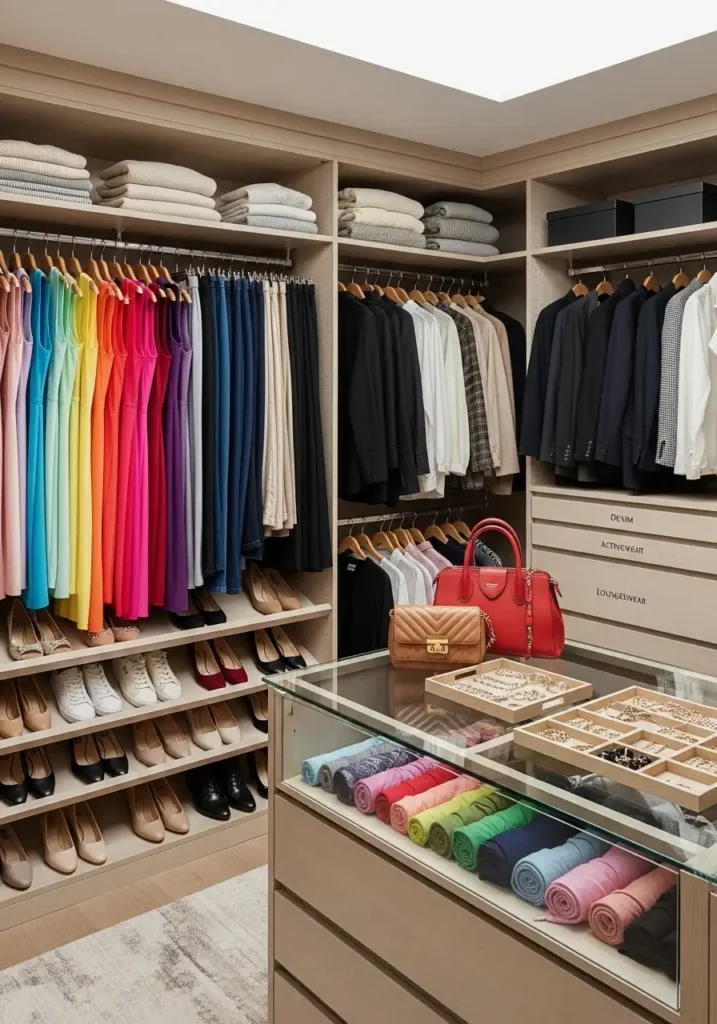
Grouping clothing by category simplifies your daily routine. Within each category, arrange pieces by color for a visually pleasing effect. This method makes outfit planning easier and faster. It also keeps your closet consistently organized over time, since it’s easier to notice — and correct — when something’s been placed in the wrong section.
Closet Organization Budget Guide
Costs vary widely depending on whether you’re buying individual accessories or installing a full custom system. Here’s a general range:
| Upgrade | Budget Option | Mid-Range Option |
|---|---|---|
| Slim matching hangers (set of 20-50) | $15–$30 | $40–$80 |
| Clear storage bins (each) | $5–$12 | $15–$30 |
| Shelf dividers (set) | $10–$25 | $30–$60 |
| Drawer organizer inserts | $15–$35 | $40–$80 |
| Over-the-door organizer | $15–$30 | $35–$70 |
| Wall hooks (set of 5-6) | $10–$20 | $25–$50 |
| LED closet lighting kit | $15–$35 | $40–$100 |
| Adjustable shelving system (per section) | $60–$150 | $200–$500 |
| Closet island (freestanding dresser alternative) | $150–$400 | $500–$1,200 |
| Custom closet island (built-in) | N/A | $1,500–$4,000+ |
A full refresh using bins, hangers, dividers, hooks, and lighting typically lands under $200 total. Structural additions like adjustable shelving systems or a built-in island represent a bigger investment and are worth planning as a separate project.
Frequently Asked Questions
Where should I start if I can only tackle one or two ideas right now?
Matching hangers and clear bins tend to deliver the biggest visual transformation for the smallest cost and effort, making them a good starting point if you’re easing into a larger project over time.
Do I need to hire a professional for closet organization systems?
Most of the ideas above — hangers, bins, dividers, hooks, over-the-door storage — are fully DIY and require no special tools. Adjustable shelving systems and closet islands are the two exceptions where professional installation is worth considering, especially for a built-in island involving plumbing-free but structural carpentry work.
Color-coding by person, rather than only by clothing category, tends to work best in shared closets, since it lets each person quickly locate their own items without disrupting someone else’s system.
What’s the best way to organize a very small reach-in closet?
Focus on vertical space first — a double hanging rod, over-the-door storage, and adjustable shelving typically free up the most usable space in a small footprint, since they don’t require any additional floor area.
How often should I reorganize or declutter my closet?
A seasonal check-in (roughly every 3-4 months) is a reasonable rhythm for most people — enough to catch items that have gone unworn for a full season without becoming a constant chore.
Final Thoughts
Transforming your closet doesn’t require a massive budget or complicated renovations. With a few strategic updates and thoughtful organization systems, you can create a space that feels calm, functional, and stylish. Start with one or two of these ideas — matching hangers and clear bins are the easiest wins — and build from there as your budget and time allow.
If you’re tackling storage throughout the rest of your home, check out our Pantry Organization guide for kitchen-adjacent storage ideas, or browse our Bedroom Decor and Master Bedroom categories for more ways to make the room around your closet feel just as considered as the closet itself.