
Introduction
Contents
- 1 Introduction
- 1.1 1. Use Light, Neutral Colors
- 1.2 2. Incorporate Multi-Functional Furniture
- 1.3 3. Add Vertical Storage Solutions
- 1.4 4. Maximize Natural Light
- 1.5 5. Use Mirrors Strategically
- 1.6 6. Choose Minimalist Décor
- 1.7 7. Opt for Glass or Acrylic Furniture
- 1.8 8. Define the Space with Rugs
- 1.9 9. Install Wall-Mounted Lighting
- 1.10 10. Keep Cables Hidden
- 1.11 11. Utilize Corner Spaces
- 1.12 12. Choose Slim, Space-Saving Desks
- 1.13 13. Add Floating Desks
- 1.14 14. Incorporate Built-In Storage
- 1.15 15. Use Foldable or Stackable Chairs
- 1.16 16. Keep the Layout Open
- 1.17 17. Add Greenery Thoughtfully
- 2 Final Thoughts
That “too-small-to-work” corner is about to become your smartest space. With a few clever layout tweaks and visual tricks, even the tiniest office can feel open, bold, and in control. These 17 ideas show how to make every inch count—and if you’ve ever admired a sharp CEO office design, you’ll love how those same power moves can make a small space look way bigger than it is.
1. Use Light, Neutral Colors
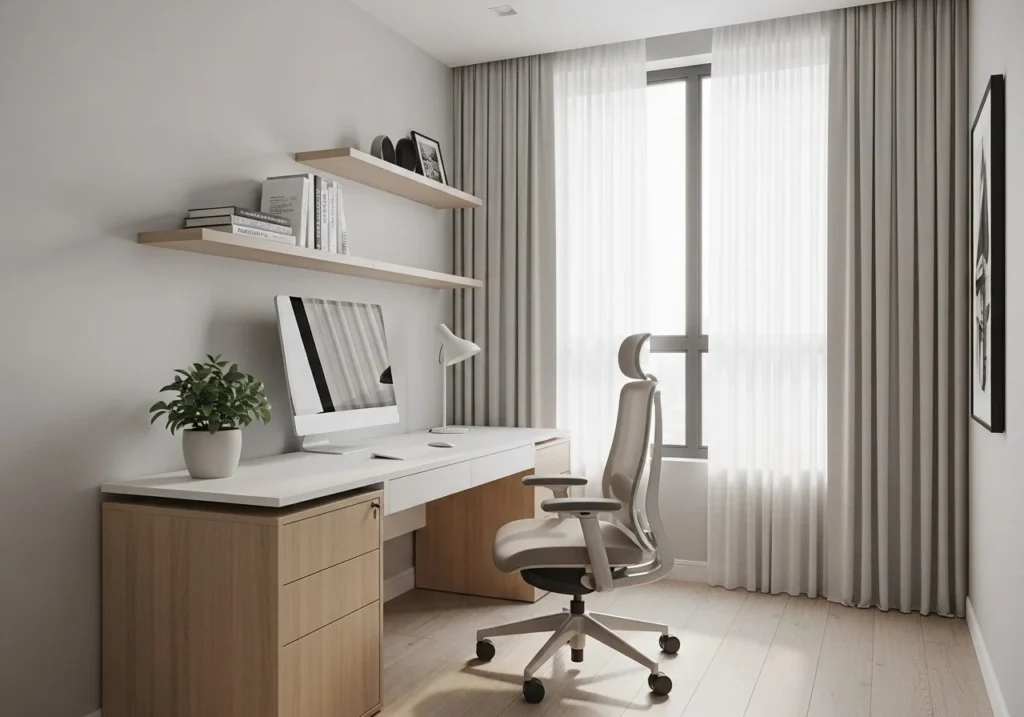
Light shades such as white, beige, and soft gray reflect natural light and make walls seem farther apart. Neutral palettes create a calm and uncluttered look that visually expands the room. You can add depth with subtle textures like linen curtains or a soft area rug. Keeping the base color light ensures the space feels open rather than boxed in.
2. Incorporate Multi-Functional Furniture
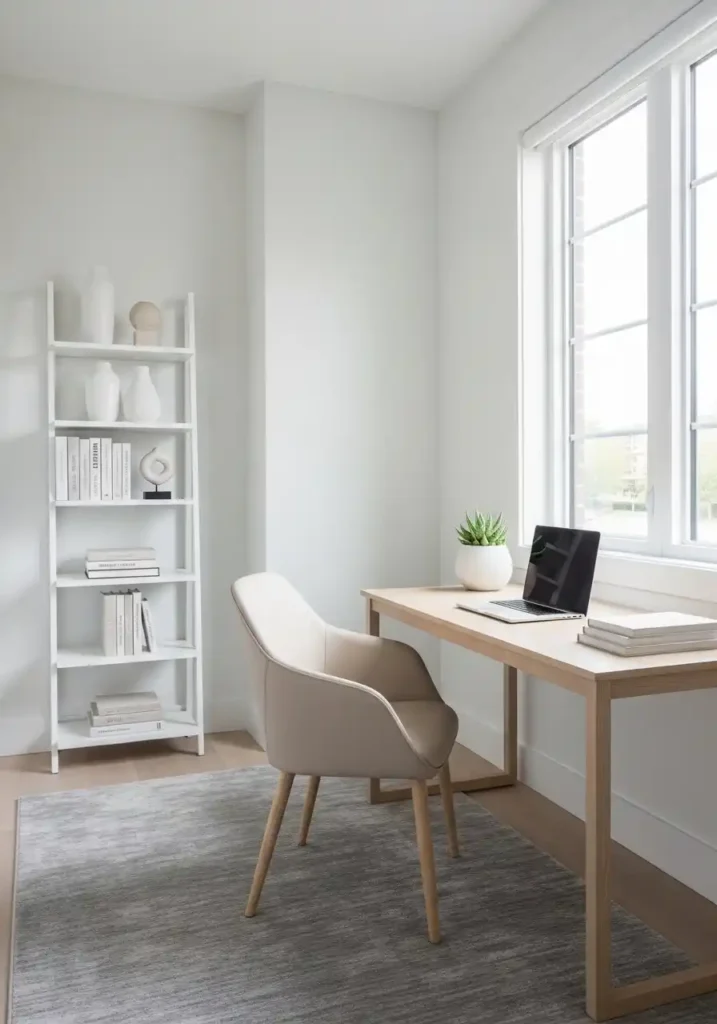
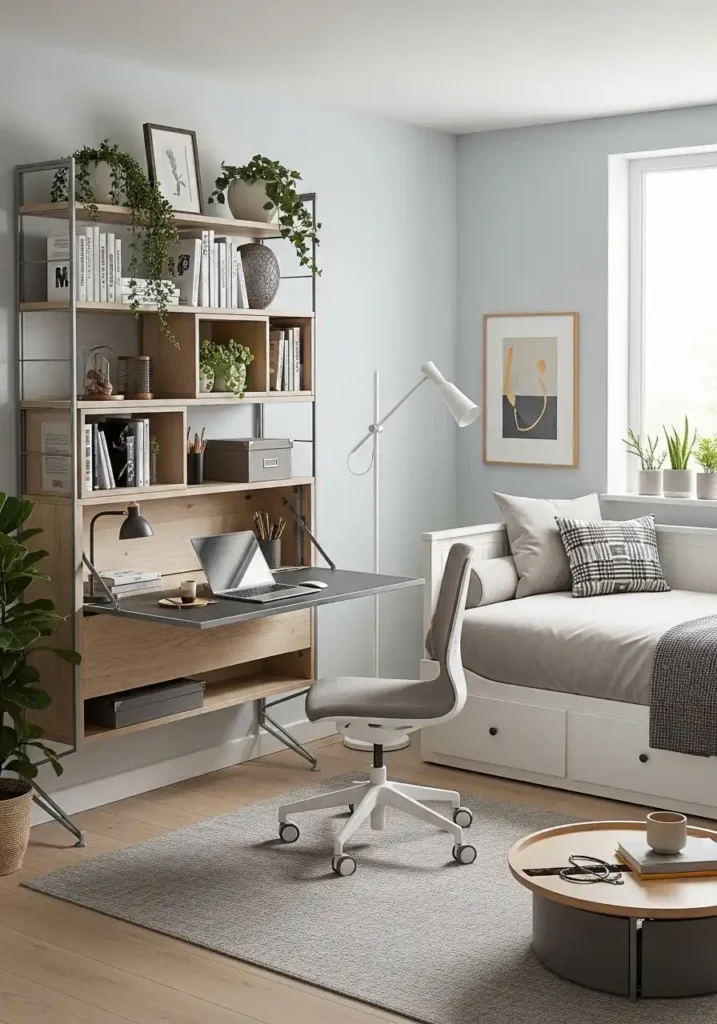
Choose desks with built-in storage or fold-down wall desks to save floor space. Multi-functional pieces reduce clutter while maintaining practicality. For example, an ottoman with hidden storage can double as seating and organization. This approach keeps your office efficient without overcrowding it.
3. Add Vertical Storage Solutions
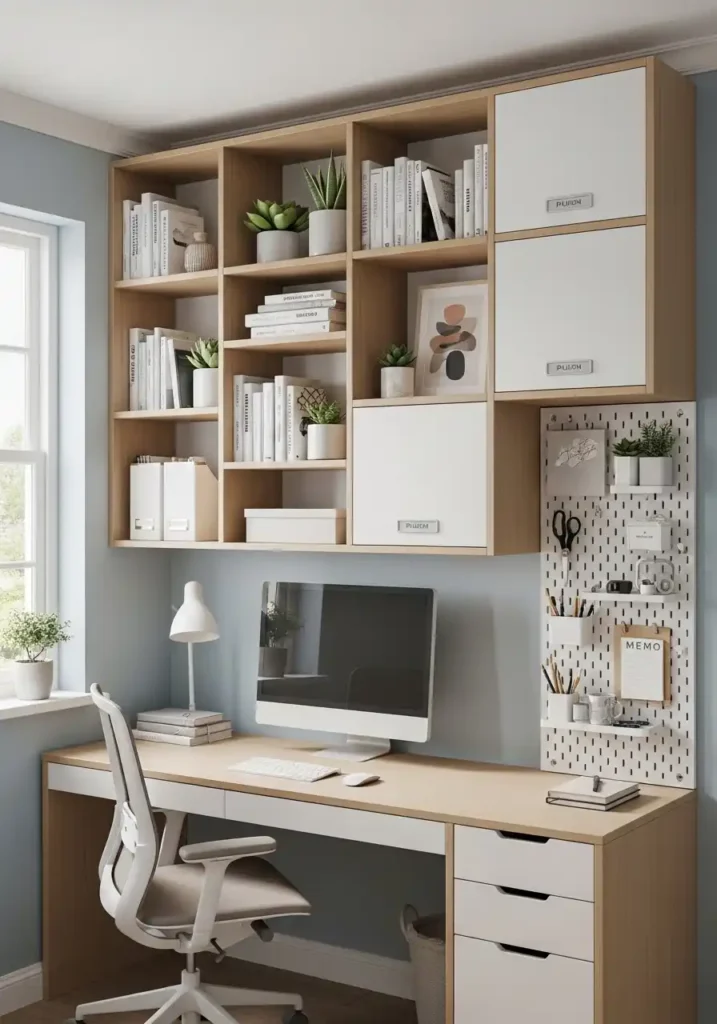
When floor space is limited, think vertically. Install floating shelves or tall cabinets to draw the eye upward and create the illusion of height. Wall-mounted organizers keep essentials within reach without taking up valuable desk space. Vertical storage keeps your office tidy and visually elongated.
4. Maximize Natural Light
Position your desk near a window to make the most of natural sunlight. Light-filled rooms automatically appear larger and more welcoming. Avoid heavy drapes and opt for sheer curtains or blinds. Natural light enhances productivity while visually expanding the space.
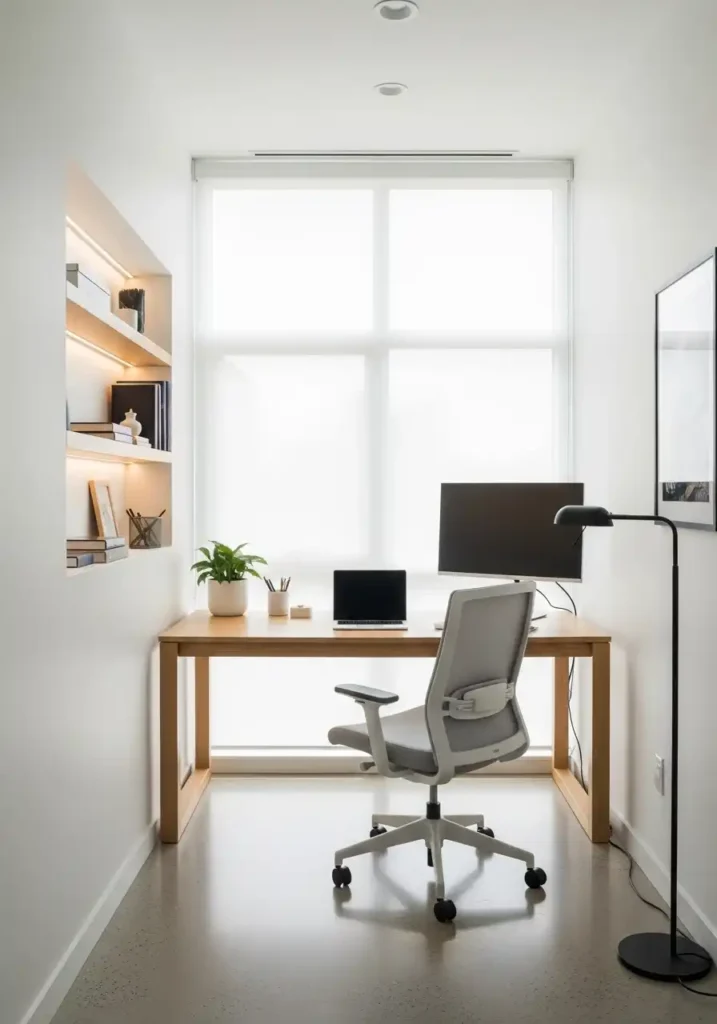
5. Use Mirrors Strategically
Mirrors reflect light and create depth, instantly making a room feel bigger. Placing a mirror opposite a window amplifies brightness. Even a small decorative mirror can make a noticeable difference. This simple trick is both stylish and effective for tiny offices.
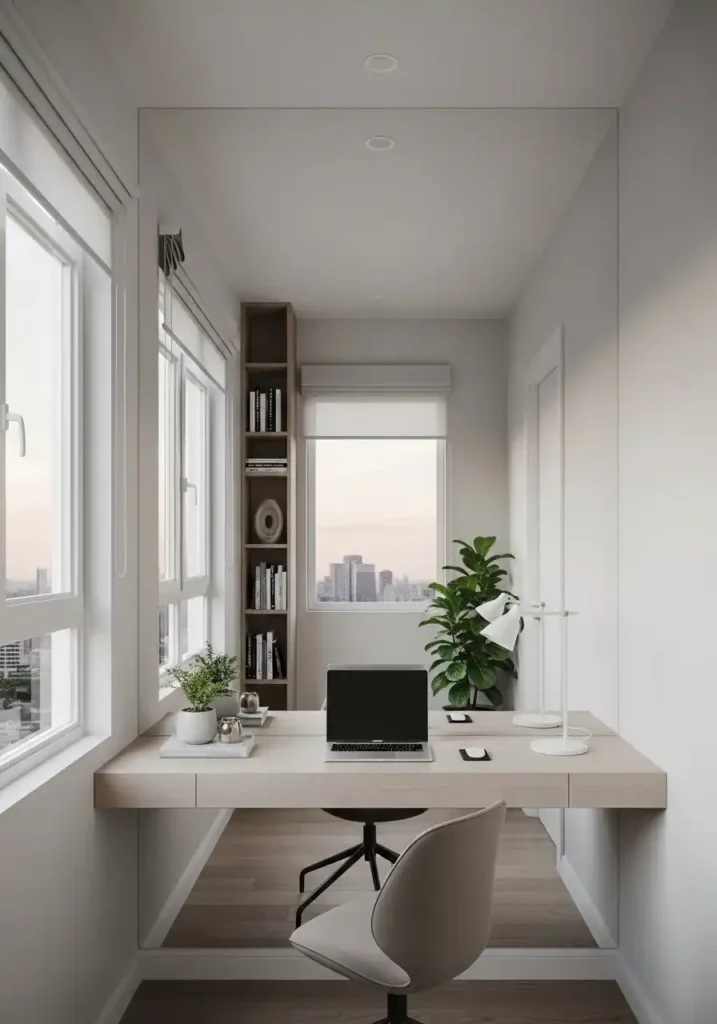
6. Choose Minimalist Décor
Clutter makes small spaces feel cramped, so keep décor simple and intentional. Select a few statement pieces rather than overcrowding shelves. Clean lines and minimal accessories maintain an airy atmosphere. A minimalist approach ensures your office feels open and organized.
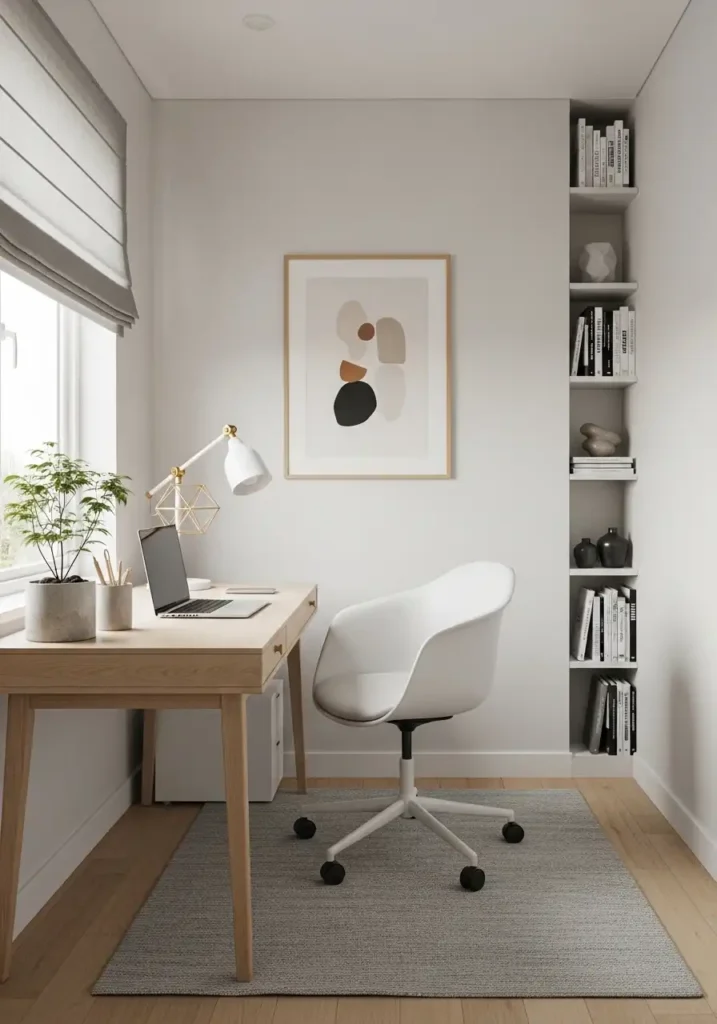
7. Opt for Glass or Acrylic Furniture
Transparent furniture pieces create the illusion of more space because they don’t visually block the room. Glass desks or acrylic chairs blend seamlessly into their surroundings. This keeps the design modern and lightweight. The result is a workspace that feels less crowded.
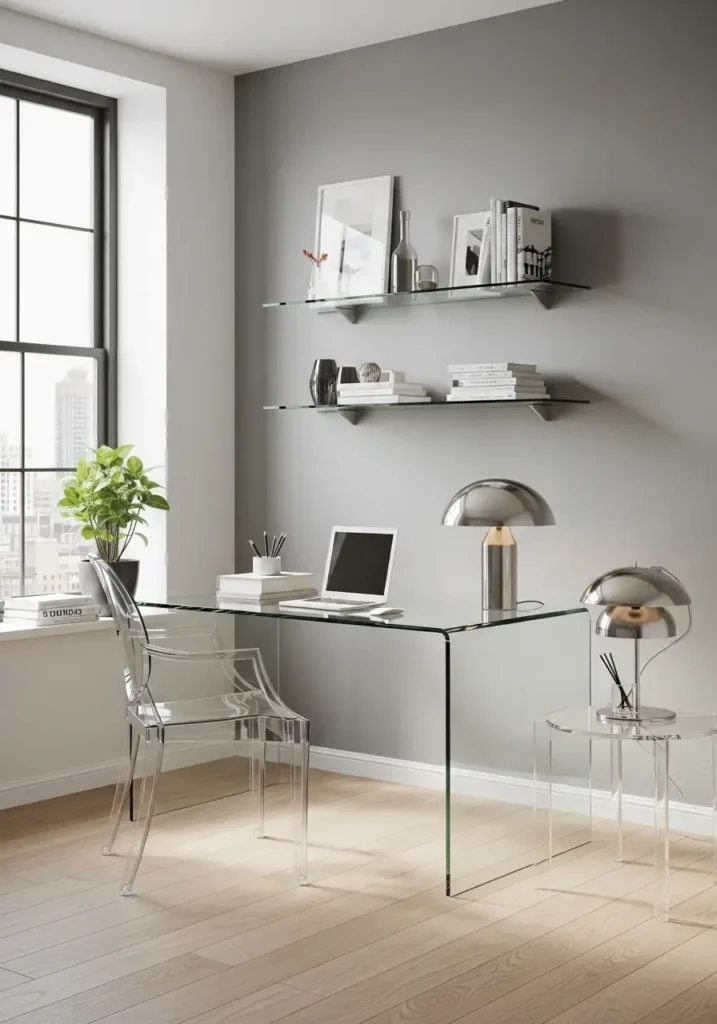
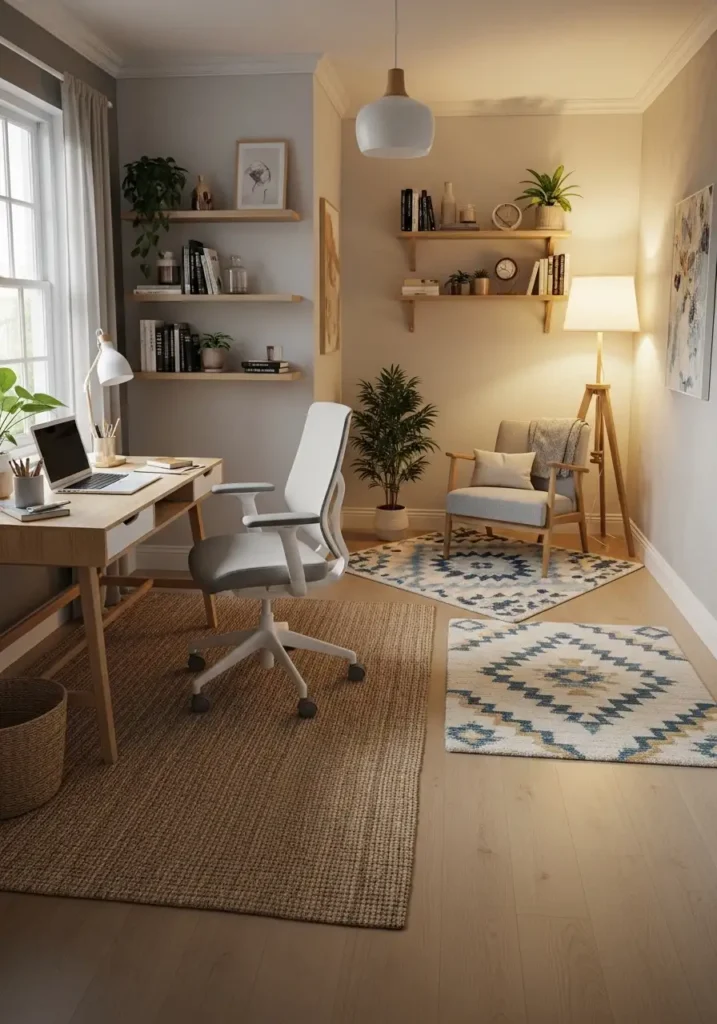
8. Define the Space with Rugs
In open-plan homes, a rug can visually separate your office area without walls. Choose a light-colored or subtly patterned rug to maintain spaciousness. This helps define the workspace while preserving openness. Rugs add warmth without shrinking the room visually.
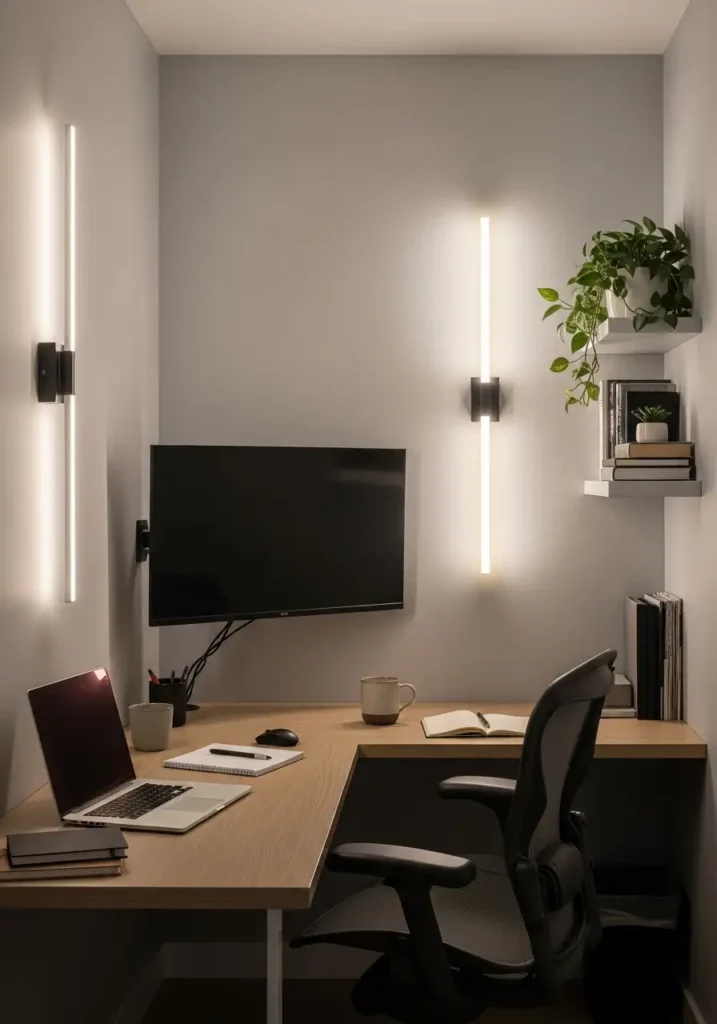
9. Install Wall-Mounted Lighting
Free up desk and floor space by installing wall sconces or pendant lights. Mounted lighting reduces clutter and keeps surfaces clear. Proper lighting also brightens the room, enhancing the sense of space. This solution combines style and functionality seamlessly.
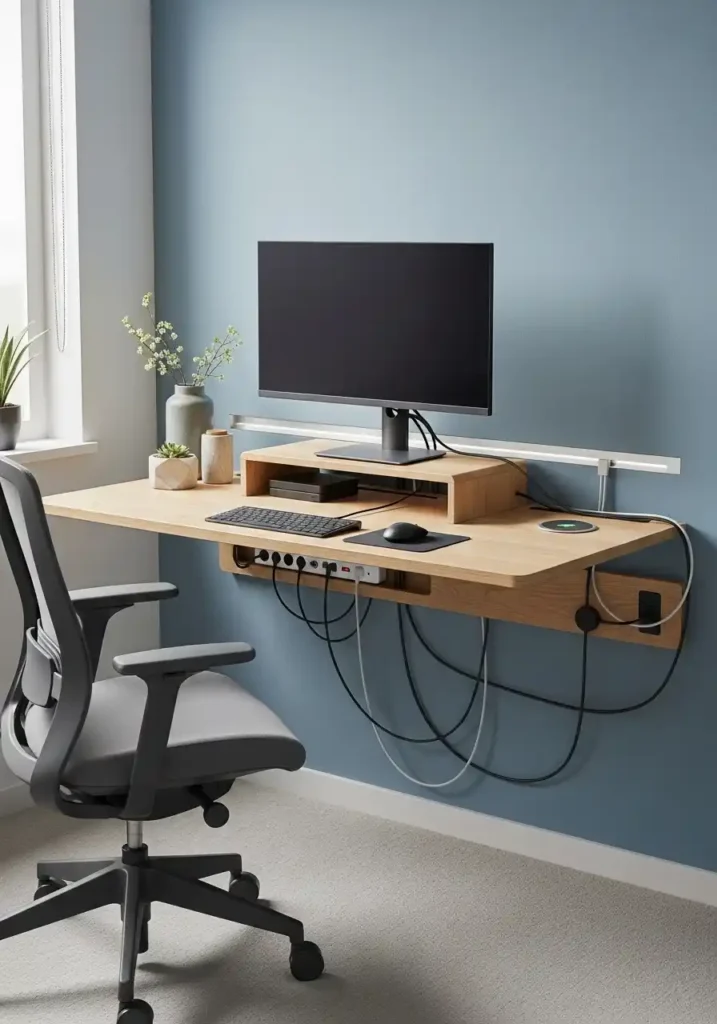
10. Keep Cables Hidden
Visible cords can make a small office look messy and chaotic. Use cable organizers, clips, or under-desk trays to conceal wires. A tidy setup instantly feels more spacious and professional. Hidden cables contribute to a streamlined, open look.
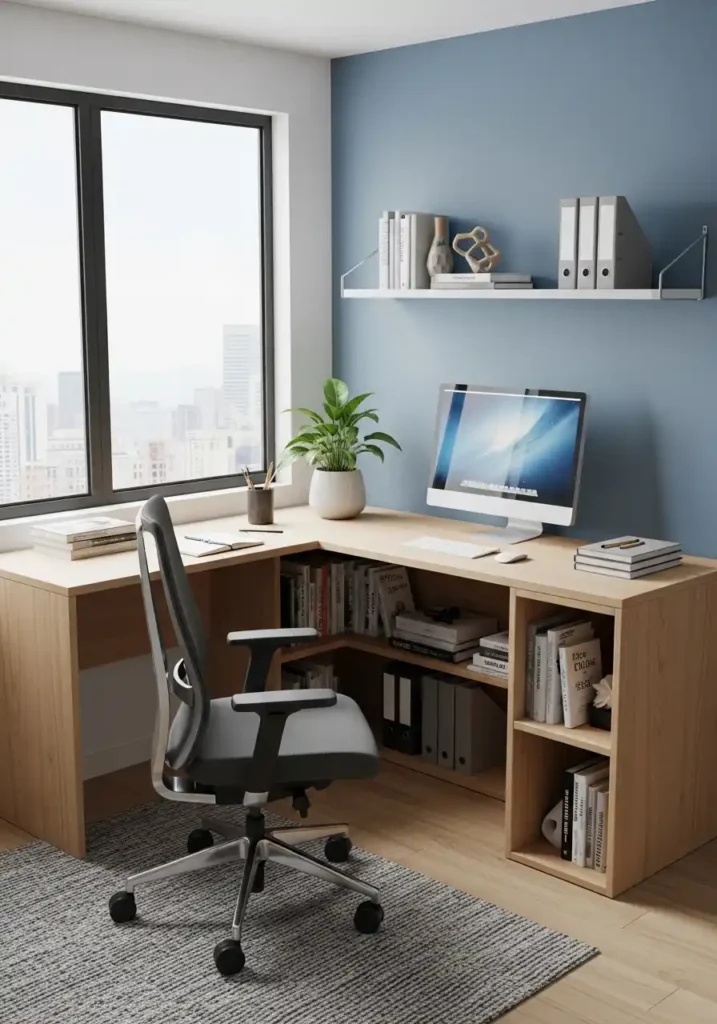
11. Utilize Corner Spaces
Corners often go unused but can house compact desks or shelving units. A corner desk maximizes every inch without overwhelming the room. This arrangement leaves more open floor space in the center. Smart corner use makes even the smallest office efficient.
12. Choose Slim, Space-Saving Desks
Opt for narrow desks that provide enough surface area without dominating the room. Wall-mounted or ladder-style desks are excellent for tight areas. Keeping the desk proportions balanced maintains visual flow. Smaller furniture pieces prevent the space from feeling cramped.
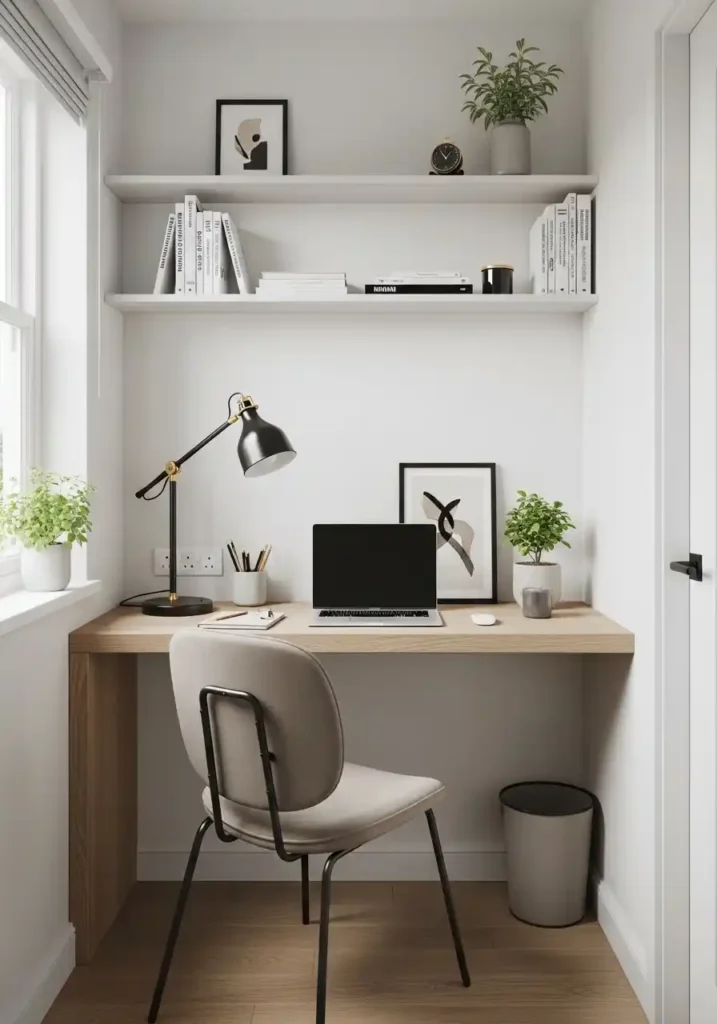
13. Add Floating Desks
Floating desks free up floor space and create a modern, airy appearance. They work especially well in studio apartments or bedrooms. The open space beneath the desk enhances the illusion of a larger room. This design keeps the workspace sleek and minimal.
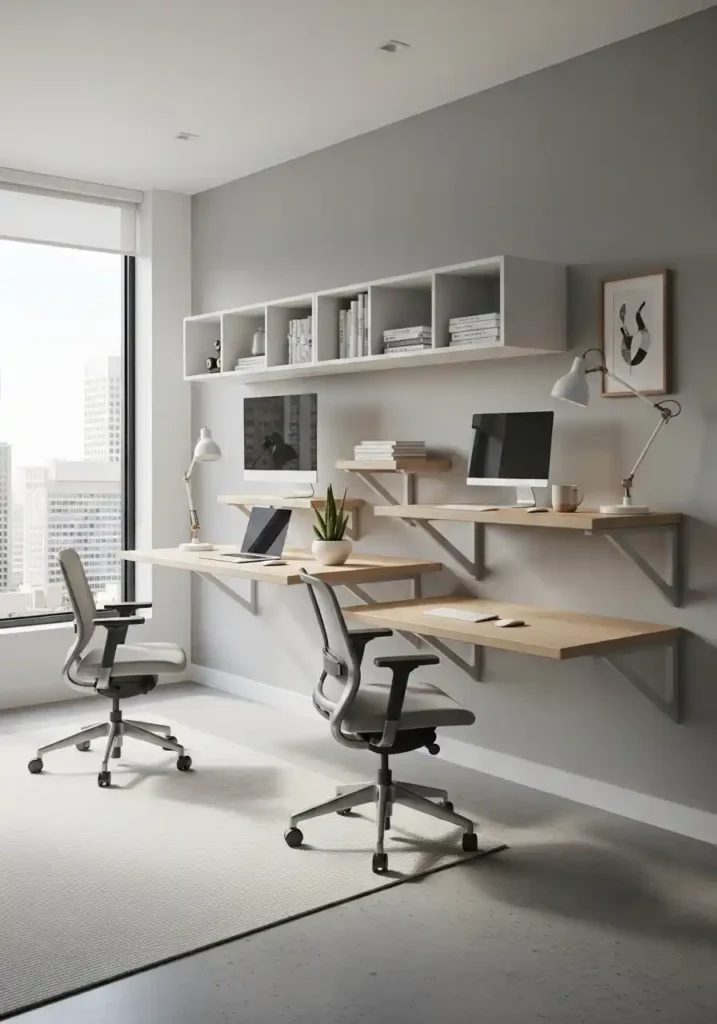
14. Incorporate Built-In Storage
Built-in shelves and cabinets blend seamlessly with walls, saving space. Custom storage maximizes every nook and cranny. This eliminates bulky standalone furniture. Built-ins provide a clean and cohesive look that opens up the room.
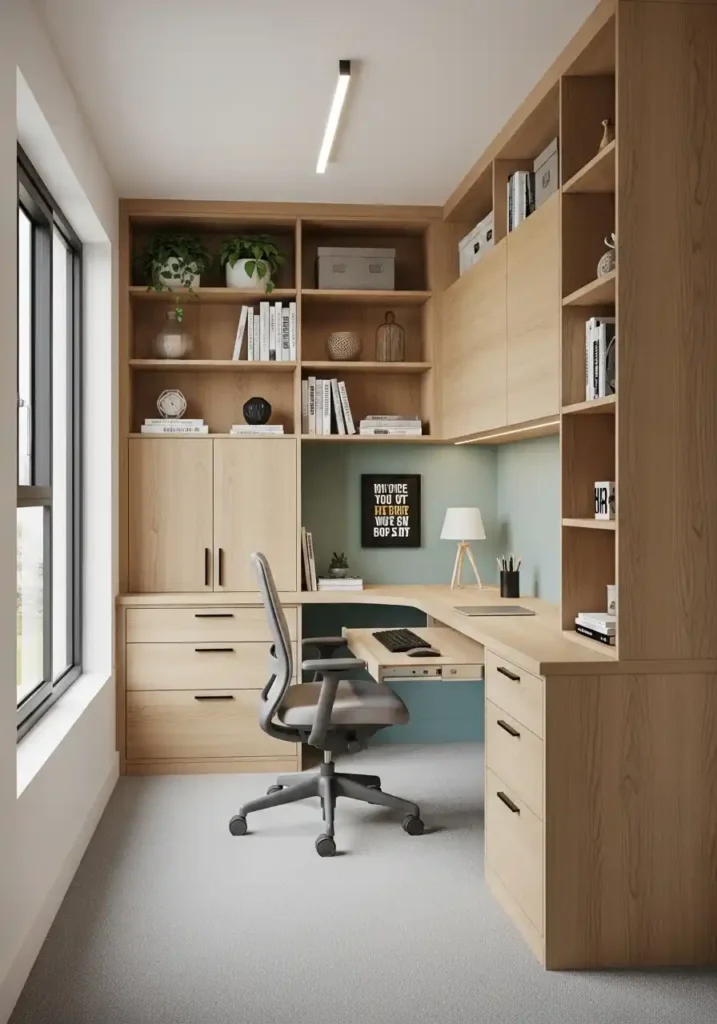
15. Use Foldable or Stackable Chairs
Foldable chairs can be tucked away when not in use. Stackable seating options keep your office adaptable for guests or meetings. Flexible furniture reduces visual clutter. This ensures your small office remains functional yet spacious.
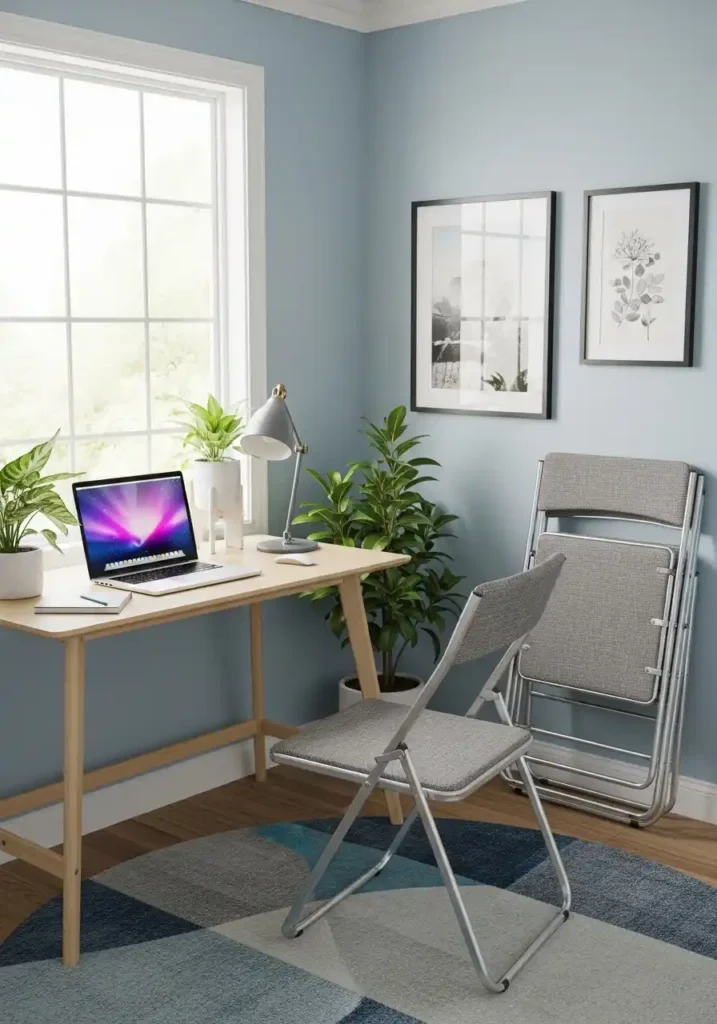
16. Keep the Layout Open
Avoid placing large furniture pieces in the center of the room. Maintain clear walkways to create a sense of flow. An open layout helps the space breathe. Strategic placement makes even a compact office feel expansive.
17. Add Greenery Thoughtfully
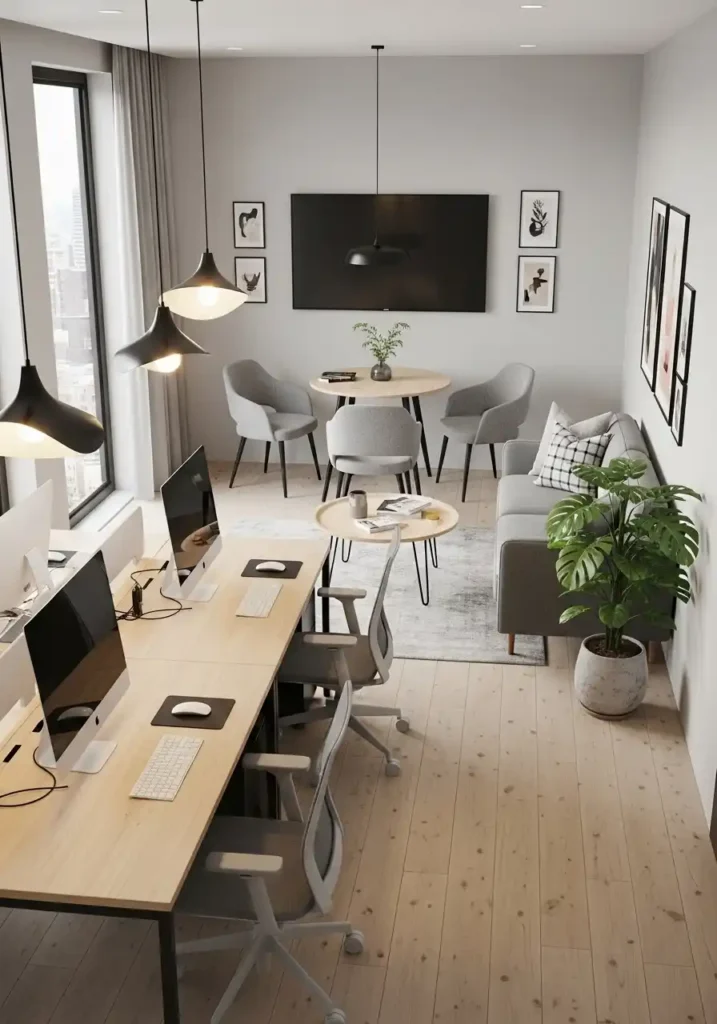
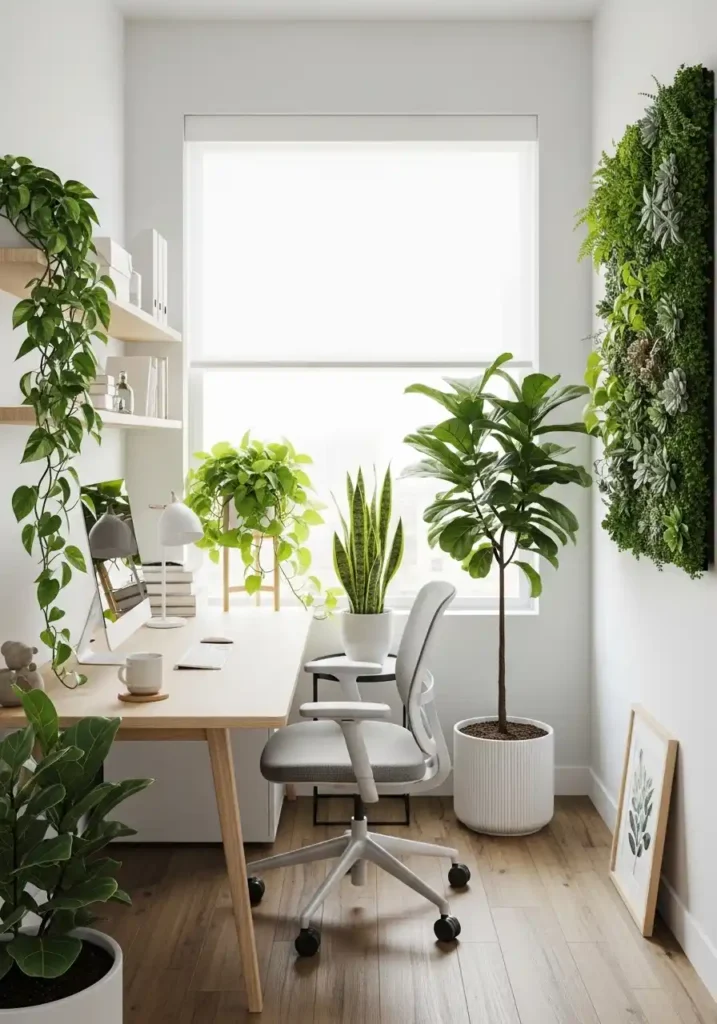
Small plants add life and freshness without overwhelming the space. Choose compact planters that fit neatly on shelves or desks. Greenery enhances mood while keeping the décor light. A touch of nature makes your office feel vibrant and open.
Final Thoughts
Designing a small office that feels spacious is all about smart choices and intentional styling. By using light colors, vertical storage, multi-functional furniture, and clever lighting, you can transform even the tiniest area into a productive retreat. Focus on minimizing clutter and maximizing light to create an airy, comfortable atmosphere. With these 17 small office design ideas, your compact workspace can look bigger, brighter, and beautifully organized.