
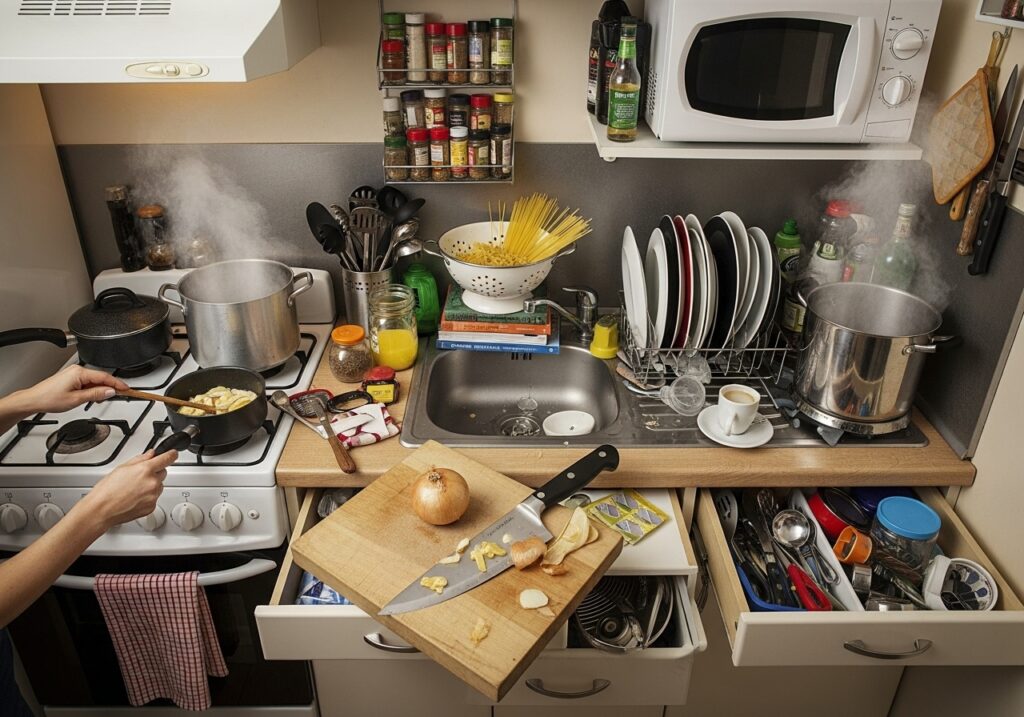
Small kitchens create daily friction. Counters feel crowded, storage feels short, and cooking turns into a shuffle. I work with people who want space without confusion. You want clear kitchen improvement ideas, honest costs, and a team that explains things plainly. This page shows how small changes create space and how my service works from start to finish.
1. Smart layout changes create space without walls.
Contents
- 1 1. Smart layout changes create space without walls.
- 2 2. Vertical storage fixes the biggest small-kitchen problem.
- 3 3. Open shelving reduces visual weight fast.
- 4 4. Pull-out storage turns gaps into working space.
- 5 5. Lighter finishes help the room feel wider.
- 6 6. Compact appliances protect walking space.
- 7 7. Layered lighting improves function and comfort.
- 8 8. Corner storage keeps space from disappearing.
- 9 9. Multi-use counters earn their place daily
- 10 10. Clear work-zone planning reduces wasted steps
- 11 Final Thoughts
Smart kitchen layout changes create space without knocking anything down. Storage moves upward, walkways stay clear, and work zones stay close. When cabinets reach the ceiling and counters stay uncluttered, movement feels easier. It’s like clearing a busy sidewalk so everyone can walk normally.
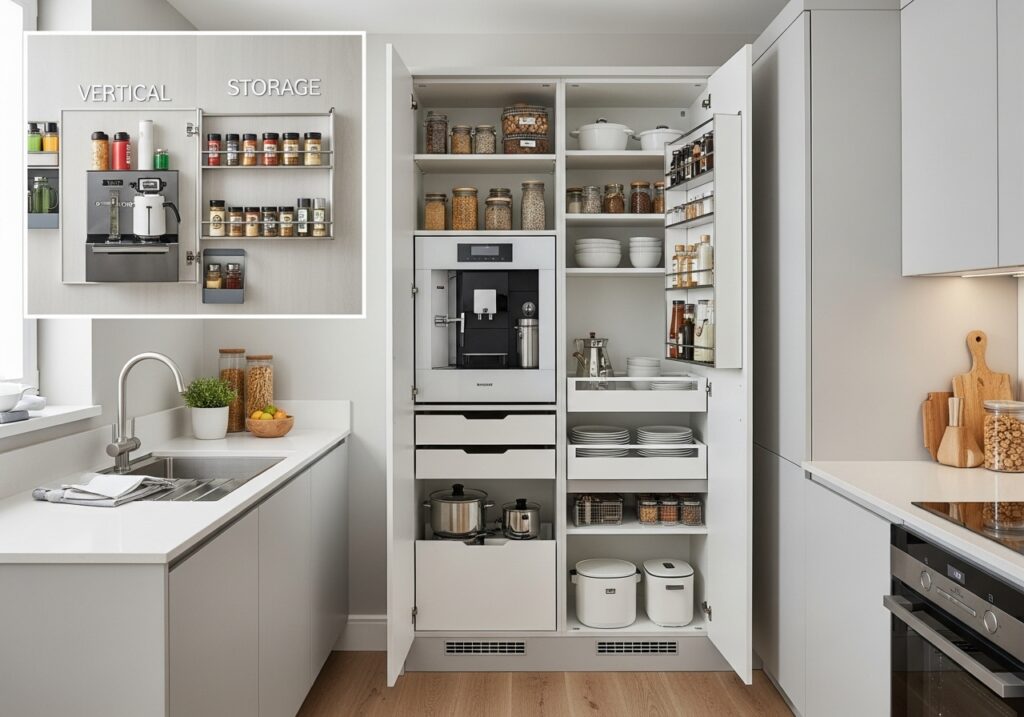
2. Vertical storage fixes the biggest small-kitchen problem.
Vertical storage pulls clutter off counters and floors. Tall cabinets and wall-mounted shelves make use of unused height. Daily items stay easy to reach without crowding prep areas. It’s like moving boxes off the floor and onto shelves.
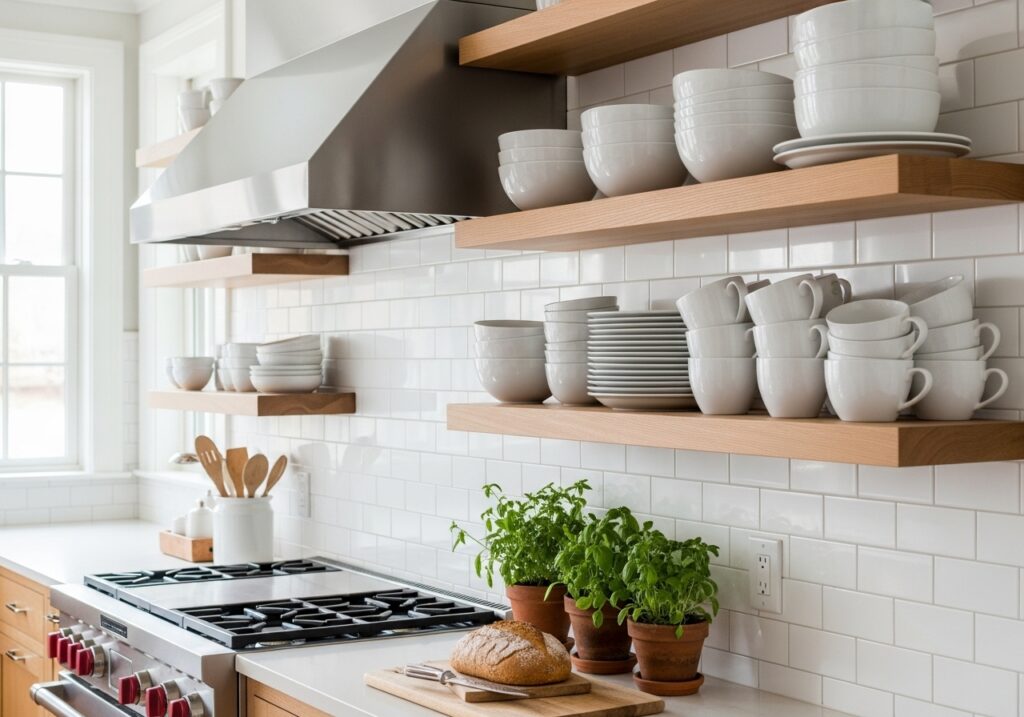
3. Open shelving reduces visual weight fast.
Open shelving lightens the room visually. Solid upper cabinets can make a small kitchen feel boxed in. Shelves let light move freely and keep essentials visible. When kept simple, they stay practical.
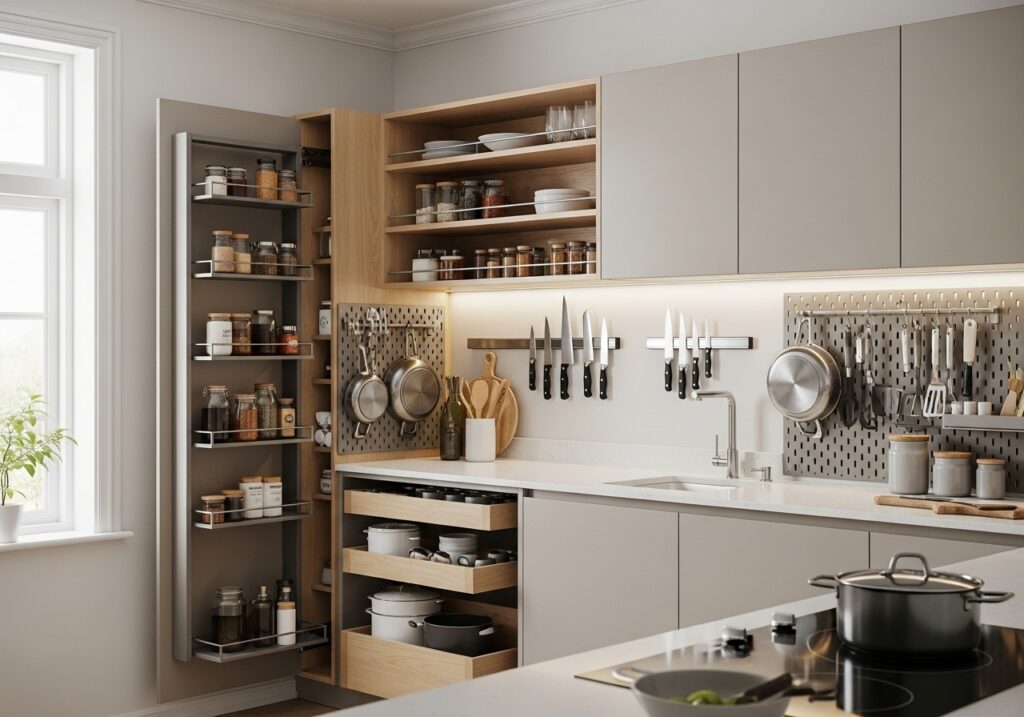
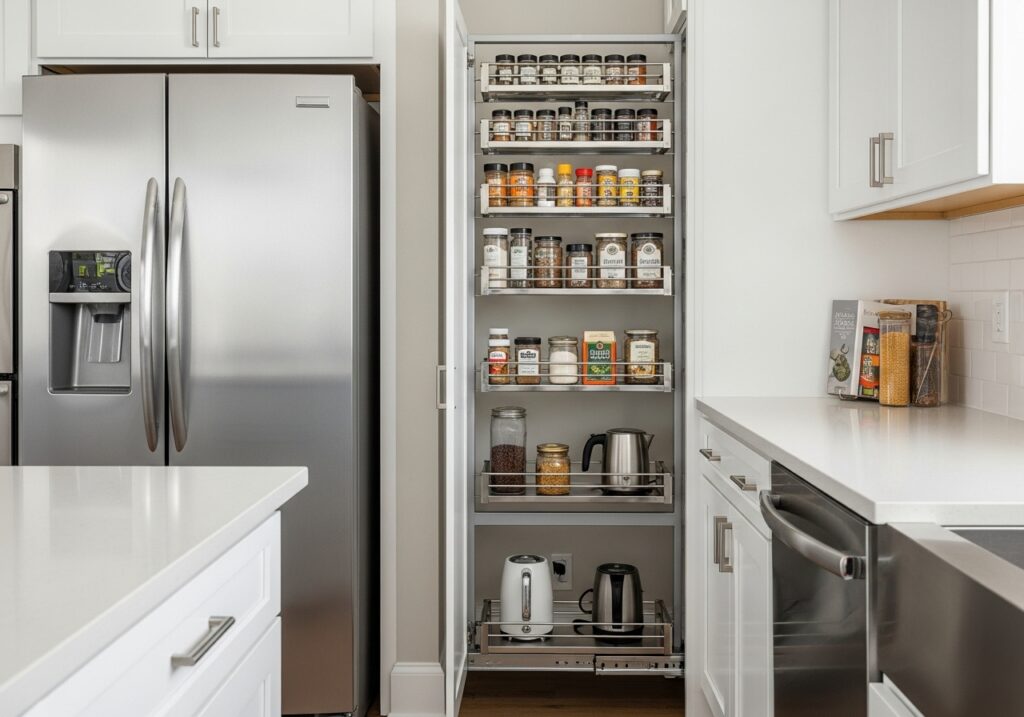
4. Pull-out storage turns gaps into working space.
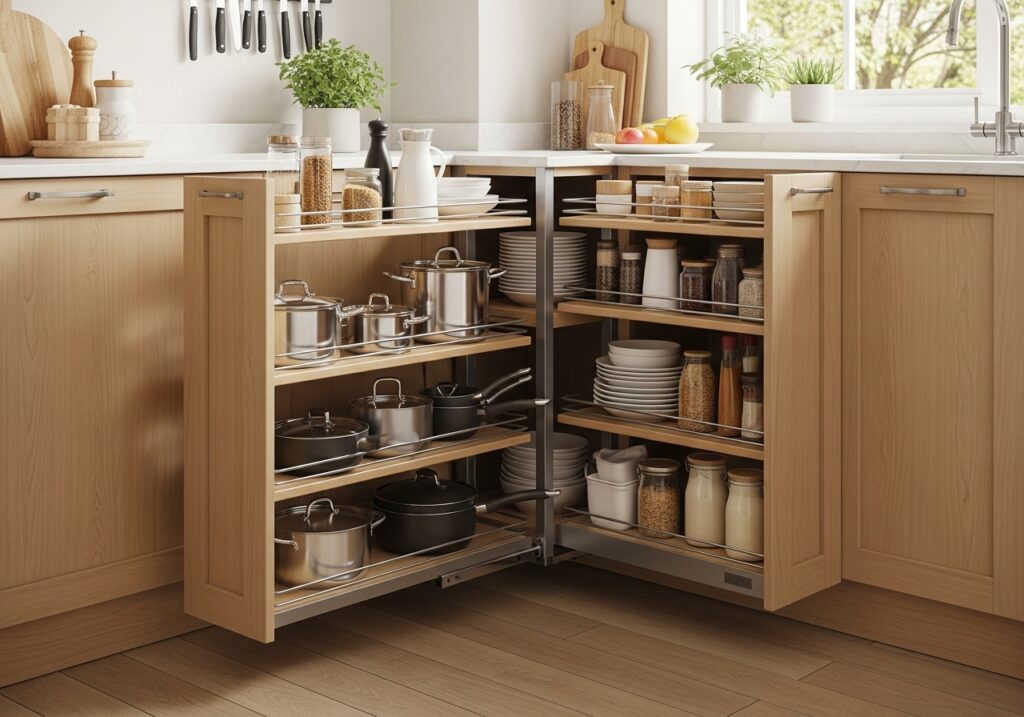
Pull-out storage uses narrow areas most kitchens waste. Slide-out pantries and spice racks keep items reachable. Nothing gets lost in the back again. It’s like finding extra pockets in a jacket you already wear.
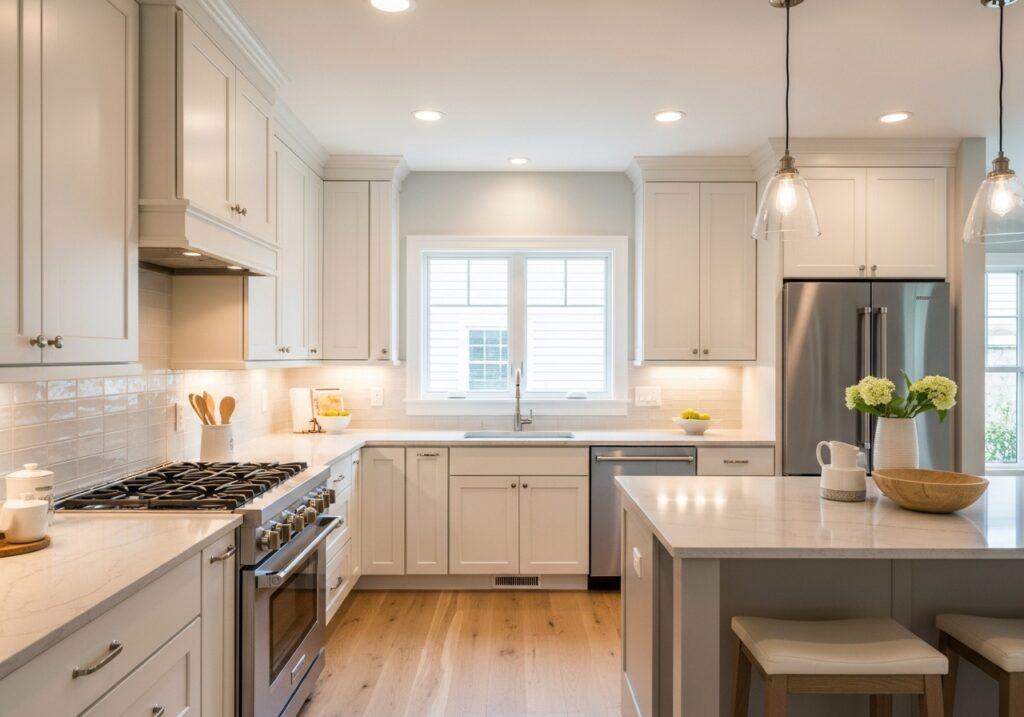
5. Lighter finishes help the room feel wider.
Lighter finishes reflect light across the kitchen. This reduces shadows and makes surfaces feel more open. Dark finishes absorb light and tighten the space. Color choice alone changes how big the room feels.
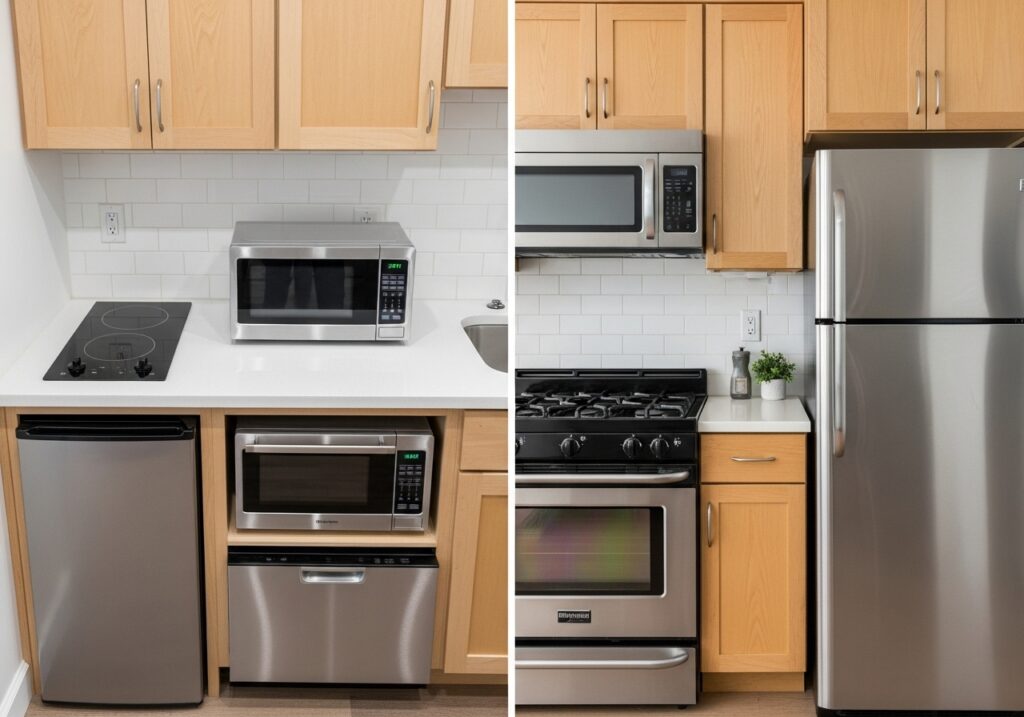
6. Compact appliances protect walking space.
Compact appliances free inches where movement matters most. Slim fridges and shallow dishwashers reduce congestion. They still handle daily cooking needs. It’s choosing balance over bulk.
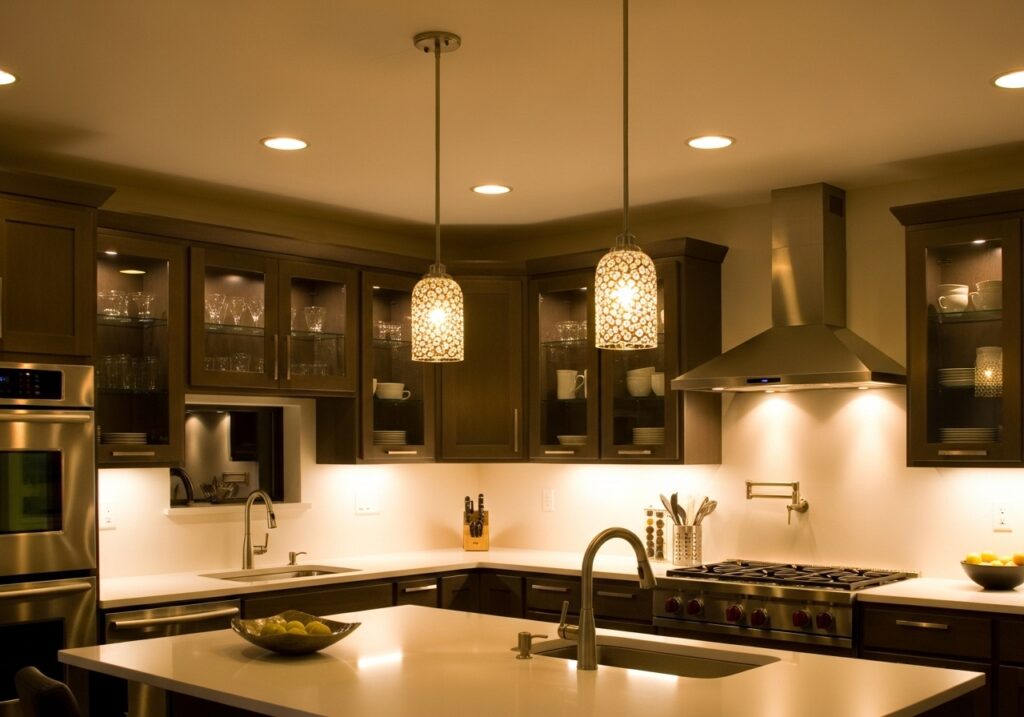
7. Layered lighting improves function and comfort.
Layered lighting removes dark corners. Ceiling lights handle overall brightness, while under-cabinet lights support prep work. Task lighting keeps counters usable at any hour. It’s like opening curtains after sunset.
8. Corner storage keeps space from disappearing.
Corner cabinets often hide unused space. Lazy Susans and swing trays bring items forward. This removes bending and blind reaching. Every corner starts pulling its weight.
9. Multi-use counters earn their place daily
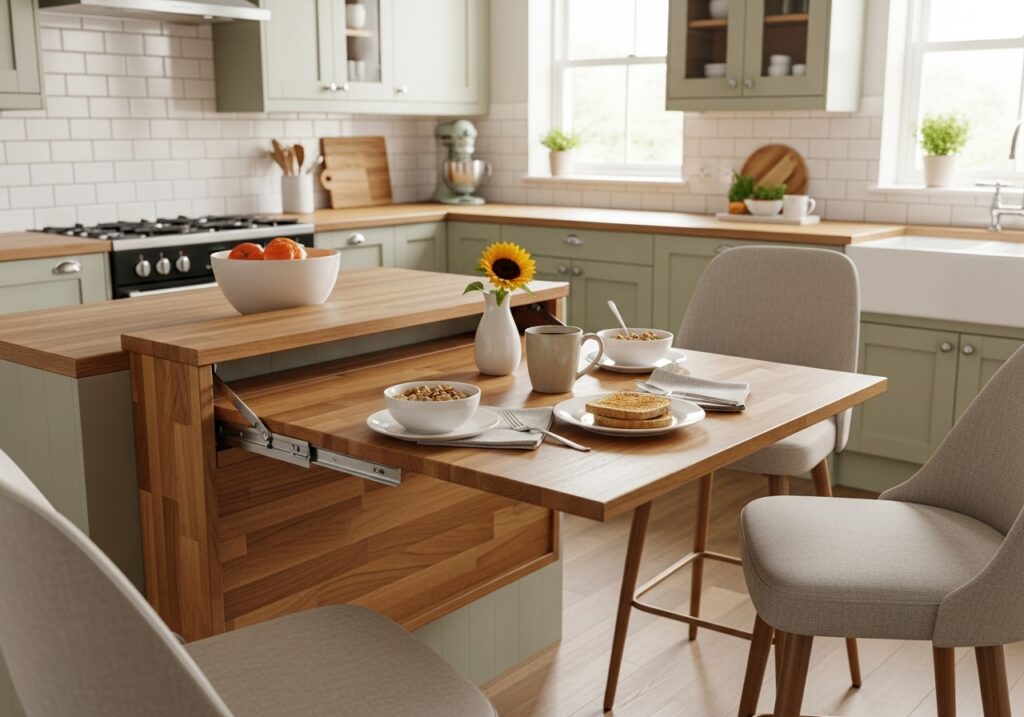
Multi-use counters support prep, dining, and extra workspace. Fold-down or pull-out surfaces stay hidden when not needed. They add function without crowding the room. It’s furniture that knows when to step back.
10. Clear work-zone planning reduces wasted steps
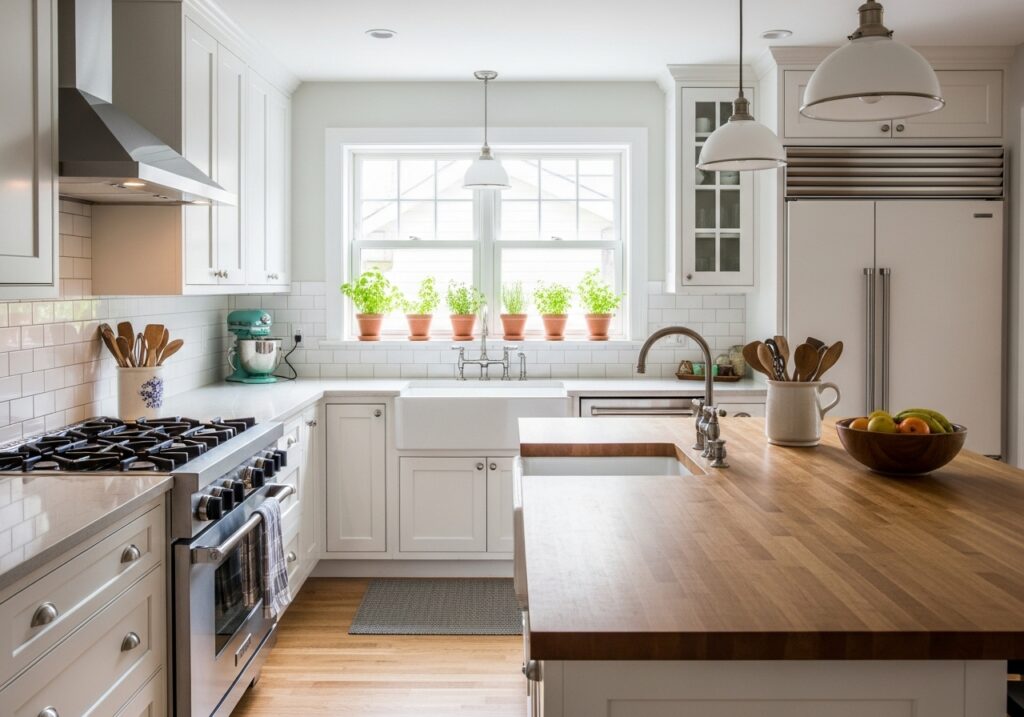
Clear work-zone planning keeps cooking smooth. Sink, stove, and fridge placement shortens movement. Fewer steps save time and energy. It’s like placing tools exactly where your hands expect them.
Final Thoughts
My service stays straightforward. I assess the space, explain options, show pricing, and manage the work. One contact guides the entire process so nothing feels scattered. Costs are shared upfront so decisions feel steady, not rushed.If your kitchen feels tight, the fix doesn’t need drama. It needs clear planning and skilled work. I focus on space that works every day and pricing that stays clear from start to finish.