
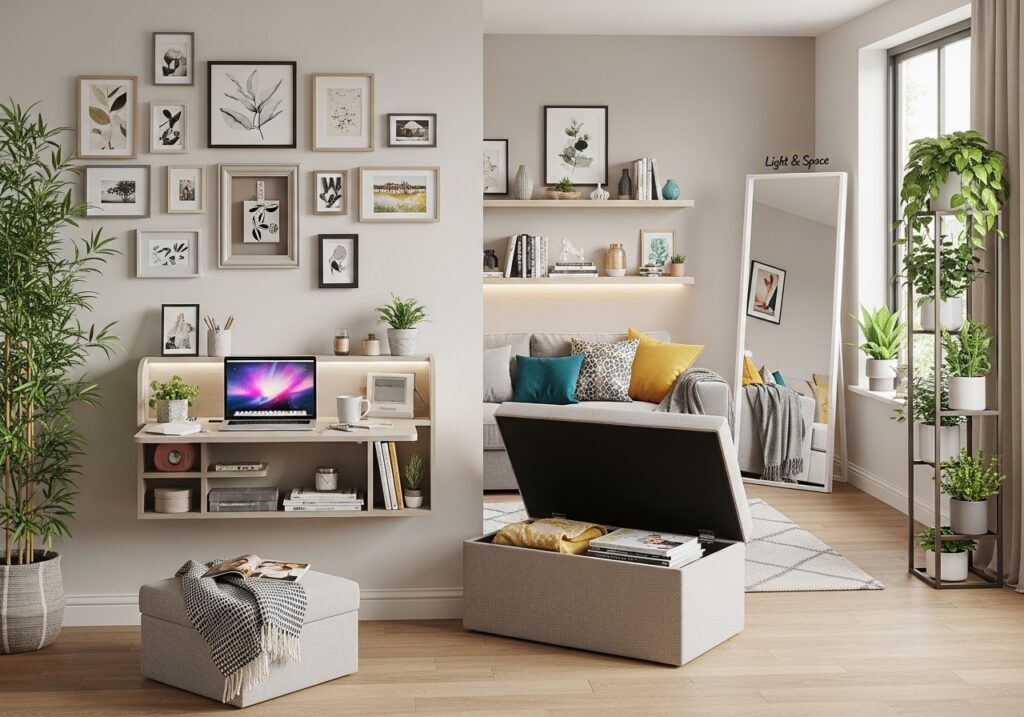
Small room. Big frustration.
Contents
- 1 Small room. Big frustration.
- 1.1 1. Use Light Wall Colors
- 1.2 2. Paint the Ceiling White
- 1.3 3. Keep Flooring One Tone
- 1.4 4. Use Mirrors Across Light
- 1.5 5. Choose Low-Profile Furniture
- 1.6 6. Go Vertical With Storage
- 1.7 7. Hang Curtains Higher
- 1.8 8. Use Rugs to Define Zones
- 1.9 9. Keep Furniture Legs Visible
- 1.10 10. Stick to One Color Family
- 1.11 11. Add Wall Lighting
- 1.12 12. Use Glass and Lucite
- 1.13 13. Keep Decor in Groups
- 1.14 14. Fix Ceiling Lines
- 1.15 15. Declutter Ruthlessly
- 1.16 Final Thought
We’ve all been there. Tight rooms. Low ceilings. Walls that close in. Floors that feel heavy. Fixing walls, floors, and ceilings sounds costly, but it doesn’t have to be. When we think about Spring Home Decor, we usually think about fresh starts, more light, and a lighter feel—and that’s exactly what we want here: space, light, and comfort without draining savings. This post focuses on low-cost fixes that make rooms breathe again.
1. Use Light Wall Colors
Light colors open space fast. White, soft beige, and pale grey reflect light and reduce visual weight. Dark walls pull inward. A single gallon of paint can change how wide a room feels, which is why smart Wall decor Ideas matter just as much as color choice. It’s like swapping a winter coat for a t-shirt.
2. Paint the Ceiling White
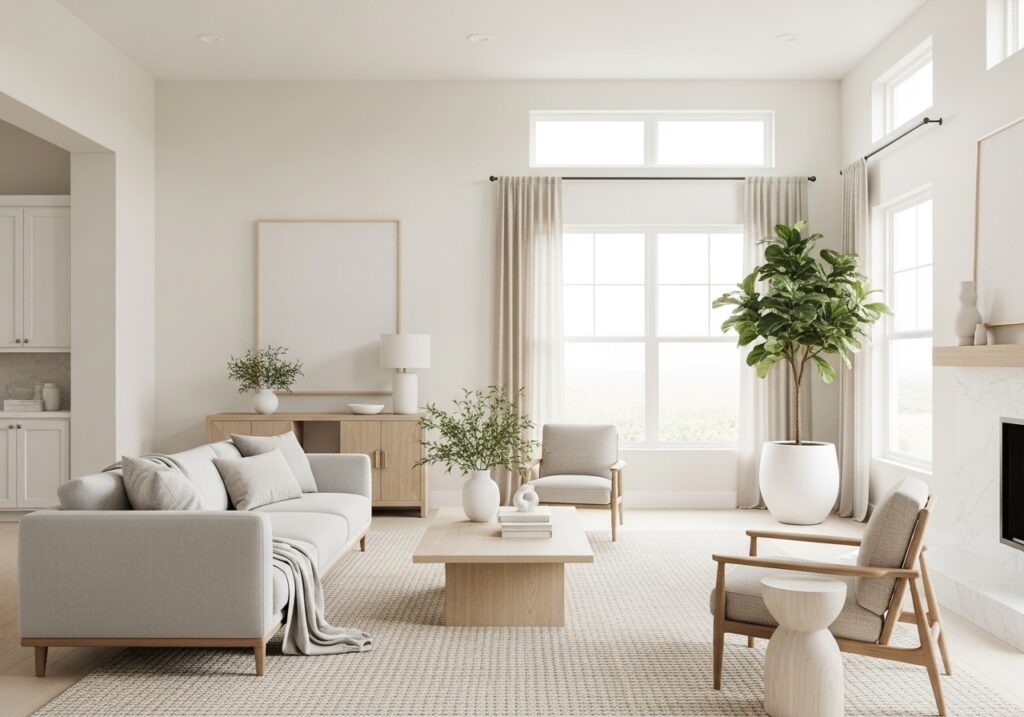
A white ceiling lifts the room. It tricks the eye into seeing height. This helps low ceilings feel less heavy, especially when paired with LED Strip Lighting Ceiling Designs that add a soft, modern glow. Flat white works best. It’s cheap and quick.
3. Keep Flooring One Tone
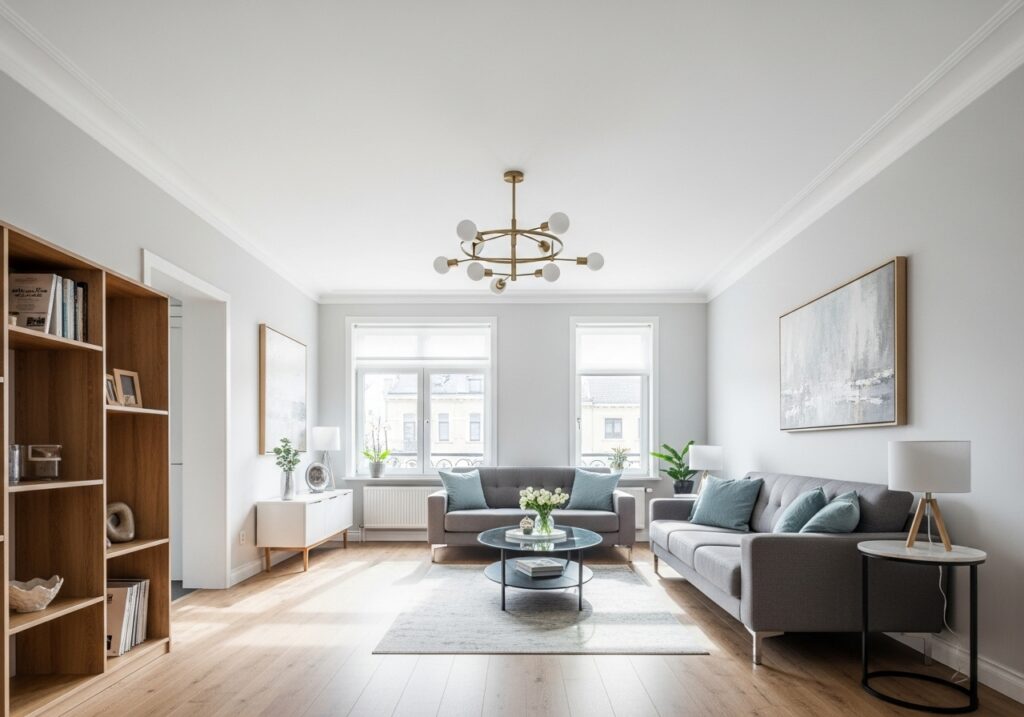
One floor tone creates flow. Too many patterns break the room into pieces. Vinyl planks or rugs in one shade keep things calm. Calm rooms feel larger.
4. Use Mirrors Across Light
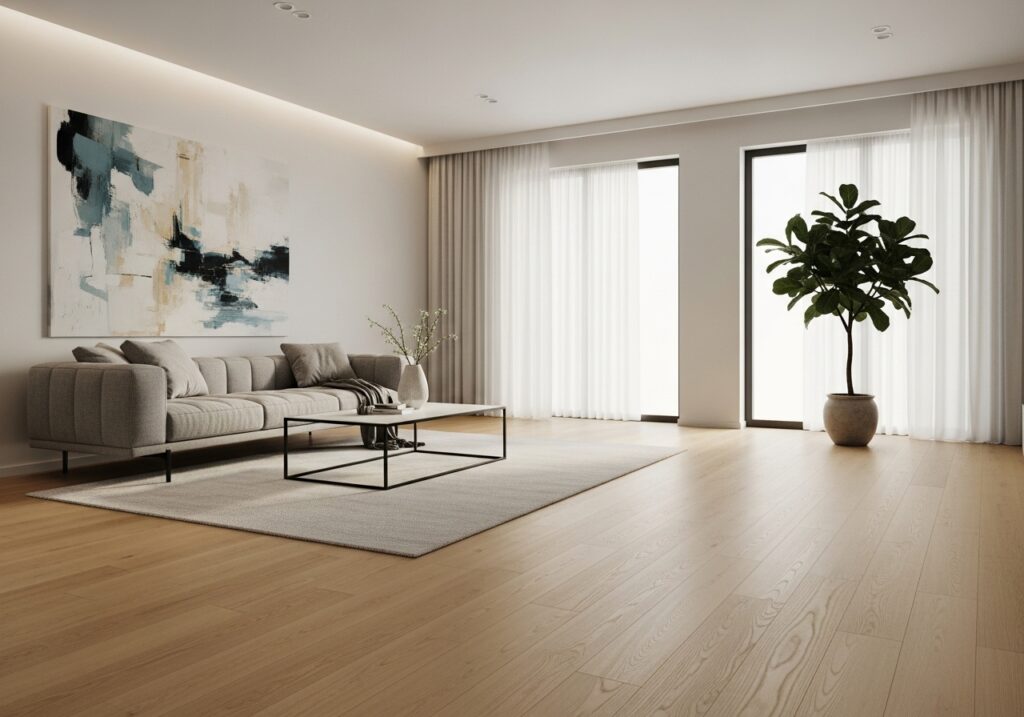
Mirrors bounce light around. Place one across a window or lamp. The room doubles visually. It’s like opening a fake window.
5. Choose Low-Profile Furniture
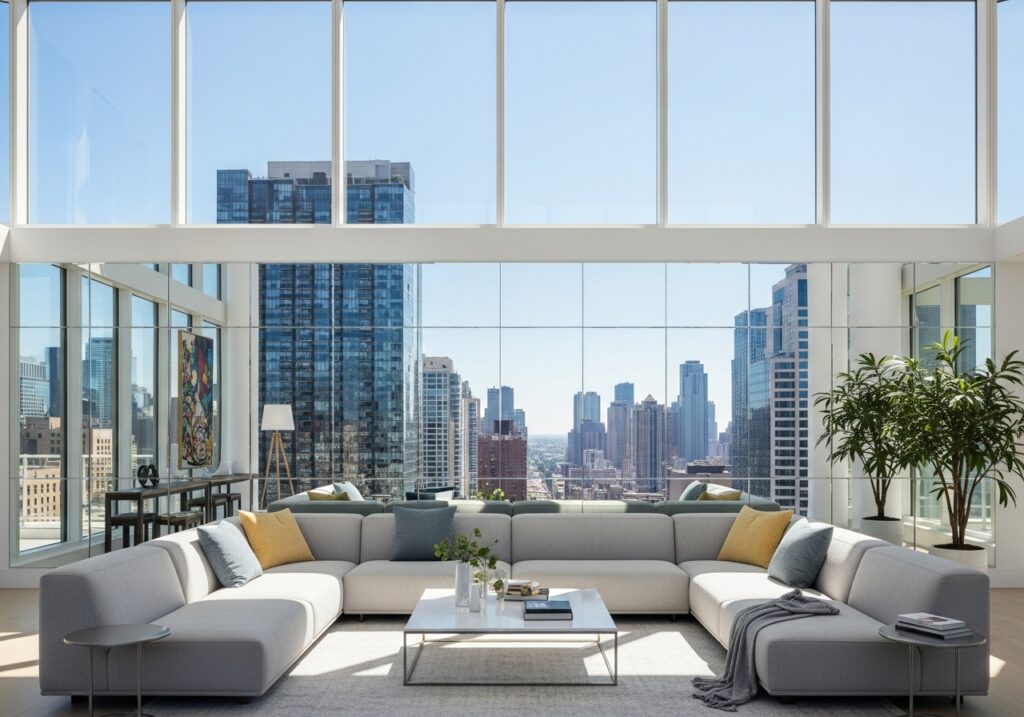
Low furniture shows more wall space. More wall space means more breathing room. Sofas, beds, and tables should sit closer to the floor. Think of it as lowering the horizon.
6. Go Vertical With Storage
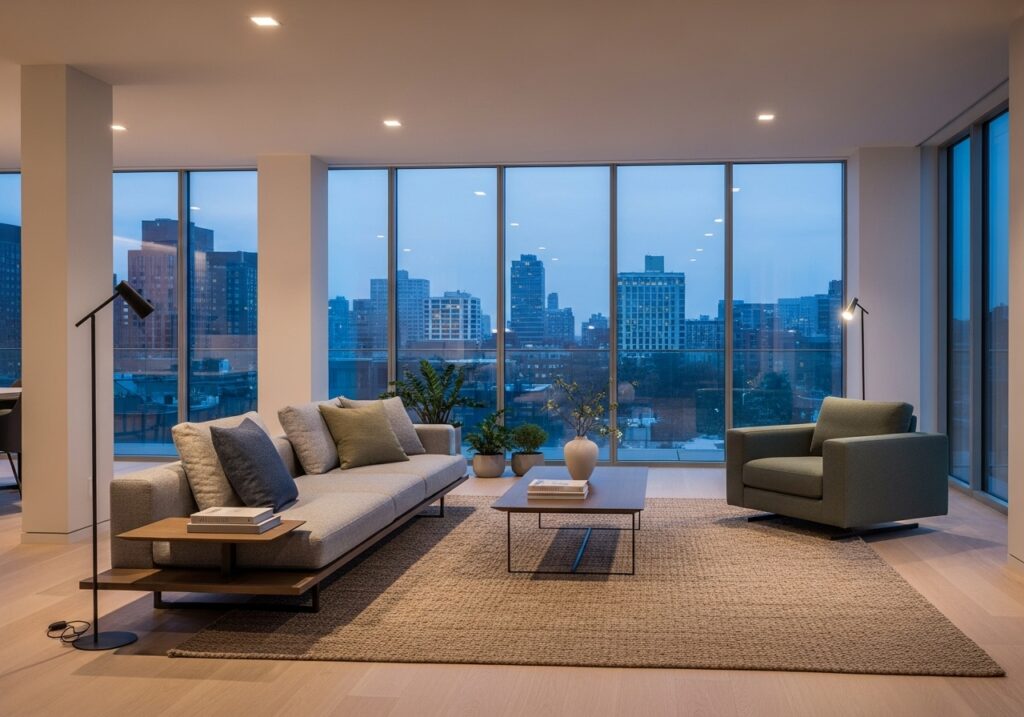
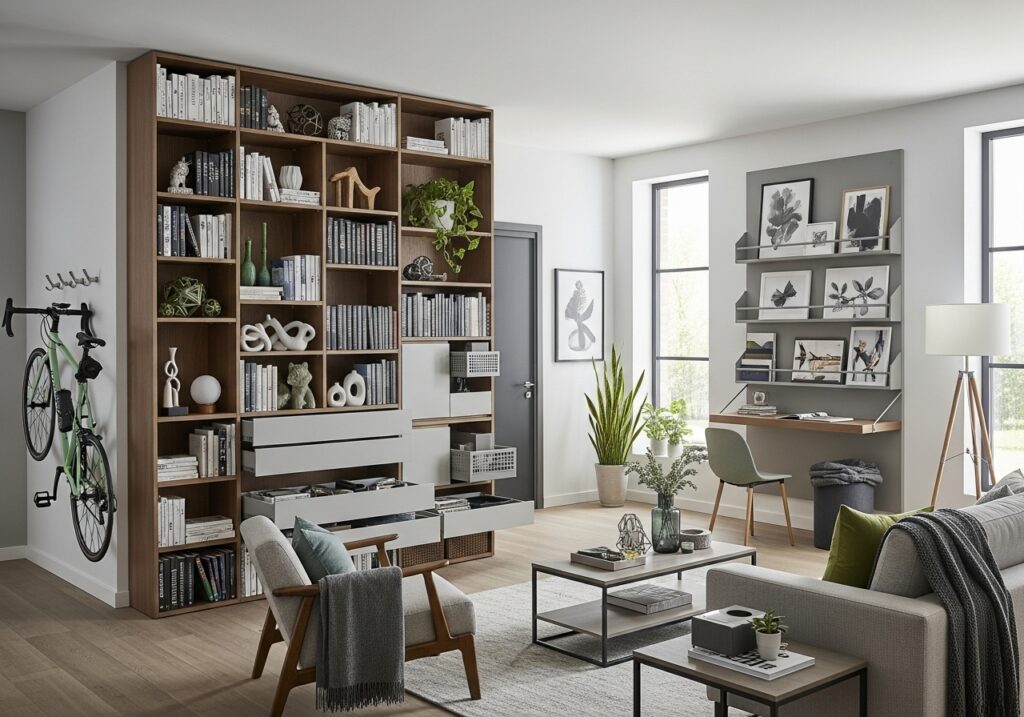
Tall shelves pull eyes upward. This reduces floor clutter and adds height. Walls work harder than floors. That’s smart use of space.
7. Hang Curtains Higher
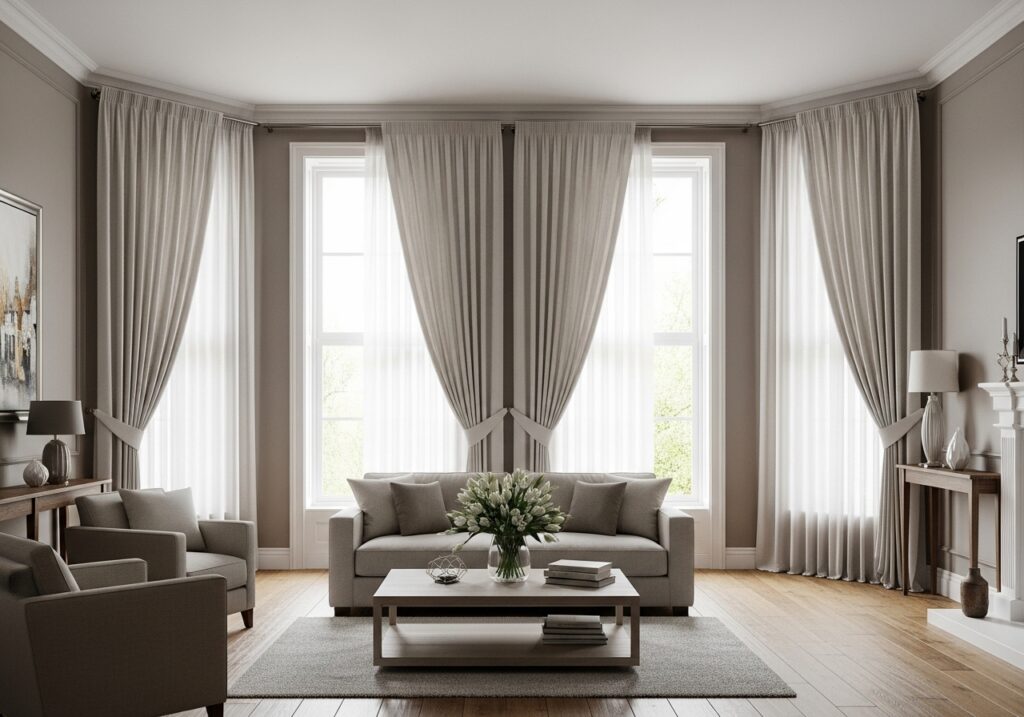
Mount curtain rods close to the ceiling. Let fabric fall to the floor. Windows look taller. Ceilings feel higher.
8. Use Rugs to Define Zones
A rug sets boundaries without walls. In small rooms, clear zones stop visual chaos. Stick to simple patterns. Busy rugs shrink rooms.
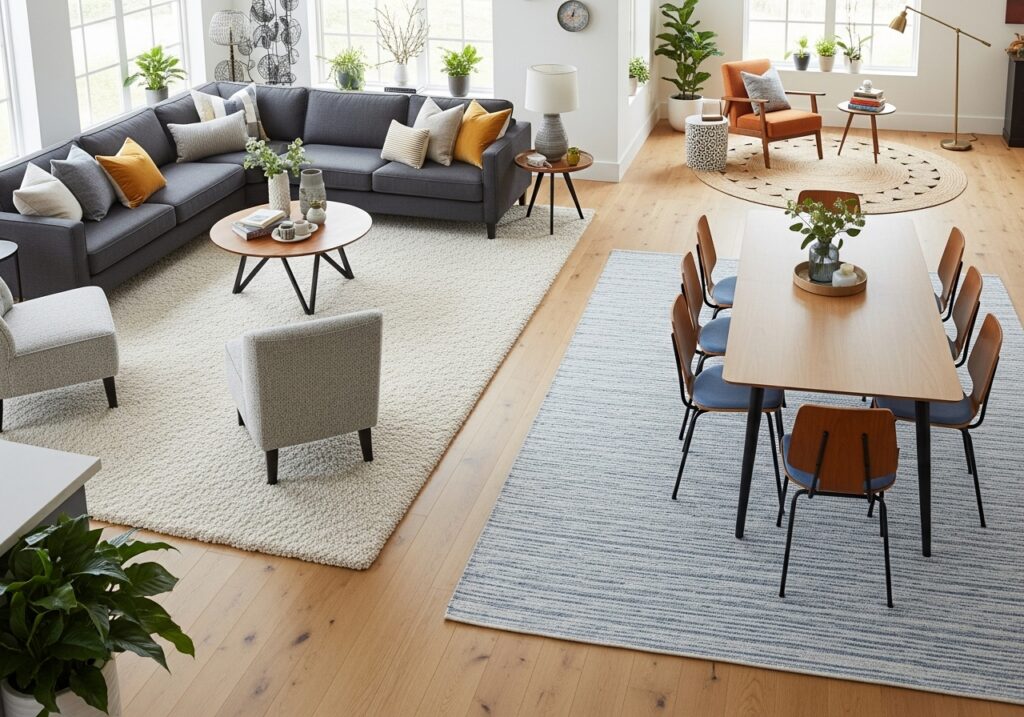
9. Keep Furniture Legs Visible
Visible legs create air under furniture. Air equals space. Skirted sofas block sightlines. Open bases keep rooms light.
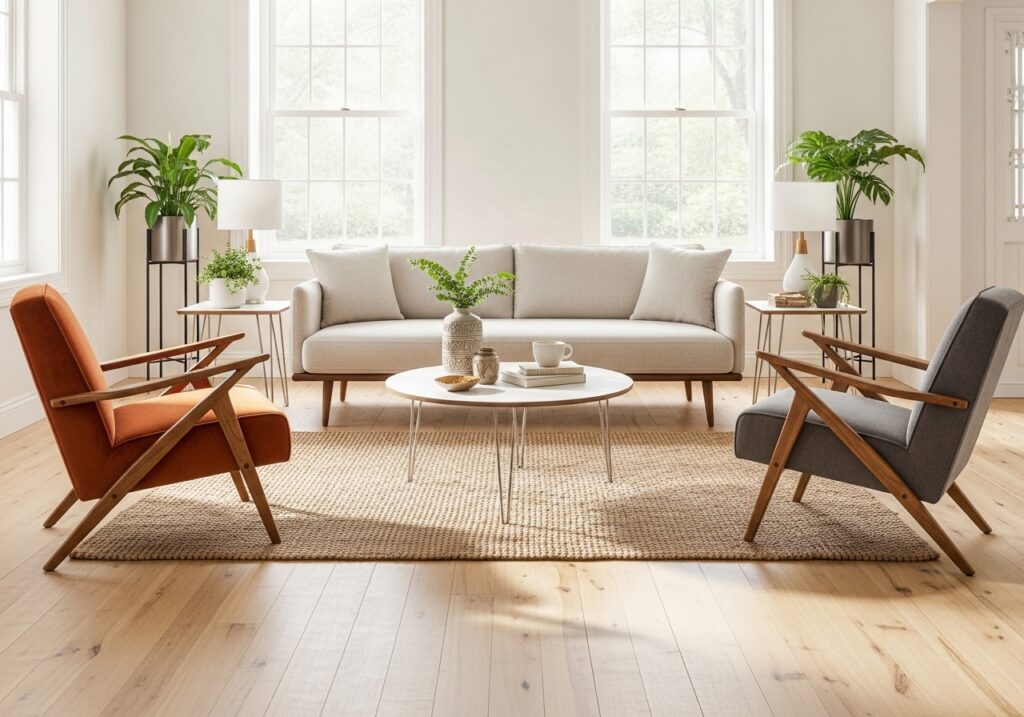
10. Stick to One Color Family
Too many colors fight each other. One color family keeps the room steady. Add texture, not color jumps. It’s like speaking one language instead of three.
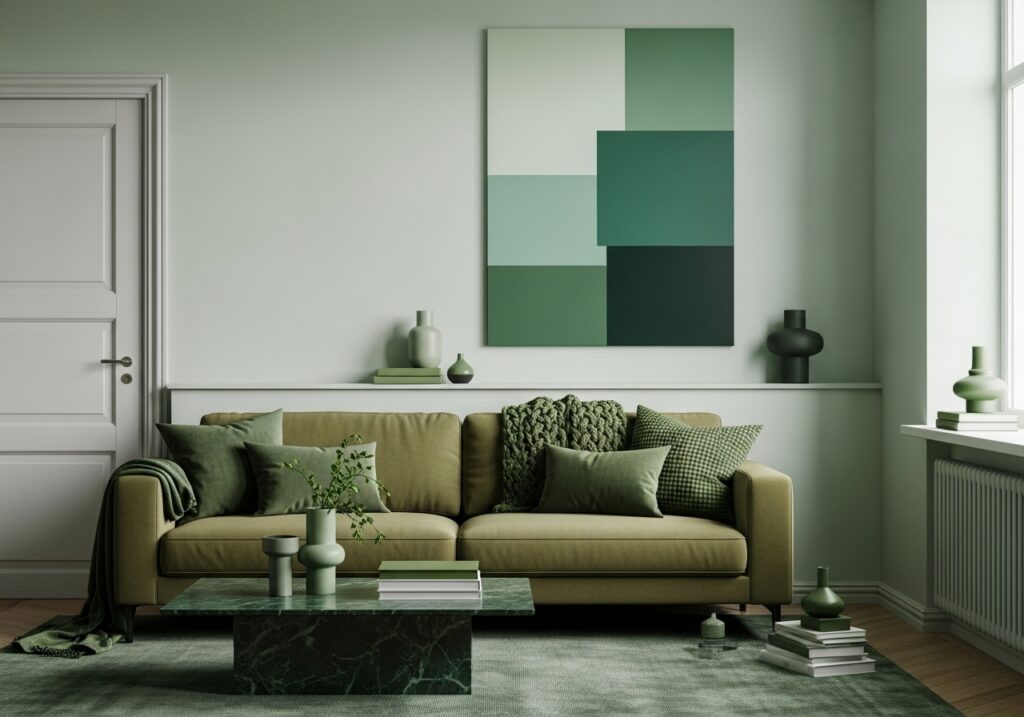
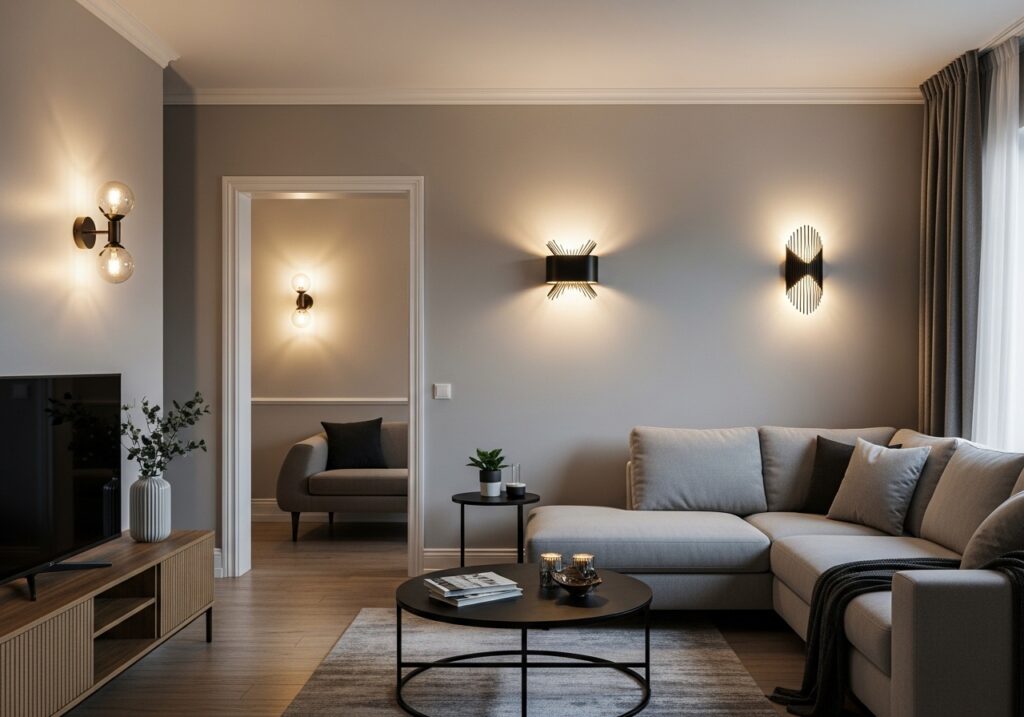
11. Add Wall Lighting
Wall lights free floor space. They also spread light evenly. Lamps on tables crowd surfaces. Walls handle the job better.
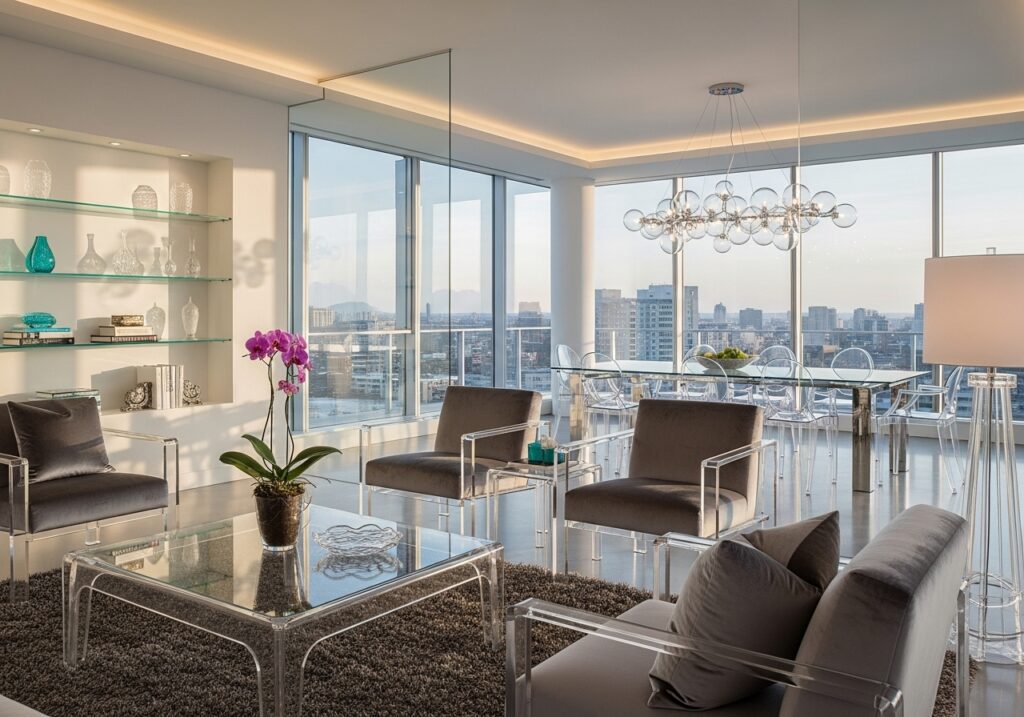
12. Use Glass and Lucite
Clear furniture reduces visual clutter. Coffee tables and chairs seem to disappear. Less bulk equals more room.
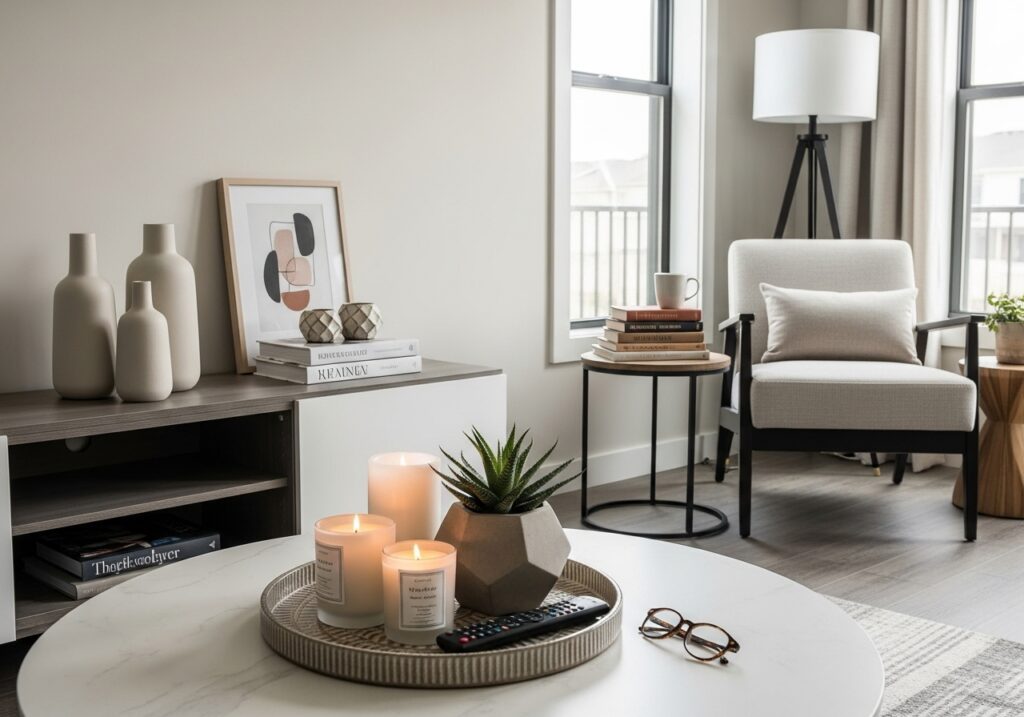
13. Keep Decor in Groups
Three items look cleaner than ten. Group decor tightly. Loose items scatter attention. Order makes rooms feel bigger.
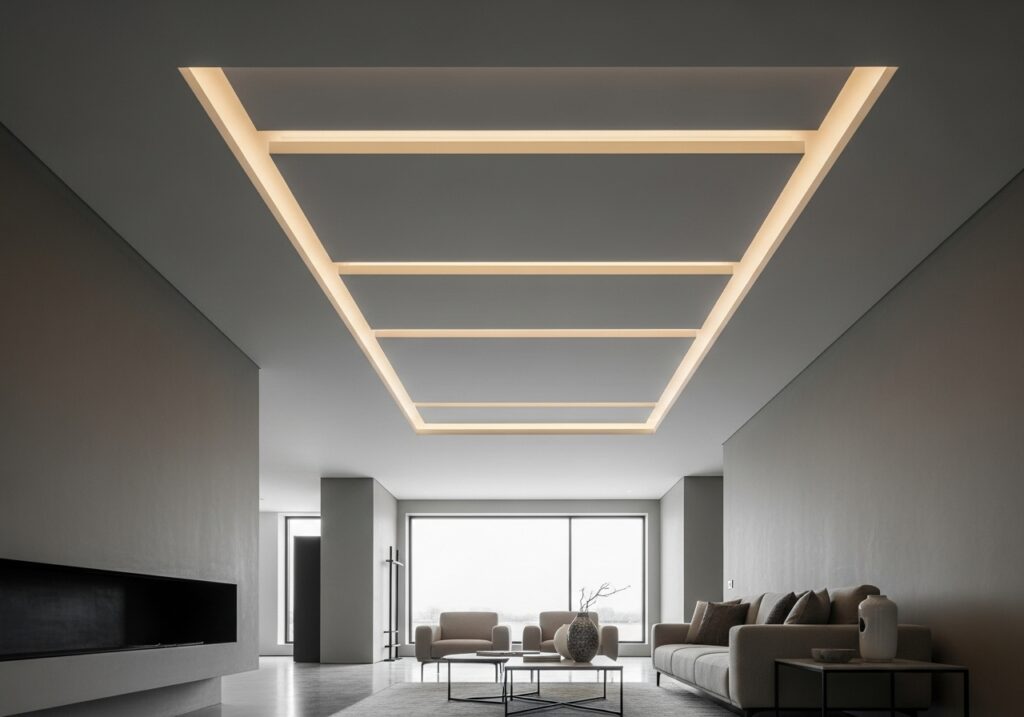
14. Fix Ceiling Lines
Exposed beams or dark trims lower ceilings. Paint them to match the ceiling. Lines fade away. Height feels natural again.
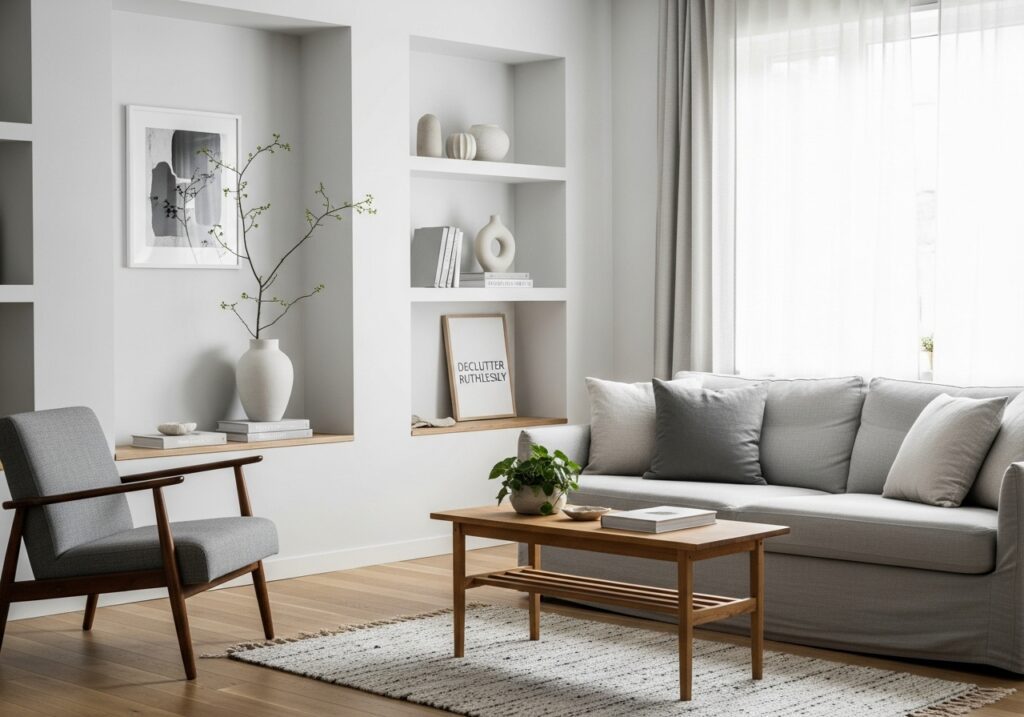
15. Declutter Ruthlessly
Stuff shrinks rooms. No hack beats less clutter. Keep what you use. Let the rest go. Space is the reward.
Final Thought
Small rooms don’t need big budgets. Walls, floors, and ceilings already hold the answers. A few smart choices turn tight spaces into calm ones. Like opening blinds after a long night, the room finally exhales.