
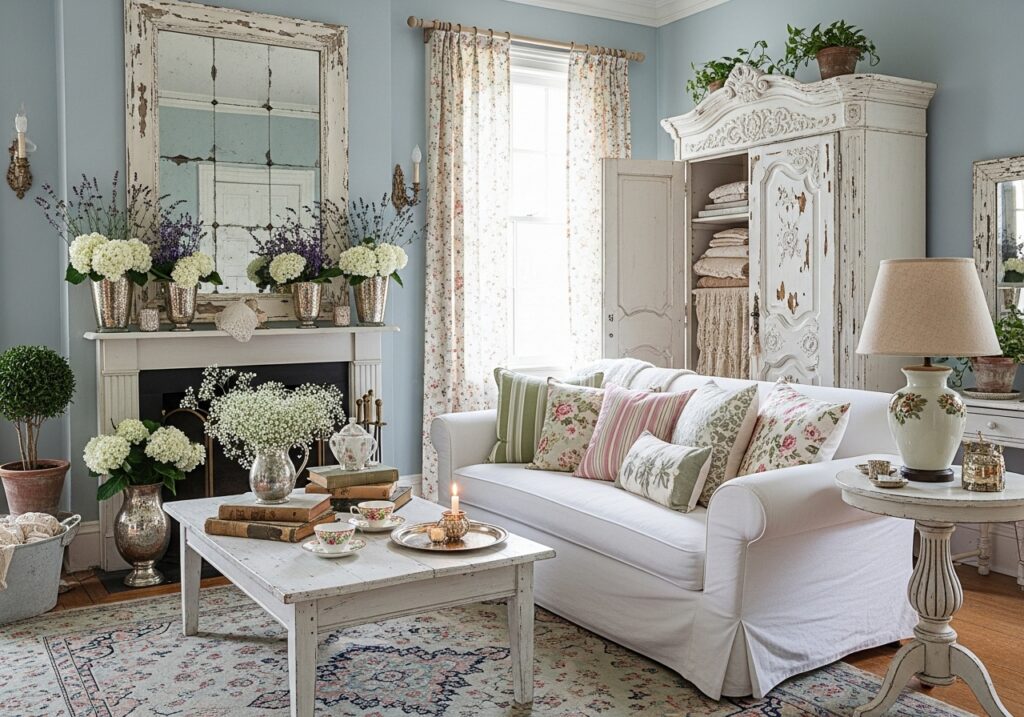
Styling a living room can be trickier than it seems. You might have the furniture, the color scheme, and even a few décor items, but somehow the room still feels incomplete, cold, or chaotic. If this sounds familiar, shabby chic design could be your solution. Unlike rigid modern styles, shabby chic embraces imperfection, warmth, and personality, turning any living room into a cozy and inviting space.
This guide will help you transform your living room with simple, practical ideas that bring comfort, charm, and elegance — without feeling forced or overdecorated.
Understanding Shabby Chic: Beauty in Imperfection
Contents
- 1 Understanding Shabby Chic: Beauty in Imperfection
- 2 Choosing the Right Colors
- 3 Furniture That Feels Comfortable and Personal
- 4 Texture: The Key to Warmth
- 5 Personal and Meaningful Décor
- 6 Integrating Natural Elements
- 7 Functionality Meets Style
- 8 Small Changes, Big Impact
- 9 Avoiding Common Mistakes
- 10 Making Your Living Room Truly Yours
Shabby chic is more than a style; it’s a philosophy. At its core, it celebrates lived-in beauty — furniture and décor that tell a story and textures that invite touch. Worn wooden tables, vintage chairs, faded rugs, and soft linen upholstery are staples of this approach.
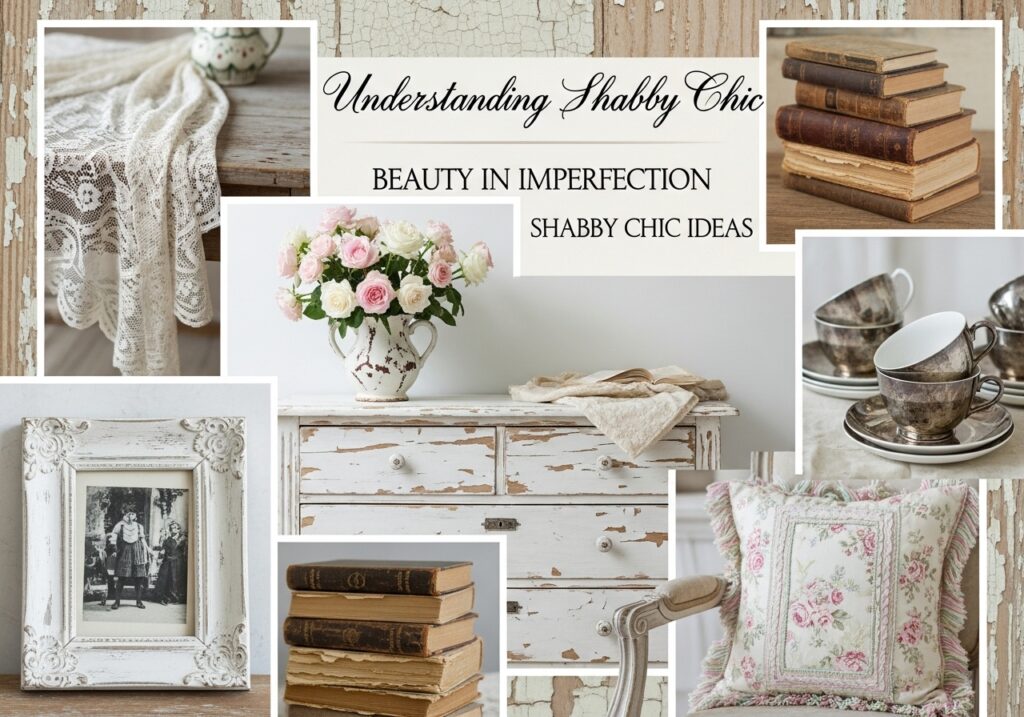
The style thrives on balance. While some elements feel aged and rustic, others bring freshness and subtle sophistication. The result is a living room that feels welcoming, personal, and timeless — a space you’ll enjoy every day.
Choosing the Right Colors
Color is the foundation of a shabby chic living room. Soft, muted tones create a calming atmosphere and allow décor pieces to shine naturally. Warm whites, creamy neutrals, and light gray walls work beautifully as a base. Adding hints of pastel shades such as blush pink, powder blue, or sage green in cushions, throws, or small décor items adds character without overwhelming the space.
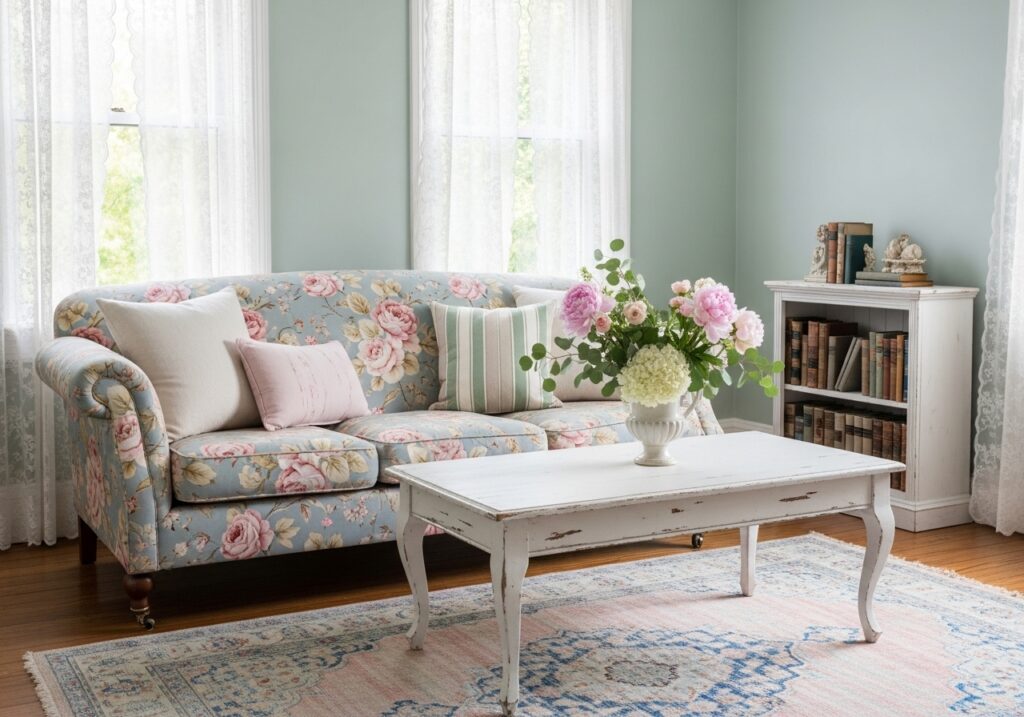
Natural light enhances these colors, giving the room an airy and relaxed feel. Light, sheer curtains help diffuse sunlight while maintaining privacy, completing the serene ambiance that shabby chic is known for.
Furniture That Feels Comfortable and Personal
Furniture in a shabby chic living room is all about comfort and personality, not perfection. A linen slipcovered sofa, a slightly distressed wooden coffee table, or a vintage armchair with faded upholstery instantly adds charm. The key is to mix old and new pieces to create a room that feels curated over time, much like a coastal living room with dark furniture, where contrast and texture work together to create a balanced and inviting space.
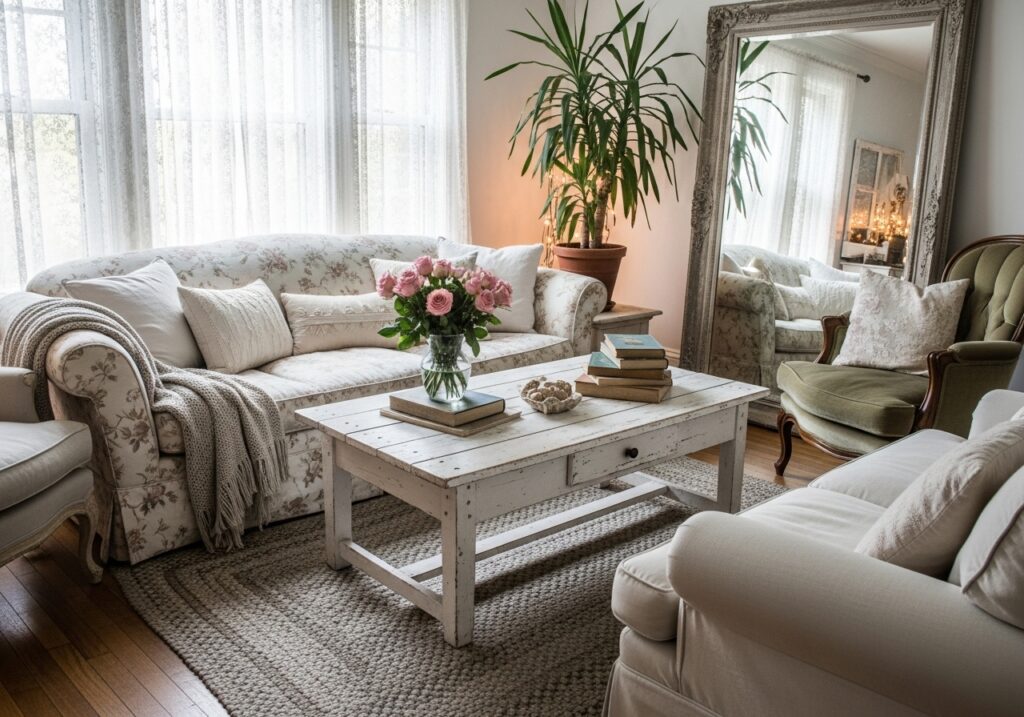
For example, pairing a modern sofa with a vintage sideboard or adding an aged wooden table under a sleek lamp can add depth and interest. Avoid overly matching furniture sets; variety gives your living room the character that makes shabby chic truly appealing.
Texture: The Key to Warmth
Texture brings life to a shabby chic living room. A plain sofa becomes inviting when layered with linen throws and cotton or velvet cushions. Worn rugs, soft drapes, and textured table runners add warmth and dimension, creating a space that looks and feels natural.
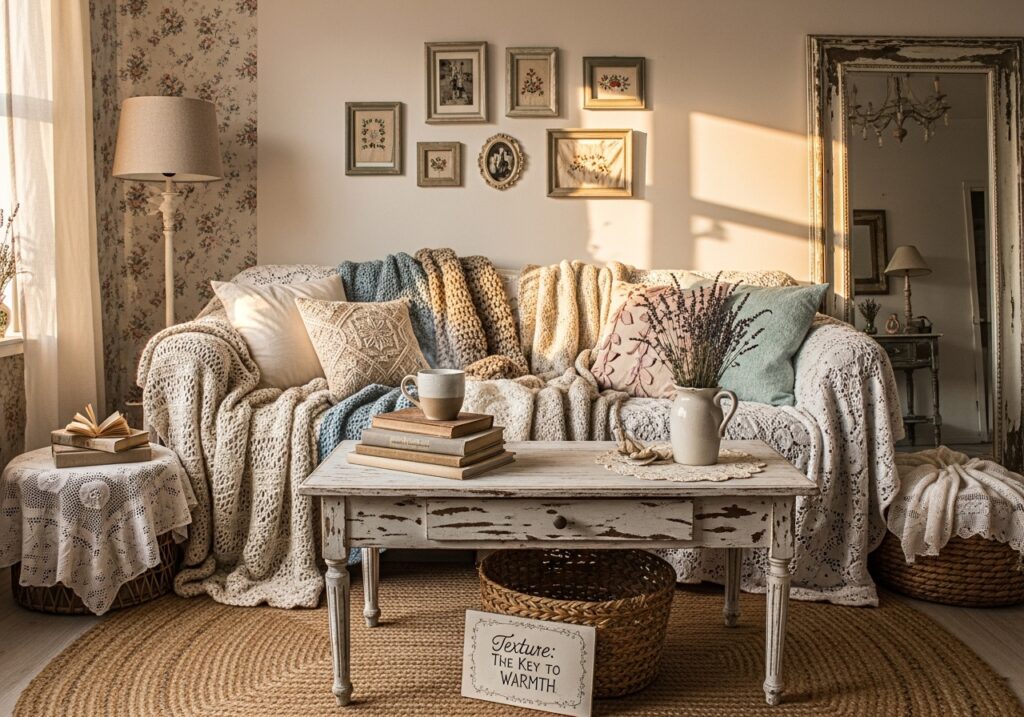
The goal isn’t to match every texture but to let them coexist in harmony, making the room feel layered and comfortable without appearing cluttered or chaotic.
Personal and Meaningful Décor
Shabby chic thrives on meaningful décor rather than purely decorative objects. Vintage vases, framed botanical prints, old books, or handmade items add personality to the room.
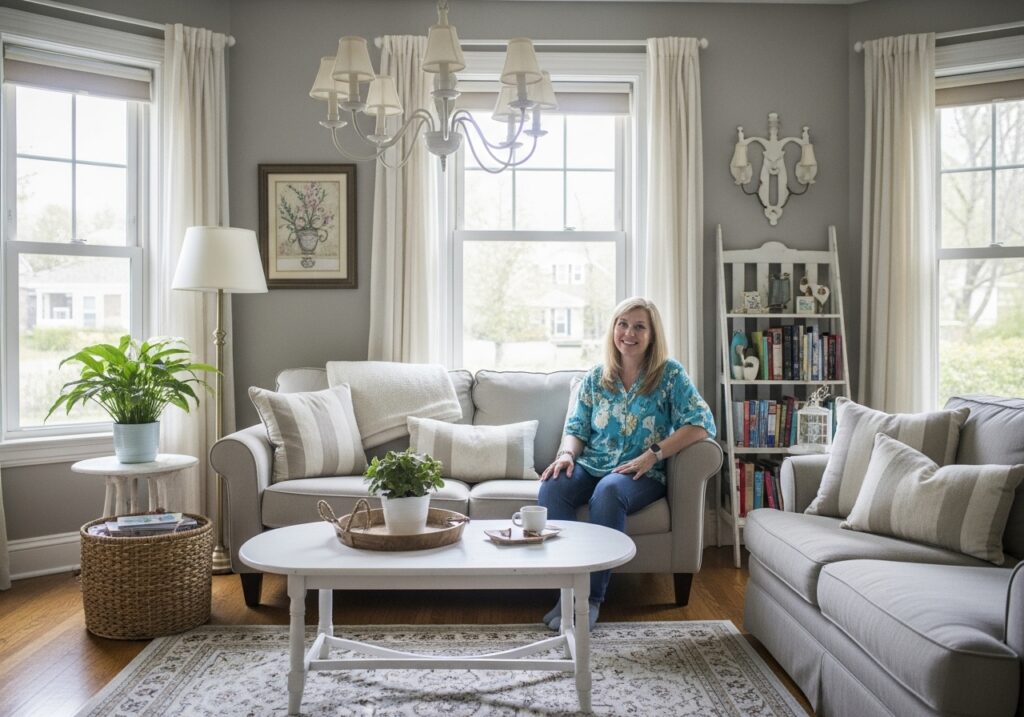
Walls can become storytelling elements, too. A slightly asymmetrical gallery wall with mismatched frames or a large ornate mirror can elevate a living room without dominating it. The charm comes from authenticity — each piece reflects your taste and history.
Integrating Natural Elements
Nature plays an important role in shabby chic interiors. Adding plants, flowers, or natural materials like wood and wicker instantly softens a space. A trailing ivy, a small fern, or fresh blooms in a rustic vase not only bring life to the room but also reinforce the relaxed, welcoming vibe.
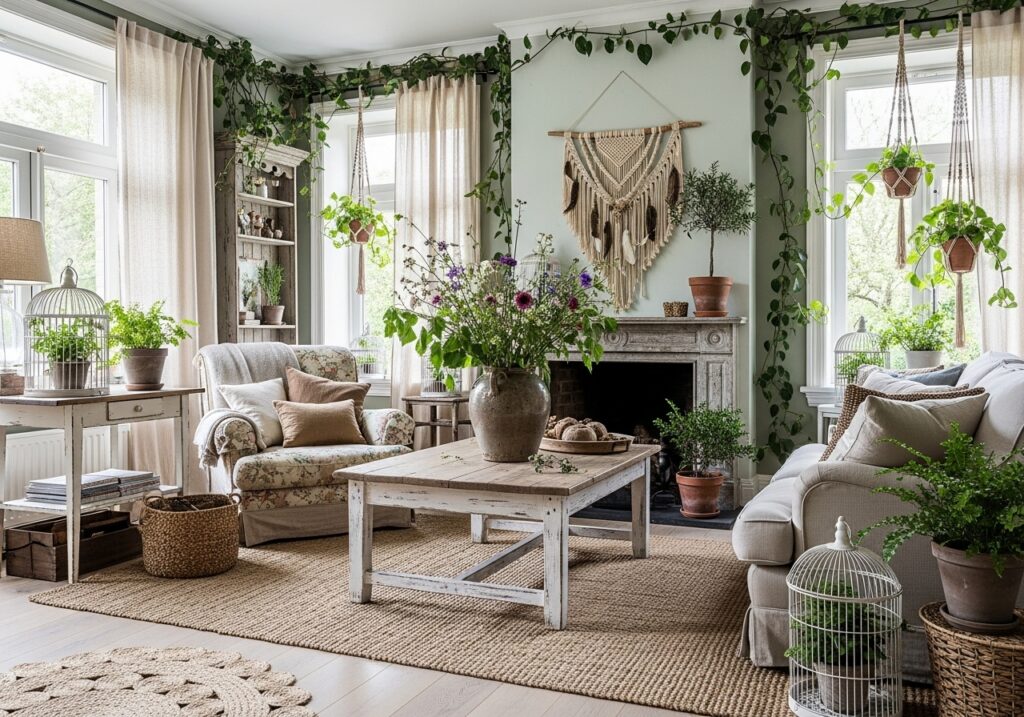
Even small natural details, like a wooden tray or stone accents, enhance the feeling of a lived-in, inviting home.
Functionality Meets Style
A stylish living room is only useful if it works for daily life. Shabby chic balances beauty and practicality effortlessly. Ensure seating is comfortable, blankets are accessible, and storage solutions like baskets or cabinets are both decorative and functional.
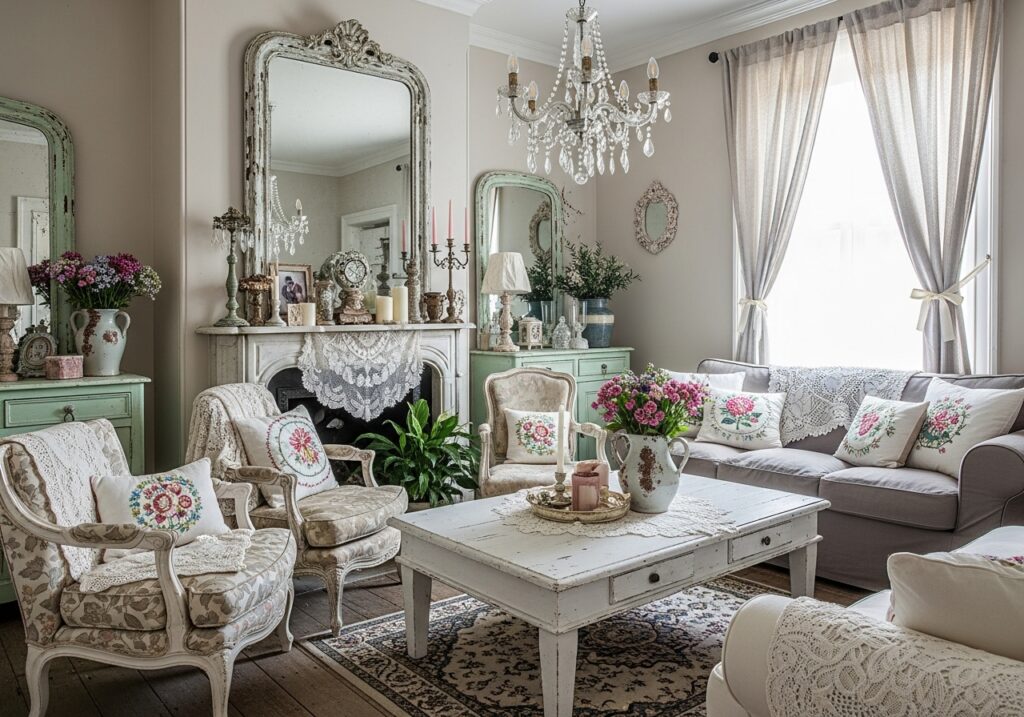
This approach allows your living room to be enjoyed fully, not just admired. Soft textures, well-placed lighting, and cozy seating encourage relaxation and socializing, making the space both beautiful and livable.
Small Changes, Big Impact
You don’t need a full makeover to embrace shabby chic. Even small adjustments can transform your living room. Swapping harsh curtains for soft linens, adding a gently worn rug, layering cushions in complementary colors, or incorporating a few vintage décor pieces can dramatically shift the room’s mood.
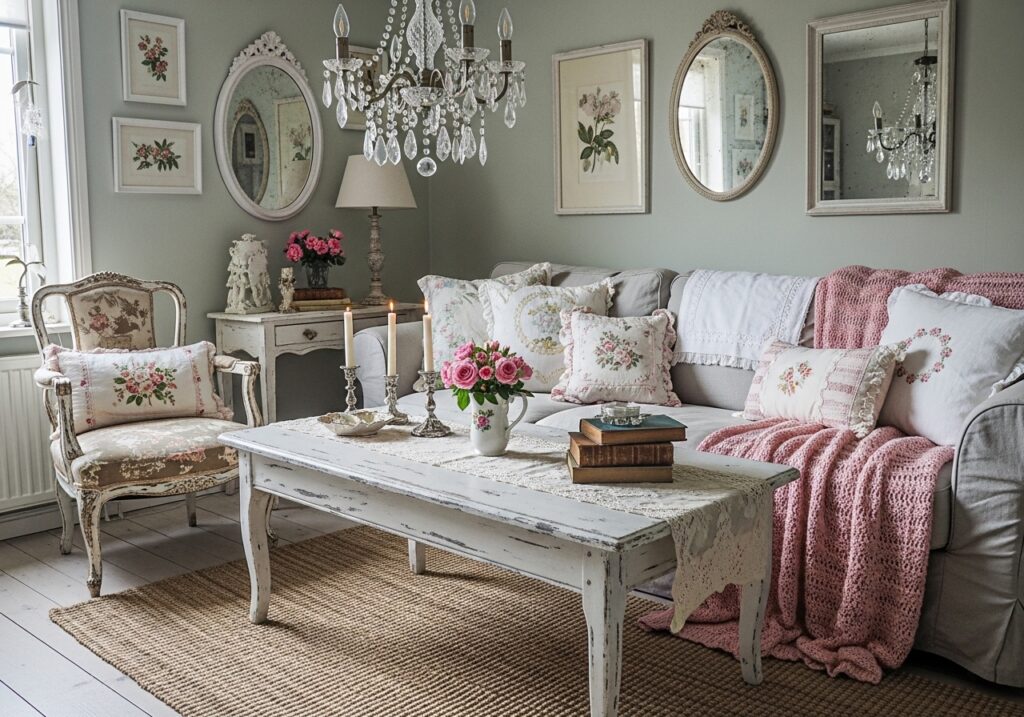
These subtle changes are often more effective than major renovations because they create a room that feels authentic and personal, rather than staged or artificial.
Avoiding Common Mistakes
Shabby chic can lose its charm if done incorrectly. Avoid overly matching furniture, too many bold prints, or cluttered surfaces. Stick to a balanced palette, mix textures thoughtfully, and let pieces speak for themselves. Imperfection should feel intentional, not careless.
Keeping the room functional while highlighting key pieces ensures the space is both inviting and visually appealing.
Making Your Living Room Truly Yours
The essence of shabby chic is that it’s personal. The style encourages you to blend comfort, nostalgia, and aesthetic sense into a living space that truly reflects who you are. By layering textures, mixing furniture styles, incorporating personal décor, and maintaining a soft color palette, you can create a living room that is both stylish and welcoming.
Over time, the room will evolve naturally. Shabby chic doesn’t require everything to be perfect from the start. Instead, it thrives on gradual enhancements and thoughtful additions that make your living room feel like home.
Conclusion
If styling your living room feels like a challenge, shabby chic provides a flexible, approachable solution. Its focus on warmth, comfort, and personal touches allows you to create a living space that feels cozy, charming, and uniquely yours.
Start with colors and textures, add meaningful décor, mix old and new furniture, and allow the space to evolve. Soon, your living room won’t just look stylish — it will feel like a home you genuinely love.